
Pulitzer-Winning Works to Explore This Fall

From a psychological investigation of a high school basketball team at midlife to a Columbia professor's classic analysis of intellectual culture, discover Pulitzer-winning works that resonate with the season.

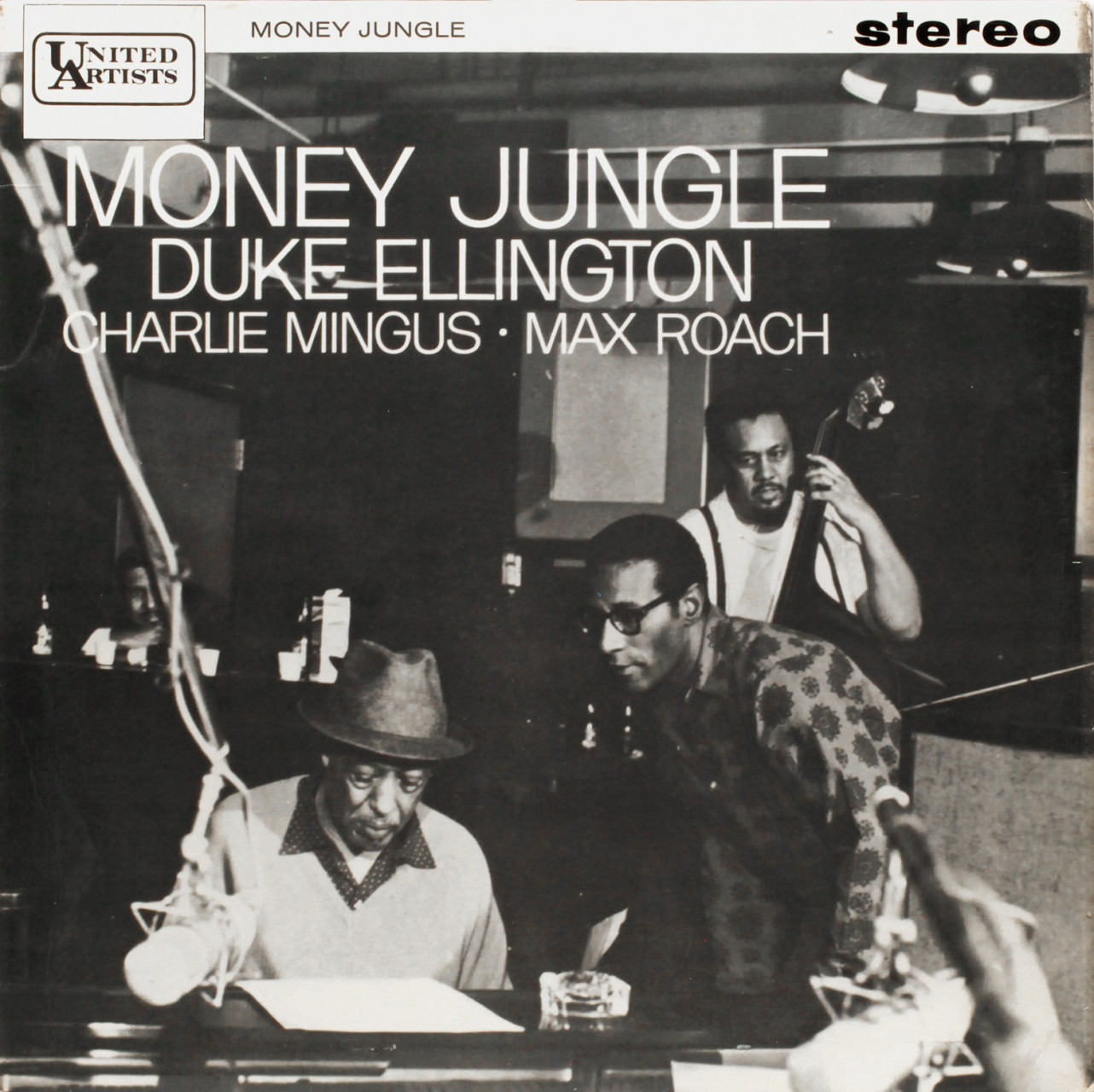
Album cover of "Money Jungle" (United Artists)

Fall is a time of both continuity and change. From a Columbia professor's classic analysis of intellectual culture to a poet's evocation of rural New England byways, the following works illuminate what often manifests as a season of transition. As the days grow colder and shorter, dig in!


'Up Country: Poems of New England,' by Maxine Kumin (Poetry, 1973)

Although she was often grouped alongside such confessional poets as 1967 Poetry winner Anne Sexton (a close friend) and two-time Pulitzer winner Robert Lowell, 1973 Poetry winner Maxine Kumin largely shied away from the biographical in her work, preferring to chronicle her impressions of rural northern New England. Published four years before she permanently relocated to a farm in Warner, N.H., Kumin's "Up Country: Poems of New England" recasts the Frostian tradition in an era of encroaching modernity; in "Cross Country by County Map," she marvels at an abandoned mountain town demarcated on a frayed map: "No one is left at Poverty Corners. [...] It does not record the headstones fallen, the cedars gone in a blight, the maples made into crutches." In "The Presence," the numinosity of early snowfall gives way to the mystery of unidentifiable tracks: "It could have been a raccoon lugging a knapsack, it could have been a porcupine carrying a tennis racket, it could have been something supple as a red fox." While the pandemic may preclude us from taking in the White Mountains' celebrated foliage, Kumin's naturalistic poetics maintain their power to transport readers. 

'Anti-Intellectualism in American Life,' by Richard Hofstadter (General Nonfiction, 1964)
 

Whether you are studying remotely or teaching in person, enrolled in a class or simply perusing the latest book releases, fall is a quintessential time for learning. Few pedagogues have matched the influence of two-time Pulitzer winner Richard Hofstadter. With a laissez-faire teaching style that influenced students including historian Stanley Elkins and New York City specialist Mike Wallace (a recipient of the 1999 History Prize), the Columbia-based Hofstadter was a vanguard force in the turn toward a pragmatic, intersectional approach "in which conflicts of interests have been fought out, compromised, adjusted." While he embraced elements of neoconservatism before his premature death from leukemia aged 54 in 1970, Hofstadter retained Old Left circumspection toward the nation's business, religious and national security establishments, an ethos that suffused his second Pulitzer-winning book, "Anti-Intellectualism in American Life." Envisioned as a rejoinder to the "egghead" canard that saw Adlai Stevenson lose two presidential elections to Dwight Eisenhower in the '50s, "Anti-Intellectualism" welds a circuitous history of American "primitivism" (with an emphasis on the foundational influence of the emergence of Anglo-American evangelicalism in the mid-18th century) to editorializing on what he perceived to be the contemporaneous decline of intellectualism, from the influence of "hundred percenter" business interests to the RAND Corporation's "expert" national security servitors and the "adolescent rebellion" of the Beats. "[Political intelligence] accepts conflict as a central and enduring reality and understands human society as a form of equipoise based upon the continuing process of compromise," he writes. "It shuns ultimate showdowns and looks upon the ideal of total partisan victory as unattainable, as merely another variety of threat to the kind of balance with which it is familiar. It is sensitive to nuances and sees things in degrees. It is essentially relativist and skeptical, but at the same time circumspect and humane." While one may concur or take umbrage at Hofstadter's thesis, his sense of purpose makes for compelling reading more than 60 years after Stevenson's defeat in the autumn of 1956.
'That Championship Season,' by Jason Miller (Drama, 1973)

Set in Scranton, Pa., Jason Miller's "That Championship Season" is a meditation on two key determinants of the autumnal season: athletic primacy and political rancor. Guided to an Eisenhower-era state basketball championship by the phlegmatic Coach, the local Catholic high school heroes have settled into the vicissitudes of early '70s midlife crises in a town marred by the socioeconomic decline of the Rust Belt. Pessimism and adultery largely have subsumed their past glories, while three of the erstwhile teammates (businessman Phil Romano, incumbent mayor George Sikowski and junior high school principal James Daley) attempt to parlay their reputations into control of the mayoralty. These fissures come to the fore at one of the team's alcohol-fueled reunions at the Coach's sprawling Victorian house, almost wholly untouched by postwar conveniences. As in three-time Drama Prize winner Edward Albee's "Who's Afraid of Virginia Woolf?", the introductory patina of rarefied sentimentality fades as the booze hits; following laudatory defenses of McCarthyism and proto-fascist broadcaster Father Charles Coughlin, the Coach remains unrepentant about his penchant for physical brutality (culminating in what is revealed to be his forced retirement following an assault of a student) while offering a nauseating series of racist and anti-Semitic fulminations, with only alcoholic drifter Tom Daley (James' younger brother) standing up to the man who had proved to be so foundational to their adult lives. Any hope of redemption is forestalled when, amid the inevitable mediation of the political disputes and requisite photo-taking, the Coach declines an invitation to watch an upcoming game on Phil's color television with another racist invective: "I hardly watch it anymore. Not my game. It's no longer the white man's game." Decades before toxic masculinity entered the popular lexicon — and in an era when reportage on the cultural valences of sports was all but limited to Joe Namath's endorsement deals — Miller offered a prescient, interrogatory vision of a quietly dystopic America that, to quote William Gibson, was not yet "evenly dispersed." And while that vision would reverberate in the work of such figures as 1979 Drama winner Sam Shepard and 1984 Drama winner David Mamet, Miller himself would largely eschew playwriting in favor of acting and directing following his Academy Award-nominated performance as Father Damien Karras in "The Exorcist" (1973), only returning to the medium with a one-man show about John Barrymore ("Barrymore's Ghost") three years before his death in 2001 aged 62.

'Money Jungle,' by Duke Ellington (Special Citation, 1999)

As the fall of 1962 loomed, posthumous 1999 Special Citation recipient Duke Ellington was at loose ends. An inveterate workaholic who continued touring until two months before his death, Ellington had been released from the six-year Columbia contract that yielded some of his most indelible recordings earlier that year. Rather than immediately obtaining a new deal, he remained unattached for a spell, recording relatively traditional collaborations with Coleman Hawkins and future Pulitzer winner John Coltrane for fledgling ABC jazz subsidiary Impulse. In between, the pianist, bassist/composer Charles Mingus (who was widely perceived by peers and critics as Ellington's stylistic heir) and drummer Max Roach convened at New York's obscure Sound Makers Studios on September 17 to record "Money Jungle." Perhaps Ellington's most outré effort — within five years, he would be backing future benefactor Frank Sinatra on a cover of Lerner and Lowe's "Follow Me" — the post-bop effort features vertiginous renditions of Ellington standards "Caravan" and "Solitude" alongside the title track, a rare showcase for Ellington's heretofore orthodox piano style. Belying a reportedly tense day of work, the sessions yielded an enduring opus in "Fleurette Africaine," a throwback to the celebrated Blanton-Webster Band and reportedly evocative of the composer's "imaginary vision of a beautiful flower blooming 'only for God' in the heart." While it was technically recorded several days before the equinox, Alan Douglas' spacious production ensured that "Money Jungle" remains redolent of a crisp West Side autumn afternoon, a signpost to musical terrain that went largely unheeded after Ellington returned to his comfort zones upon signing with Sinatra's Reprise Records in 1963. If you're in the area, stroll by Ellington's longtime base of operations at 333 Riverside Drive and cue it up.