
Pulitzer Reading List: Illness and Recovery, Research and Medicine

Over the years, Pulitzer winners and finalists across the journalism and books categories have analyzed diseases and their treatments. As the Covid pandemic sparks interest in infectious disease research and therapies, learn more about how scientists and doctors have approached other ailments through the work of these writers.
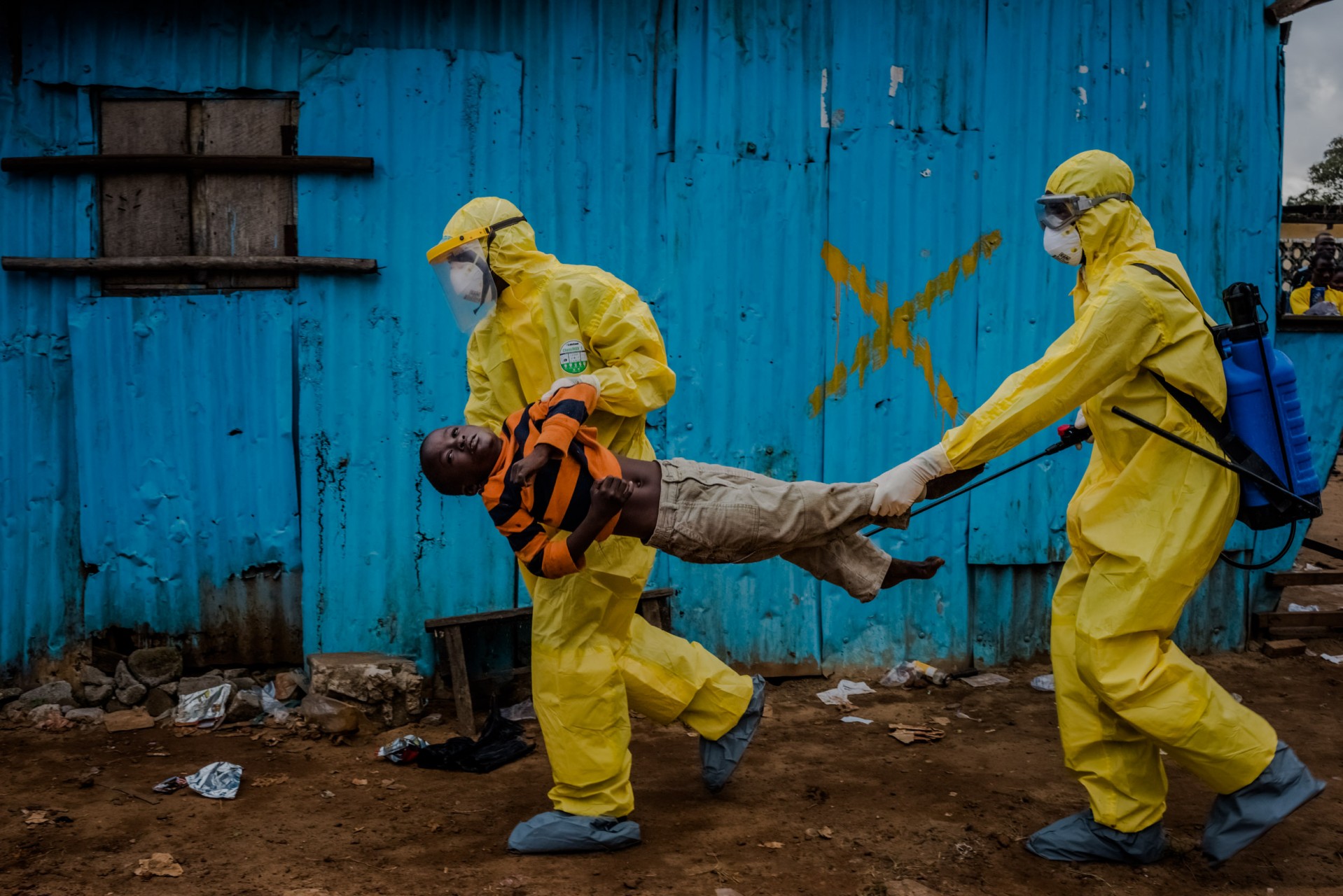
One of Daniel Berehulak's Pulitzer-winning images of the Ebola outbreak in West Africa.

“History repeats, but science reverberates,” cancer physician and researcher Siddhartha Mukherjee has said. Mukherjee won the 2011 General Nonfiction Prize for "The Emperor of All Maladies," a deep dive on cancer. Journalists and book authors alike have explored the origins, treatment and social effects of diseases — from David Oshinky's close look at the many facets of polio in America to real-time reporting and photography on Ebola outbreaks in Africa from Newsday and The New York Times.

As the Covid pandemic continues to ravage the globe, these works offer perspective on the science and impacts of illness.


1.

'Polio: An American Story,' by David M. Oshinsky
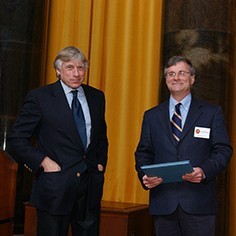
Lee Bollinger and David M. Oshinsky
The summary of Oshinsky's 2006 History winner opens: "All who lived in the early 1950s remember the fear of polio and the elation felt when a successful vaccine was found." Americans and people around the world likely can relate to those fears and hopes today.

2.

'The Emperor of All Maladies: A Biography of Cancer," by Siddhartha Mukherjee
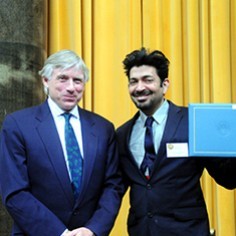
Lee Bollinger and Siddhartha Mukherjee
Mukherjee, a cancer physician and researcher at Columbia University, was hailed by the Pulitzer Board for producing this work, describing it as "an elegant inquiry, at once clinical and personal, into the long history of an insidious disease that, despite treatment breakthroughs, still bedevils medical science." The 2011 General Nonfiction winner since has been adapted for the small screen in a 2015 PBS documentary by the same name.

3.

'The Social Transformation of Medicine,' by Paul Starr

Starr's 1984 General Nonfiction winner explored the history of the U.S. healthcare system. The book offers examples of why things happen the way they do in American hospitals, while also analyzing decades of government policy and health insurance programs. Starr, a professor at Princeton, updated a new edition in 2017 with a prologue and epilogue that bring the book up to the present day.

4.

Newsday reporting on Ebola, Laurie Garrett

A longtime Newsday reporter, Garrett delved into the Ebola virus outbreak from Zaire in her 1996 Explanatory Reporting portfolio. Garrett has been a frequent commentator on Covid — read her pieces on how a highly infectious disease originated and spread. She turned her reporting into a book, "Ebola: Story of an Outbreak," that was published in 2014.

5.

The New York Times Staff Reporting on Ebola
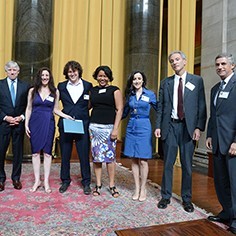
Lee Bollinger and The New York Times staff
Nearly two decades after Garrett's reporting in Newsday, The New York Times won the 2015 International Reporting Prize "for courageous front-line reporting and vivid human stories on Ebola in Africa, engaging the public with the scope and details of the outbreak while holding authorities accountable." Again, the journalism centered not just on real-time reporting of the outbreak's consequences for those who contracted the disease, but also on the role of government on treatment and containment.

6.

Daniel Berehulak, For photography that appeared in The New York Times
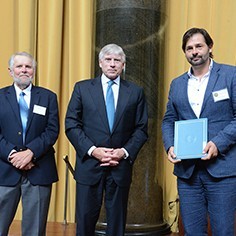
Mike Pride, Lee Bollinger and Daniel Berehulak
That same year, photography that appeared in The New York Times also was awarded a Pulitzer for capturing the Ebola outbreak visually. Daniel Berehulak was cited "for his gripping, courageous photographs of the Ebola epidemic in West Africa" in 2015. He went on to win another Pulitzer in 2017 in the Breaking News category for documenting "callous disregard for human life in the Philippines brought about by a government assault on drug dealers and users."