Finalist: Lynsey Addario, contributor, The New York Times
Nominated Work







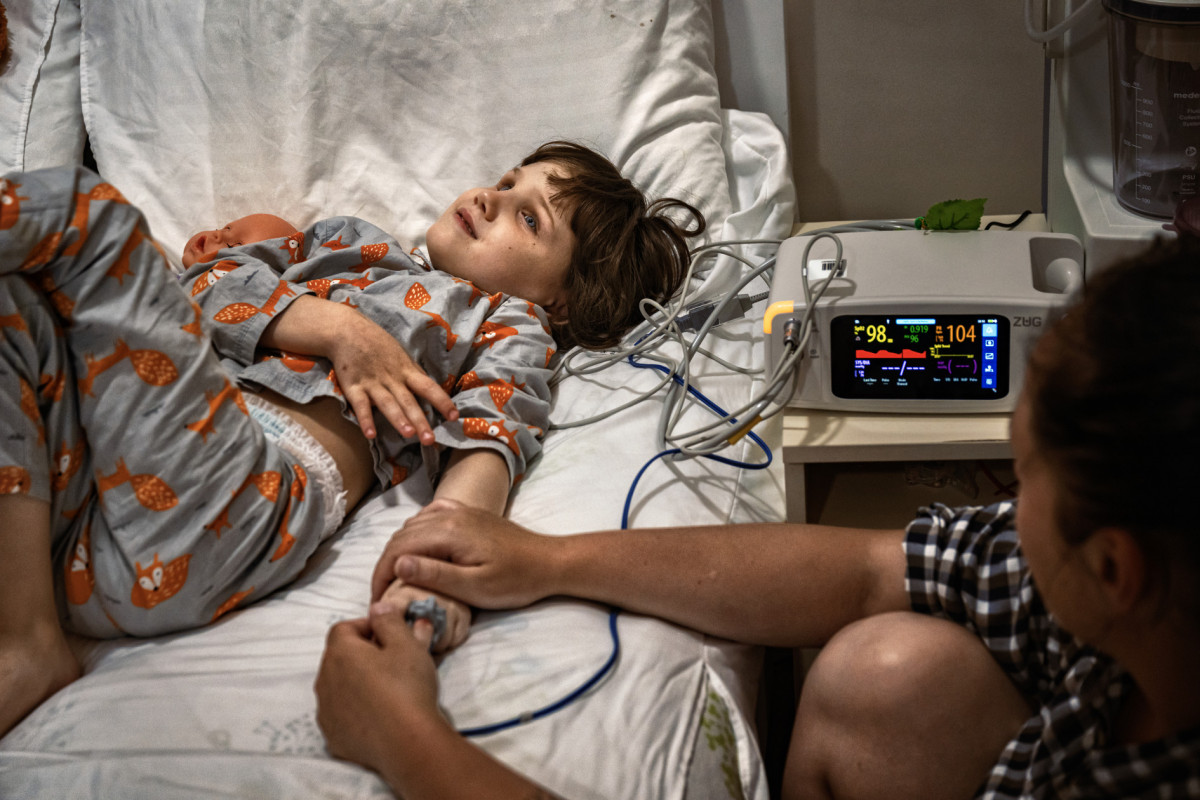
Almost three years into Russia’s full-scale invasion of Ukraine, families with children suffering from severe illnesses or disabilities have struggled to navigate the complexities of care in the throes of a war. Sonya Liakh’s chemotherapy course for a rare form of eye cancer was interrupted by the February 2022 invasion. Sonya’s type of cancer, retinoblastoma, is usually curable—if it is caught and treated early. Sonya’s mother and her doctors believe the interruption in her treatment was fateful.

With both eyes lost to the cancer, Sonya learned to navigate her blindness at the shelter where she and her family lived. Riding her bicycle and swinging in the playground were among the activities that brought her joy.

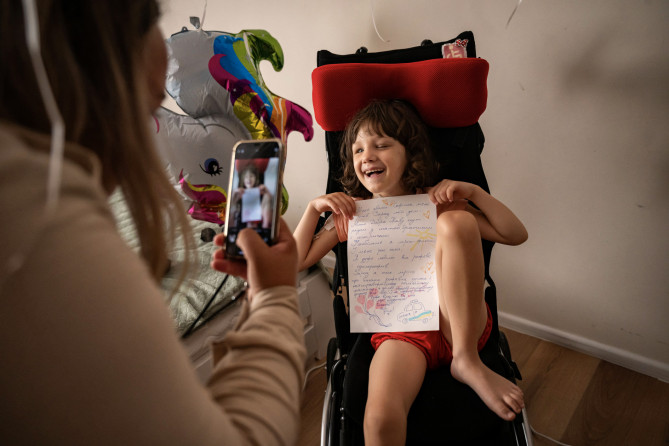
Sonya’s spirit and independence in the face of her illness gained the admiration and affection of the staff members of Misto Dobra, or City of Goodness, the hospice where her family lived. Here, she holds up a letter describing her dreams for Olha Ivasiuk, an art teacher and photographer at the shelter who became a close family friend.
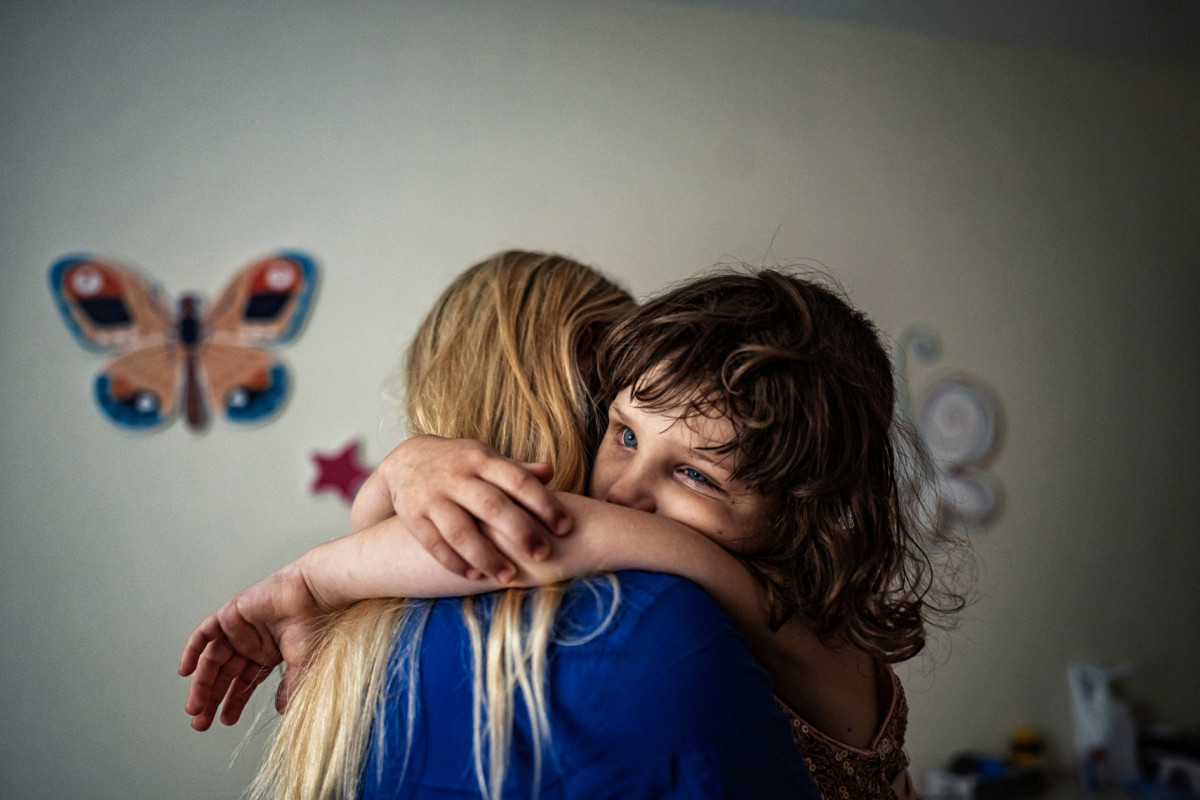
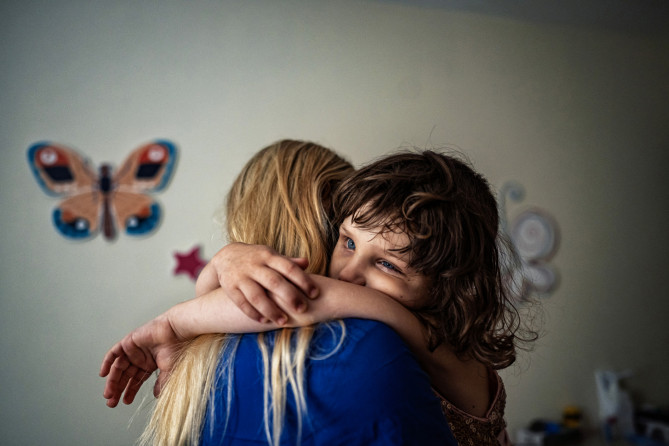
Humanitarian groups throughout Ukraine are supporting children with cancer, autism, cerebral palsy and a range of physical and psychological needs. Misto Dobra took in Sonya’s family when it had little money, with her father gone and her mother, Natalia Kryvolapchuk, facing eviction while caring for Sonya and her two siblings. Here, Sonya gives a hug to the co-founder, Marta Levchenk.

At times, as she reveled in the shelter’s pool or walked through the gardens lined with rose bushes, Sonya lived her days almost as if she had sight.
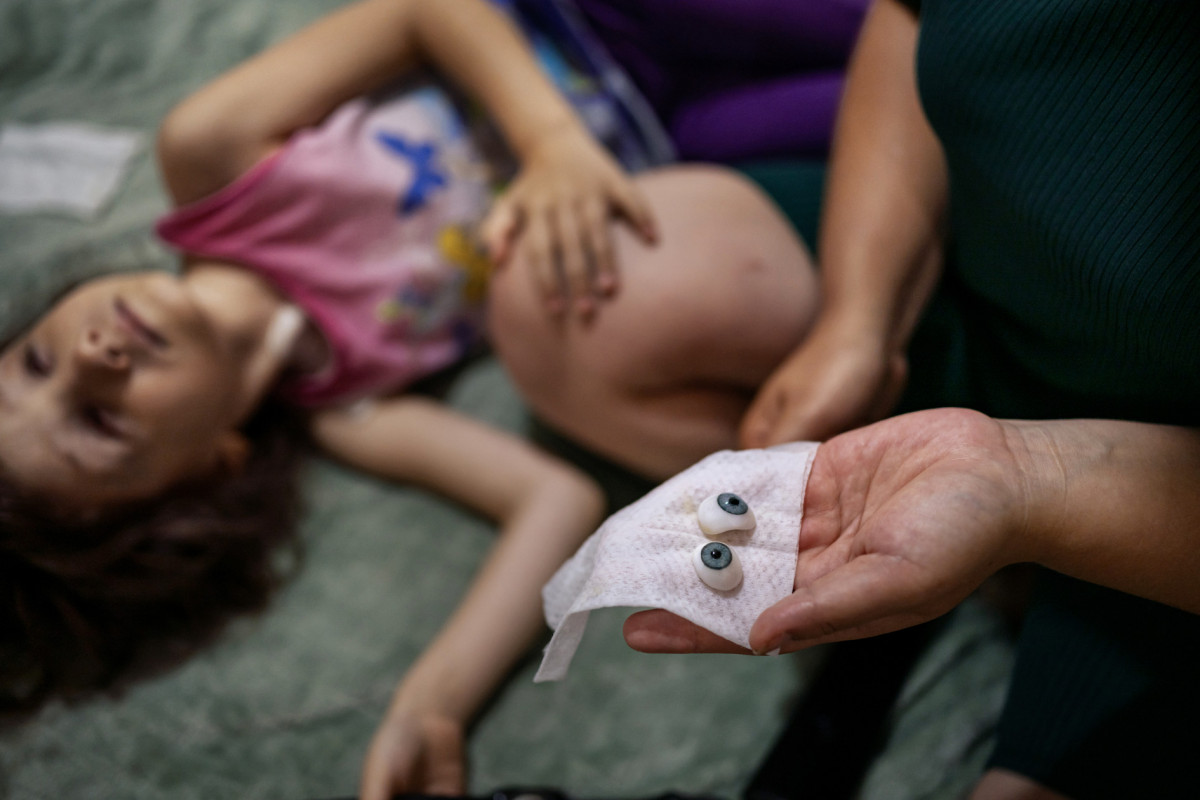
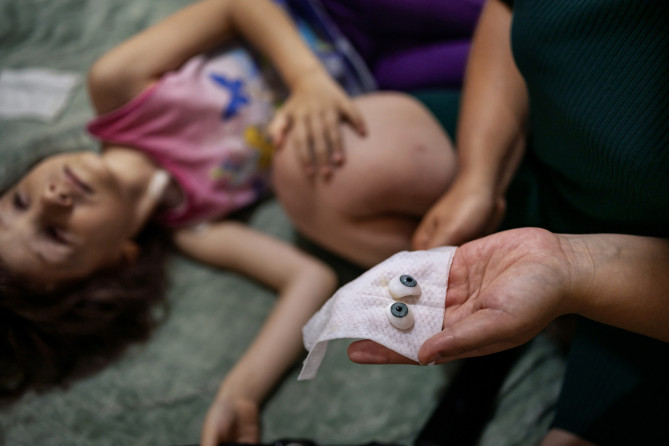
Tumors in her head forced the removal of Sonya’s hazel green eyes, first her left, then her right. She requested crystal blue prosthetics to replace them.
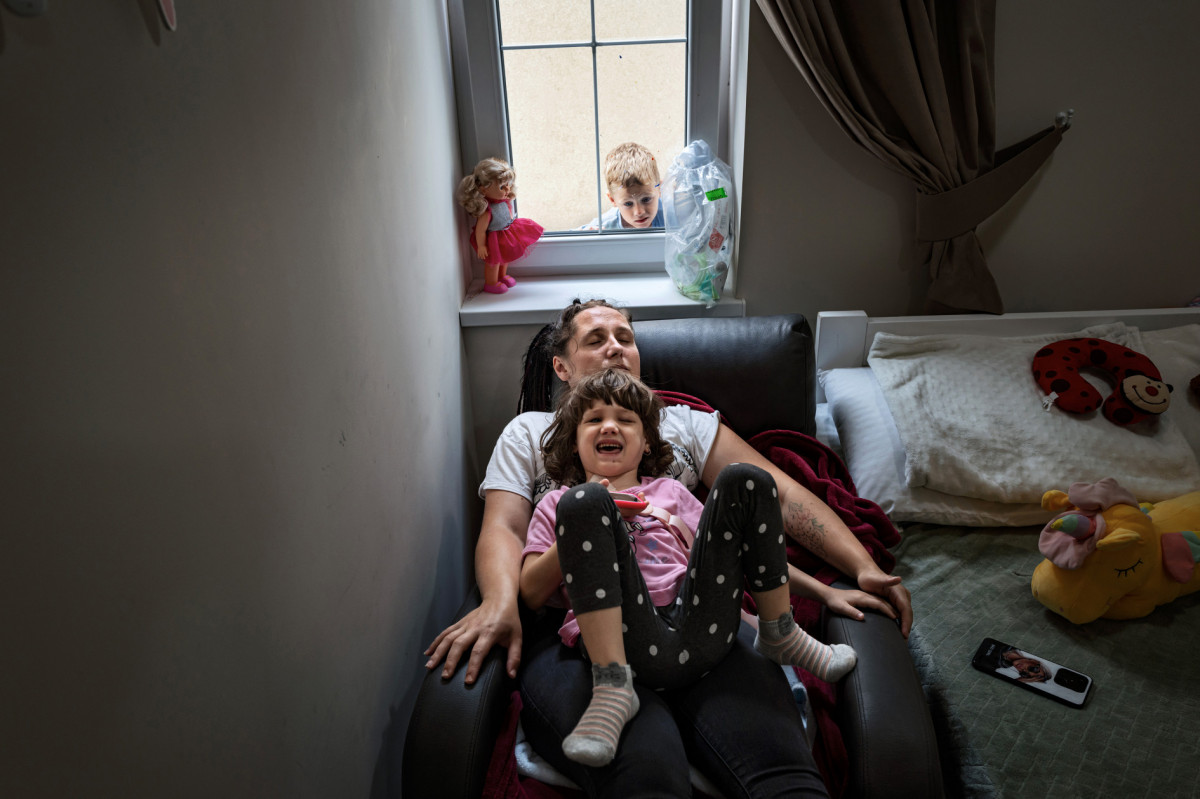
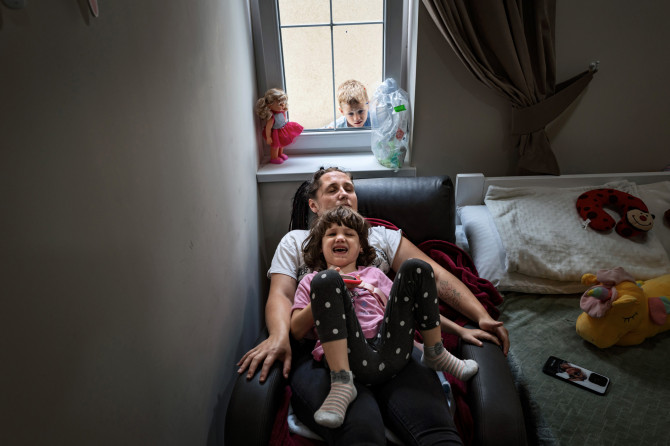
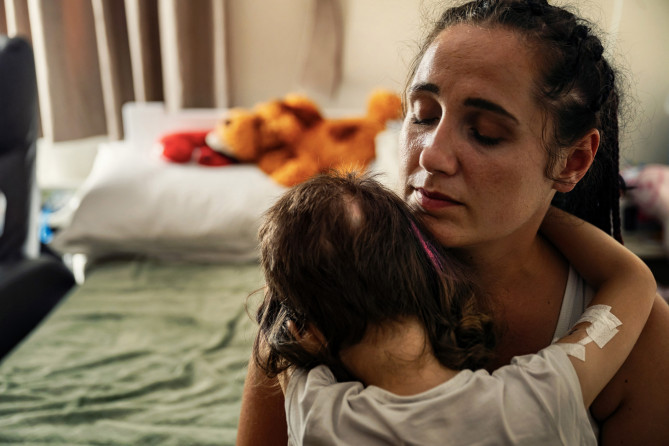
The chief doctor at Misto Dobra worked hard to strike a balance between relieving her pain while not extinguishing “the light in Sonya’s eyes.” But in her final weeks, she received additional painkillers after her regular dose of morphine, and her outings across the grounds of the shelter became less frequent. Here, she sits with her mother, Natalia Kryvolapchuk, awaiting painkillers after a dose of morphine while her brother Oleksandr, 4, peeks through the window.
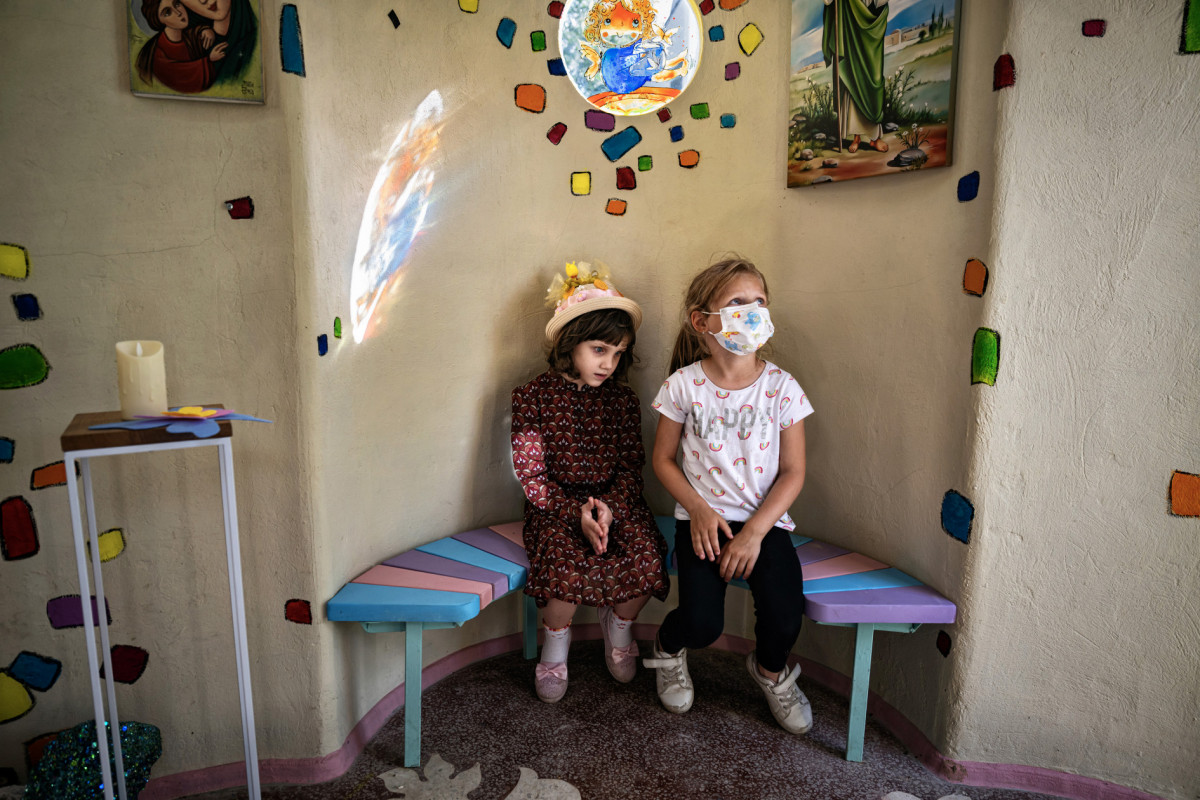
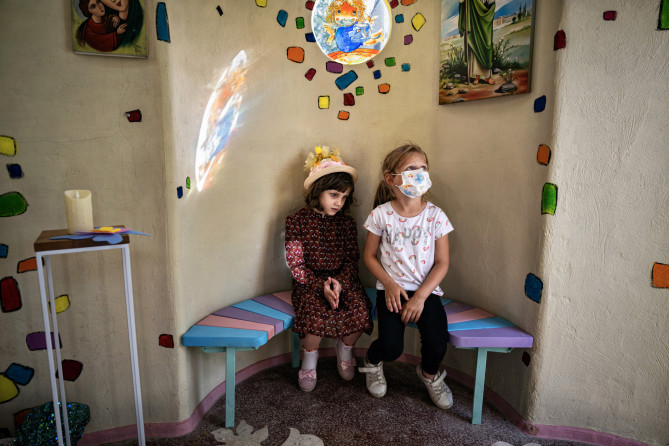
Sonya and her sister Valeria in a small chapel at Misto Dobra. The tentacles of the war in Ukraine affect families far from the front line. Her mother threw a party for her sixth birthday last May in case she didn’t survive until her actual birthday of July 7.

Administering her own medication was one of the few things left that Sonya could control. But as she grew more frail, she lost the ability to do that, too. Eventually, she was receiving blood transfusions every three days.
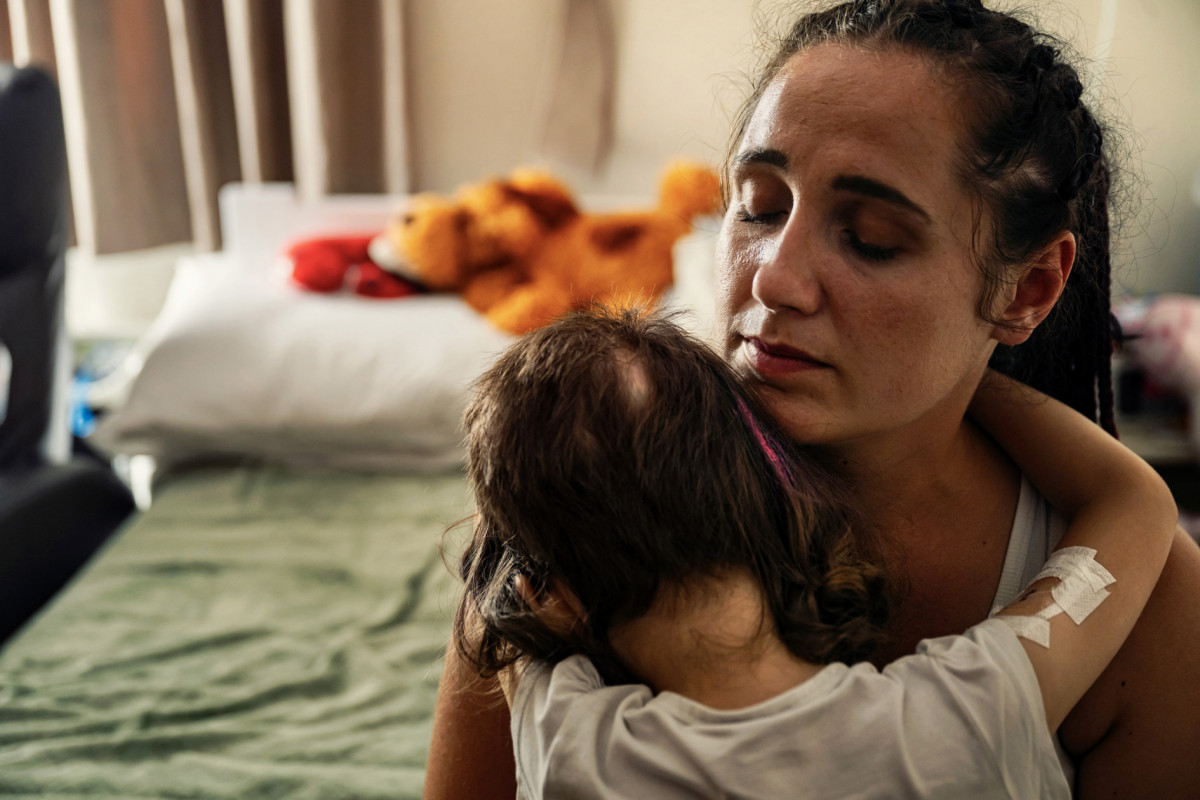
When Sonya’s condition deteriorated, she sensed her mother’s anxiety. When she told Natalia, “Mom, I want to live,” she left her mother speechless.
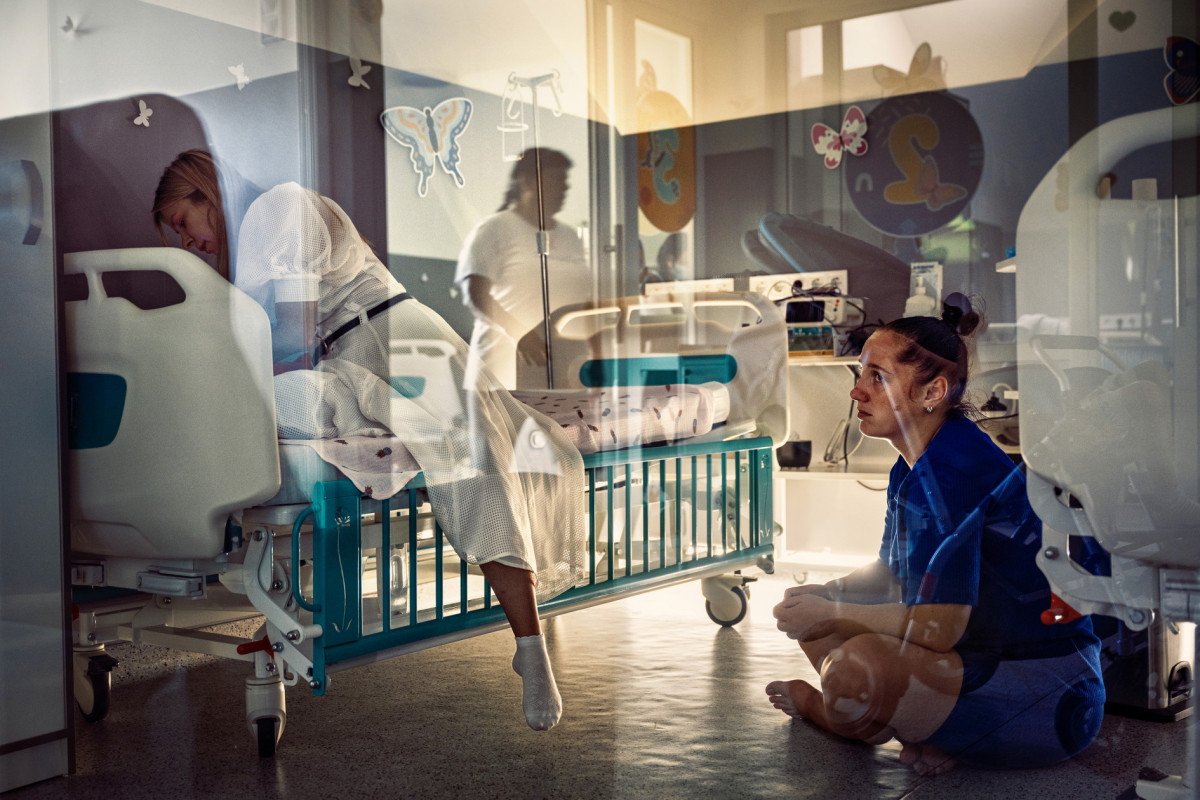
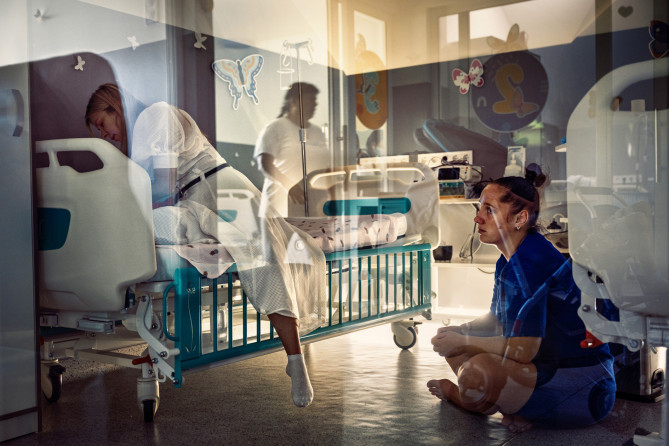
Sonya, weak and heavily medicated, was moved to the hospice section of the shelter in mid-summer. Her hemoglobin levels dropped so low that she had to make frequent trips to the local pediatric hospital for transfusions. She died on Aug. 21, 2024.
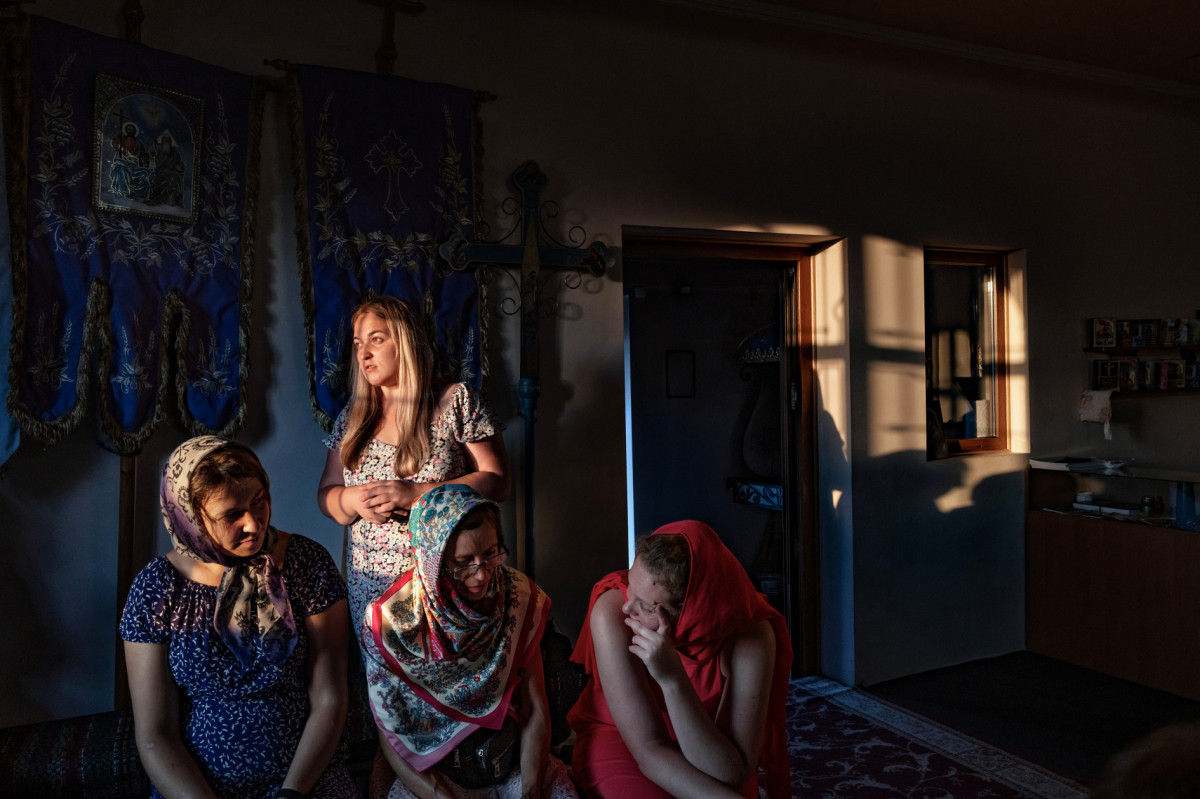
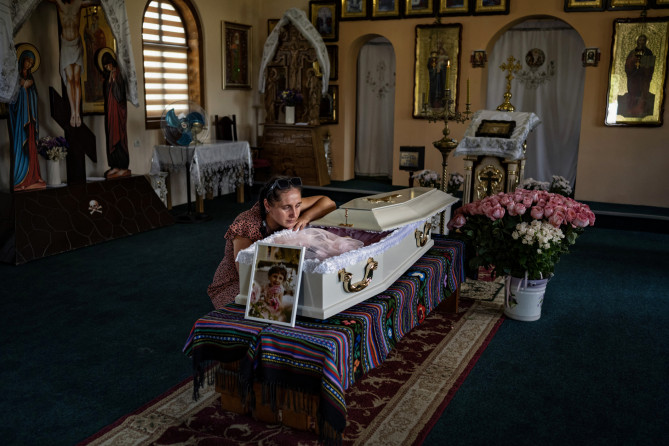
Olha Ivasiuk, the art teacher who befriended Sonya, joined mourners at her funeral.

Wakes and funerals for children affected by the war take place across Ukraine every week. The United Nations estimates that more than 2,400 children have died since the invasion almost three years ago.

Natalia places a cross in Sonya’s coffin. She agreed to let two journalists chronicle Sonya’s final months because she felt it was important to show the war’s effect on Ukraine’s children.

Pink, Sonya’s favorite color, was the color of the day when she was buried in Chernivitsi, in Western Ukraine. She had told her mother, “I want an airplane to fly to the angels” so that she could “bring other angels down to earth.”
Biography
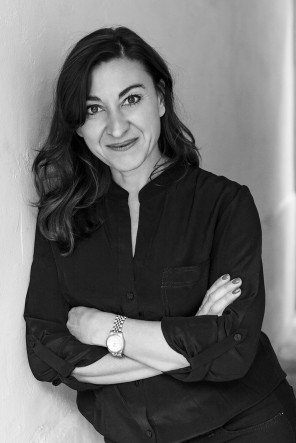
Lynsey Addario is an American photojournalist, who has been covering conflict, humanitarian crises, and women’s issues around the world on assignment for The New York Times and National Geographic for more than two decades. Since Sept. 11, 2001, Addario has covered conflicts in Afghanistan, Iraq, Libya, Lebanon, Darfur, South Sudan, Somalia, the Democratic Republic of Congo, Yemen, Syria, and ongoing war in Ukraine.
In 2015, American Photo Magazine named Addario as one of five most influential photographers of the past 25 years, saying she changed the way we saw the world's conflicts.
Addario is the recipient of numerous awards, including a MacArthur fellowship. She was part of the New York Times team to win a Pulitzer Prize for International Reporting out of Afghanistan and Pakistan (2009) and, again, in 2023, for International Reporting from Ukraine during the current war. For her work in Ukraine, she also won the 2022 George Polk Award, and was a Pulitzer finalist in Breaking News Photography for her tragic image of a mother and her two children killed on the Irpin Bridge in a targeted Russian strike against innocent civilians.
In addition, Addario has won an Overseas Press Club's Olivier Rebbot Award and two Emmy nominations. She holds five Honorary Doctorate Degrees for her professional accomplishments from the University of Wisconsin-Madison, Bates College in Maine, and the University of York in England, Barnard College and the School of Visual Arts.
In 2015, Addario wrote a New York Times bestselling memoir, “It's What I Do,” which chronicles her personal and professional life as a photojournalist coming of age in the post-9/11 world. In 2018, she released her first solo collection of photography, “Of Love and War,” published by Penguin Press.