Four Classic Pulitzer-Winning Poets to Read During National Poetry Month
From W. H. Auden's Brooklyn walkabouts to Elizabeth Bishop's quiet seashores, discover nourishing Pulitzer-winning poetry.
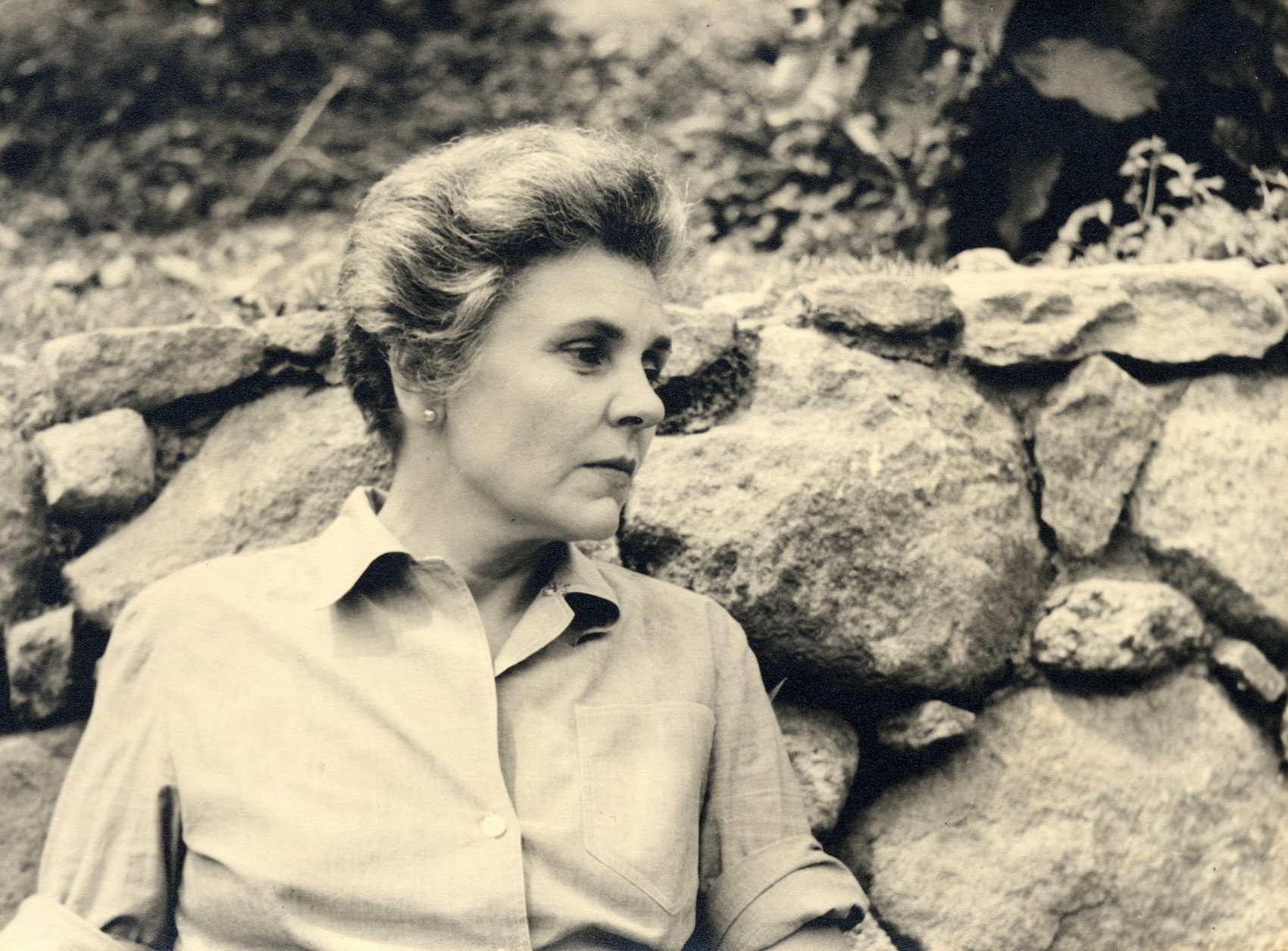
Elizabeth Bishop in 1955. (Houghton Mifflin)
April is National Poetry Month, and while the canon of Pulitzer-winning poets reflects the stylistic diversity of the field, few literary arenas can be as daunting for those who have not dropped by in a long time.
The following four poets are bound in equal measure by timelessness, humor, wanderlust and, above all else, a sense of optimism for the human condition — even in challenging times. Dig in!
1.
"The Age of Anxiety" by W. H. Auden
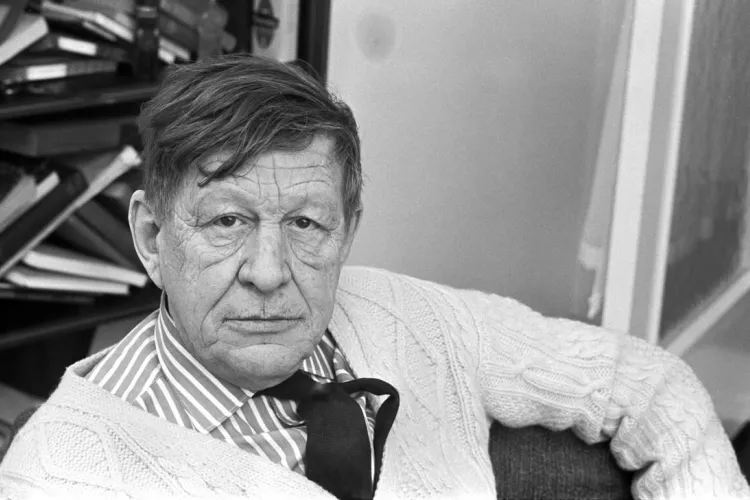
After graduating from Christ College, Oxford with a third-class degree in 1928, W. H. Auden pursued careers as a poet, playwright, schoolteacher and political journalist, often in collaboration with friend and occasional lover Christopher Isherwood. With World War II imminent and homosexuality actively prosecuted in their native country, the writers emigrated to the United States in early 1939. While Isherwood (who had past experience in the film industry) soon settled in Los Angeles, Auden found his American Dream in an altogether different place.
The previously posh enclave of Brooklyn Heights had declined in social importance following the consolidation of Greater New York in 1898. By the Depression era, its spacious Italianate brownstones had been subdivided into apartments and rooming houses for bohemians seeking inexpensive accommodation beyond Greenwich Village. A distinct working class waterfront neighborhood encircling the Heights offered some of New York's most vibrant bars — and a welcoming atmosphere for the city's queer communities.
Auden initially settled on stately Montague Terrace before moving to former Harper's Bazaar editor George Davis' house at 7 Middagh Street on the border with the waterfront district. While living with a dazzling litany of artists — including Carson McCullers, Benjamin Britten, Gypsy Rose Lee and Paul and Jane Bowles — at the so-called "February House" (coined by Anais Nin because of the profusion of February birthdays among the residents), he settled into the most significant relationship of his life with Brooklyn College student Chester Kallman.
In reality, life at February House was far from idyllic: Auden was a taskmaster who assigned chores, budgets and rules for dinnertime conversation, while his relationship with Kallman soon evolved into a close platonic friendship when the younger man decided that he did not want a monogamous relationship with Auden. Ultimately, Auden left Brooklyn in 1941 to teach at the University of Michigan, never to return as a resident.
Yet the borough he left behind is the essence of "The Age of Anxiety," the long poem that earned Auden the Pulitzer in 1948. Written between 1944 and 1946 and fashioned after both the classical eclogue and the Old and Middle English epics that Auden studied under J. R. R. Tolkien, it concerns a group of people (including a readerly shipping clerk, a Royal Canadian Air Force intelligence officer, a department store buyer and a Navy officer) who convene at an unspecified dive of dubious provenance.
"Semi-intoxicated" following their symposium, they "[seek] that state of prehistoric happiness which [...] can only be imagined in terms of a landscape bearing a symbolic resemblance to the human body," passing "all the signs of a facetious culture." After walking by a series of institutional buildings and remarking on the evolution of "slums [...] suburbs [...] tennis courts," they arrive at "a little insurrection of red sandstone" built by "a scholarly old scoundrel," a clear evocation of the voluptuary Queen Anne mansions of Clinton Hill, an arriviste counterpoint to the Heights' patrician structures. The dark night of the soul continues until "the train comes out on the Manhattan Bridge" and they disembark, sharing contact information for future meetings: "The Cycle of Nature/Revolved as usual." In other words, a timeless New York morning.
Although Auden would remain a trenchant and vital poet for decades to come, "The Age of Anxiety" is a special panacea that, contrary to its title, revels in the amiability of fellowship that Auden struggled to maintain off the page. It is the modernist and unabashedly urban analog to Tolkien's Middle-earth, a salutary, escapist space for those who have communed with the city — and those who have just found a new friend in its inclusive grasp.
The previously posh enclave of Brooklyn Heights had declined in social importance following the consolidation of Greater New York in 1898. By the Depression era, its spacious Italianate brownstones had been subdivided into apartments and rooming houses for bohemians seeking inexpensive accommodation beyond Greenwich Village. A distinct working class waterfront neighborhood encircling the Heights offered some of New York's most vibrant bars — and a welcoming atmosphere for the city's queer communities.
Auden initially settled on stately Montague Terrace before moving to former Harper's Bazaar editor George Davis' house at 7 Middagh Street on the border with the waterfront district. While living with a dazzling litany of artists — including Carson McCullers, Benjamin Britten, Gypsy Rose Lee and Paul and Jane Bowles — at the so-called "February House" (coined by Anais Nin because of the profusion of February birthdays among the residents), he settled into the most significant relationship of his life with Brooklyn College student Chester Kallman.
In reality, life at February House was far from idyllic: Auden was a taskmaster who assigned chores, budgets and rules for dinnertime conversation, while his relationship with Kallman soon evolved into a close platonic friendship when the younger man decided that he did not want a monogamous relationship with Auden. Ultimately, Auden left Brooklyn in 1941 to teach at the University of Michigan, never to return as a resident.
Yet the borough he left behind is the essence of "The Age of Anxiety," the long poem that earned Auden the Pulitzer in 1948. Written between 1944 and 1946 and fashioned after both the classical eclogue and the Old and Middle English epics that Auden studied under J. R. R. Tolkien, it concerns a group of people (including a readerly shipping clerk, a Royal Canadian Air Force intelligence officer, a department store buyer and a Navy officer) who convene at an unspecified dive of dubious provenance.
"Semi-intoxicated" following their symposium, they "[seek] that state of prehistoric happiness which [...] can only be imagined in terms of a landscape bearing a symbolic resemblance to the human body," passing "all the signs of a facetious culture." After walking by a series of institutional buildings and remarking on the evolution of "slums [...] suburbs [...] tennis courts," they arrive at "a little insurrection of red sandstone" built by "a scholarly old scoundrel," a clear evocation of the voluptuary Queen Anne mansions of Clinton Hill, an arriviste counterpoint to the Heights' patrician structures. The dark night of the soul continues until "the train comes out on the Manhattan Bridge" and they disembark, sharing contact information for future meetings: "The Cycle of Nature/Revolved as usual." In other words, a timeless New York morning.
Although Auden would remain a trenchant and vital poet for decades to come, "The Age of Anxiety" is a special panacea that, contrary to its title, revels in the amiability of fellowship that Auden struggled to maintain off the page. It is the modernist and unabashedly urban analog to Tolkien's Middle-earth, a salutary, escapist space for those who have communed with the city — and those who have just found a new friend in its inclusive grasp.
2.
"The Waking" by Theodore Roethke
When he succumbed to a heart attack at the age of 55 in the summer of 1963, 1954 Poetry winner Theodore Roethke was arguably one of the nation's most prominent public intellectuals, as evidenced by a loving encomium from longtime friend (and future Pulitzer winner) Stanley Kunitz in the New York Review of Books. But while few would contend that Roethke has been decanonized — "The Waking," which lent its title to his Pulitzer-winning collection, remains as ubiquitous as "The Red Wheelbarrow" in middle and secondary school textbooks, while his collected poems are in print electronically — the wellspring of poetic movements that took flight in the decade following his death (from the Deep Image "stones and bones" poetry of onetime student James Wright to the playfulness of the New York School) attenuated the reach of a poet who had been likened to the early modernists in cultural importance.
Reflecting a scholarly disposition, Roethke's poetics were remarkably eclectic for the early postwar era, encompassing the influence of taboo forces (English Romanticism, Whitman) while repudiating the era's disdain for overtly biographical material. Much of Roethke's work is rooted in his tumultuous relationship with his father, a German immigrant and proprietor of a 25-acre greenhouse; likewise, the effects of his bipolar disorder and alcohol abuse linger in the background.
Yet even the most unpleasant of the greenhouse poems are undergirded by stealthy optimism; in the oft-anthologized "Root Cellar," "roots ripe as old bait" defy convention by refusing to "give up life/Even the dirt kept breathing a small breath." In "Four for Sir John Davies," an integral component of his Pulitzer-winning work, Roethke draws upon the specter of the Elizabethan writer and legal theorist to extol the endurance of the poetic tradition as an immutable and shared heritage: "I take this cadence from a man named Yeats/I take it, and I give it back again/For other tunes and wanton beats/Have tossed my heart and fiddled with my brain." For Roethke, "the world outleaps the world," and this spirited verve continues to power his work nearly 60 years after his premature death. Beneath the turmoil, he teaches, there is always hope.
Reflecting a scholarly disposition, Roethke's poetics were remarkably eclectic for the early postwar era, encompassing the influence of taboo forces (English Romanticism, Whitman) while repudiating the era's disdain for overtly biographical material. Much of Roethke's work is rooted in his tumultuous relationship with his father, a German immigrant and proprietor of a 25-acre greenhouse; likewise, the effects of his bipolar disorder and alcohol abuse linger in the background.
Yet even the most unpleasant of the greenhouse poems are undergirded by stealthy optimism; in the oft-anthologized "Root Cellar," "roots ripe as old bait" defy convention by refusing to "give up life/Even the dirt kept breathing a small breath." In "Four for Sir John Davies," an integral component of his Pulitzer-winning work, Roethke draws upon the specter of the Elizabethan writer and legal theorist to extol the endurance of the poetic tradition as an immutable and shared heritage: "I take this cadence from a man named Yeats/I take it, and I give it back again/For other tunes and wanton beats/Have tossed my heart and fiddled with my brain." For Roethke, "the world outleaps the world," and this spirited verve continues to power his work nearly 60 years after his premature death. Beneath the turmoil, he teaches, there is always hope.
3.
"North & South/A Cold Spring" by Elizabeth Bishop
Largely supported by an annuity from her father, a Massachusetts real estate developer, 1956 winner Elizabeth Bishop was able to publish sparingly during her life, averaging one volume per decade between 1946 and 1976. The long interregnums enabled her to focus on a variety of pursuits, including close correspondences with fellow Pulitzer winners Marianne Moore and Robert Lowell, travel (when she received her Pulitzer, Bishop was in the midst of a long expatriation near Rio de Janeiro with her partner, architect Lota de Macedo Soares), and friendships with other literary luminaries, including Pauline Pfeiffer Hemingway and socialite Louise Crane. Bishop also pursued painting and short story writing.
Although Bishop did not shy away from biographical material — written late in life, the oft-anthologized "In the Waiting Room" evokes her chronic childhood asthma, while many of the poems in "Questions of Travel" (1965) address her time in Brazil — she remained devoted to a measured poetics that eschewed both the confessionalism of Lowell and the vanguard abstruseness of Moore. Like 1945 winner Karl Shapiro, Bishop was appointed consultant in poetry to the Library of Congress (the antecedent of today's poet laureate) before the age of 40.
Like William Carlos Williams, Bishop frequently cast the natural world alongside urbanity. In "Seascape," from her first volume (which received the Pulitzer in a reissued omnibus with her second book, "A Cold Spring"), she contemplates "the whole region, from the highest heron/down to the weightless mangrove island," with an exegesis on the roots leading her to surmise that "heaven is not like flying or swimming/but has something to do with blackness/and a strong glare." This need to live in the moment manifests in "Letter to N.Y.," addressed to Crane: "taking cabs in the middle of the night/driving as to save your soul/where the road goes round and round the park/and the meter glares like a mortal owl." But at her most engrossing, Bishop weaves liminal vistas with a tinge of surrealism, as reflected in "Summer's Dream": "To the sagging wharf/few ships could come/The population numbered/two giants, an idiot, a dwarf."
"Oh, I didn’t even have ambitions," Bishop recalled in 1977 of her early involvement in poetry and initial meeting with Moore. "As I said, I must have been half-asleep." Indeed, her poems seem as if they have always been with us — and a comfort in the darkest of times.
Although Bishop did not shy away from biographical material — written late in life, the oft-anthologized "In the Waiting Room" evokes her chronic childhood asthma, while many of the poems in "Questions of Travel" (1965) address her time in Brazil — she remained devoted to a measured poetics that eschewed both the confessionalism of Lowell and the vanguard abstruseness of Moore. Like 1945 winner Karl Shapiro, Bishop was appointed consultant in poetry to the Library of Congress (the antecedent of today's poet laureate) before the age of 40.
Like William Carlos Williams, Bishop frequently cast the natural world alongside urbanity. In "Seascape," from her first volume (which received the Pulitzer in a reissued omnibus with her second book, "A Cold Spring"), she contemplates "the whole region, from the highest heron/down to the weightless mangrove island," with an exegesis on the roots leading her to surmise that "heaven is not like flying or swimming/but has something to do with blackness/and a strong glare." This need to live in the moment manifests in "Letter to N.Y.," addressed to Crane: "taking cabs in the middle of the night/driving as to save your soul/where the road goes round and round the park/and the meter glares like a mortal owl." But at her most engrossing, Bishop weaves liminal vistas with a tinge of surrealism, as reflected in "Summer's Dream": "To the sagging wharf/few ships could come/The population numbered/two giants, an idiot, a dwarf."
"Oh, I didn’t even have ambitions," Bishop recalled in 1977 of her early involvement in poetry and initial meeting with Moore. "As I said, I must have been half-asleep." Indeed, her poems seem as if they have always been with us — and a comfort in the darkest of times.
4.
"Selected Poems" by James Tate
In an era where the big tent of American verse ranged from seminal postmodernist Charles Olson's epic Maximus Poems to the feminist confessionalism of 1973 Poetry winner Maxine Kumin, from the third world Marxism of Amiri Baraka to the Frostian rectitude of two-time Pulitzer winner Richard Wilbur, 1992 winner James Tate managed to cut through a balkanized field with a singular and enduring voice.
An indifferent student with few aspirations beyond securing a blue-collar job, Tate was shamed by his friends into enrolling at a branch campus of Kansas State College. While there, Pulitzer winners Wallace Stevens and William Carlos Williams precipitated an intellectual awakening in which he could use the medium to craft a "private place [...] where I could let my daydreams—and my pain—come in completely disguised." As he prepared to graduate, legend holds that he drove to the Iowa Writers' Workshop to show his work to poetry director and 1980 winner Donald Justice, who admitted him to the prestigious creative writing program on the spot. Within three years, he would be the youngest member of the Yale Series of Younger Poets.
Tate's Pulitzer (for a selected volume spanning his first 20 years of work) marked the beginning of a professional recrudescence that came to include a National Book Award and routine appearances in The Best American Poetry until his death in 2015. After publishing six volumes in the first decade and a half of his career, Tate only published two books in the 1980s, a period that, while far from fallow in substance, coincided with a backlash against his style after it was widely emulated.
Although Tate's earliest poems (including "Uncle" and "The Lost Pilot," an acclaimed evocation of his father, a World War II casualty) offer the roadmap for the next 50 years, "The Oblivion Ha-Ha" (1970) is the early highlight of his career, a parvenu academician's take on the satirical coastal ennui of John Waters and The Tubes. In "Poem," set in the pre-Manson Hollywood Hills, a woman is "the dream within the dream within" — shades of a tacky overdub on a live album — while "Consumed" juxtaposes the better angels of the 1960s ("your faith in justice, your/hope for a better day, the rightness/of fate, the dreams, the lies/the taunts”) against the perceived excesses of the occult revival: "A dark star passes through/you on your way home from/the grocery: never again are you/the same.”
By the following decade, Tate had become interested in what student and friend Matthew Zapruder retrospectively characterized as "stripping away any of the accepted signifiers of free-verse poetry — things like line breaks, imagery, metaphor, wild comparisons and leaps, conceptual rhyme, virtuosic sonic play, and so on — to see what was left. He was looking for the pure poetry after all the things that usually tell us we are reading poetry are gone." This approach is first evident in earnest in 1986's "Neighbors," a kind of incantatory monologue set in a very different milieu than the freewheeling period:
“In their most private fantasies, how would each of them change their lives? And what do they think of us, as neighbors, as people? They are certainly cordial to us, painfully polite when we chance-encounter one another at the roadside mailboxes — but then, like opposite magnets, we lunge backward, back into our own deep root systems, darkness and lust strangling any living thing to quench our thirst and nourish our helplessly solitary lives. And we love our neighborhood for giving us this precious opportunity, and we love our dogs, our children, our husbands and wives. It's just all so damned difficult!”
In the unspoken cues of daily life Tate found a rich lode of humor and percipience. Anyone who enjoys comedy will find resonance in these timeless rhythms, making him an ideal (and, barring the occasional generation gap shock value, eminently diverting) introduction to the world of contemporary poetry.
An indifferent student with few aspirations beyond securing a blue-collar job, Tate was shamed by his friends into enrolling at a branch campus of Kansas State College. While there, Pulitzer winners Wallace Stevens and William Carlos Williams precipitated an intellectual awakening in which he could use the medium to craft a "private place [...] where I could let my daydreams—and my pain—come in completely disguised." As he prepared to graduate, legend holds that he drove to the Iowa Writers' Workshop to show his work to poetry director and 1980 winner Donald Justice, who admitted him to the prestigious creative writing program on the spot. Within three years, he would be the youngest member of the Yale Series of Younger Poets.
Tate's Pulitzer (for a selected volume spanning his first 20 years of work) marked the beginning of a professional recrudescence that came to include a National Book Award and routine appearances in The Best American Poetry until his death in 2015. After publishing six volumes in the first decade and a half of his career, Tate only published two books in the 1980s, a period that, while far from fallow in substance, coincided with a backlash against his style after it was widely emulated.
Although Tate's earliest poems (including "Uncle" and "The Lost Pilot," an acclaimed evocation of his father, a World War II casualty) offer the roadmap for the next 50 years, "The Oblivion Ha-Ha" (1970) is the early highlight of his career, a parvenu academician's take on the satirical coastal ennui of John Waters and The Tubes. In "Poem," set in the pre-Manson Hollywood Hills, a woman is "the dream within the dream within" — shades of a tacky overdub on a live album — while "Consumed" juxtaposes the better angels of the 1960s ("your faith in justice, your/hope for a better day, the rightness/of fate, the dreams, the lies/the taunts”) against the perceived excesses of the occult revival: "A dark star passes through/you on your way home from/the grocery: never again are you/the same.”
By the following decade, Tate had become interested in what student and friend Matthew Zapruder retrospectively characterized as "stripping away any of the accepted signifiers of free-verse poetry — things like line breaks, imagery, metaphor, wild comparisons and leaps, conceptual rhyme, virtuosic sonic play, and so on — to see what was left. He was looking for the pure poetry after all the things that usually tell us we are reading poetry are gone." This approach is first evident in earnest in 1986's "Neighbors," a kind of incantatory monologue set in a very different milieu than the freewheeling period:
“In their most private fantasies, how would each of them change their lives? And what do they think of us, as neighbors, as people? They are certainly cordial to us, painfully polite when we chance-encounter one another at the roadside mailboxes — but then, like opposite magnets, we lunge backward, back into our own deep root systems, darkness and lust strangling any living thing to quench our thirst and nourish our helplessly solitary lives. And we love our neighborhood for giving us this precious opportunity, and we love our dogs, our children, our husbands and wives. It's just all so damned difficult!”
In the unspoken cues of daily life Tate found a rich lode of humor and percipience. Anyone who enjoys comedy will find resonance in these timeless rhythms, making him an ideal (and, barring the occasional generation gap shock value, eminently diverting) introduction to the world of contemporary poetry.