Fiction, History and Biography Winners to Read This Fourth of July
From Ray Bradbury's summer idylls to Thomas Jefferson's slaveholding legacy, explore the complexity and contradictions of America's birthday with Pulitzer-winning work on this summer reading list.
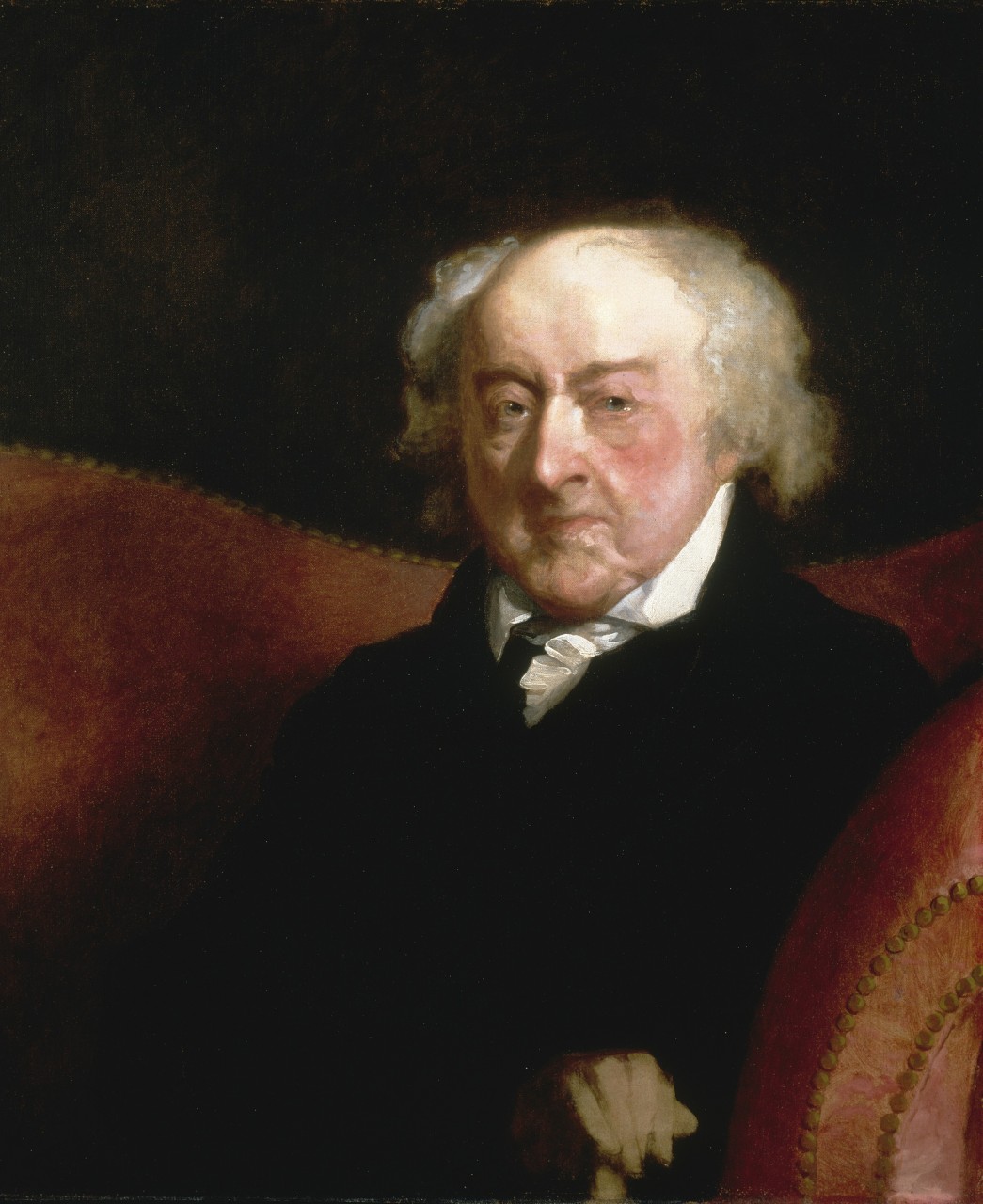
A portrait of John Adams by Gilbert Stuart. (File)
Beginning with "The American Revolution — A Constitutional Interpretation" by Charles Howard McIlwain in 1924, the War of Independence and the annual commemoration of the founding of the United States have inspired a wide range of work from Pulitzer winners.
Ranging from the laudatory to the provocative, they demonstrate that the semiotics of the day are constantly in flux, contingent on factors that hardly could have been envisaged by the Second Continental Congress in July 1776.
The following five works offer vastly different interpretations of the legacy of that July 4. But they share a commitment to life, liberty and the pursuit of happiness that continues to bind our nation together amid political and geographic differences. We encourage you to share your favorite Pulitzer-winning book related to Independence Day with friends and family this week.
1.
"John Adams" by David McCullough
Rivaled perhaps only by Benjamin Franklin and Thomas Jefferson in intellectual breadth among the Founding Fathers (his "Thoughts on Government" served as a blueprint for the Constitution, while his contributions to American jurisprudence include the presumption of innocence and the right to counsel), John Adams's reputation was diminished by his bellicose term as second president of the United States, exemplified by the authoritarian Alien and Sedition Acts and tensions that culminated in the "Quasi-War" with France. A decade after chronicling the similarly divisive life of Harry Truman, popular historian David McCullough earned his second Pulitzer for this pathbreaking biography, which contextualized the Braintree attorney's staggering accomplishments against the backdrop of his chaotic personal life. While Washington, Jefferson and Franklin continue to permeate the popular imagination, "it was John Adams, more than anyone, who had made [American independence] happen," McCullough writes.
2.
"The Radicalism of the American Revolution" by Gordon S. Wood
The Alva O. Way University Professor at Brown, Wood's monograph offers a general overview of the societal changes wrought by the Revolution. Despite eschewing the heinous effects of the trans-Atlantic slave trade and the liberatory imperatives of Enlightenment fraternal organizations on the epoch, Wood demonstrates that the war offered a radical egalitarianism antithetical to the circumscribed hierarchies of colonial life. In the dawn of the new nation, Wood writes, "Americans came to believe that no one in a basic down-to-earth and day-in-and-day-out manner was really better than anyone else." Yet the ascendence of small businesses (enabled by contract law, itself a byproduct of the new egalitarianism) and spirited political differences under the laissez-faire governance of the Articles of Confederation would soon give way to the semi-patriciate constitutional government and a diminished egalitarianism rooted in the putative commonalities of the middle class. The past decade has shown that Wood's dialectical tensions remain embedded at the very core of the American experience — and are intrinsic to understanding it.
3.
"Take Me Home" by Ray Bradbury
Bradbury emerged from unique environs — a Chicagoland boarding house, the streets of prewar Los Angeles and the subculture of early science fiction fandom — to become the conscience of the American soul, blending the subconscious terrors of H. P. Lovecraft with the quotidian beauty of Edgar Lee Masters. While the Midwestern carnivalesque of "Something Wicked This Way Comes" and the allegorical "Fahrenheit 451" will captivate readers for generations to come, Bradbury's memoiristic vignettes of his Illinois childhood are imbued with a mordant, spectral quality. Days before his death in 2012, Bradbury returned to this milieu in "Take Me Home," a piece for The New Yorker. No longer hiding behind the fictive imprimatur of "Dandelion Wine"'s Douglas Spaulding, he revisits familiar terrain: his family's boarding house, the discovery of Edgar Rice Burroughs. But his account of an Independence Day gathering is particularly resonant: "At the end of the Fourth of July, after the uncles had their cigars and philosophical discussions, and the aunts, nephews, and cousins had their ice-cream cones or lemonade, and we’d exhausted all the fireworks, it was the special time, the sad time, the time of beauty. It was the time of the fire balloons. Even at that age, I was beginning to perceive the endings of things, like this lovely paper light."
4.
"The Hemingses of Monticello: An American Family" by Annette Gordon-Reed
The legacy of the American Revolution is deeply intertwined with the legacy of chattel slavery of African-Americans that persisted for nine decades following the Declaration of Independence. Drawing upon years of research, Harvard historian Annette Gordon-Reed's "The Hemingses of Monticello" was key in establishing the scholarly consensus that Thomas Jefferson — who drafted much of that foundational document before serving as the nation's third president — raped and fathered five children with a slave, Sally Hemings, following the death of his wife in 1782. Notably, their children were the only slaves freed by Jefferson during his lifetime; most passed in the era's white society because of their maternal and paternal European ancestry. "American slavery at its beginnings — obscure, distant, and tragic — is probably for most people a less attractive point of focus than the story of the discovery and political founding of the American nation," Gordon-Reed wrote. "If you like your history heroic — and many people seem to — the story of slavery in the early American period is simply not the place to go looking for heroes, at least not among the people most commonly written about." In an era where patriotism is often conflated with hagiography, Gordon-Reed's book is a vital reminder of fellow Pulitzer winner William Faulkner's enduring maxim: "The past is never dead. It's not even past."
5.
"Independence Day" by Richard Ford
Along with two-time Pulitzer finalist Raymond Carver, Richard Ford was a key figure in the emergence of dirty realism, a literary movement rooted in nascent academic creative writing programs that repudiated the "high postmodernism" of authors like Thomas Pynchon and finalist E. L. Doctorow in favor of straightforward narratives about the problems of working- and middle-class Americans. The commercial failure of his first novel forced him to seek refuge as a sportswriter, and it was in beleaguered sports journalist Frank Bascombe that Ford crafted his most resonant character. In contrast to Carver's universe, where the threats of downward mobility and substance abuse are omnipresent, Bascombe is a paragon of bourgeois rectitude. In his Pulitzer-winning novel, the second in a series of four, he becomes a realtor after leaving journalism, owns properties in suburban New Jersey and can afford to take his son, Paul, on a holiday trip to the Baseball and Basketball Halls of Fame. But the weekend is also suffused with tensions from his relationship with his ex-wife, Ann, and the pressure to find a home for a demanding client. Linking it all together is Bascombe's ruminative neuroses, characterized by parenthetical asides and self-deprecation. "My greatest human flaw and strength, not surprisingly, is that I can always imagine anything — a marriage, a conversation, a government — as being different from how it is, a trait that might make one a top-notch trial lawyer or novelist or realtor," he says, "but that also seems to produce a somewhat less than reliable and morally feasible human being." For Ford, the respite of a suburban holiday weekend suggests nothing less than the finitude of America itself.