Following Monday's announcement of the 104th Pulitzer Prizes in the midst of the COVID-19 pandemic, news organizations and institutions covered winners' and finalists' paths. Read a selection of those stories and posts below.
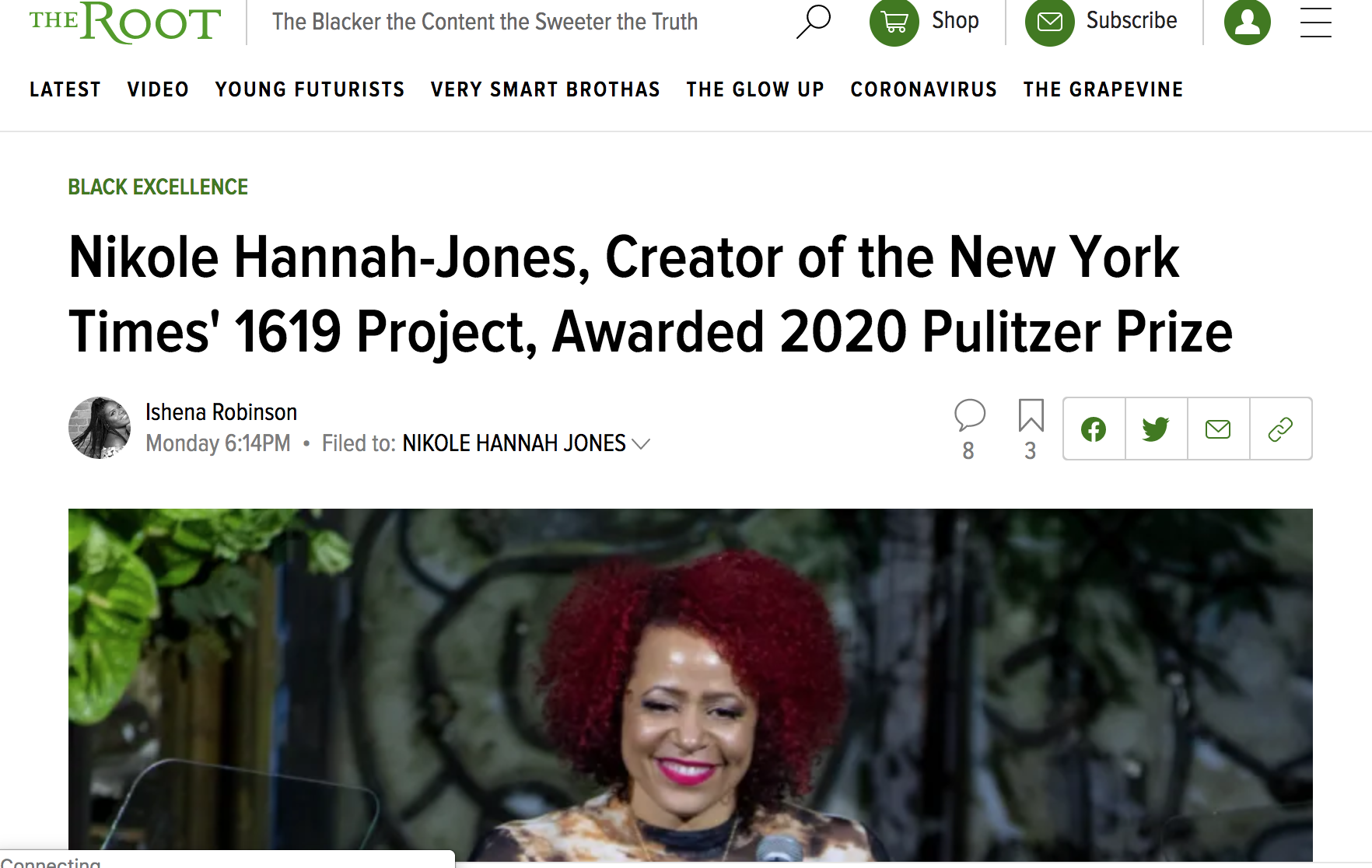
Nikole Hannah-Jones' Commentary Prize, awarded "for a sweeping, provocative and personal essay for the ground-breaking 1619 Project, which seeks to place the enslavement of Africans at the center of America’s story, prompting public conversation about the nation’s founding and evolution.,"* was recognized by several organizations, including Essence magazine, The Root and the Waterville-Cedar Falls (Ia.) Courier. 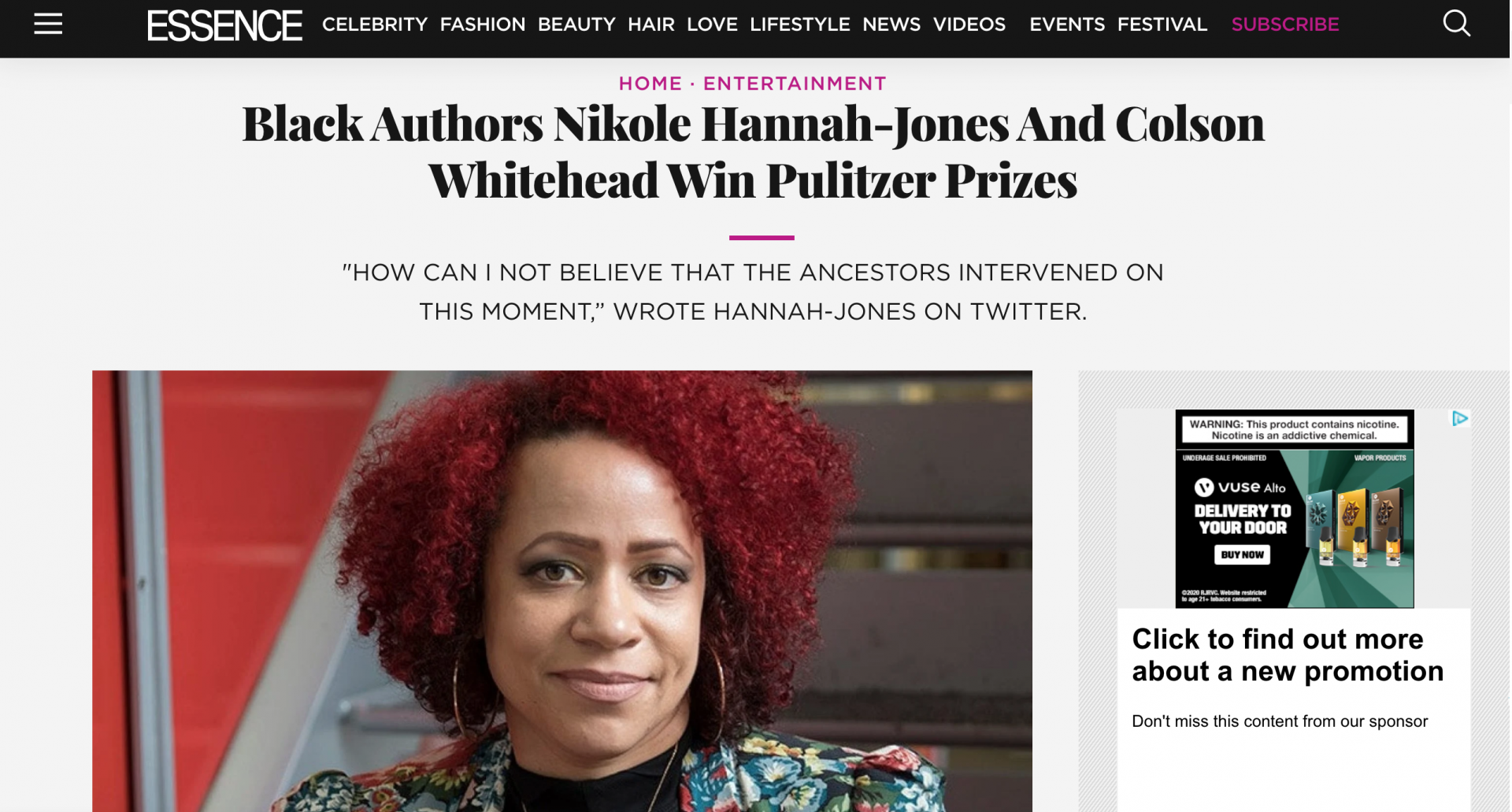
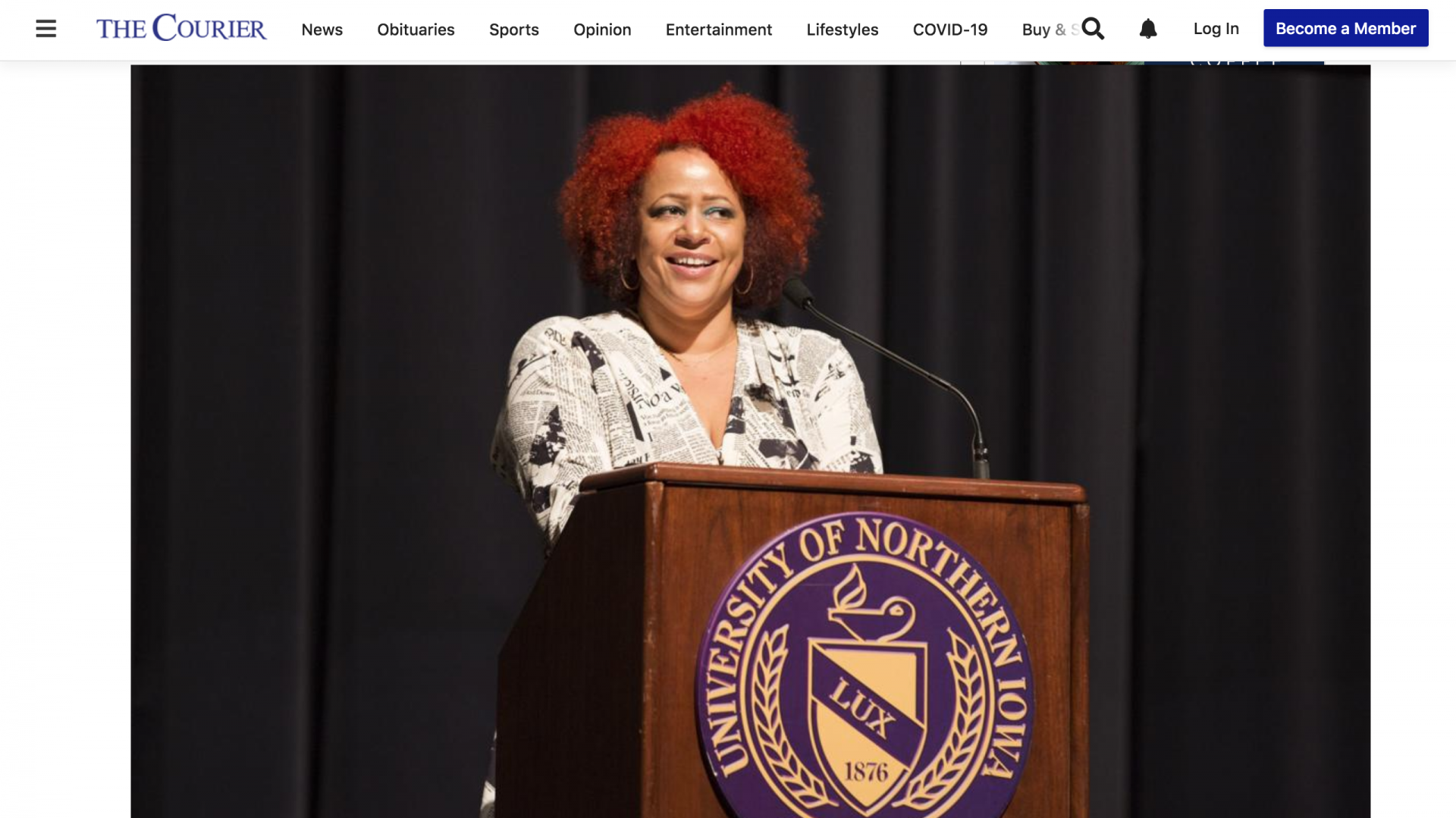
According to reporter Nancy Newhoff of the latter publication:
Hannah-Jones grew up in Waterloo and graduated from Waterloo West High, and talks about her early days here in a podcast for the 1619 Project. She is now an investigative journalist with the New York Times and the creator of the paper’s deep dive into the implications of the history of slavery — The 1619 Project.

The inaugural Audio Reporting Prize was awarded to the staff of This American Life, Molly O'Toole of the Los Angeles Times and Vice News freelance reporter Emily Green "for revelatory, intimate journalism that illuminates the personal impact of the Trump Administration’s 'Remain in Mexico' policy." Vice News' Michael Learmonth explored the courageous reporting of Green, whose subjects, a Honduran asylum seeker and his son, "were extorted by a Mexican border official and then thrown into a van by a cartel, which photographed them, threatened to remove the child’s kidneys, and held them for an $18,000 ransom." The family was released after a relative paid the ransom.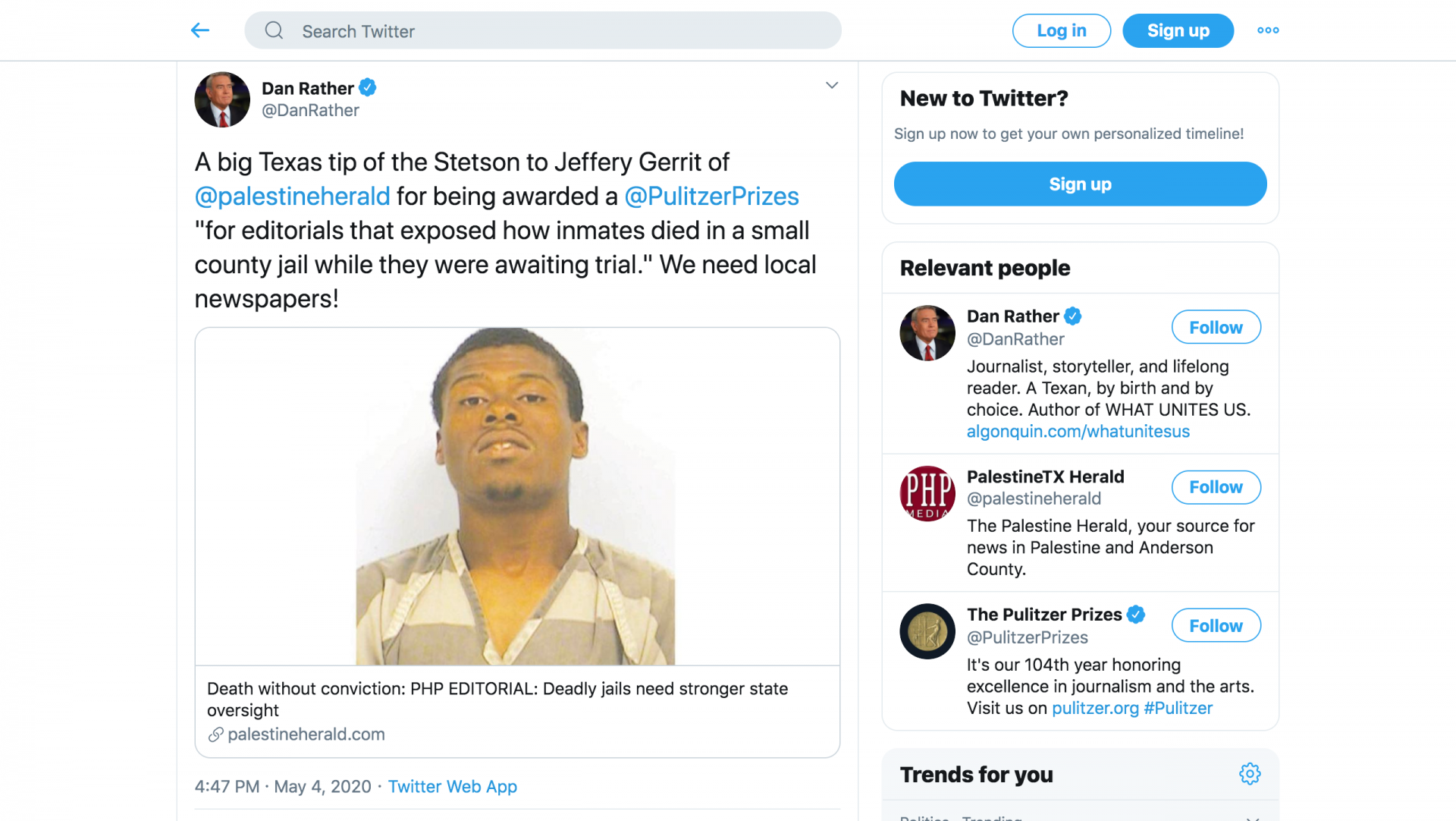
A former rock drummer and Detroit Free Press columnist who defied Fitzgerald's maxim again to become editor of the Palestine Herald-Press in the exurbs south of Dallas, Jeffrey Gerritt received the Editorial Writing Prize for work "that exposed how pre-trial inmates died horrific deaths in a small Texas county jail — reflecting a rising trend across the state — and courageously [taking] on the local sheriff and judicial establishment, which tried to cover up these needless tragedies."
Jericho Brown was awarded the Poetry Prize for "The Tradition," his third book, "a collection of masterful lyrics that combine delicacy with historical urgency in their loving evocation of bodies vulnerable to hostility and violence." He and Drama winner Michael R. Jackson were profiled by by LGBT news site Towleroad.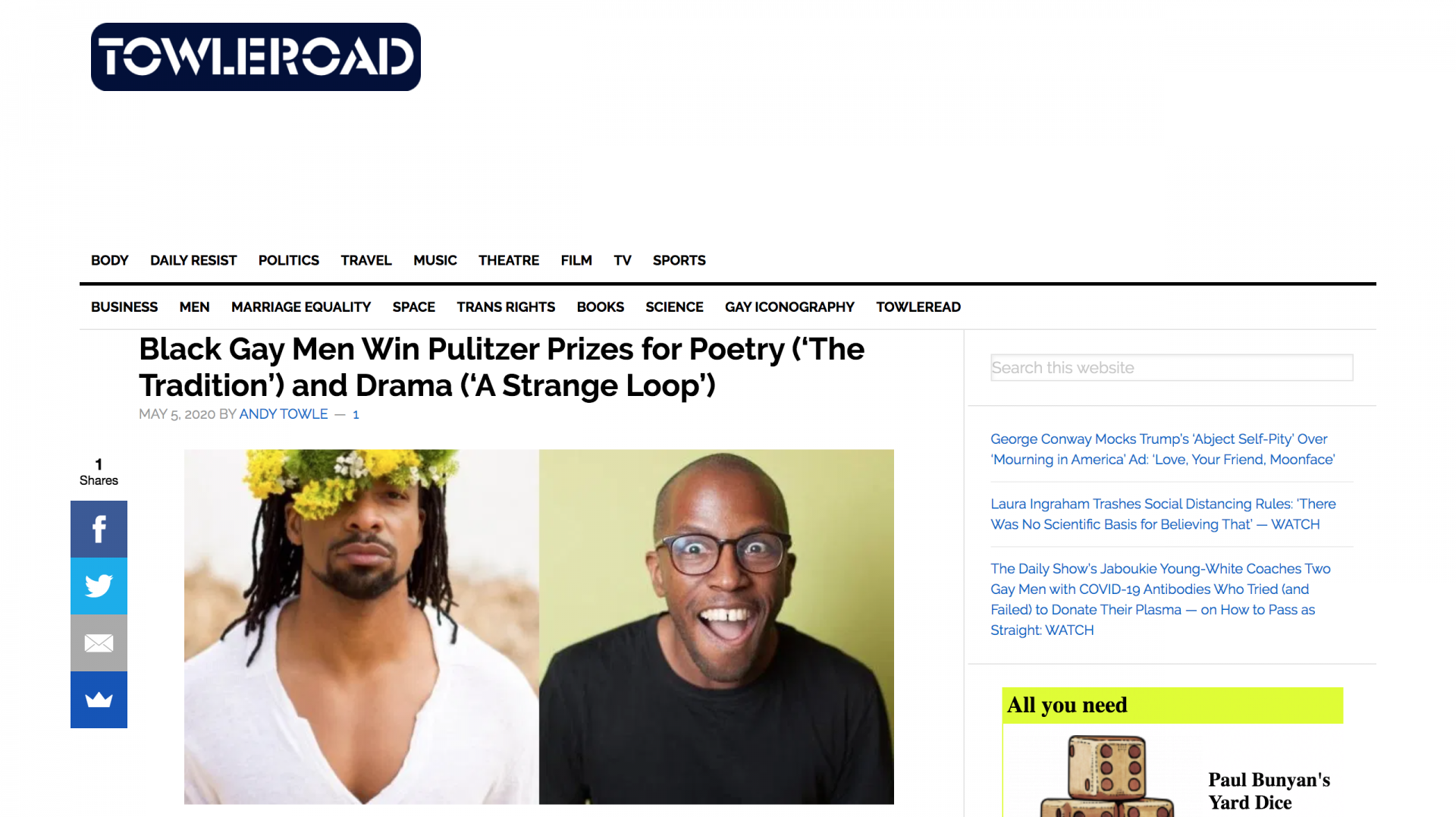
Featuring music and lyrics by Jackson, "A Strange Loop" was cited by the Board as "a metafictional musical that tracks the creative process of an artist transforming issues of identity, race and sexuality that once pushed him to the margins of the cultural mainstream into a meditation on universal human fears and insecurities."
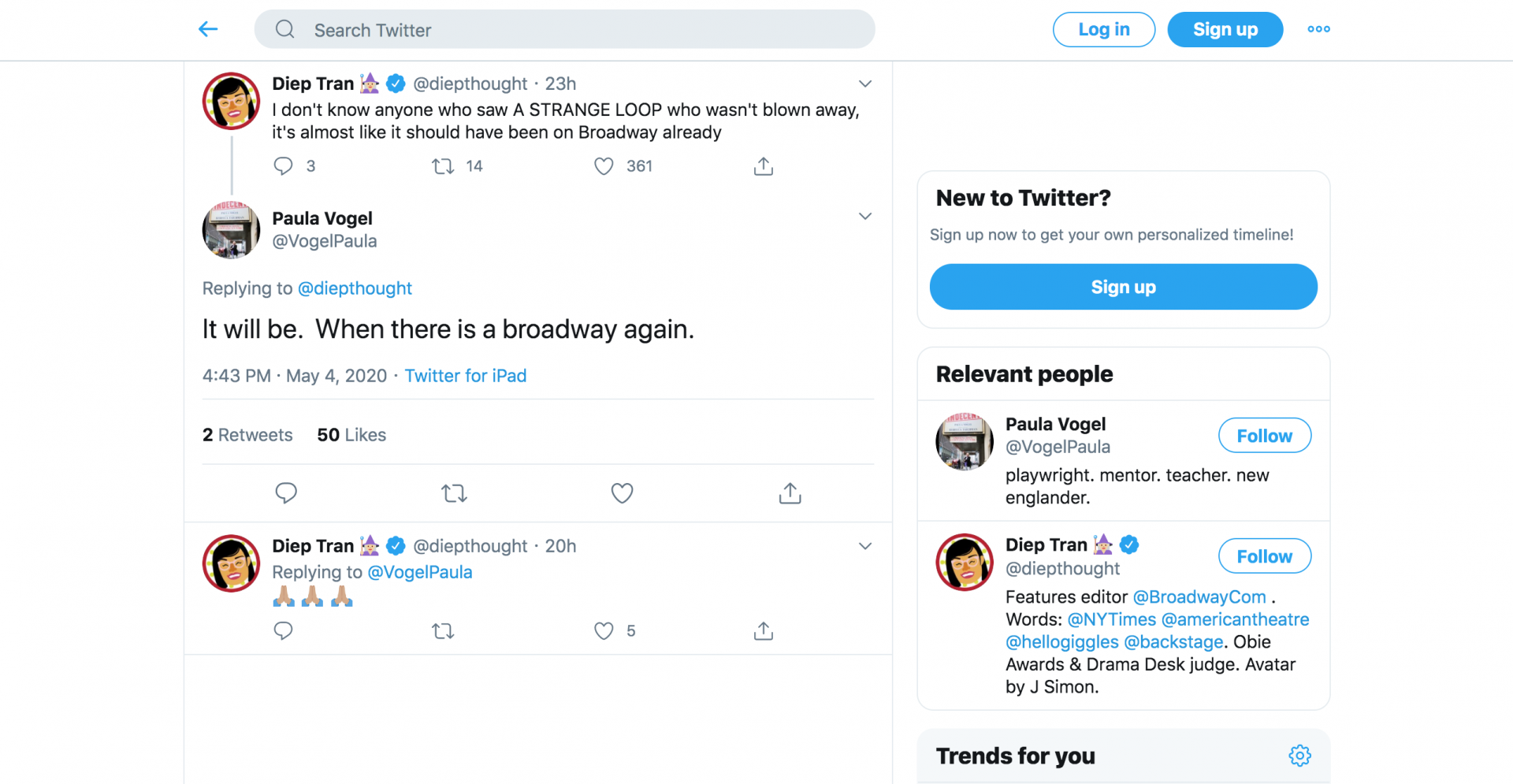
Jackson's work was staged at Playwrights Horizons, an intimate off-Broadway venue. Shortly after the announcement, 1998 Drama winner Paula Vogel — who did not make her Broadway debut until 2017 — speculated that Jackson would not have to wait as long.
Jackson also was recognized by venerable indie rock/lo-fi singer-songwriter Liz Phair, a seminal influence on his work. Her song "Strange Loop" (along with the work of cognitive scientist and 1980 General Nonfiction winner Douglas Hofstadter) inspired the play's name.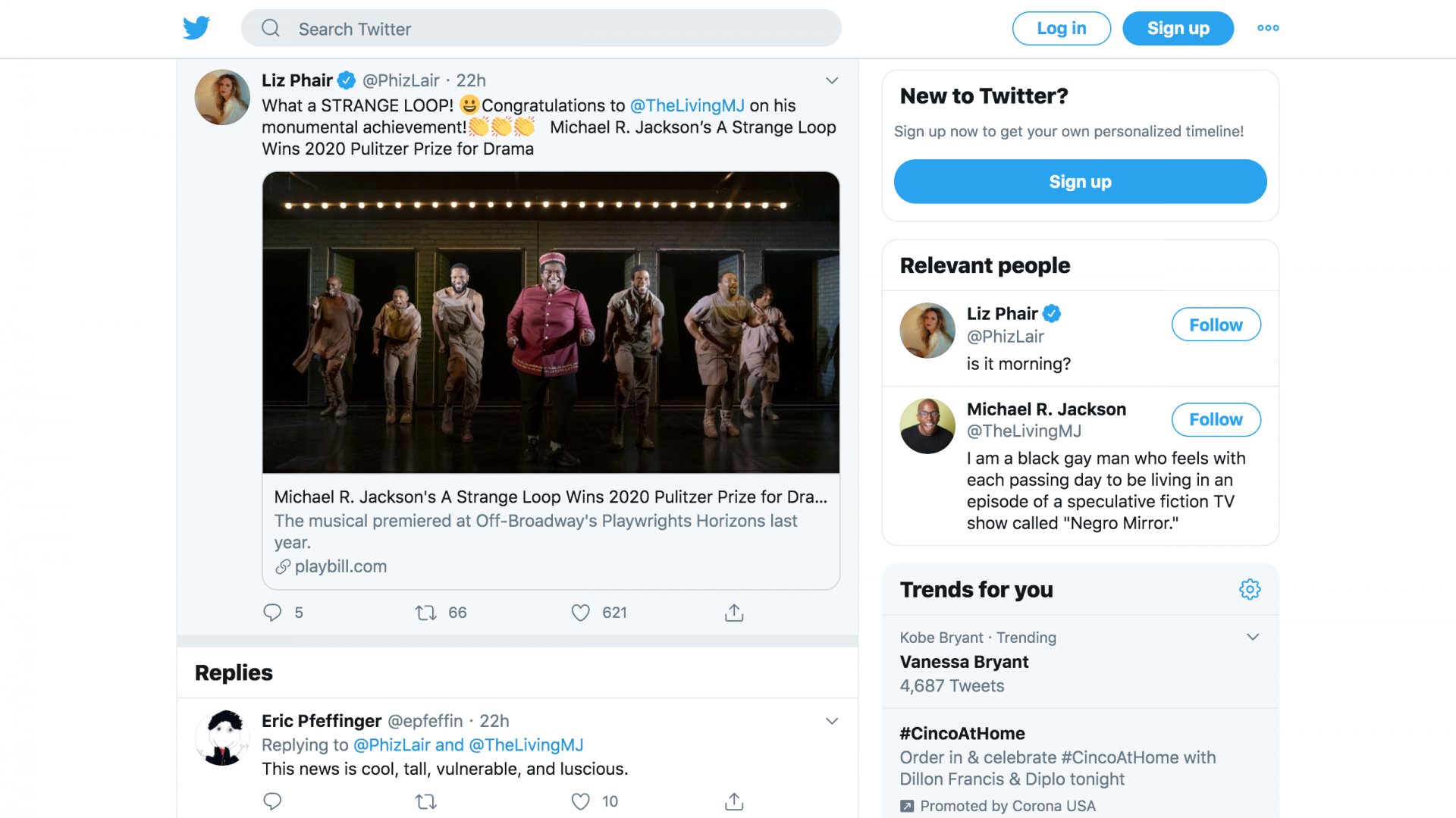
Anne Boyer, who was awarded a General Nonfiction Prize for "The Undying," an "elegant and unforgettable narrative about the brutality of illness and the capitalism of cancer care in America," was recognized by Kansas City alt-weekly The Pitch.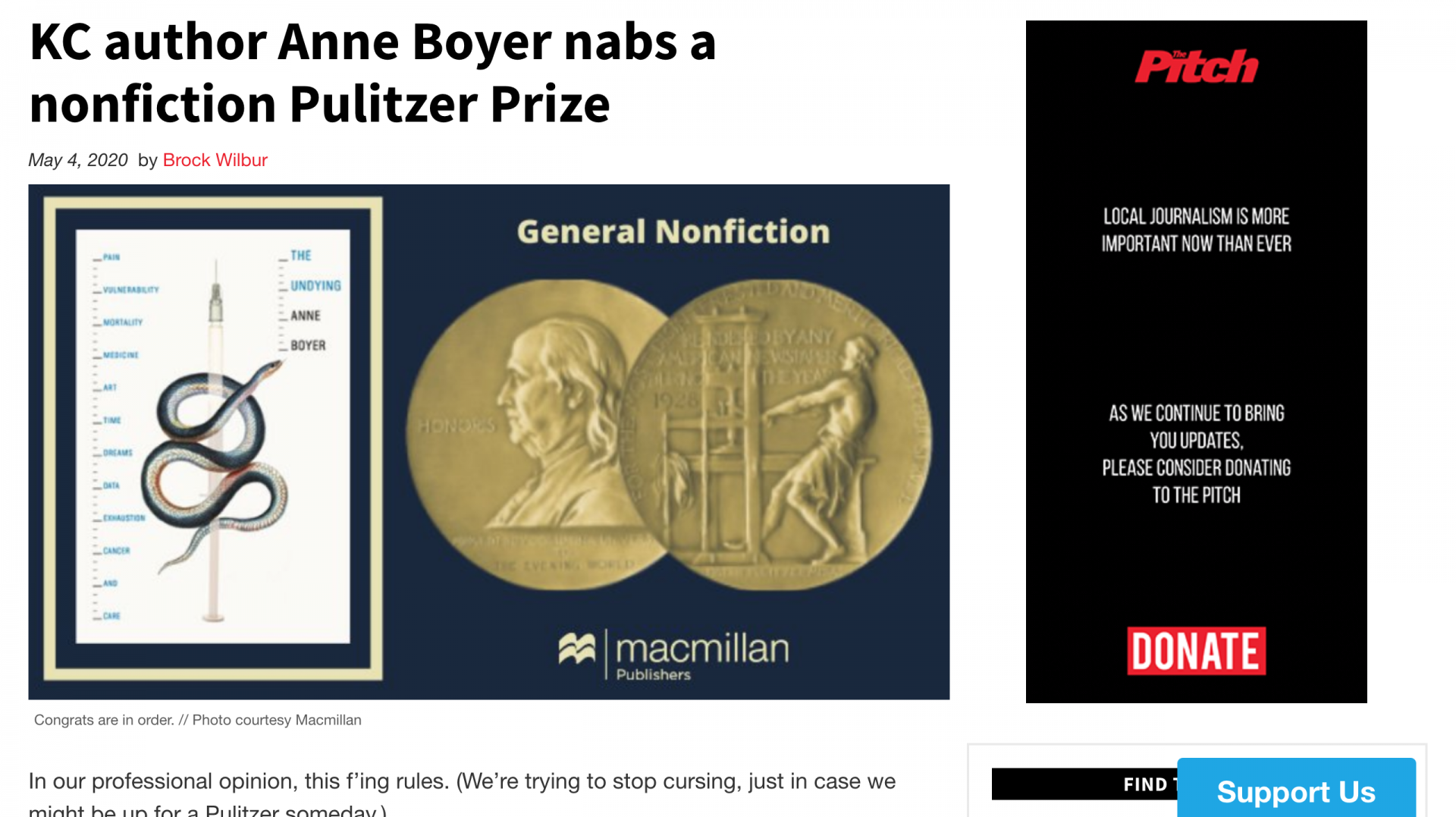
Boyer, a Topeka native, is an associate professor of creative writing at the Kansas City Art Institute. Writer (and fellow Salina South Cougar) said:
In our professional opinion, this f'ing rules. (We’re trying to stop cursing, just in case we might be up for a Pulitzer someday.)
With his second Fiction Prize for "The Nickel Boys," a "spare and devastating exploration of abuse at a reform school in Jim Crow-era Florida that is ultimately a powerful tale of human perseverance, dignity and redemption," Colson Whitehead became only the fourth author (preceded by Booth Tarkington, William Faulkner and John Updike) to receive the award twice. Doubleday, his publisher, offered a wry, digitally savvy comment on his historical achievement: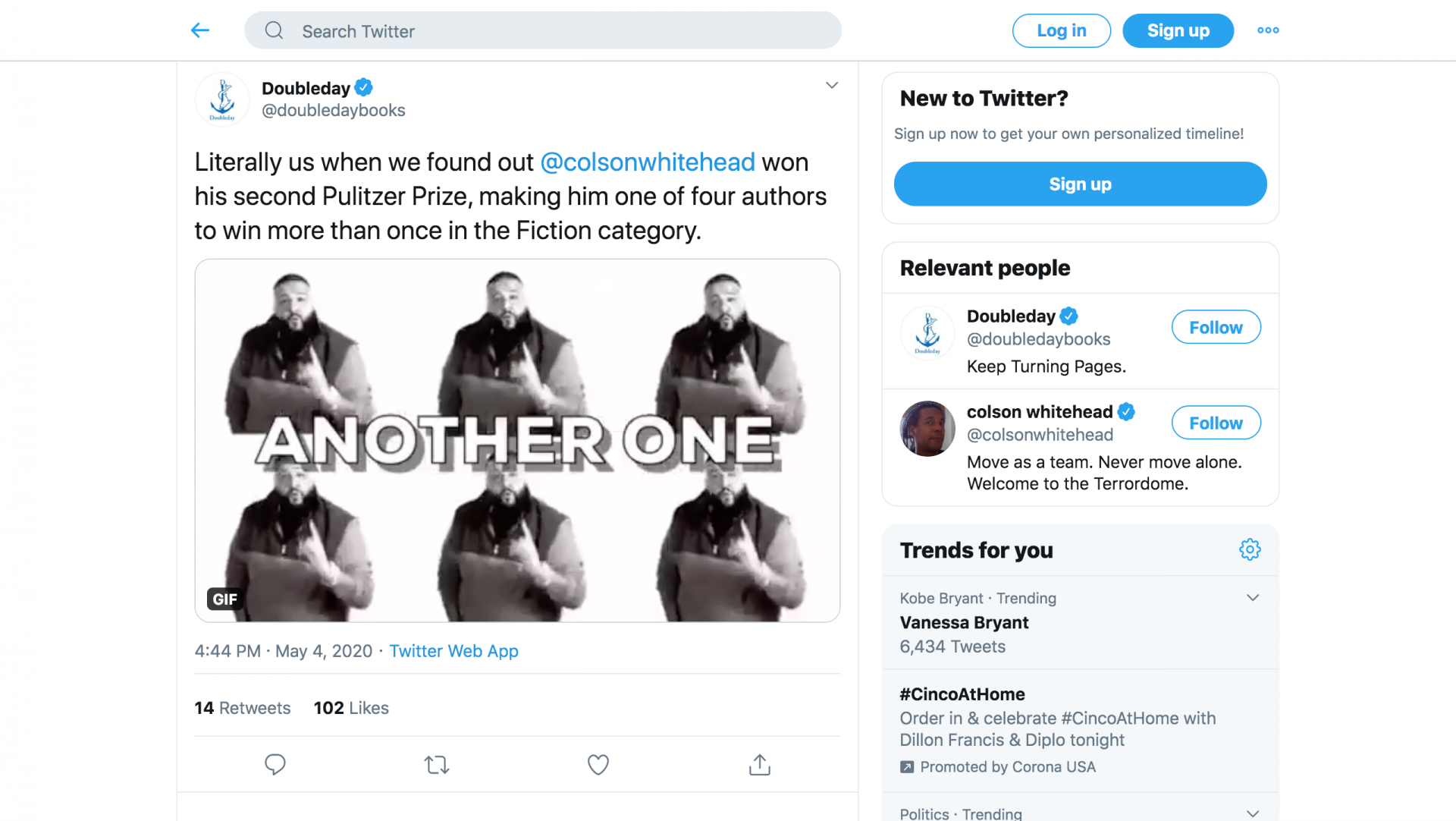
*This page has been updated to reflect the final language of the citation.