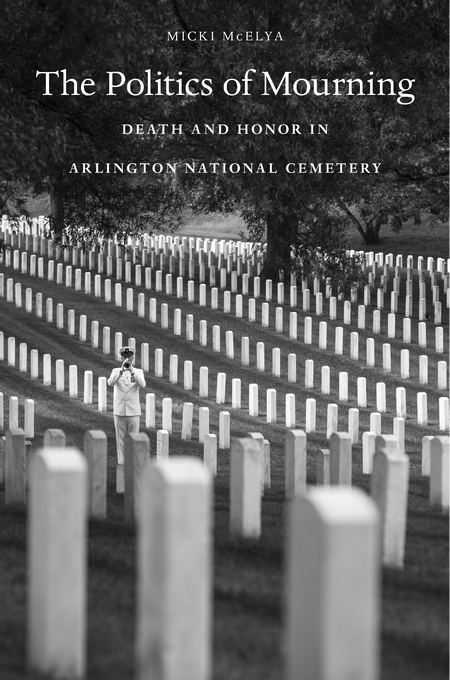
Finalist: The Politics of Mourning: Death and Honor in Arlington National Cemetery, by Micki McElya (Harvard University Press)

For a luminous investigation of how policies and practices at Arlington National Cemetery have mirrored the nation’s fierce battles over race, politics, honor and loyalty.

Nominated Work

The Politics of Mourning: Death and Honor in Arlington National Cemetery

Arlington National Cemetery is America’s most sacred shrine, a destination for four million visitors who each year tour its grounds and honor those buried there. For many, Arlington’s symbolic importance places it beyond politics. Yet as Micki McElya shows, no site in the United States plays a more political role in shaping national identity.

Arlington commemorates sacrifices made in the nation’s wars and armed conflicts. Yet it has always been a place of struggle over the boundaries of citizenship and the meaning of honor and love of country. A plantation built by slave labor overlooking Washington, D.C., Arlington was occupied by Union forces early in the Civil War. A portion was designated a federal cemetery in 1864. A camp for the formerly enslaved, Freedman’s Village, had already been established there in 1863, and remained for three decades.

The cemetery was seen primarily as a memorial to the white Civil War dead until its most famous monument was erected in 1921: the Tomb of the Unknown Soldier, symbolizing universal military sacrifice through the interment of a single World War I Unknown. As a century of wars abroad secured Arlington’s centrality in the American imagination and more Unknowns joined the first at the tomb, inclusion within its gates became a prerequisite for broader claims to national belonging. In revealing how Arlington encompasses the most inspiring and the most shameful aspects of American history, McElya enriches the story of this landscape, demonstrating that remembering the past and reckoning with it must go hand in hand.

-- from the publisher
Biography

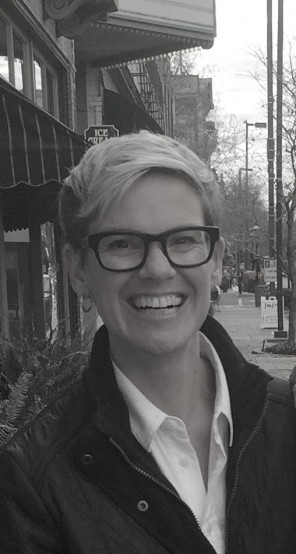
Micki McElya is Associate Professor of History at the University of Connecticut. She specializes in the histories of women, gender, and race in the United States from the Civil War to the present, with an emphasis on political culture and memory. She is author of The Politics of Mourning: Death and Honor in Arlington National Cemetery (Harvard University Press, 2016) and Clinging to Mammy: The Faithful Slave in Twentieth-Century America (Harvard University Press, 2007). McElya received her B.A. in history from Bryn Mawr College in 1994 and a Ph.D. from New York University in 2003. Before joining the faculty of the University of Connecticut, she was an assistant professor of American Studies at the University of Alabama (2003-2008). She is currently at work on a book entitled Liberating Beauty: Feminism, the Civil Rights Movement, and Miss America.

Winners

Prize Winner in General Nonfiction in 2017:

Matthew Desmond

For a deeply researched exposé that showed how mass evictions after the 2008 economic crash were less a consequence than a cause of poverty. General Nonfiction

Finalists

Nominated as finalists in General Nonfiction in 2017:

John Donvan and Caren Zucker

For a passionate work of advocacy that traces public perceptions about autism from chillingly cruel beginnings to a kinder but still troubling present.

The Jury

Robert Messenger(Chair)

Books Editor

George Getschow

Director, Mayborn Literary Nonfiction Conference and Writer-in-Residence, Mayborn Graduate Institute of Journalism

Eileen Pollack

author and Professor, Helen Zell MFA Program in Creative Writing

Winners in General Nonfiction

Joby Warrick

A deeply reported book of remarkable clarity showing how the flawed rationale for the Iraq War led to the explosive growth of the Islamic State.

Elizabeth Kolbert

An exploration of nature that forces readers to consider the threat posed by human behavior to a world of astonishing diversity.

Dan Fagin

A book that deftly combines investigative reporting and historical research to probe a New Jersey seashore town's cluster of childhood cancers linked to water and air pollution.

Gilbert King

A richly detailed chronicle of racial injustice in the Florida town of Groveland in 1949, involving four black men falsely accused of rape and drawing a civil rights crusader, and eventual Supreme Court justice, into the legal battle.

2017 Prize Winners

C. J. Chivers

For showing, through an artful accumulation of fact and detail, that a Marine’s postwar descent into violence reflected neither the actions of a simple criminal nor a stereotypical case of PTSD.

Peggy Noonan

For rising to the moment with beautifully rendered columns that connected readers to the shared virtues of Americans during one of the nation’s most divisive political campaigns.

Hilton Als

For bold and original reviews that strove to put stage dramas within a real-world cultural context, particularly the shifting landscape of gender, sexuality and race.

Art Cullen

For editorials fueled by tenacious reporting, impressive expertise and engaging writing that successfully challenged powerful corporate agricultural interests in Iowa.