
Finalist: Sustain, by Andrew Norman

Premiered by the Los Angeles Philharmonic, an absorbing orchestral work rich with mesmerizing textures and color, including washes of clustered string sounds and cascading winds, creating a virtual sound installation in which perceptions of time are suspended (Schott Music).

Nominated Work

Sustain

Sustain was commissioned by the Los Angeles Philharmonic for the first concerts of their centennial season.

My first thought in writing the work was to imagine the audience that will sit in Disney Hall 100 years from now, during the 200th season of the Los Angeles Philharmonic. What will it mean to gather as a community and listen to an orchestra in 2118? How will the ears and minds of those people be different from ours? How will they be the same? How will their notions of time and space and sound and history be shaped by the world around them, and what will that world outside Disney Hall look like? What place will the art of live symphonic performance have in such a society?

These are broad and bottomless questions which led me in many directions, but gradually they coalesced around a pair of subjects. The first is time. Perhaps, 100 years from now, the act of sitting quietly and listening to a symphonic argument unfold over 45 minutes will mean even more than it does today. Perhaps, in a time when humans will be bombarded with increasingly atomized bits of information, when overstimulation, fragmentation, and isolation will be the given norms of experience and discourse, perhaps then communal listening to a single, long unbroken musical thought will carry a kind of significance, sacrifice, and otherness we can’t yet really imagine.

I realized, as I was trying to conceptualize Sustain as a one long unbroken musical thought, that I was attempting to access and understand spans of time that were much bigger than my own, that I was trying to move from times with which I was familiar—that of a tweet, or a work day, or a year—to things I could never personally experience, like the rise and fall of species, the movement of tectonic plates, the birth and death of stars.

Strucutrally speaking, Sutain is cast in the form of a contracting spiral. It repeats the same music ten times in a row, each repetition being exponentially faster than the time before. What takes many minutes to unfold at the beginning flies by in a few seconds toward the work’s center.

All this thinking about time and proportion brought me around to what is perhaps at the heart this piece: the natural world. Midway through writing Sustain I discovered that I was really writing a piece about the earth, and my—and our—relationship to it. All the work I was doing with long spans of musical time and geologically-unfolding sonic processes was in many ways my attempt to place us, the listeners, in relation to things in nature which are unfathomably bigger and longer than we are. And if there is a sense of sadness or loss that permeates this music, it comes from the knowledge that we, at this critical moment in our history, are not doing enough to sustain the planet that sustains us, that we are not preparing our home for those who will inhabit it in the next hundred, thousand, or million years.

Sustain was hailed as “a new American masterpiece” in the New Yorker, “sublime” by the New York Times, and “a near out-of-body acoustic experience that sounds like, and feels like, the future we want…” in the Los Angeles Times.
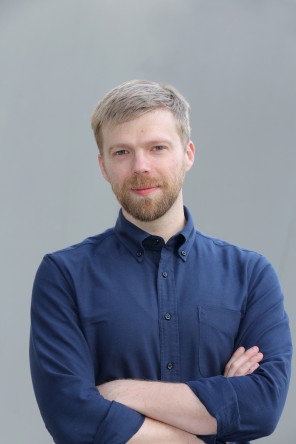
-- from the composer's website

Biography

Andrew Norman is a Los Angeles-based composer of orchestral, chamber, and vocal music.

Andrew’s work draws on an eclectic mix of sounds and notational practices from both the avant-garde and classical traditions. He is increasingly interested in story-telling in music, and specifically in the ways non-linear, narrative-scrambling ideas from other time-based media might intersect with traditional symphonic forms. His distinctive, often fragmented and highly energetic work has been cited in The New York Times for its “daring juxtapositions and dazzling colors,” in the Boston Globe for its “staggering imagination,” and in the Los Angeles Times for its “audacious” spirit and “Chaplinesque” wit.

Andrew’s symphonic works have been performed by leading ensembles worldwide, including the Berlin, Los Angeles, and New York Philharmonic orchestras, the Philadelphia and Minnesota Orchestras, the BBC, Saint Louis, Seattle, San Francisco, Oregon, and Melbourne Symphonies, the Orpheus, Saint Paul, and Los Angeles Chamber Orchestras, the Tonhalle Orchester, the Royal Concertgebouw Orchestra, the Orchestre National de France, and many others. Andrew’s music has been championed by eminent conductors, including John Adams, Marin Alsop, Gustavo Dudamel, Simon Rattle, and David Robertson.

In recent seasons, Andrew’s chamber music has been played by the Ensemble InterContemporain, the Calder Quartet, A Far Cry, and the Sharoun Ensemble. It has been featured at the Bang on a Can Marathon, the Chamber Music Society of Lincoln Center, the Wordless Music Series, the CONTACT! series, the Ojai Festival, the MATA Festival, the Tanglewood Festival of Contemporary Music, the Green Umbrella series, the Monday Evening Concerts, and the Aspen Music Festival.

Andrew was recently named Musical America’s 2017 Composer of the Year. He is the recipient of the 2004 Jacob Druckman Prize, the 2005 ASCAP Nissim and Leo Kaplan Prizes, the 2006 Rome Prize, the 2009 Berlin Prize, and a 2016 Guggenheim Fellowship. He joined the roster of Young Concert Artists as Composer in Residence in 2008 and held the title “Komponist für Heidelberg” for the 2010/11 season. Andrew has served as Composer in Residence with the Boston Modern Orchestra Project and Opera Philadelphia, and he currently holds that post with the Los Angeles Chamber Orchestra. Andrew’s string trio The Companion Guide to Rome was a finalist for the 2012 Pulitzer Prize in Music, and his large-scale orchestral work Play was named one of NPR’s top 50 albums of 2015, nominated for a 2016 Grammy, recently won the Grawemeyer Award for Music Composition, and was praised in The New York Times as a “breathtaking masterpiece” and “a revolution in music.”

Andrew is a committed educator who enjoys helping people of all ages explore and create music. He has written pieces to be performed by and for the young, and has held educational residencies with various institutions across the country. Andrew joined the faculty of the USC Thornton School of Music in 2013, and he is thrilled to serve as the director of the L.A. Phil’s Barry and Nancy Sanders Composer Fellowship Program for young composers.

Andrew recently finished two piano concertos, Suspend, for Emanual Ax, and Split, for Jeffrey Kahane, as well as a percussion concerto, Switch, for Colin Currie. Upcoming projects include a symphony for the Los Angeles Philharmonic and collaborations with Jeremy Denk, Jennifer Koh, Johannes Moser, yMusic, and the Berlin Philharmonic.

Andrew’s works are published by Schott Music.

Winners

Prize Winner in Music in 2019:

Ellen Reid

A bold new operatic work that uses sophisticated vocal writing and striking instrumental timbres to confront difficult subject matter: the effects of sexual and emotional abuse. Libretto by Roxie Perkins. Prism was commissioned and produced by Beth Morrison Projects in association with Trinity Wall Street, presented in a rolling world premiere with LA Opera and the PROTOTYPE Festival. Music

Finalists

Nominated as finalists in Music in 2019:

James Romig

Released by New World Records, a hypnotic solo-piano work comprised of 43 individual sections whose striking harmonic implications and subtly dramatic effects distill music to its barest essences.

The Jury

Scott Cantrell(Chair)

classical music critic, Dallas, Texas

John V. Brown, Jr.

Director, Jazz Program; Professor of the Practice of Music, Duke University

David Harrington

Artistic Director/Violinist

Raymond J. Lustig

composer and instructor of composition

Winners in Music

Kendrick Lamar

Recording released on April 14, 2017, a virtuosic song collection unified by its vernacular authenticity and rhythmic dynamism that offers affecting vignettes capturing the complexity of modern African-American life.

Du Yun

Premiered on January 6, 2016, at the Prototype Festival, 3LD Arts and Technology Center, New York City, a bold operatic work that integrates vocal and instrumental elements and a wide range of styles into a harrowing allegory for human trafficking in the modern world. Libretto by Royce Vavrek.

Henry Threadgill

Recording released on May 26, 2015 by Zooid, a highly original work in which notated music and improvisation mesh in a sonic tapestry that seems the very expression of modern American life (Pi Recordings).

Julia Wolfe

A powerful oratorio for chorus and sextet evoking Pennsylvania coal-mining life around the turn of the 20th Century.

2019 Prize Winners