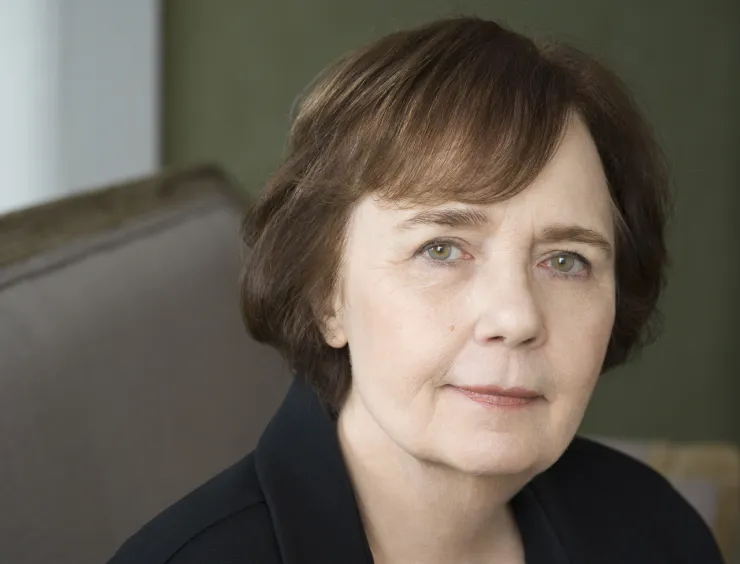
New York Times columnist Gail Collins recently released "No Stopping Us Now: The Adventures of Older Women in History," which looks back on meaningful contributions to history by a vast array of women. It's not the first time she's considered the roles of women in public life in book form — she's also authored "America's Women: 400 Years of Dolls, Drudges, Helpmates and Heroines," and "When Everything Changed: The Amazing Journey of American Women from 1960 to the Present."
As a member of the board, Collins's book is ineligible for prize consideration due to the organization's rules regarding potential conflicts of interest.
She spoke with the Prizes in celebration of Women's History Month in March.
Pulitzer Prizes: In 2003, you published "America's Women: 400 Years of Dolls, Drudges, Helpmates and Heroines," in 2009 you came out with "When Everything Changed: The Amazing Journey of American Women from 1960 to the Present" and this year you released "No Stopping Us Now: A History of Older Women in America."
Over the course of researching so many books about the lives of women in America, how do you think things have changed in the last 20 or so years?
Gail Collins: If you look at 1960 to 2000, the changes were cosmic. You're starting from a society where employers advertised openings under "Help Wanted - Men" and "Help Wanted - Women." It was perfectly legal for professional schools to set quotas -- teeny tiny quotas -- for how many female students they'd accept. Women who didn't get married were considered huge failures, women who didn't have children were tragedies and gay women ... weren't out. Women who did get married and have children were expected to stay home and be full-time housewives.
Then, as my book title notes, everything changed. I'd say the last two decades were about adapting to those new freedoms and opportunities, which have now become part of our lives. For instance, men and women now interact everywhere in almost every workplace, and we've been spending a lot of time teaching men how they have to behave in close proximity to so many female equals. The #MeToo movement is, I'd say, the single most important development of the 21st century for women in our country.
PP: Conversely, what hasn't changed?
GC: Well, women are still judged way, way more on their looks than men of comparable ages. There are a lot of professions where women don't find the ladder to the highest positions very welcoming.
We've made a lot of progress in getting parental leave for new mothers, but the education system doesn't provide nearly enough support for families that need infant and toddler care, or after-school programs.
And #MeToo certainly hasn't completed its mission.
PP: How did you choose which women to include in the new book?
GC: I mainly read through American women's history and looked to see who was still going strong at 50, 60 ... and on up. And sometimes looked in the background to see who was really making things happen while men took most of the credit. Everybody, of course, knows Rosa Parks stood up to that Alabama bus driver when she was in her 40s. But then when the Montgomery bus boycott followed -- and really introduced much of America to the civil rights movement -- we saw it as a protest run by male ministers. Actually, it was older black women did most of the organizing. They were the ones who knew all the average people thanks to their community service programs, their work as teachers, their social clubs and voter registration.
And sometimes I just found stories I didn't know about famous women. I was sort of tickled when I learned how Elizabeth Cady Stanton used her grey hair as a weapon to open up the world of politics and reform. In her time, the idea of a woman giving a speech to any group that included men was considered an outrage. Women were supposed to stay home and raise children, not become public figures. If you broke that pattern you were acting like a harlot and it was perfectly fine to throw a stone or two.
Then Stanton said — oh, yes, of course that's true. I definitely followed the rules — look at all my kids! But now they're grown and I'm too old to be a threat. So if you don't mind I'm just going to take my little grey head off around the country, giving speeches to men and women about the importance of good home life. Plus I may throw in just a tad about abolition and women's rights, and maybe divorce reform ...
It worked and suddenly there she was, riding trains in the middle of the night by herself, playing cards with the soldiers in the next car. Orating like hell for huge crowds. The women who knew her saw what was going on and started writing odes to menopause.
PP: Could you share any hopes for the up-and-coming generation of American women?
GC: Anybody who's worked with this new generation knows they're going to be terrific. I have total confidence in them. I think my hopes would be directed more at the economy around them. For instance, my work world is journalism, and the death of local papers around the country is breaking my heart. Nobody has yet figured out a way to use the new social media models to start sites that will cover neighborhoods, cities and states in depth, and make enough money from ads or subscriptions to pay a staff. There are lots of challenges like that in fields from farming to medicine and I'm going to trust — and challenge — today's young women to keep fighting to find great answers.
PP: When you've taught journalism, what about about your students has inspired you?
GC: Haven't taught for some time, but even back then the future prospects in the field weren't stupendous for people who wanted really good-paying jobs with lots of security. I was moved and touched that they wanted to make the commitment — and investment — anyway, just because they loved the work.