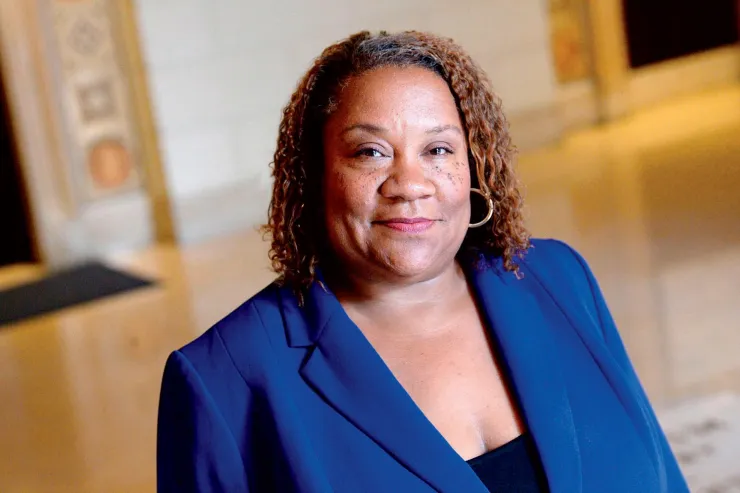
Good afternoon and welcome to the announcement of the 2019 Pulitzer Prizes. My name is Dana Canedy and I am the Administrator of the Pulitzers.
We are gathered in the famed Pulitzer Hall of the Journalism School at Columbia University, where the Pulitzer board met at the end of last week to select this year’s winners in 14 journalism and seven Arts and Letters categories. The recipients were selected from an especially competitive field of nominees and will be revealed in a moment.
But before I announce who they are, I want to break with tradition and offer my sincere admiration for an entry that did not win, but that should give us all hope for the future of journalism in this great democracy.
The entry is from the staff of The Eagle Eye student newspaper at Marjory Stoneman Douglas High School in Parkland, Florida, which submitted the obituaries of 17 coaches and classmates, who were killed during a tragic shooting inside their school in February 2018.
The Eagle Eye’s submission stated that the student reporters and editors had to “put aside our grief and recognize our roles as both survivors, journalists and loved ones of the deceased.”
These budding journalists remind us of the media’s unwavering commitment to bearing witness — even in the most wrenching of circumstances — in service to a nation whose very existence depends on a free and dedicated press.
There is hope in their example, even as security threats to journalists are greater than ever. And there is hope — even as some wrongly degrade the media as an enemy of the very democracy it serves.
Of course, the press will endure, because, as the founding fathers knew well, there can be no democracy without it.
That is something Rebecca Smith, Wendi Winters, Rob Hiaasen, Gerald Fischman and John McNamara understood, too. They understood it when they went to work last June at The Capital Gazette in Annapolis, Maryland, and were gunned down by a madman who opened fire in their newsroom.
It is what Jamal Khashoggi understood, as well, when he bravely wrote truth to power at The Washington Post before being murdered in October 2018, inside the Saudi consulate in Turkey.
In all, 63 professional journalists worldwide were killed this year, according to Reporters Without Borders. That is a 15% increase in journalists who lost their lives for simply trying to do their jobs.
In their spirit, this year’s winning work reflects, yet again, a steely resolve in upholding the highest principles and ideals of this noble profession.
In the Arts and Letters categories, as well, the winners reflect a dedication to purpose that is revealed through extraordinary work that shines a light on the pride, the potential and also the pain of the times. They include books, music and drama that inform, uplift and, at times, anger us about some of the most pressing social, political and cultural issues of the day. They are expressions of creative freedom about gender, class and history that prompt us to consider the impact of our actions and policies on the communities and world we inhabit.
As you can see, there is so much to be proud of — indeed to, well, respect — in the work being honored this year, and so I now proudly announce the winners who will constitute the 103rd class of Pulitzer Prize honorees.