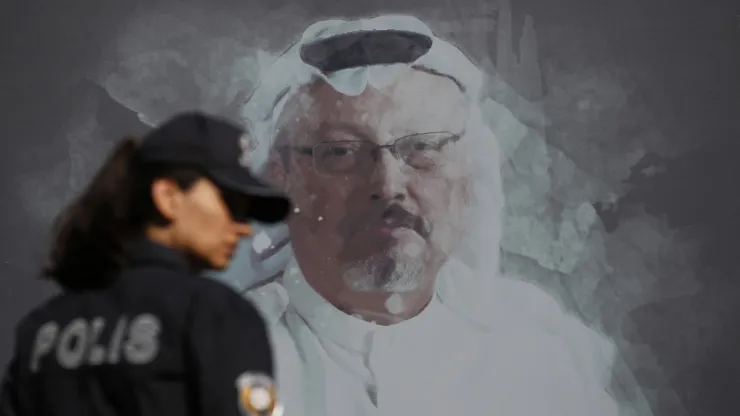
In remembrance of the life and journalistic career of Saudi-born journalist and Washington Post contributor Jamal Khashoggi, who was murdered one year ago today, advocates for press freedom are speaking out about the as-yet unsolved case.
Colulumbia University President and Pulitzer Board member Lee C. Bollinger spoke with U.N. Special Rapporteur for Extrajudicial Killing and Columbia Global Freedom of Expression Director Agnès Callamard about the case in the lead-up to today's anniversary.
"It is now the case that censorhip anywhere is censorship everywhere. And that certainly applies in the killing of Jamal Khashoggi" President Bollinger said.
"If you just cared or looked at it from the standpoint of freedom of speech and press in the United States, just from the standpoint of the First Amendment, he was murdered in significant part because of his exercise of First Amendment rights in the United States, through the things he said said and he wrote, especially in the Washington Post," he continued.
"So it raises this profoundly deep concern as to what the United States can do and will do legally when one of the people, or more of the people, who are exercising their First Amendment rights are then killed, murdered or otherwise penalized for that speech by actors and states around the world."
Watch the video of the conversation here:
Columbia Journalism School Dean and Pulitzer board member Steve Coll also moderated a panel with Callamard about attacks on dissidents in Saudi Arabia and Khashoggi's killing.
An interview with Callamard is available on the Columbia University website. In it, she also addresses the cases of four other journalists who have been killed or threatened in the course of their reporting: Deyda Hydara of Gambia, Pablo Medina Velázquez of Paraguay, Anna Politkovskaya of Russia and Rana Ayyub of India.
Khashoggi's colleagues at the Post were finalists for the 2019 prize in Public Service for "commanding and courageous coverage of the murder of Saudi-born journalist and Washington Post contributor Jamal Khashoggi inside Saudi Arabia’s Turkish consulate."
Along with Callamard and others, Post owner Jeff Bezos attended a vigil in Istanbul in memory of the slain journalist, saying to his fiancee, Hatice Cengiz, "You are not alone."
As Pulitzer Administrator Dana Canedy said in April of this year, when the 2019 prizes were announced: "Of course, the press will endure, because, as the founding fathers knew well, there can be no democracy without it. [...] It is what Jamal Khashoggi understood, as well, when he bravely wrote truth to power at The Washington Post before being murdered in October 2018, inside the Saudi consulate in Turkey."