This is the second part of chapter one of the new edition of "Pulitzer's Gold," Roy Harris’s book tracing the century-long history of the Pulitzer Prize for Public Service. The Columbia University Press is publishing the book this month, as the centennial of the Pulitzer Prizes begins.
The first part of the chapter was published yesterday.
Sharing Secrets
By ROY HARRIS
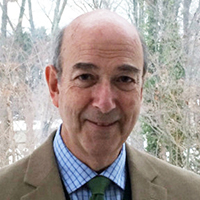
Roy Harris
If the Sun Sentinel was a dark horse for the 2013 Public Service Pulitzer, the Guardian-U.S. website and The Washington Post became front-runners for 2014 almost as soon as their first blockbuster stories started appearing. “I thought it was a slam-dunk because in many ways this was the biggest story of the year, and clearly a huge public service,” says Paul Steiger, a former Pulitzer board member, veteran Wall Street Journal managing editor, and founding editor of the investigative website ProPublica. “And these two news organizations had done the major work, with considerable reporting to back up the documents they had been given.”
But in the newsrooms of both The Post and the Guardian-U.S., nothing was automatic in the weeks leading up to their first stories — appearing within a day of each other on June 5 and 6, 2013. In a competitive flurry, reporters and editors rushed to assemble and confirm their drafts, based on the extraordinarily detailed and complex files that Edward Snowden, a former NSA contractor, had provided.
Both publications were aware that what they left out of their stories — because its publication might truly threaten national security or put lives at risk — was perhaps more critical than what they published. (In the final days before the first stories ran, each news organization gave the government a chance to argue that publication of certain information was too sensitive — much as The New York Times had done forty-two years earlier in preparing its Vietnam-era revelations about the Pentagon Papers for publication.)
One element in the Guardian-Post competition was perhaps unique to Pulitzer-winning journalism: the rival news organizations both had the same journalist, the documentary filmmaker Laura Poitras, on their teams. That stemmed from Poitras in January 2013 being the first media person with whom Snowden made contact, communicating through a strict encryption procedure and hiding his identity at that point. “How this story unfolded,” Poitras acknowledges, “does not fit into a neat newsroom story.”
Snowden, who in late 2012 had failed to link up with his first choice of media contacts, the Guardian-U.S. opinion columnist Glenn Greenwald, viewed both Poitras and Greenwald as potential recipients of his stolen government material. From their past work he knew they were sympathetic with his outrage over extreme levels of government spying on Americans. Conveniently the two journalists knew each other through their common board membership in a press freedom foundation. Snowden also considered them outside the mainstream media, which he distrusted in part because he believed such organizations too cautious — delaying, neutering, or killing sensitive stories after vetting them with those being challenged.
While there was one story from his trove of documents that Snowden wanted to go public right away — about a secret NSA program called PRISM — he generally planned to give his entire file to chosen reporters and let them and their editors decide what to publish and what to hold back. “In one of Snowden’s early emails he told me that the evidence he would provide would be too much for one journalist,” Poitras says, and she started thinking of possible collaborators, with Greenwald at the top of her list.
Her own encryption skills — which she developed when U.S. authorities started routinely monitoring her gear and her notebooks when she traveled — made Poitras especially useful in Snowden’s plan. “Ironically, being targeted by the U.S. government for my reporting was the best training to prepare me for working on the NSA story and communicating with Snowden,” she says from her home in Berlin. “By the time Snowden reached out I had been through seven years of security training.”
The anonymity of her source raised worries about whether he was legitimate, even as he described the huge archive of secret documents that exposed widespread U.S. spying on Americans. So in February she met in New York with Barton Gellman — a former Post reporter then working at a foundation — seeking advice on how to confirm that the documents were real and piquing his interest about the mystery source.
Poitras was aware of the historic debate dating back to the Pentagon Papers about how the media should deal with secret documents. “I knew very well the risks that whistleblowers take and the government’s intimidation to stop publishers from working on national security issues.” But other worries were personal, she says.
“The six months from January to June 2013 were the most frightening and stressful of my life. It was much more scary than the eight months I spent in Iraq [making a 2006 documentary]. I knew that if the sources were legitimate, they were at great risk, and so was I.”
For the Guardian-U.S. and The Post, another kind of angst began in May. Poitras and Greenwald stayed in regular contact. But when Snowden told Poitras that he thought it time for one particular NSA story to be published, she also reached out to Gellman. The story related to a program code-named PRISM, which allowed the agency to tap directly into the databases of nine U.S. Internet companies: Microsoft, Google, Facebook, AOL, Apple, Yahoo!, Skype, YouTube, and Paltalk. The race was on to be first with an NSA story.
At the Guardian-U.S., a website that had grown to sixty journalists since opening in 2011, Greenwald had been hired as a columnist by editor in chief Janine Gibson, who was looking for impact writers to bring it visibility. A former constitutional lawyer who was already popular online, writing from his home in Rio de Janeiro, “Glenn was such a powerful presence on the Internet I was worried he would overshadow the Guardian brand,” says Gibson. “But soon, it was very clear he was a fantastic fit. Working with him was challenging, but brilliantly so.” The arrangement called for Greenwald to post his own Guardian columns unedited, but anything that could have legal consequences “or posed an unusual journalistic quandary” would be processed by editors.
Gibson had not expected Greenwald to be a reporter, but his conversion began when Greenwald “rang me up one day and said I have this huge story; it’s the biggest intelligence leak ever,” according to Gibson. “And I said get on a plane.” Greenwald, who at the time held about twenty-five of the secret NSA files, arrived with Poitras in Gibson’s offices on May 31. Gibson knew that Bart Gellman had reconnected with The Washington Post and was also interested in the NSA files. But the Guardian editor remembers getting the feeling that Poitras “was suspicious of whether The Washington Post would ever publish.” Gibson says, “I felt she was suspicious of me, too. But Glenn has a relationship with Laura, and I have a relationship with Glenn. So it worked out.” The editor adds,
“The thing about the Guardian is we don’t get too hung up on the way things are supposed to be. Our approach is embracing the new.”
In this case that “new” involved making New York–based Guardian veteran Ewen MacAskill a third member of the Greenwald-Poitras team. MacAskill would accompany them to Hong Kong, where Poitras and Greenwald had made plans to meet with Snowden.
“A story of this kind can be quite capsizing for an organization,” says Gibson. So the Guardian took care to make sure everything it published on the NSA documents would be solid. Concerns about objectivity “were why we put in Ewen in the first place, and why all our stories were written and constructed by a team of editors here,” she says. “We questioned every single word, making sure we didn’t overreach, and justifying every single claim where a legal case could be made.” Greenwald may have had free rein with his columns, “but when somebody writes a news story, that goes through the Guardian process. It’s the work of many, many people.” Looking back she adds, “Most of the stories had several bylines, and even when it’s Glenn alone, it’s gone through many levels of process.”
The Guardian began preparing two stories based on NSA documents: first a story that Greenwald singled out as particularly shocking, on the government collecting the phone records of millions of citizens from Verizon under secret court order. The second story was about PRISM — the piece Snowden had wanted out first. While the Guardian-U.S. team traveled to Hong Kong, Gibson would help manage getting comment from the administration and doing the final editing.
After contact between Gellman and Laura Poitras had been renewed in May 2013, a period of three-way trust building began among the two of them and the still anonymous Edward Snowden. “Laura and I had to worry about whether we were being set up,” says Gellman.
“Snowden saw me as the corporate newsroom guy, and worried that the story would be too hot for a card-carrying member of the mainstream media.”
Gellman had practical concerns about handling secret documents like the PRISM files he had received. His decision to reconnect with the Post alleviated that problem by providing him with legal protection and the backing of a news organization he respected. Poitras agreed to participate with him. And Gellman won Snowden over to the idea by explaining how boldly the paper had published previous stories on government surveillance. “I told him I’d take the story elsewhere if the Post and I could not agree on what should be done. I meant that,” says Gellman.
“It was clear I didn’t want to be Bart Gellman, freelance reporter, with a story like this.” Even the process of verifying classified documents could create legal liability for an individual journalist while company lawyers could more easily deflect such concerns. “I’d made my home at the Washington Post for many years,” he says, “and I trusted the leadership there.” The former leadership anyway; Gellman had never met the Post’s new executive editor, Martin Baron, hired from the Boston Globe a few months earlier. So the reporter placed a call to the Post assistant managing editor for investigations, Jeff Leen. Leen had worked with Gellman on stories about Vice President Dick Cheney that had won Gellman and Jo Becker the 2008 National Reporting Pulitzer.
Gellman’s call to Leen came on a Sunday, May 19. “So I was completely not in work mode,” Leen recalls. “I was surprised to hear from him, and frankly a little annoyed. He was very secretive and cryptic.” Then came the conditions Gellman said the Post would have to accept. “It’s going to have to go in the paper in forty-eight or seventy-two hours — that kind of thing. My mind was reeling a bit at all the demands.” But he knew Gellman. “It’s like E. F. Hutton: You listen,” Leen says. “Also, there was a faint note of fear in his voice. And that scared me a little bit.” Leen suspected that NSA documents were involved.
Several meetings were quickly planned with Post editors, including one with Baron, just coming back from vacation. It was arranged for Gellman to enter the Post building unseen to avoid office speculation.
“The first stop I made was with Don Graham,” says Gellman. “I knew this was going to be a very tricky story, with high stakes for the paper.” The reporter assured himself that the Graham family, which still controlled the Post at the time, would support a project the editors approved.
At the first meeting with Baron, Gellman made his pitch to a small group of editors and lawyers. Gellman described “a document and a story, and I said it was possible that there would come a time when there would be more.” But there would be many more questions, he knew, beyond “How many stories are there?” Gellman was asking an editor he had never met to approve a story from a source whose name could not be revealed. The Post would have to grant legal protection to Gellman and to Poitras, whose byline might also be appearing in a rival publication competing for the story. Plus a new security and encryption system was needed in a locked room used for nothing else. “I felt like I was making preposterous demands,” says Gellman, “and I was thinking, ‘I’d probably throw me out.’”
But Baron was riveted. “My initial reaction was that I was surprised that the U.S. government was doing this,” he says of the PRISM material. “It was a sensitive subject, in that it involved national security matters. It was also highly consequential, in that it could have legal consequences for us, and it raised significant public policy issues.” And, says Baron, who is often given to understatement, “I’m always glad when somebody’s coming to us with a story that might be good.”
As for approving a joint Gellman-Poitras byline, “It was unusual, but this was an unusual story, in unusual times,” Baron says. So he signed off on it. “Bart felt she deserved a byline as a result of the access she provided. I didn’t see any particular reason we shouldn’t include Poitras on the byline. And it was the right thing to do.” At a subsequent meeting, Poitras got her first experience of Baron, Jeff Leen, and other Post newsroom players. “I remember Marty joked that he wanted to meet me, before risking the institution,” says Poitras, who felt acknowledged for bringing it the PRISM story.
As the editor Jeff Leen and Gellman began preparing the Post’s PRISM story, Leen had the strange sense that he and Gellman “were just picking up where we left off after the Cheney series.” With two differences: first, only a handful of staffers knew Gellman was even in the building. Second, “I knew this could be the biggest story I’ve ever seen. And it turned out to be. These documents were really the crown jewels of American intelligence gathering,” Leen says. “We also knew that this was an issue that was ripe for public debate.” A number of legislators had been calling for months for more transparency on domestic surveillance. “And it was about a system that has grown so big that a contractor like Snowden is in a position to get this information.”
But as the PRISM story entered its final editing stage, the Guardian’s June 5 Verizon story appeared. “We realized, Now we’re in a race to get our story out,” says Leen, who knew a Guardian PRISM story could appear online any time and beat the Post. Shifting to high gear, the Post brought Gellman into the main newsroom to work with Leen in his office. For the first time, staffers knew their old colleague was back. “This was investigative reporting on deadline on a very complicated subject,” says Leen. At the same time, the Post sought comment from the government for inclusion in the story while Baron reviewed drafts from his own office. The Post’s PRISM story beat the Guardian’s by a matter of minutes.
June 5 and June 6 were just the start of a months-long effort by both publications to break down the Snowden archive of NSA documents into segments that would align with the Guardian’s and the Post’s reporting priorities.
After the Guardian-U.S. ran its own PRISM story by Greenwald and MacAskill, it moved on to a June 9 profile of the twenty-nine-year-old Snowden, running this along with an interview that Poitras filmed in Hong Kong. Snowden was no longer anonymous.
This was followed on June 17 by a Snowden question-and-answer session on the website theguardian.com. One jewel of its coverage was its “NSA Files Decoded” feature, a video discussion that made surveillance a personal issue for readers. (Poitras, meanwhile, compiled her footage from the Guardian-Snowden interviews for use in a film to be called "Citizenfour," after the code name he had used in reaching out to the filmmaker. In February 2015, "Citizenfour" would win the Academy Award for Best Documentary.)
The Post published a Gellman profile of Snowden on June 10. Gellman’s first in-person Snowden interview would not appear until that December 24, when the reporter visited him in Moscow, where Snowden had relocated after leaving Hong Kong in June.
Among the major exclusives the Post reported from the NSA files was an August 30 exploration of the fiscal 2013, $52.6 billion “black budget” for U.S. spy agencies, which the article said had “built an intelligence-gathering colossus since the attacks of Sept. 11, 2001.”
Still, according to the Post they “remain unable to provide critical information to the president on a range of national security threats.”
The article by Gellman and the staffer Greg Miller was accompanied by an elaborate Web-based breakdown allowing readers to delve into certain expenditures of the Central Intelligence Agency, the National Reconnaissance Office, and the NSA.
In a lighter vein, Gellman was dining with his family at a Chinese restaurant not long after that when his partner handed him a fortune cookie saying she had gotten his fortune by mistake. “Put the data you have uncovered to beneficial use,” it read.
“In terms of working with the Guardian and the Washington Post, I think both organizations have done extraordinary reporting,” says Laura Poitras of her peculiar relationship with competing publications on a critical story. “On a personal level, it has not been easy. I am an independent journalist without an organization behind me. I published with the Guardian and the Post on a freelance basis. Neither organization offered institutional support for things like legal fees, travel costs, and computer security. At the moments of highest risk, I was very much on my own.”
As the seven public service jurors assembled at Columbia’s Graduate School of Journalism in March 2014 to consider the sixty-nine entries in the category, they were well aware of what the Guardian and the Post had written over the past eight months. But according to the Buffalo News editor Michael Connelly, the jury chair, careful reading was given to all submissions. “What you worry about is overlooking something of merit because it didn’t get national attention,” he says.
The Pulitzer board asks jurors for three nominated finalists, and the jury picked Newsday as one for the Melville, New York-based daily’s use of digital tools and in-depth reporting to expose shootings, beatings, and other misconduct by some Long Island police. The Pulitzer board had already ruled that the Guardian-U.S. qualified to enter for the prizes despite its parent newspaper being in the United Kingdom. Though the awards are for American media, its U.S.-based newsroom and separate online Guardian-U.S. site made it eligible.
In Connelly’s view, the power of the Guardian and the Post stories had already created “a shared sense that this was a big deal, a big year. It was exciting,” he says. “You knew whatever you did you were doing something important.” After reviewing all entries, the jurors listed both the Guardian and the Post along with Newsday, leaving it to the Pulitzer board to decide whether to give two public service prizes or one. The jury addressed each of the Post and the Guardian entries in a four-paragraph note. (Newsday got one paragraph.) The first three identical paragraphs said the stories were “published nearly simultaneously” as part of “an unprecedented moment in journalism.” The final paragraph differentiated the Guardian’s and the Post’s NSA coverage in language that the board would echo in naming the two publications the gold medal winners.
In the jury nominations, only Bart Gellman was mentioned by name.
Janine Gibson sees wisdom in the Pulitzer board’s decision to honor both her publication and the Post. “It’s really one of those stories that transcends newspaper rivalry. It’s been quite a solidarity thing,” she says. And in a way, she notes, “the role of the press had become almost as big a deal as the role of the surveillance.”
The Pulitzer choice was nearly as controversial as the stories themselves. Beyond those who simply viewed the Post and the Guardian-U.S. as traitorous for working with Snowden’s stolen documents, some critics took issue with the specific decisions made at the Post and the Guardian about which files to make public and which to hold back. The Vanity Fair columnist Michael Kinsley wrote in his New York Times review of Greenwald’s book "No Place to Hide": “It seems clear, at least to me, that the private companies that own newspapers, and their employees, should not have the final say over the release of government secrets, and a free pass to make them public with no legal consequences.” His review also stirred a storm of debate.
The media authority Jay Rosen of New York University pointed to what he sees as a weakness in the Pulitzer system exposed by the process of selecting these winners. Designed to recognize American news organizations or individual journalists, the prizes had no way to acknowledge Snowden’s role and especially his choice of the journalists who would receive the NSA files. “In my view,” wrote Rosen, “that decision — through collaboration [to] release stories in the press vehicle ‘closest to those individuals whose privacy has been invaded’— won the Pulitzer today.”
The Pulitzer board’s selection of the Post and the Guardian focused on the public service involved in preparing important material in a way that had value for readers. In that way, it was quite similar to the board’s decision in 1972 to honor the New York Times with a gold medal – not for dumping the stolen government Vietnam War archive on the public but for meticulously analyzing the government deceptions within those so-called Pentagon Papers. Thus the board had “already crossed that bridge about being willing to give the prize based on stolen documents,” former Pulitzer board member Geneva Overholser told PBS Newshour’s Gwen Ifill in commenting on the two 2014 gold medals. “It was awarded to the most affecting story of this year, in my view. This story had enormous impact. ... The president himself has said there need to be steps taken in terms of kind of reining in the National Security Agency.” And even beyond the review ordered by the White House, as Bart Gellman sees it, the U.S. government at all levels “acknowledged that too much had been kept secret and a debate on the boundaries of surveillance was overdue.” A federal appeals court ruled the collection of telephone call records unlawful. And indeed, in the wake of the NSA disclosures “privacy became a market force for the first time since Internet revolution.”
In choosing its public service winners, the 2014 Pulitzer board specifically recognized the Post for “authoritative and insightful reports that helped the public understand” and the Guardian for “helping through aggressive reporting to spark a debate.” It is possible, then, that the work of the Post on the Snowden story eased the way for the Pulitzers to honor the Guardian with a prize that it otherwise might not have gotten. Janine Gibson believes part of her publication’s Pulitzer acknowledgment came because “the Guardian as an institution took an enormous amount of risk.” She adds, “I hope it gives other institutions confidence and succor.”
As for the Post, Marty Baron was reminded of the Catholic priest stories that won the same prize eleven years earlier for the Boston Globe when he was editor there. In giving the May 2014 commencement speech at his alma mater, Lehigh University, he said that in Boston, “one of the world’s most powerful institutions was held accountable.” Meanwhile, “There is nothing more powerful in our society than the federal government. ... Do American citizens get to determine how much privacy they’re entitled to? Or does government decide all that for us — in secret — as long as it can assert national security as its rationale?”