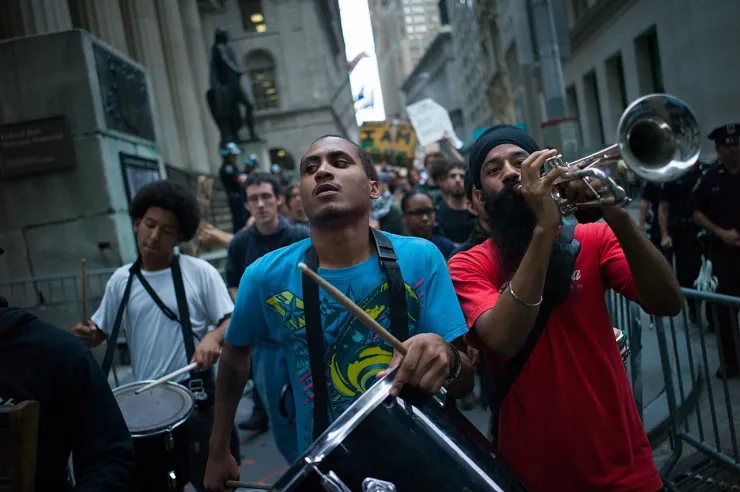
A perk of semi-retirement, for veteran photojournalist Ozier Muhammad, 69, is the added time and space he gets to shoot his favorite types of stories.
Lately, he’s been expanding his portfolio of pics of jazz musicians, led by celebrity trombonist Craig Harris, who perform regularly at Greater Calvary Baptist Church in Harlem, which Muhammed has called home for three decades and been photographing for 40 years.
“Just above Marcus Garvey Park, in April, September and December, every Tuesday of the month from noon to 2 p.m. and every Friday from 7 to 9 p.m., these men and women musicians perform in that church. And it’s spectacular,” said Muhammad, co-winner of the 1985 Pulitzer Prize for International Reporting.
“I was 15 when I first fell in love with the music,” continued Muhammad. “Not to the exclusion of other music, but jazz is what I think is magical. I get into it. I testify. I shout. I bear witness.”
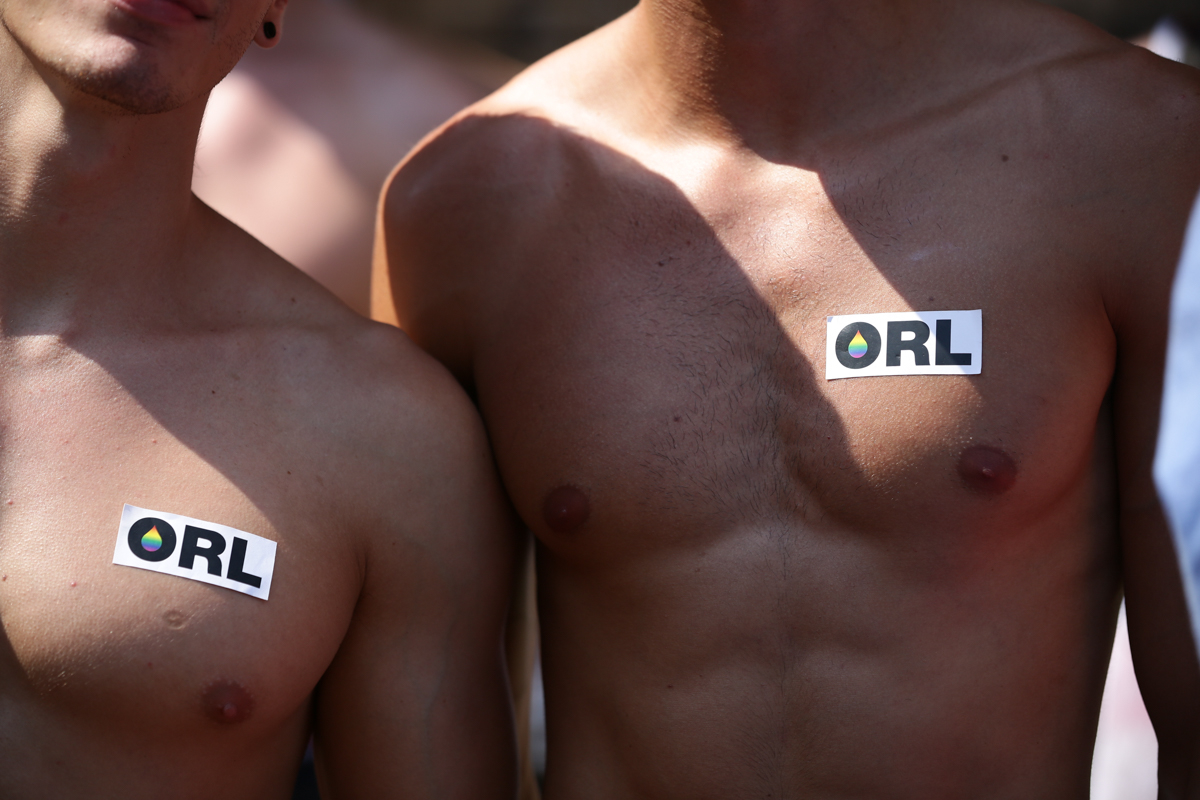
Attendees at New York City's Gay Pride Parade remember those lost in Orlando, FL during a shooting at Pulse Nightclub. Photo: Ozier Muhammad/NYT
Mainly, he’s approached his roughly half-century in photojournalism with the relative detachment demanded of a straight-ahead chronicler of truths, facts and so forth, he said. He has covered everyday Janes and Joe, that dude dancing for dollars and pocket-change on a Harlem sidewalk, the heads of fledging and floundering democracies, various points and personalities in between. His Pulitzer-winning photos illustrated a Newsday series on hunger in Africa. That mass of lands, cultures, peoples and politics, to Muhammad, still doesn’t attract the news coverage that it merits.
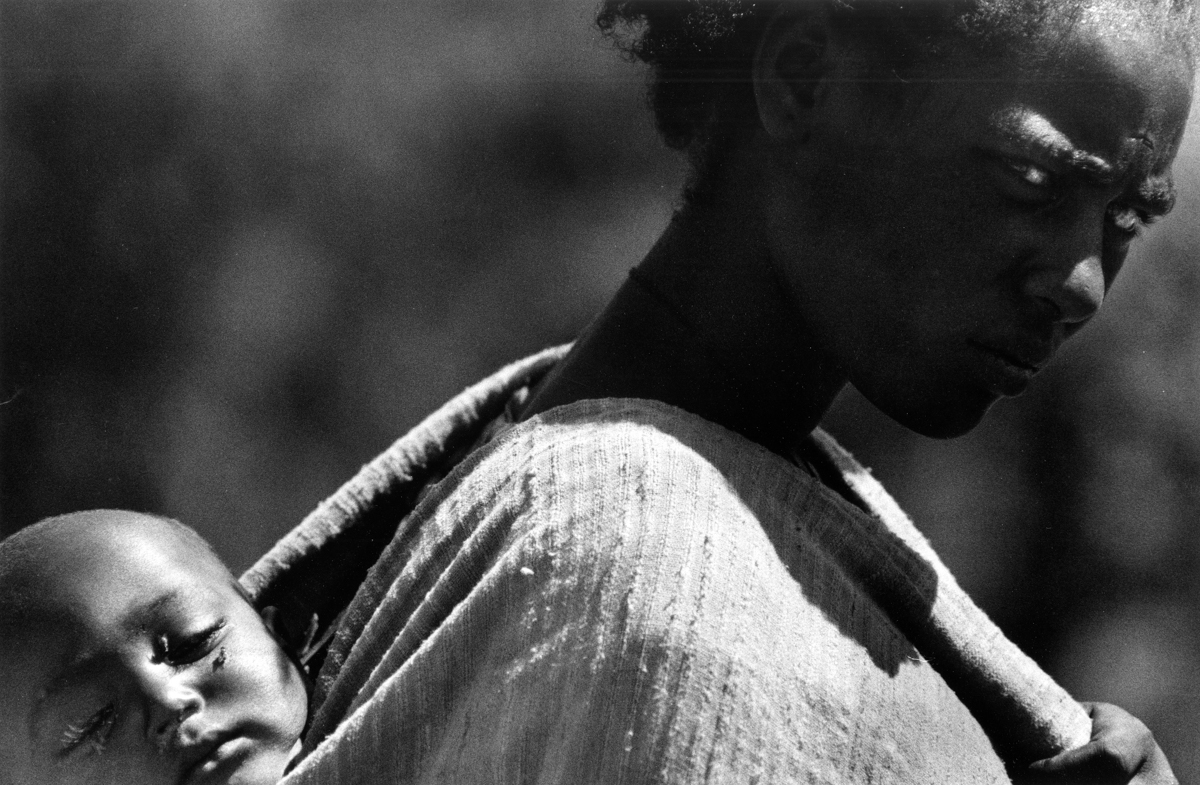
Drought in the Sahel region of Africa, from Mali to Ethiopia. This image was part of Muhammad's 1985 Pulitzer-winning portfolio. Photo: Ozier Muhammad/Newsday
Muhammad’s roots — racially, regionally, culturally and as part of a cadre of black photographers breaking into mostly white newsrooms — have informed how he practices his craft. That was as essential when he was starting out as it is today, he said, given that journalists of color still comprise a minority of the nation’s shrunken press corps.
“One can make an argument that when people of color are displayed in [the news] they are usually suffering come terrible, cataclysmic strife,” said Muhammad, employed part-time by the City University of New York’s marketing department. “The same goes for the Middle East … You hardly ever see what people are doing to remedy the horrible things … There is too much coverage of the results of the machinations of the powers-that-be in the world. We don’t see enough of folks who are trying to control the chaos. We just see the results, and usually the worst results are the faces of people of color.”
He continued: “The New York Times’s ’Saturday Profile’ is a celebratory piece, but most of the people being celebrated are white. Usually, whatever is awe-inspiring is white. Chaos, in the news, so often is black, brown or yellow.”
Chicago-born, Muhammad is the grandson of Nation of Islam Founder Elijah Muhammad. Coming of age in that famous family of Black Muslim leaders — itself spotlighted in an array of news, commentary and pictures — he picked up jazz and a Yashica film camera around the same time.
After college, early on, he worked for the pioneering Johnson Publishing Co., whose Ebony and Jet magazines were devoted to telling the myriad tales of black people that much of white-owned, mainstream media either didn’t cover or covered without the nuance and context that are signatures of solid journalism. His career also landed him in Charlotte, N.C., and in New York City, where his last full-time gig was at The New York Times. Its editors dispatched Muhammad down the block and around the world to shoot the news.
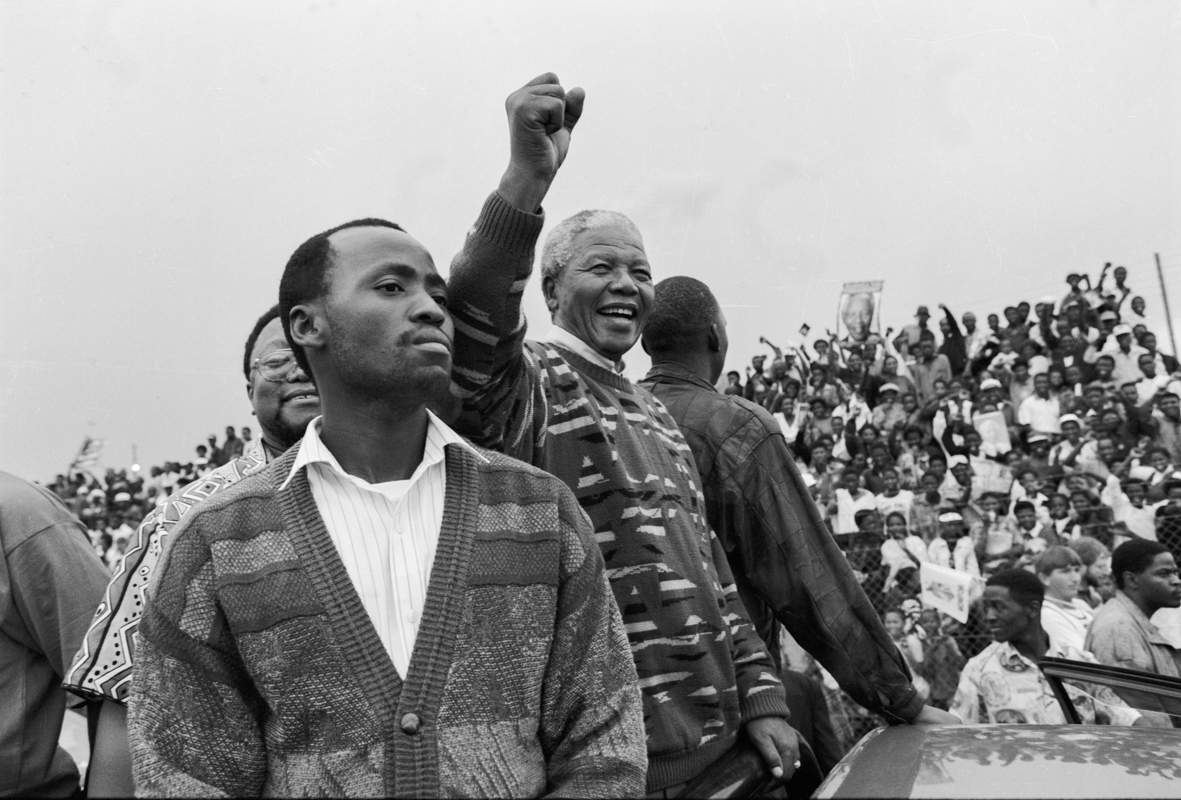
Nelson Mandela attends a 1994 campaign rally at Soweto National Football Stadium in South Africa. Photo: Ozier Muhammad/NYT
“But I went to South Africa on my own dime, when it was announced that Nelson Mandela had died. I wanted to close that circle. I’d covered his campaign for the presidency and his trip to New York in 1990. I felt I really needed to be there. I will do something like that again, if it has great importance to people in the African Diaspora,” Muhammad said.
He’s covered the Civil Rights Movement, the South’s fits-and-starts fight to desegregate, homecoming queens at historically black colleges and universities, celebrities of entertainment and sports. “Being a photojournalist is like being a kind of cultural anthropologist,” he said. “You get a chance to try to pull back the layers of people’s lives and interpret what you discover.”
These days, through his public lectures and exhibitions, private travels and a website of pictures with spare descriptions of who and what they depict, Muhammad, keeps striving to fill in some gaps. His photographs are in the permanent exhibits of entities including the Art Institute of Chicago, Bank of America, Haverford College and the Z. Smith Reynolds Foundation.
Though he usually exhibits his work during Black History Month — his retrospective was displayed in Manhattan in February 2019 at the Interchurch Center — he opted to forego the time-consuming rigors of that, in 2020, to prep for a fall exhibition at the University of Minnesota’s Katherine E. Nash Gallery.
“Some people crack jokes about Black History Month being the shortest month of the year. That doesn’t bother me. I think it enlivens the winter,” Muhammad said, chuckling, then turning serious. “But this does focus attention on our humanity in ways that it isn’t usually focused on … There is a criminal absence of the history of this country in its fullness. For people predisposed to learning something — and hopefully that something will be more than about George Washington Carver and his peanut butter — this month will have meaning.”