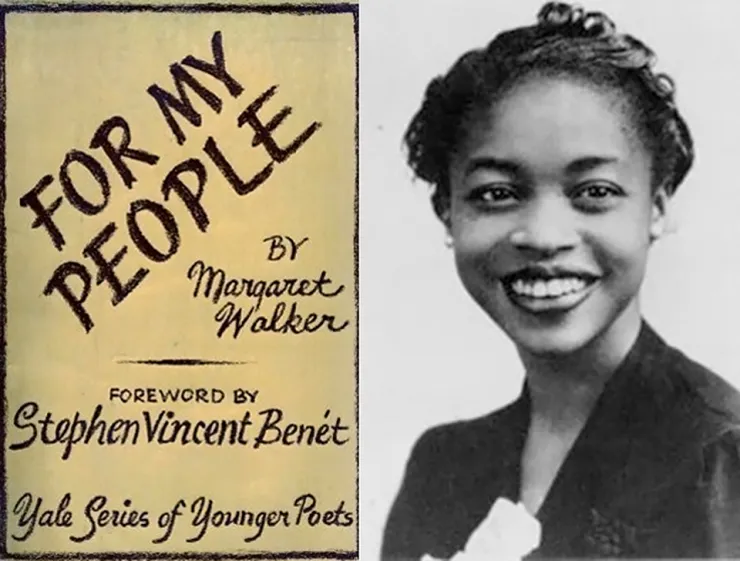
In 1943, works by several young poets impressed the Pulitzer Prize poetry jury. “One is a Filipino!” gushed the longtime jury chairman. “Another is a negro!”
The first contender was the highly experimental poet Jose Garcia Villa. In 1929, at the age of 21, he had emigrated from the Philippines, still a U.S. commonwealth. But in retrospect, Margaret Walker, the African-American, was the one who got away.
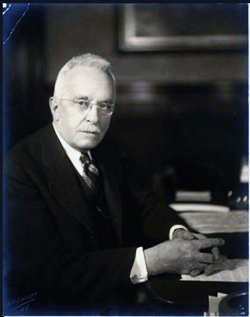
Wilbur Cross
The jury’s chairman, Wilbur L. Cross, was a Yale literature professor who ruled over the Pulitzer poetry prize for the first quarter century of its existence. The Pulitzer Advisory Board, which made the final choice for the prizes, followed his recommendations annually – until 1943.
Cross opened the door to this departure from the norm by suggesting that the board had a “rather important question of policy” to consider in awarding the prize that year.
The policy issue was, in short, Robert Frost.
By then Frost had already won three Pulitzer Prizes in poetry. According to one of his biographers, Jay Parini, he was also a close friend of all three members of the jury.
Cross’s jury report said: “No other book of American poetry published during 1942 is in a class with Frost’s ‘A Witness Tree.’ . . . For sheer merit, apart from any other consideration, the award should go to Frost.”
Then came the but:
“But Frost has already received the Pulitzer Prize three times, an honor which he has shared with Edwin Arlington Robinson. The question whether, considering all circumstances, the award should be made again to Frost is a matter for the Advisory Board to settle. The jury was perplexed over this question.”
Cross expressed concern that if the prize went to Frost, the jury would be accused of failing “to find any evidence of new talent.” He then listed seven worthy books of poems, beginning with Villa’s Have Come, Am Here. Cross cited several criticisms of this book but concluded: “in spite of these drawbacks, Villa has written a very remarkable series of poems, quite worthy of a Pulitzer Prize.”
“ ‘For my People,’ by Margaret Walker, a well-educated colored woman, now a college professor of English: Stephen Vincent Benét has given her a conspicuous place among the younger American poets. Miss Walker writes of her people with deep emotion, lightened here and there with humor. No one of her race, I think, has done better for them in verse.”
To the modern ear, these words sound condescending. But it is worth noting that Cross was a month shy of 80 years old when he wrote this report. He was born in 1862, the second year of the Civil War.
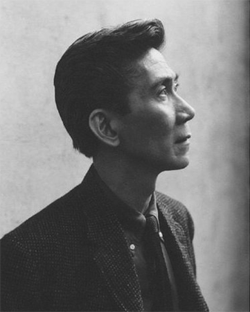
Jose Garcia Villa
As progressive as the Pulitzer Prize Advisory Board could sometimes be, it was a conservative body in its early years. In tune with its times, the board included no woman or African-American until 1979-80 – 36 years after the Villa and Walker books were considered.
The Pulitzer files do not reflect how much consideration the board gave either of these books, but in the end it awarded Frost his fourth Pulitzer.
Not to second-guess history, but The Witness Tree has not stood up as Frost’s best work. A prize to Walker would have changed a life and a career. And more than Villa’s poems, it is Walker’s work that resonates as art and artifact. Here is her title poem.
For My People
For my people everywhere singing their slave songs
repeatedly: their dirges and their ditties and their blues
and jubilees, praying their prayers nightly to an
unknown god, bending their knees humbly to an
unseen power;
For my people lending their strength to the years, to the
gone years and the now years and the maybe years,
washing ironing cooking scrubbing sewing mending
hoeing plowing digging planting pruning patching
dragging along never gaining never reaping never
knowing and never understanding;
For my playmates in the clay and dust and sand of Alabama
backyards playing baptizing and preaching and doctor
and jail and soldier and school and mama and cooking
and playhouse and concert and store and hair and
Miss Choomby and company;
For the cramped bewildered years we went to school to learn
to know the reasons why and the answers to and the
people who and the places where and the days when, in
memory of the bitter hours when we discovered we
were black and poor and small and different and nobody
cared and nobody wondered and nobody understood;
For the boys and girls who grew in spite of these things to
be man and woman, to laugh and dance and sing and
play and drink their wine and religion and success, to
marry their playmates and bear children and then die
of consumption and anemia and lynching;
For my people thronging 47th Street in Chicago and Lenox
Avenue in New York and Rampart Street in New
Orleans, lost disinherited dispossessed and happy
people filling the cabarets and taverns and other
people’s pockets and needing bread and shoes and milk and
land and money and something – something all our own;
For my people walking blindly spreading joy, losing time
being lazy, sleeping when hungry, shouting when
burdened, drinking when hopeless, tied, and shackled
and tangled among ourselves by the unseen creatures
who tower over us omnisciently and laugh;
For my people blundering and groping and floundering in
the dark of churches and schools and clubs
and societies, associations and councils and committees and
conventions, distressed and disturbed and deceived and
devoured by money-hungry glory-craving leeches,
preyed on by facile force of state and fad and novelty, by
false prophet and holy believer;
For my people standing staring trying to fashion a better way
from confusion, from hypocrisy and misunderstanding,
trying to fashion a world that will hold all the people,
all the faces, all the adams and eves and their countless
generations;
Let a new earth rise. Let another world be born. Let a
bloody peace be written in the sky. Let a second
generation full of courage issue forth; let a people
loving freedom come to growth. Let a beauty full of
healing and a strength of final clenching be the pulsing
in our spirits and our blood. Let the martial songs
be written, let the dirges disappear. Let a race of men now
rise and take control.