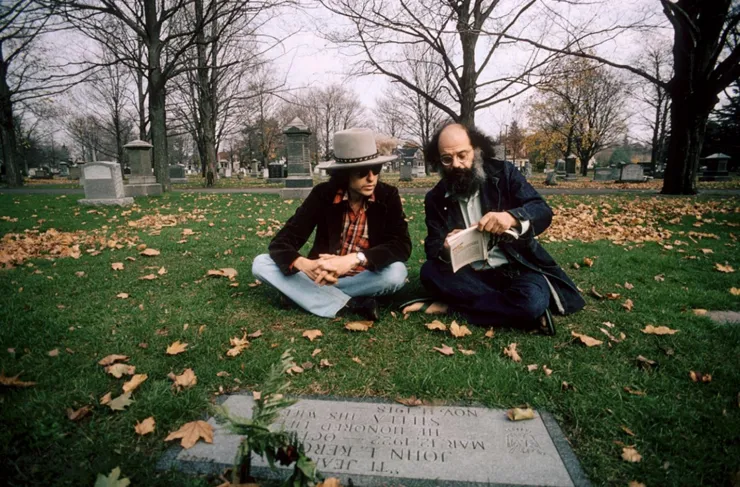
Journalist Steve Silberman has released a transcript of a previously unknown 1977 interview of Bob Dylan by Allen Ginsberg. Best known for his writings on neurodiversity and the San Francisco rock scene of the 1960s, Silberman had studied under Ginsburg at the Naropa Institute's Jack Kerouac School of Disembodied Poetics that year.
Although it spanned three decades, the friendship between the Dylan and Ginsburg was evanescent, often characterized by late-night drop-ins at the poet's East Village apartment and recording sessions that humored his fascination with pop music stardom.
According to biographer Bill Morgan, Dylan was Ginsberg's "greatest hero" among his celebrity friends, even after he settled into literary respectability and a tenured professorship at Brooklyn College. However, "the more Allen thought about Dylan, the more he realized that he didn't really know him at all."
In this context, the interview is noteworthy for its eschewal of the personal history that bound the writers together through tempestuous periods of their lives. It was Ginsberg who thoughtfully delivered books to Dylan as he convalesced from his 1966 motorcycle accident near Woodstock, N.Y. Likewise, Dylan once declared Ginsberg's work "the first poetry that spoke to me in my own American language" and counseled Ginsberg in his personal life.
Instead, they turned to business of a sort: poetics, film and the making of Dylan's "Renaldo and Clara."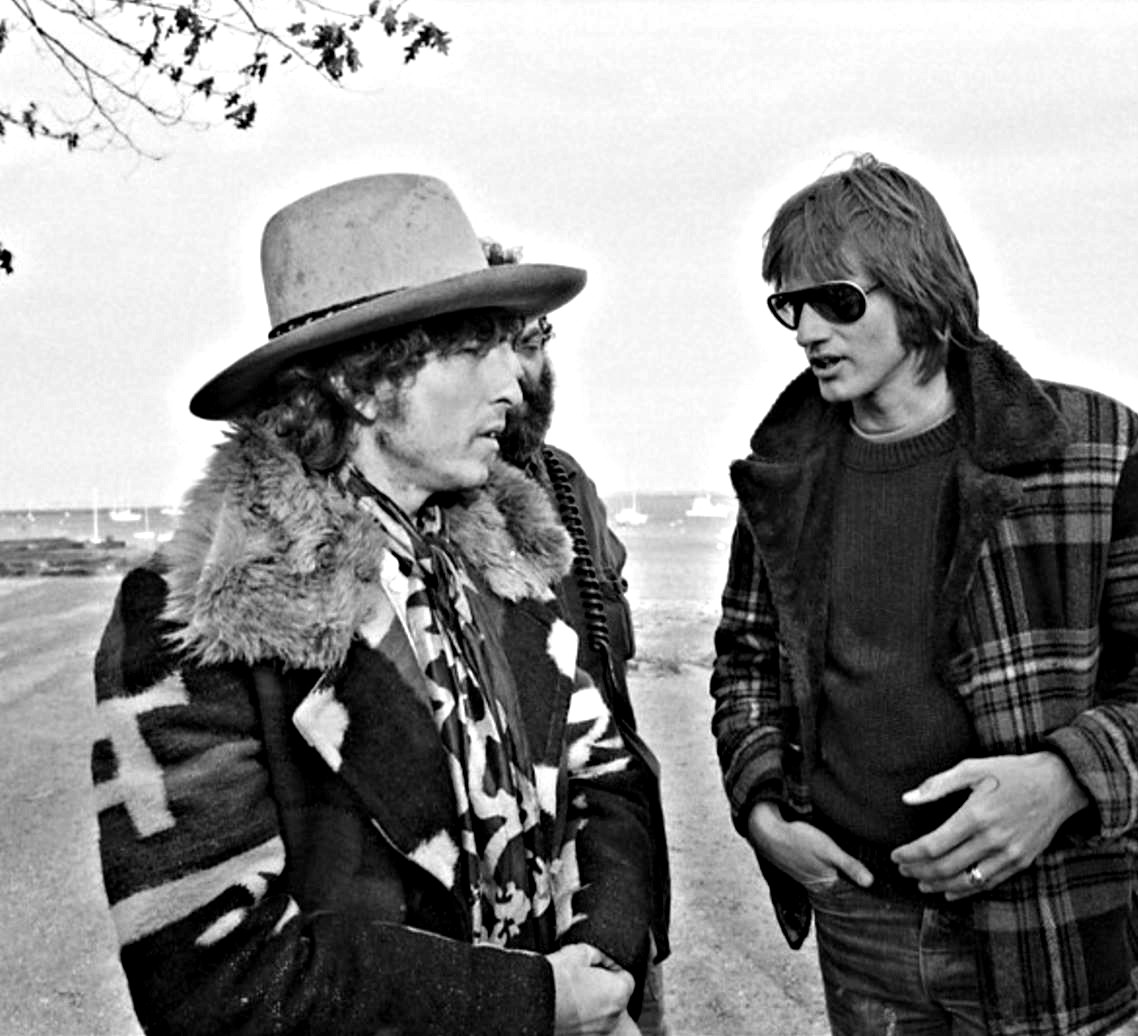
Bob Dylan (left), filmmaker Howard Alk (center) and Sam Shepard (right) during the production of "Renaldo and Clara." (File)
Released in 1978 and nominally co-written by 1979 Drama winner Sam Shepard (then primarily known for his work as an underground playwright and screenwriter), "Renaldo" juxtaposed concert and documentary footage from the 1975 leg of Dylan's Rolling Thunder Revue against chaotic fictional vignettes featuring the likes of Shepard and Ginsberg. The self-financed, 232-minute film failed to resonate with arthouse audiences and has remained largely unavailable since.
While it proved to be a confounding bookend to one of the singer-songwriter's richest artistic periods, Dylan perceived the film as a major breakthrough.
"The interest is not in the literal plot but in the associational texture — colors, textures, images. [...] The point to get is that the film is connected by an untouchable connective link," he said.
Elsewhere, the two reflect on the immortality and processes of art, including Dylan's adoption of the "conscious" aesthetics of painter Norman Raeben, a path that led to the creative wellspring of "Blood on the Tracks" (1975). Beginning in the 1960s, Ginsberg frequently employed found footage from audio recordings in his work, leading Dylan to petulantly assert that Ginsberg was an "unconscious artist."
"I don't think you know what you're doing," he said. "Anybody can be an unconscious artist."
"You can't improve on Actuality," Dylan continued. "Let's say that this is what God gives you — he gives you a flower. Let's see you improve it."
In an invocation of his Apollonian apprenticeship under Lionel Trilling, Ginsberg attempted to "arrange" a flower that Dylan handed to him. Dylan, the onetime fraternity brother-turned-autodidactic poète maudit, encouraged him to photograph the flower or even to "sing" it.
At an impasse, they moved on to a thorough explication of "Renaldo," Ginsberg deferring to his enigmatic younger friend once more. It was emblematic of a singular dialogue that would continue for nearly 20 years.
Read the full interview here.