Mary Lou Werner began her journalism career as a 17-year-old copygirl at the Evening Star in Washington, D.C. The boss who offered her a reporting job three years later first made sure she intended to stay single. “He scared me out of 10 or 15 years of marriage,” she later recalled.
When she became an editor, she was asked if she thought male reporters would listen to her. It turned out they did. Over the years she mentored journalists as diverse as Carl Bernstein of Watergate fame and Cal Thomas, the conservative columnist. After her death in 2009 at the age of 83, Bernstein recalled “her imperturbable manner and her constant good nature” as well as her speed in a job that required it.
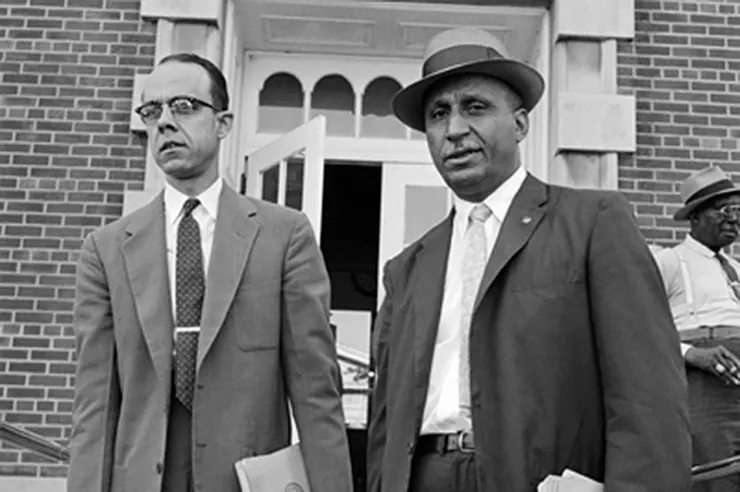
In 1958 when Werner covered the school integration crisis in Virginia, speed was of the essence. The Star was an afternoon paper, and she later recalled of this period: “Ninety percent of my stuff I dictated off the top of my head.”
The governor of Virginia had declared: “Integration anywhere means destruction everywhere.” Under a regime of “massive resistance” the state passed a law that said anytime an African-American student entered a white school, the school had to close.
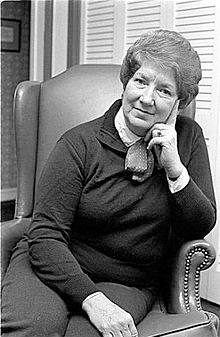
Mary Lou Werner
Werner won the 1959 Pulitzer Prize in Local Reporting, Edition Time – local reporting of breaking news – for her stories. The Pulitzer Prize Board cited her for “comprehensive year-long coverage of the integration crisis in Virginia which demonstrated admirable qualities of accuracy, speed and the ability to interpret the news under deadline pressure in the course of a difficult and taxing assignment.”
She later married, becoming Mary Lou Forbes, and edited the commentary section of the Washington Times. Karen Rothmyer, an assistant professor at the Columbia University’s Graduate School of Journalism, interviewed Forbes about her Pulitzer-winning work. In this excerpt from the oral history Rothmyer compiled from the interview, Forbes told her how she worked sources to figure out what was really happening.
‘If the paper did its job of informing people, they would make the right decision’
By MARY LOU WERNER
I was covering the Virginia General Assembly at the time the so-called massive resistance laws were passed. Right after the Brown decision the then-governor, Tom Stanley, had very reasonable things to say, but then political considerations got involved. One of the main laws was that the minute a Negro entered a white school, the school was closed. Another one was that the state would give a tuition grant to anyone who wanted to go to a private school.
Albertis Harrison, who was elected state attorney general in 1957, and who later became governor, filed a suit as attorney general challenging that law. The filing was accompanied by a terse announcement that the state wanted to make sure that giving state money to private individuals to go to private schools was all legally okay under the Virginia constitution. I talked to Harrison and that conversation is a good example of how you get your insights into things.
I asked Harrison, “Is this just another stalling move?” Well, he was silent for a long time. Then he said, “Don’t you ever quote me on this, but let me tell you, if we’ve got to get rid of these laws, let me ask you something: is it better for us to get rid of them in our state court?” This case was filed in a state court, and meanwhile there was a challenge of the same laws by the NAACP in the federal court. “Is it better for us to get rid of them, will the people swallow it better, or do we wait for the federal court to do it?”
I said, “Say no more.”
But that gave me the tip-off. I wrote my story to say that the state of Virginia had filed this suit and then, very quickly, I added that while some saw this as a delaying tactic, others – and of course those “others” included no better a source than Harrison – felt . . . and then I described the issue of state versus federal action. I was the only reporter who played it like that. The New York Times and the Washington Post and everybody else jumped to the conventional conclusion that it was solely a delaying tactic.
I got along with the NAACP as well as with the leadership in Virginia. Both sides talked to me to the extent they could about their court strategies or what they believed would happen next or even beyond that. We respected confidences in those days perhaps more than now, and I would get tips from both sides. There were some really delightful lawyers on both sides.
Spottswood Robinson was one of the NAACP attorneys, a brilliant man, and he could really argue a case. I complimented him one day on one of his appearances in court. One of the arguments was about busing – whether this wouldn’t lead to isolation. Robinson started talking in court about what he called the loneliness of the Negro. “It doesn’t hurt him,” he said. “He can survive it. We’ve survived it for years.”
I told him later, “That really got me.” And he said, “Oh, I use that one all the time.”
Most of the stories I did on what was happening were breaking news, but I did some feature stories whenever I could. I’d go to a town, for example, and do a piece on the mood of the town.
I was also still covering a lot of politics and I remember following around a politician one day who was running for Congress. He was trying to deal gingerly with questions about the school situation as he went through a very definitely low-income white area. I think it was actually public housing.
Some young woman, with babies squabbling around, asked him, “Well, what are you going to do about this integration thing?” and he came up with a standard politician’s answer: “It’s a real problem we got to solve” – you know, the whole routine – and she said, “Well, I just don’t think it’s right. I could have been born” – I guess she said colored – “I could have been born colored and I wouldn’t want anyone to have laws against me.”
So here was some poor lady who you’d think had nothing more on her mind than how warm is the pablum, and that’s what she’s saying.
No matter how hard you try to be even-handed, it was such a sensitive issue that people would call to complain even about how we covered a legal decision. But we did take care to avoid inflammatory pieces. There was a strong sense that Virginia would work its way out of this, maybe not as fast as it should, but that if the paper did its job of informing people, they would make the right decision.
Sources: “Pulitzer-winning journalist Mary Lou Forbes dies at 83,” by Donald Lambro, Washington Times, June 9, 2009; Rothmyer, Karen: Winning Pulitzers: The Stories Behind Some of the Best News Coverage of Our Time, Columbia University Press, New York, Oxford, 1991. pp. 103-110.