Guamanians are Americans. As the U.S. and North Korean governments lobby threats across the Pacific, this island of about 163,000 U.S. citizens has become caught in the crosshairs. It's only 2,100 miles southeast of North Korea.
Manny Crisostomo, who won a Feature Photography prize in 1989 for his work at the Detroit Free Press, shares with Pulitzer.org images from his home island. Peek through Crisostomo's highly personal lens on Guam. The captions are his own.
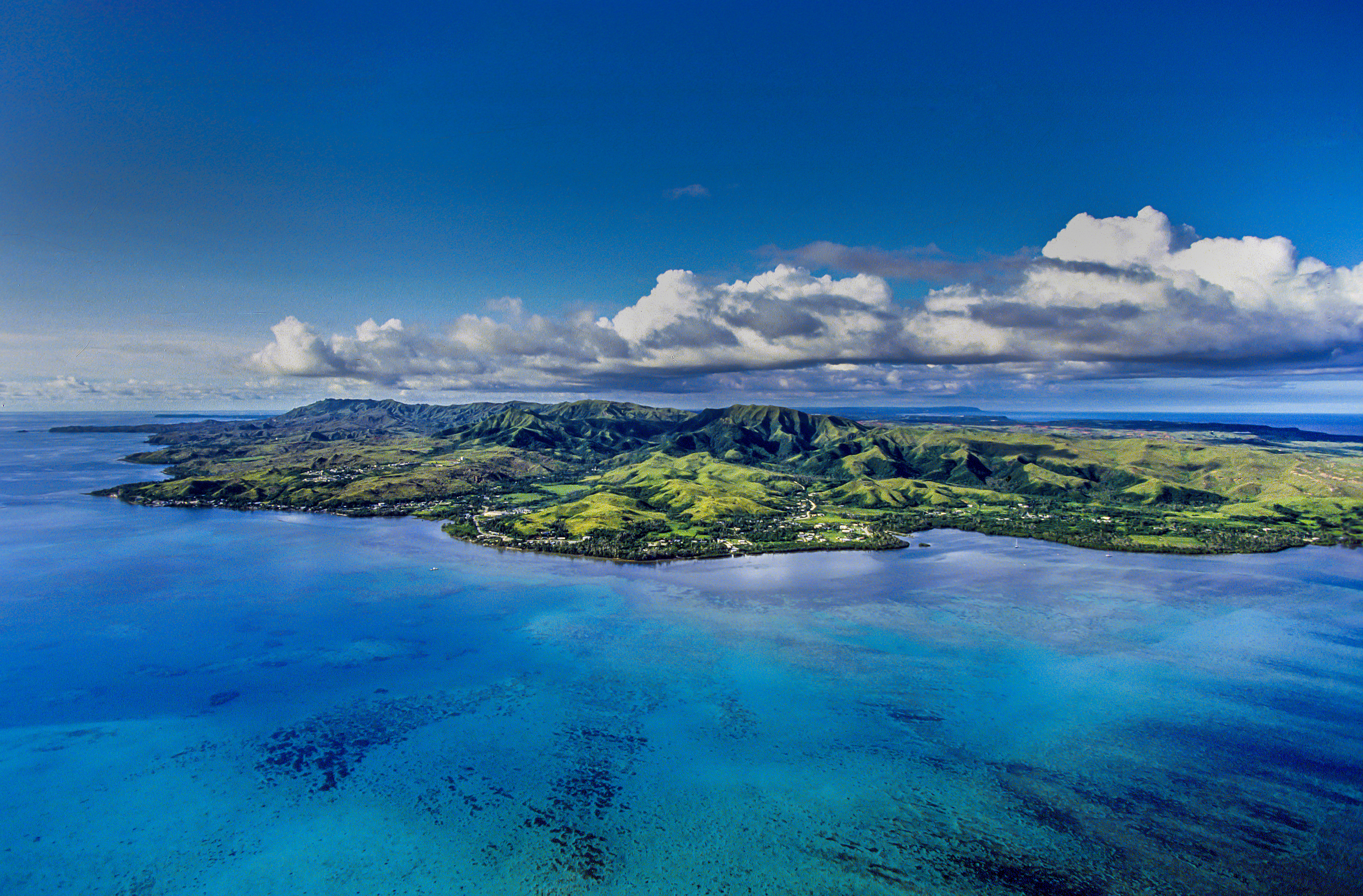
Guam is a US territory, of 160,000 people and about 7,000 military personnel, most stationed at Andersen Air Force Base and Naval Base Guam, which also contain long-range bombers, ships and submarines.The island is an important strategic hub for the U.S — about 3,800 miles west of Hawaii and only 2,100 miles southeast of North Korea.
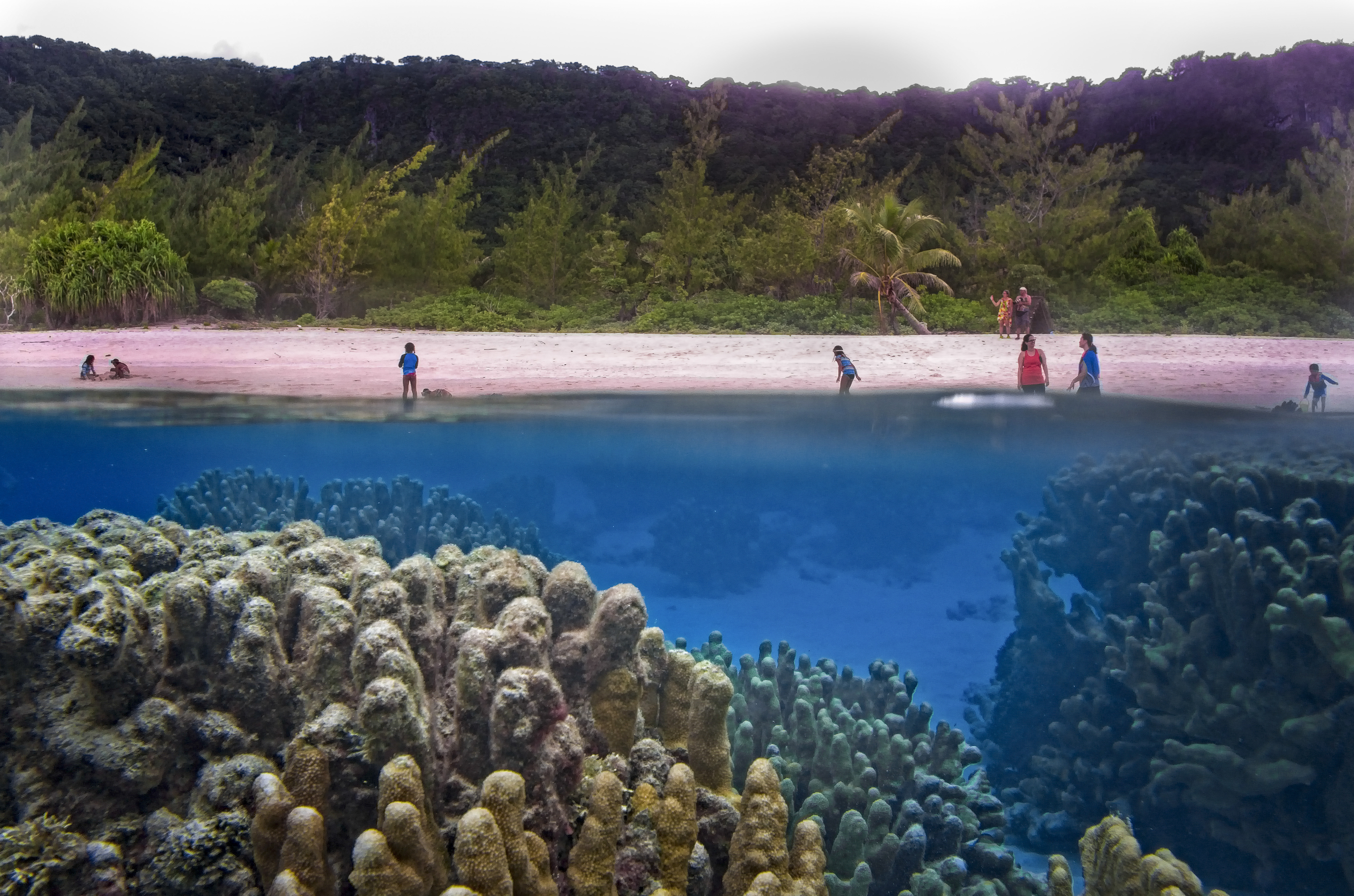
The reef and pristine beach in Hinapsan, located on the northern end of the island of Guam. Local landowners and their guests have to enter and drive through Anderson Air Force Base to access the land and beachfront. That U.S. military base contains long-range bombers.
The Guam local newspaper reported on September 18, 2017: "Bombers from Andersen Air Force Base joined other military aircraft from the U.S., Japan and South Korea in a show of force that included a bombing drill with live ammunition over the Korean peninsula Monday."
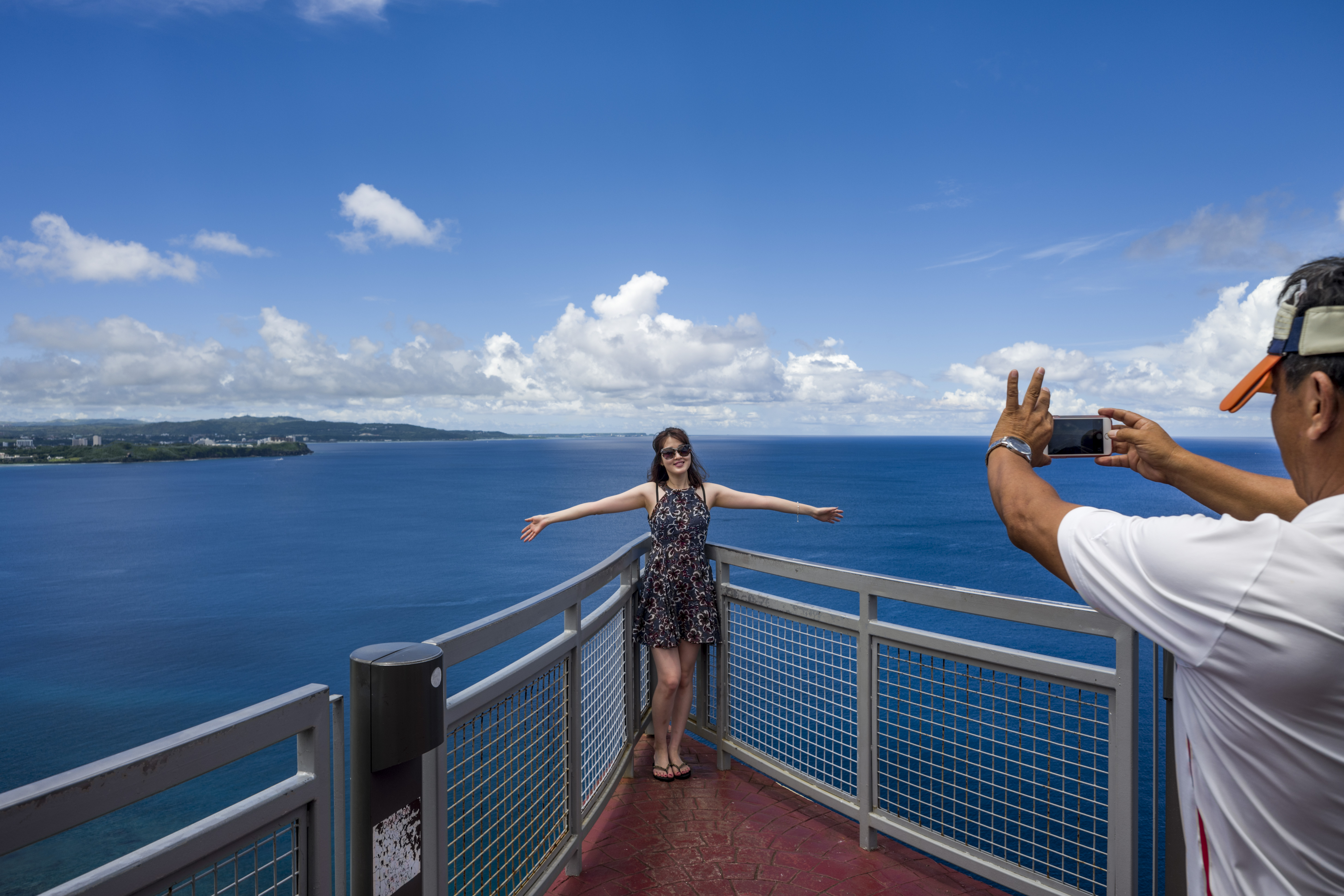
Two Lovers Point is a popular tourist spot in Guam. The Guam Visitors Bureau reported Guam welcomed 143,677 visitors in August 2017. Since 1967 Guam has welcomed more than 38 million visitors
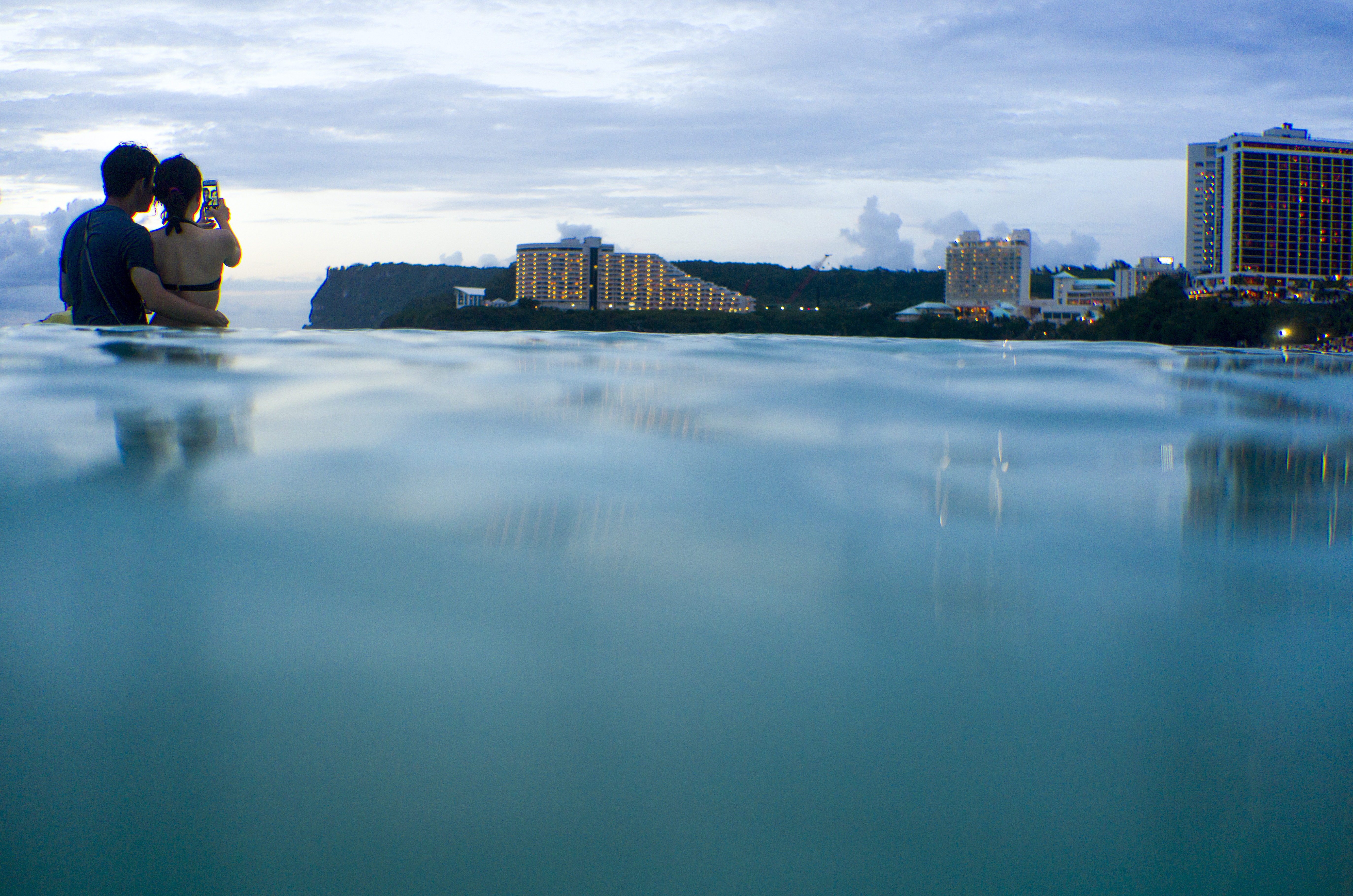
Tourists take a selfie in the waters of Tumon Bay on Guam.
"Before the North Korea tension, our visitor arrivals for this August were expected to be the top month in Guam’s history. Instead, there was a slight decline. The last thing we need is for this trend to continue. We must make great strides to ensure the future of our island’s top economic contributor remains robust and diverse. Lt. Governor Tenorio and I are committed to ensuring our visitors and residents feel safe and protected. The livelihood of thousands of men and women are on the line if we don’t all work together to sustain our tourism industry.”
— Guam Governor Eddie Baza Calvo
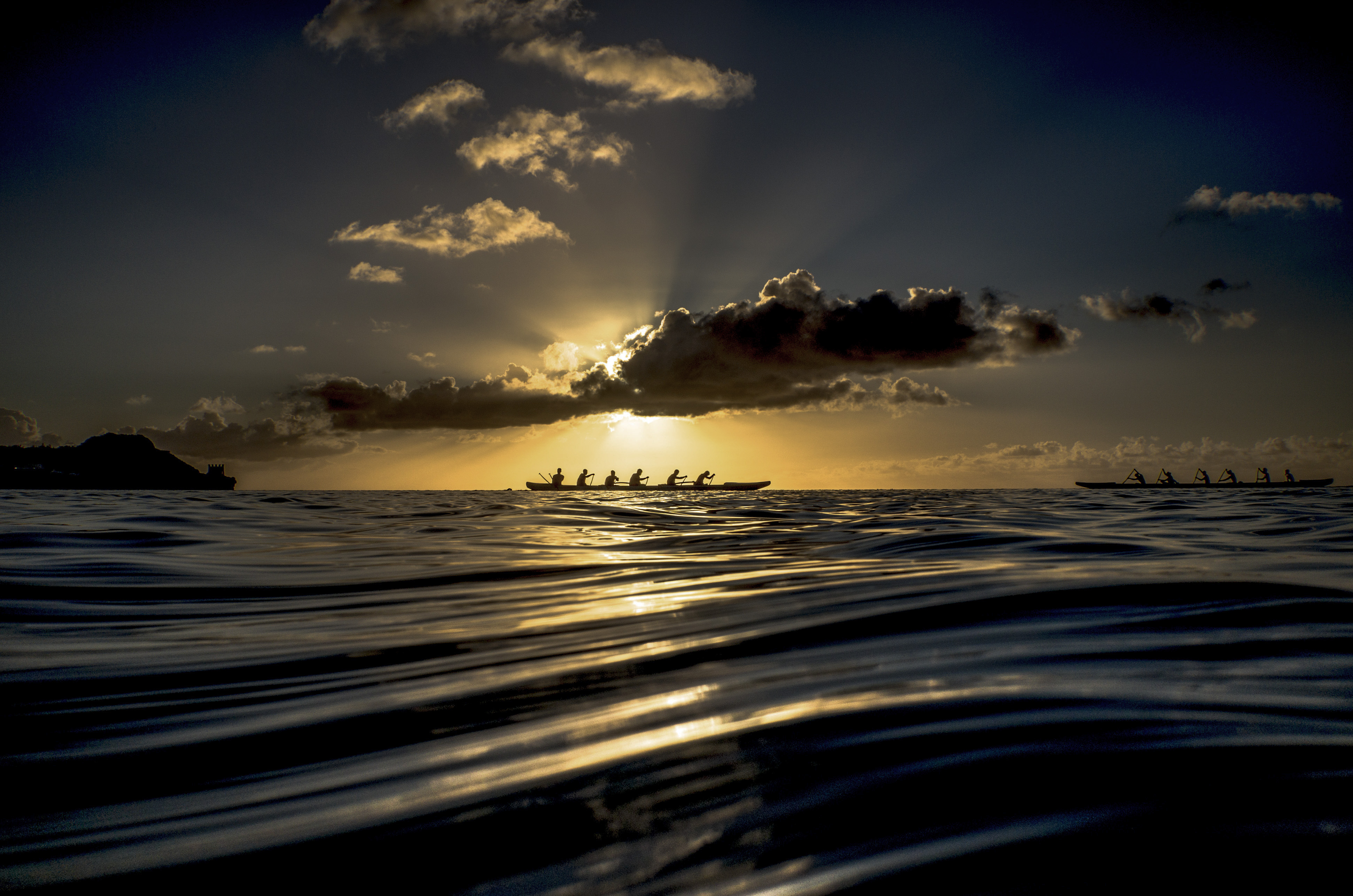
Canoe paddlers train for races in Tumon Bay, Guam.
According to the Guam Visitors Bureau Guam, welcomed 143,677 visitors in August 2017, a 0.7 percent decrease when compared to the previous year. While arrivals fell short of surpassing the record of 144,758 visitors in August 2016, it still was enough to record the second best arrivals month in Guam’s history.
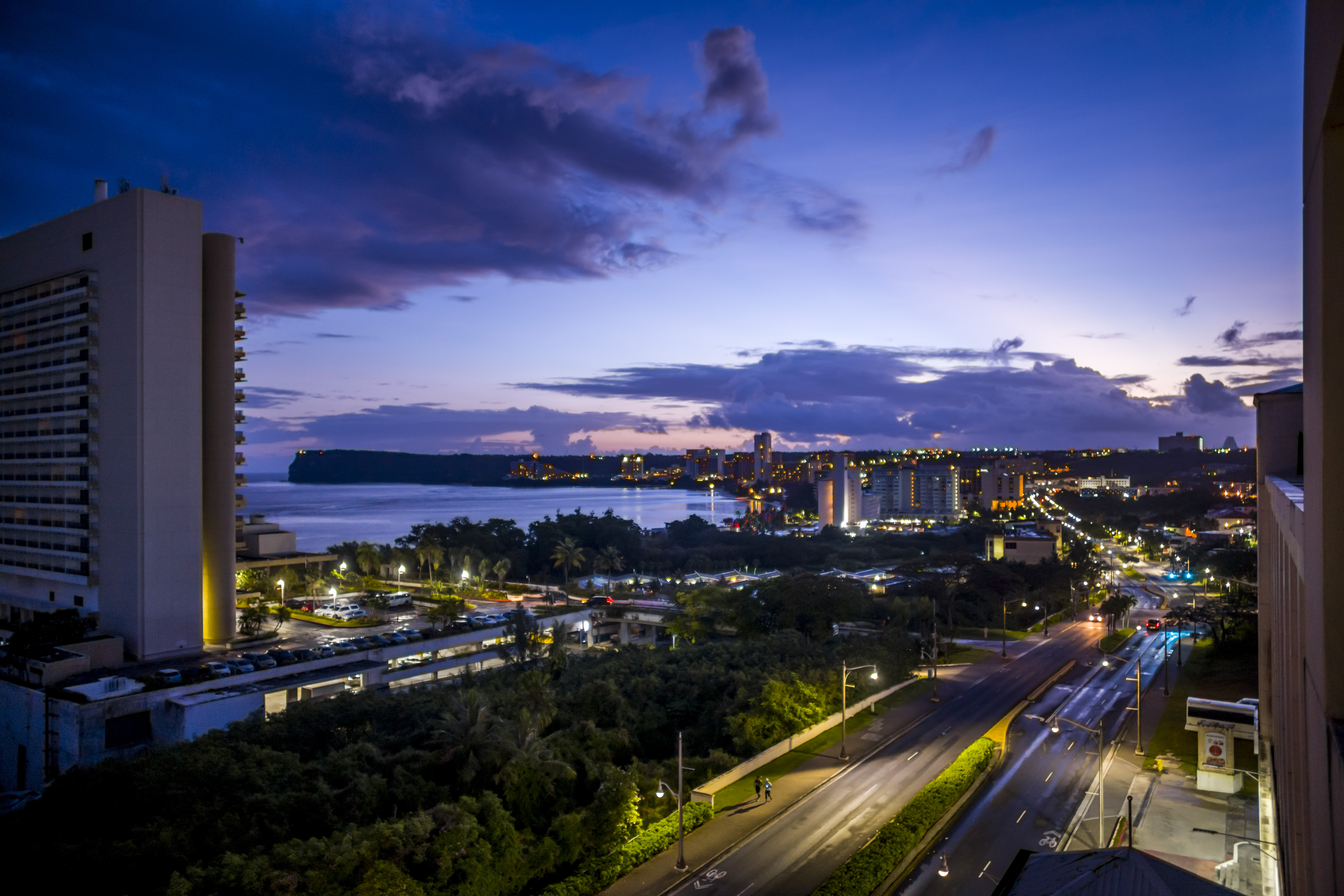
Hotels line Tumon Bay, Guam, in this early morning photo.
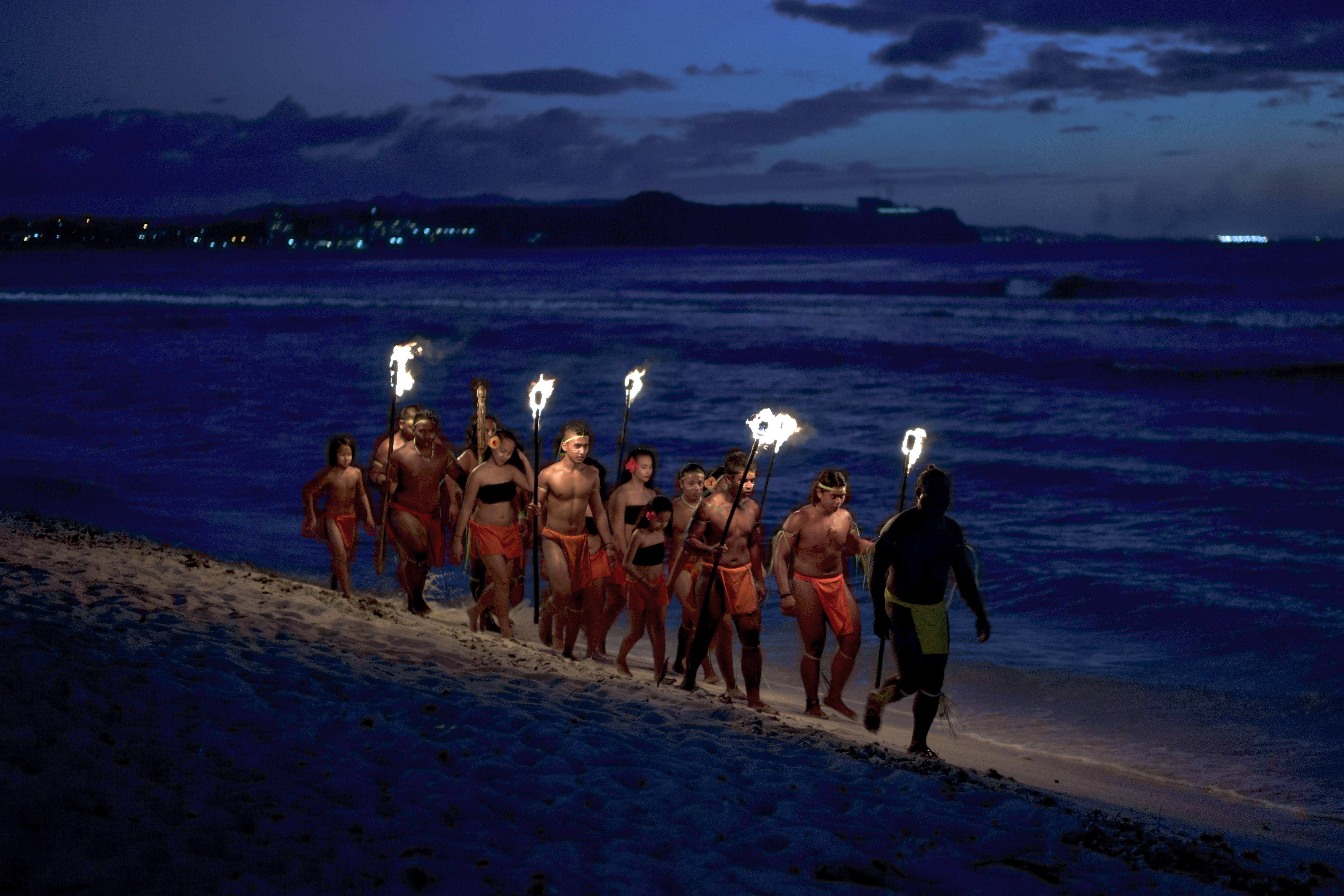
Traditional dancers and performers walk the sand beach on their way to their performance venue in Tumon Bay, Guam.
The Guam Visitors Bureau (GVB) has released its findings from the 2017 Survey of Tourism Attitudes of Resident (STAR) survey. The STAR survey noted increased favorability toward tourism, with 69 percent of residents believing that tourism has a positive impact on them and their families and Guam overall.
Most residents that took the survey also agreed that tourism creates many well-paying jobs.
Based on information from the STAR survey, it was recommended that GVB focus more on traditions, history and food when promoting Guam’s culture to visitors, as well as arts and crafts for community-sponsored events.
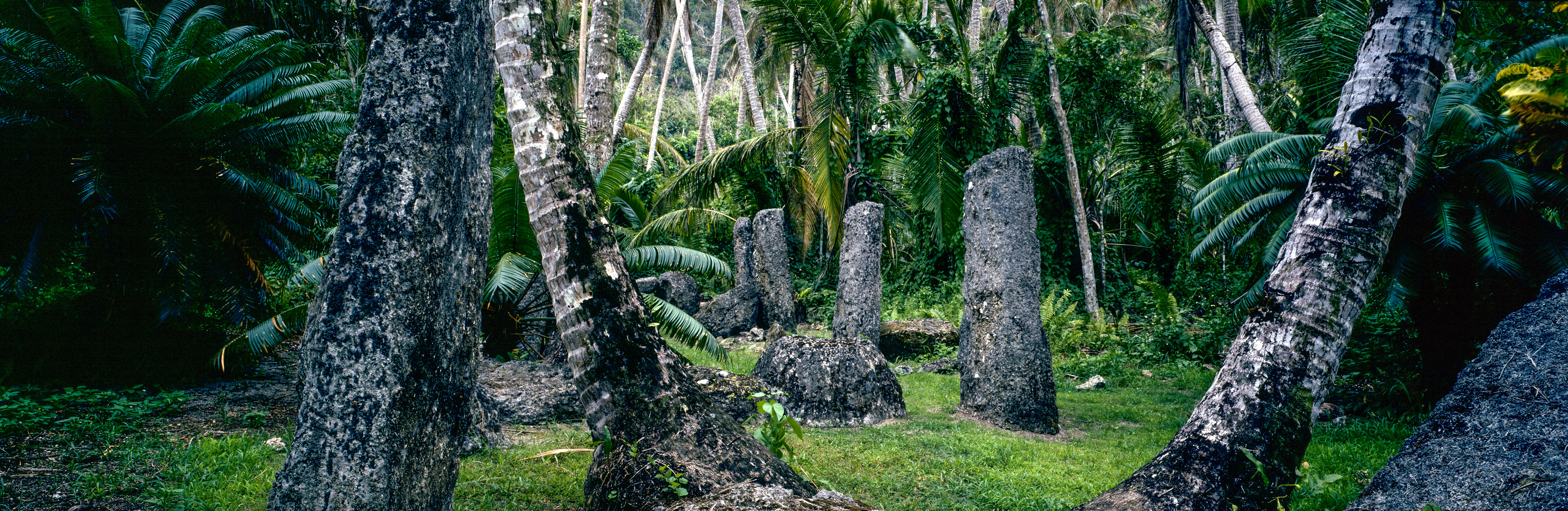
The jungle in Hinapsan has a sacred Latte site. According to Guampedia, "Latte is a Chamorro term that refers to stone pillars and cup-shaped capitals or capstones, which represent house supports and are ascribed to the ancient people of Guam and the Mariana Islands.
In modern times the latte shape has become a symbol of Chamorro cultural identity and has been used in many different contexts: official government documents, government offices, historic building reconstructions, license plates and bus stops; in business logos and names, tourist souvenirs, jewelry.
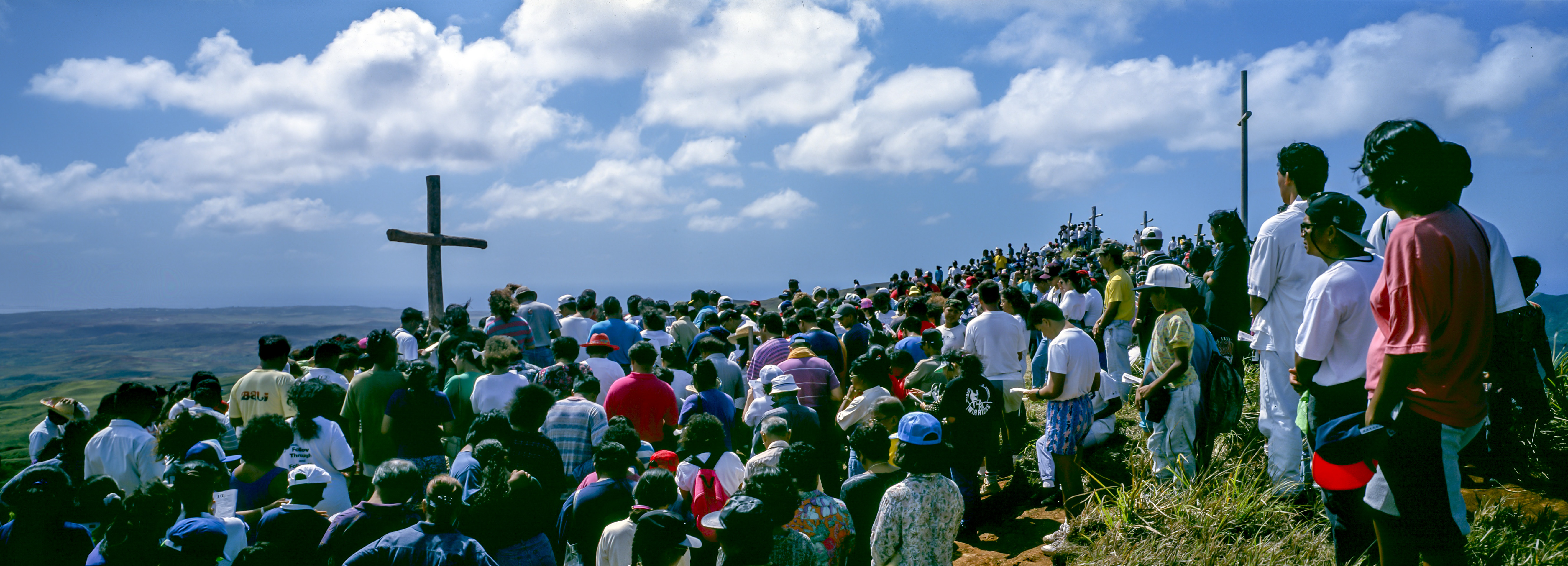
The island's Roman Catholic faithful hike and carry wooden crosses to the tallest point in Guam to celebrate Good Friday.
According to Guampedia, "Guam is the site of the first Roman Catholic mission and formal European colony in the Pacific islands."
As a Spanish colony, the Chamorro people adapted to influences regarding religion, social organization and cultural practices from Spain, Mexico and the Philippines.
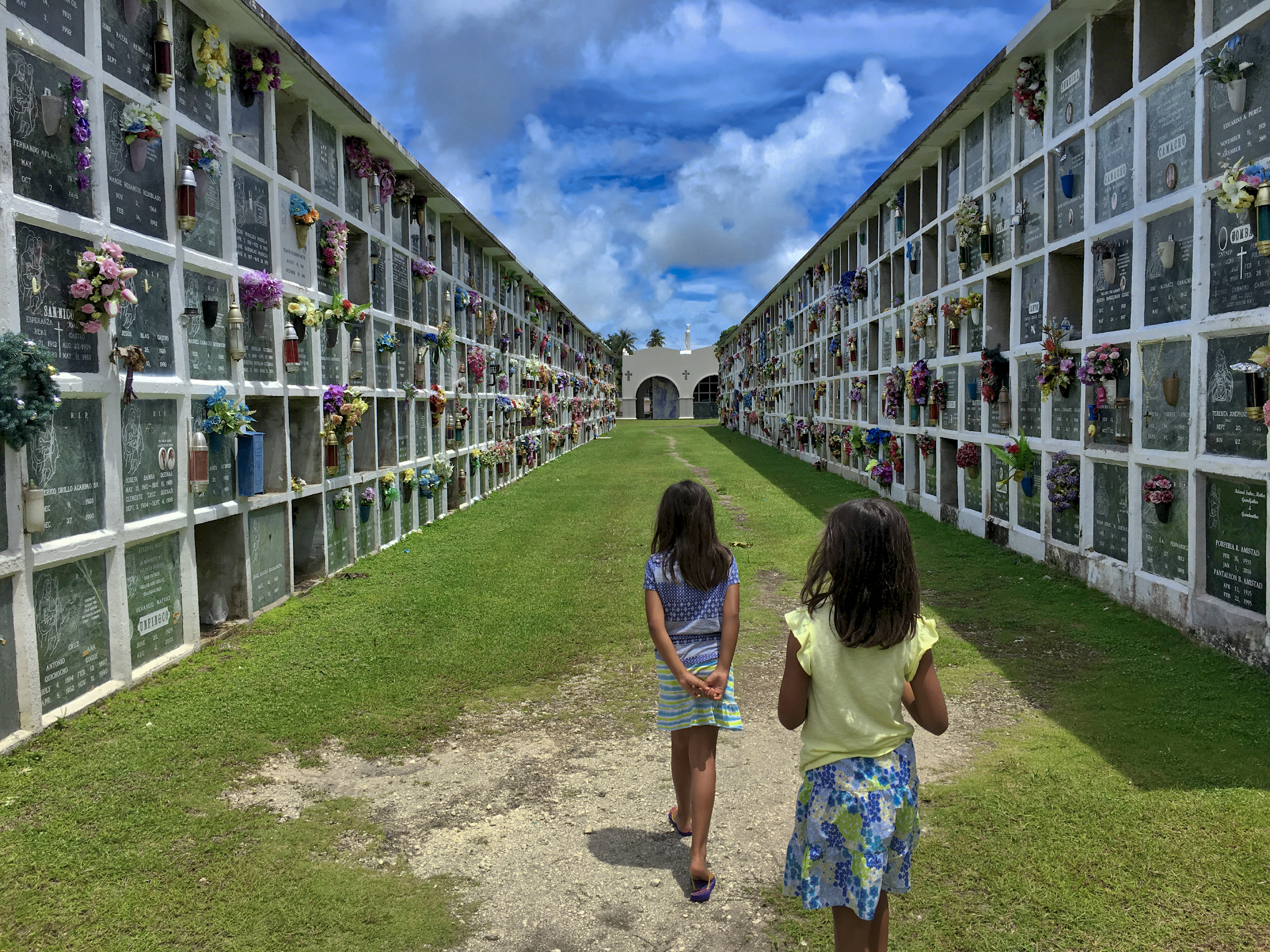
My twin daughters Audrey and Sophie walk through a row of crypts at Pigo Catholic Cemetery in Hagåtña, Guam. I was showing them where grandpa and grandma are buried.
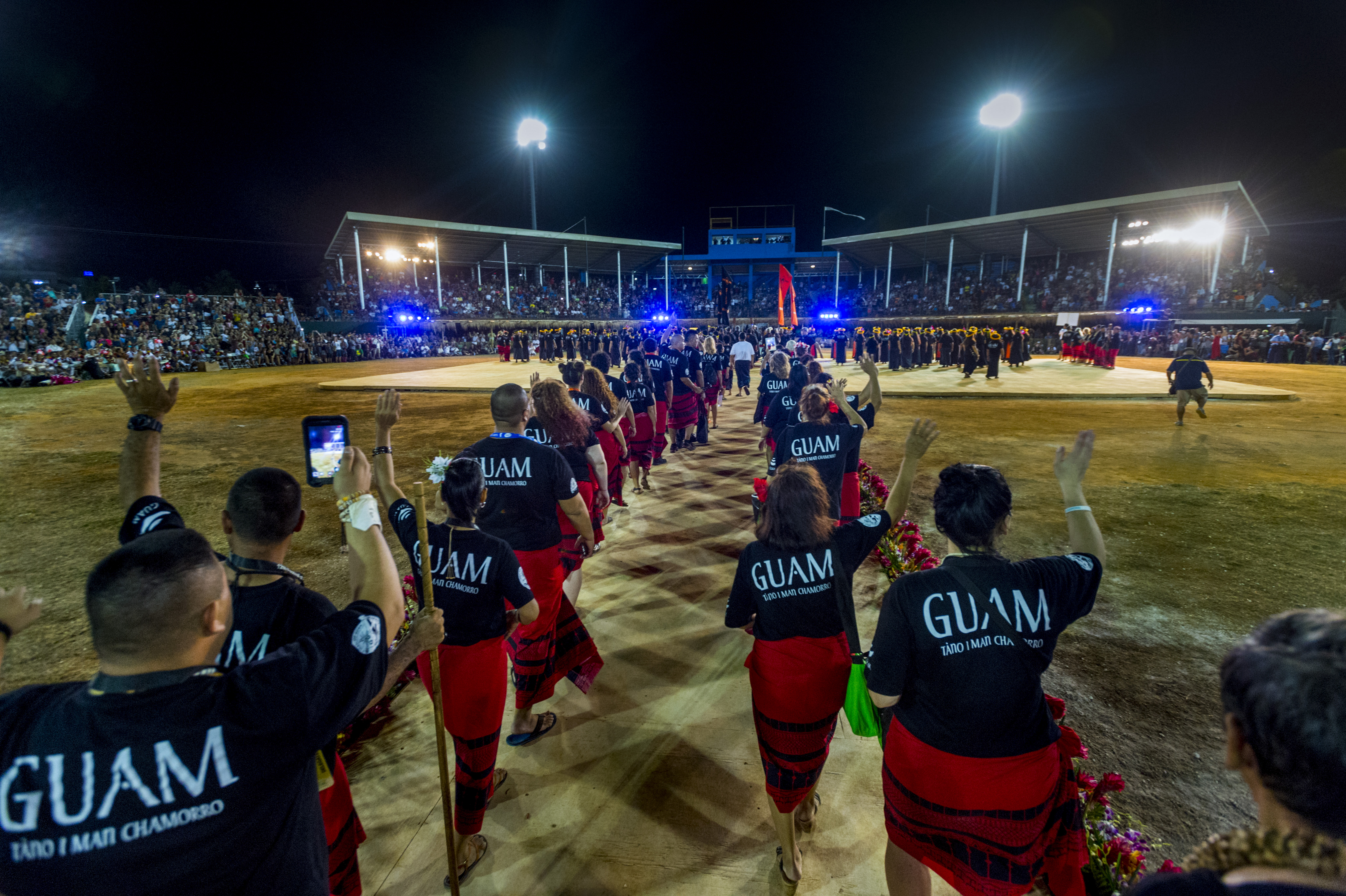
Cheers greet the Guam delegation as they join the Opening Ceremony at Paseo de Susana in Hagåtña during the Parade of Nations the official start of the 12th Festival of Pacific Arts.
The traveling festival hosted every four years by a different country in Oceania. More than 3,000 performers, artists and cultural icons from 25 island nations showcased their indigenous cultures in what is called the “Olympics of Pacific Arts.”
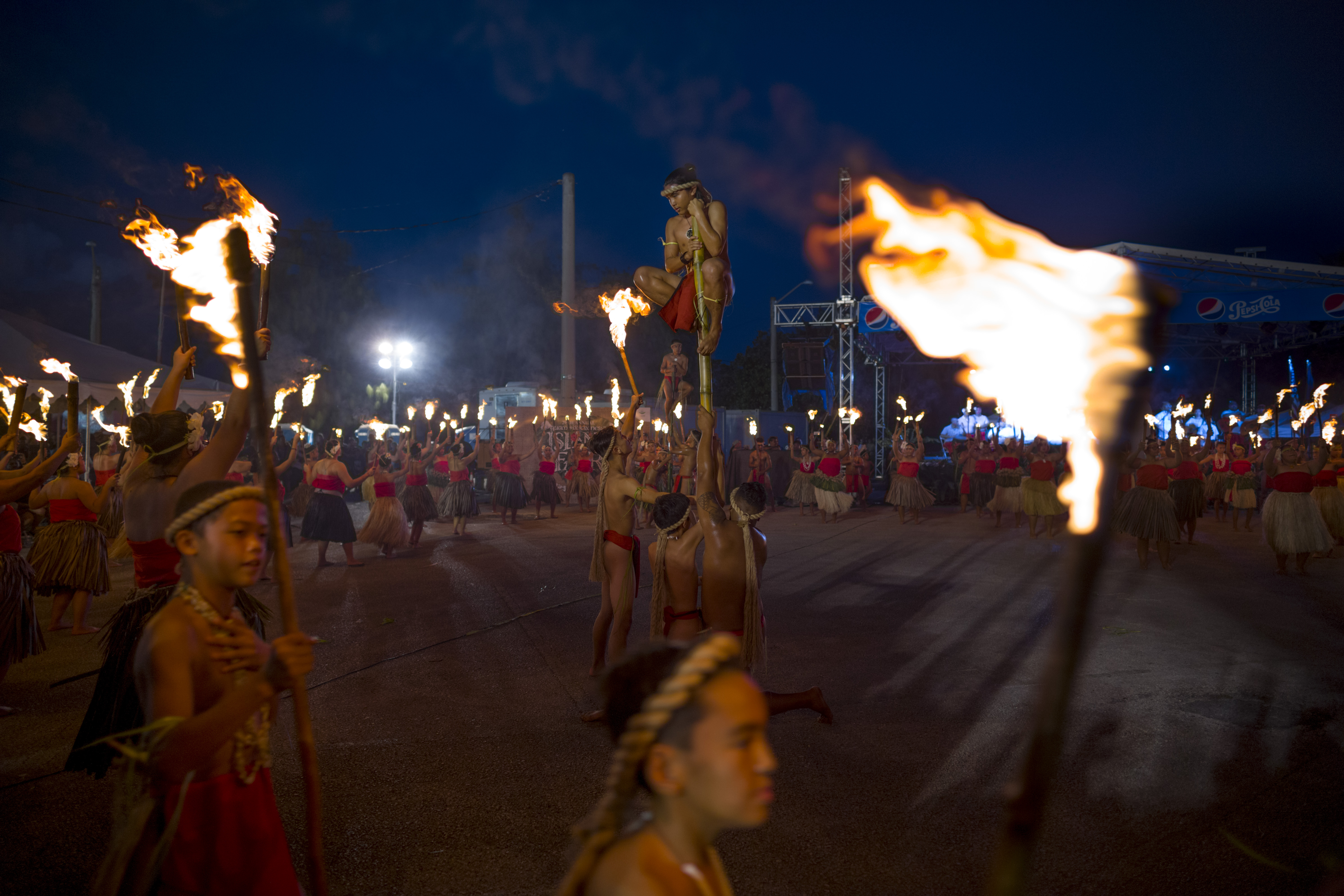
Opening ceremony for the Guam Micronesia Island Fair at Hagatna, Guam.
The Guam Micronesia Island Fair is the island’s biggest celebration of the Micronesian region’s art and culture.The Guam Visitors Bureau estimates about 10,000 people per day attended the Island Fair, which was extended this year from three to five days. Traditionally held at Ypao Beach Park, GVB moved the annual event to Chamorro Village.
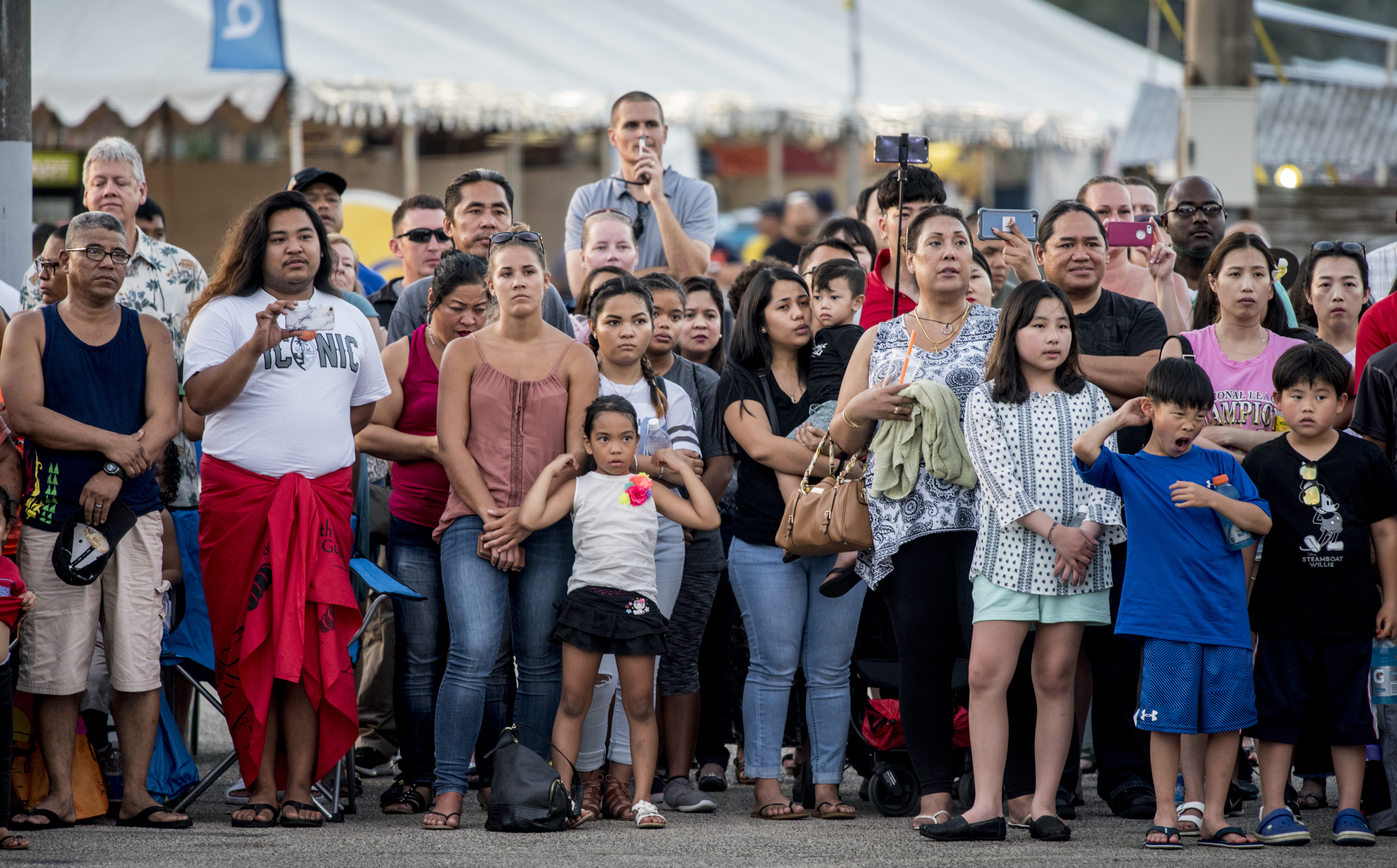
Fair-goers attend the opening ceremony for the Guam Micronesia Island Fair at Hagatna, Guam.
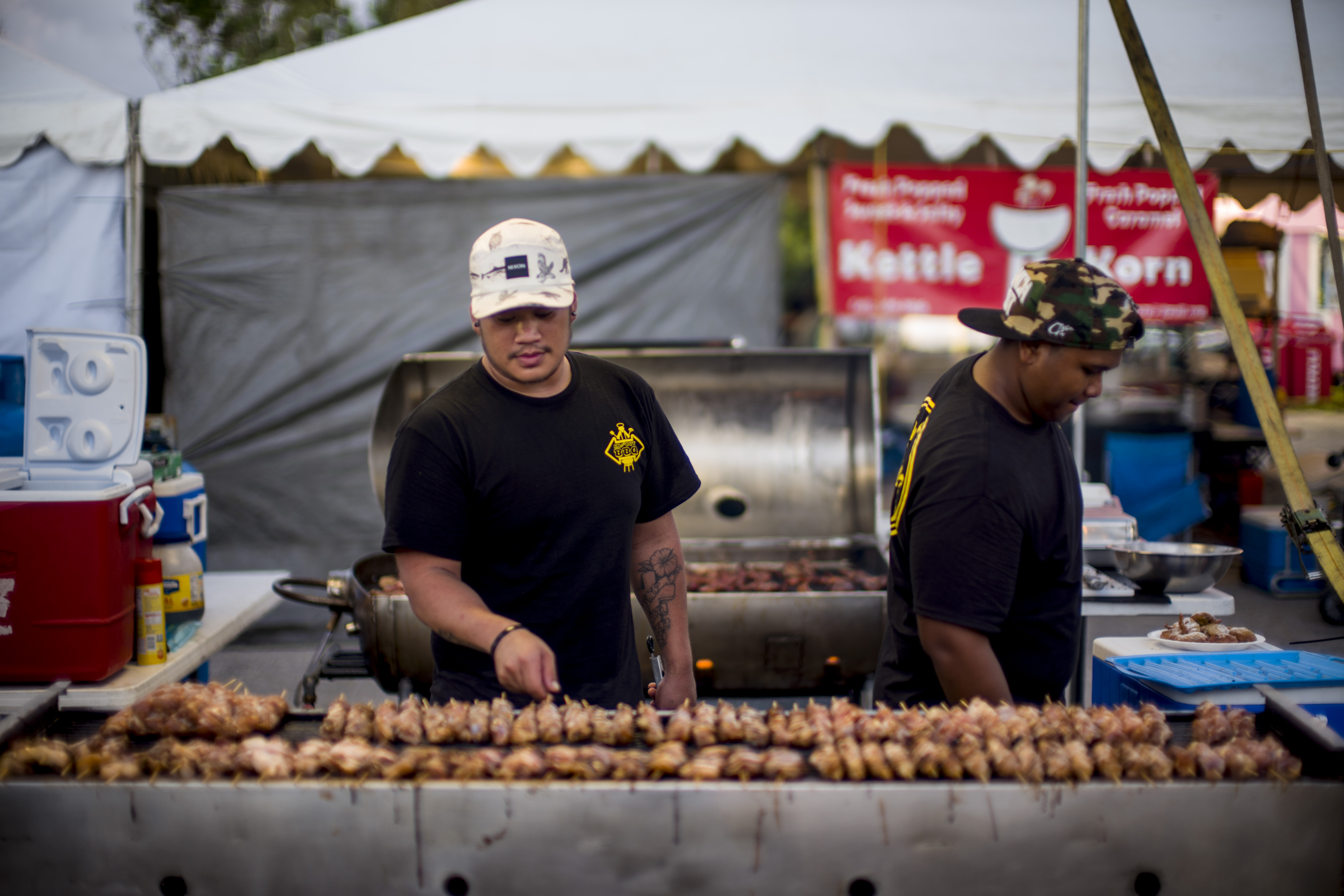
Barbecue is a common sight on the island of Guam. Here, cooks prepare food for the hundreds of people that attended the Guam Micronesia Island Fair at Hagatna, Guam.
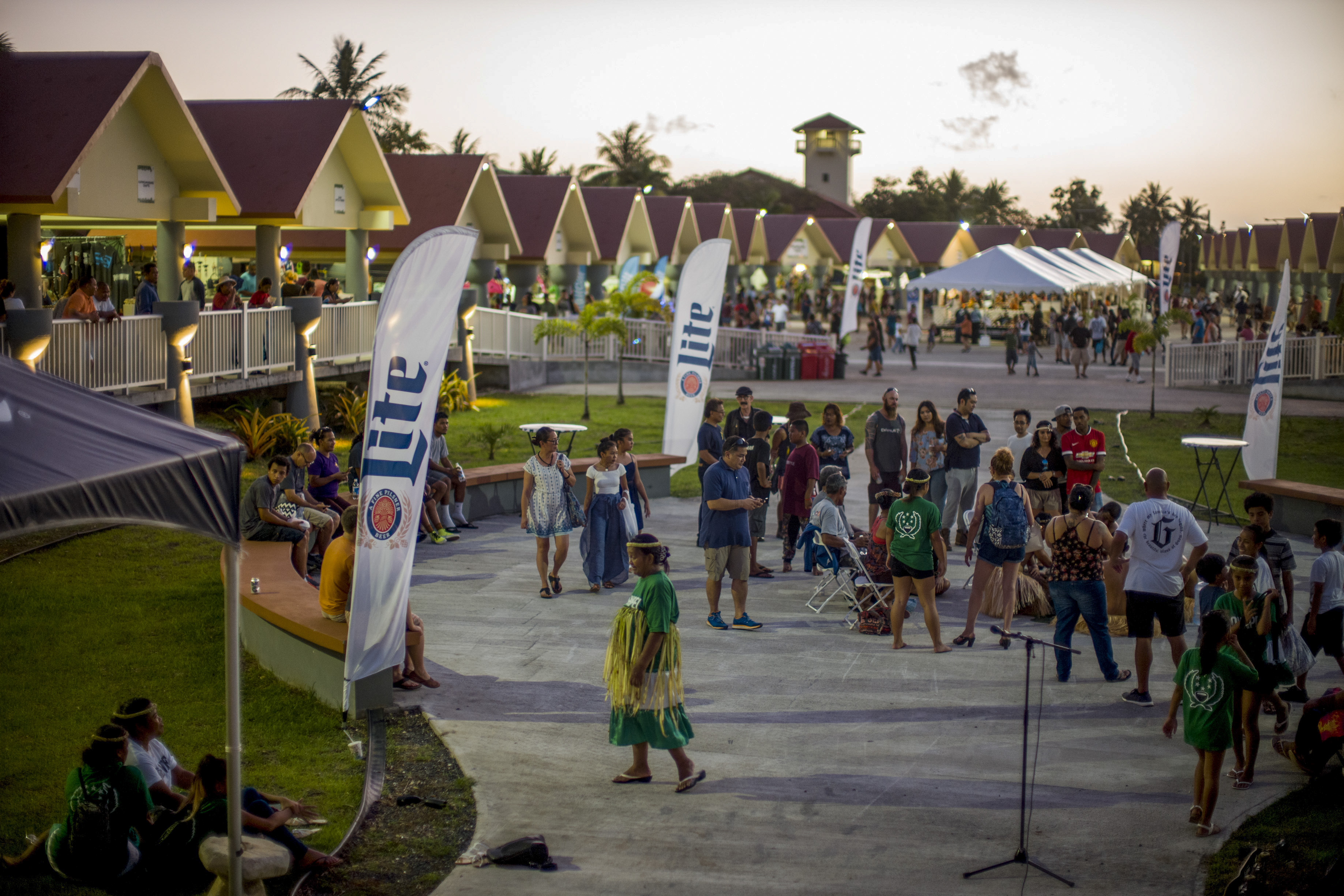
Fair-goers attend the Guam Micronesia Island Fair at the Chamorro Village in Hagatna, Guam.
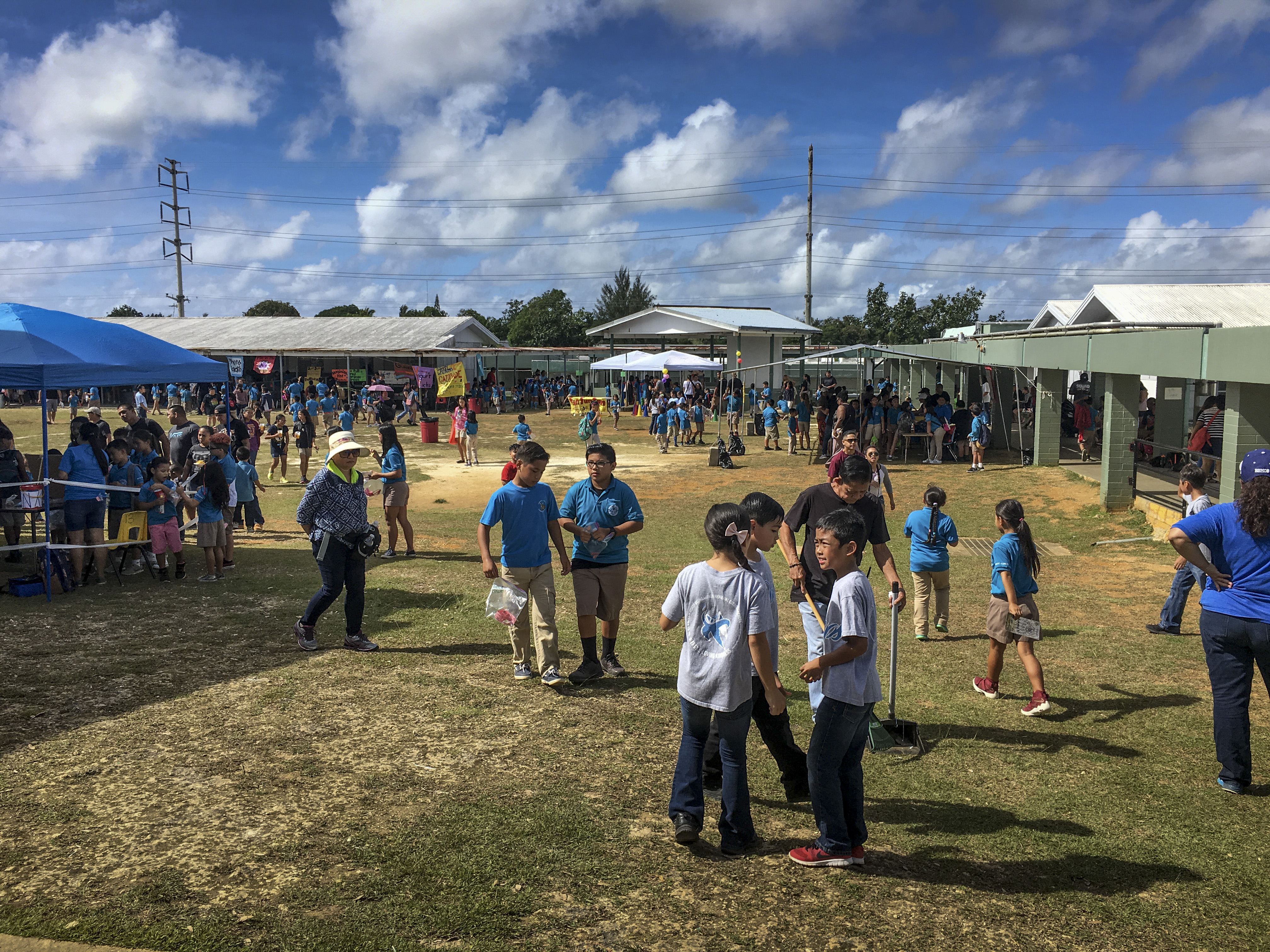
Elementary school students at Carlos L. Taitano Elementary in Sinajana, Guam.
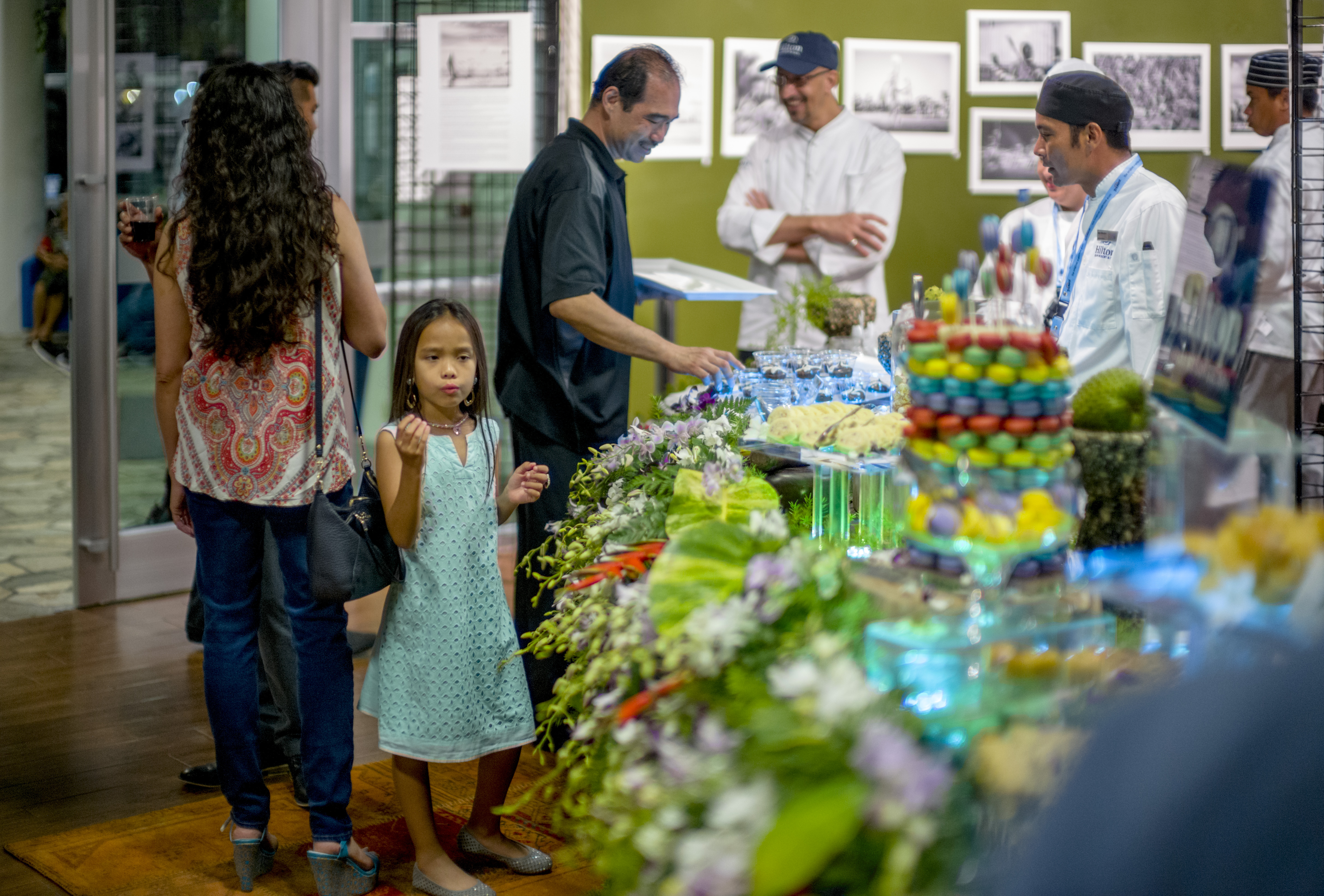
Hundreds attend the Pastries in Paradise event at the Guam Museum in Hagatna, Guam.
Pastries in Paradise is an evening of scrumptious desserts prepared by the island’s top chefs paired with fine wines and beverages. The event is a charity fundraiser.
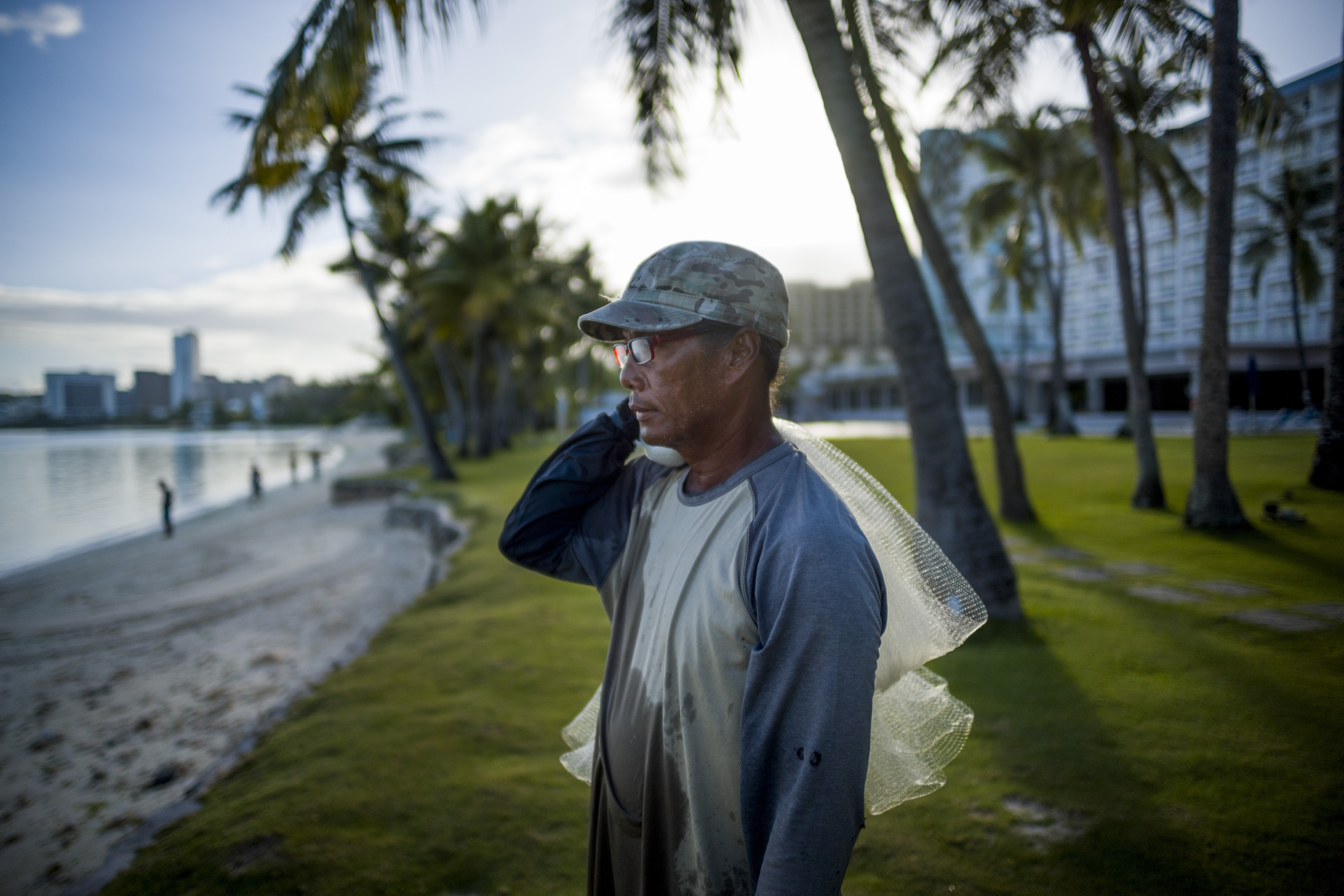
Fisherman Rick Rivera looks for mañåhak, or juvenile rabbit fish, with his net, or Talaya, at the ready at Tumon Bay in Guam. The net fisherman walks the beach of popular tourist location early in the morning before tourists fill the beaches and water.
The ancient Chamorros used a variety of nets for fishing, each net with its own orginal Chamorro name. Today, the most common image of a Chamorro fisherman is one in which he casts the nets.
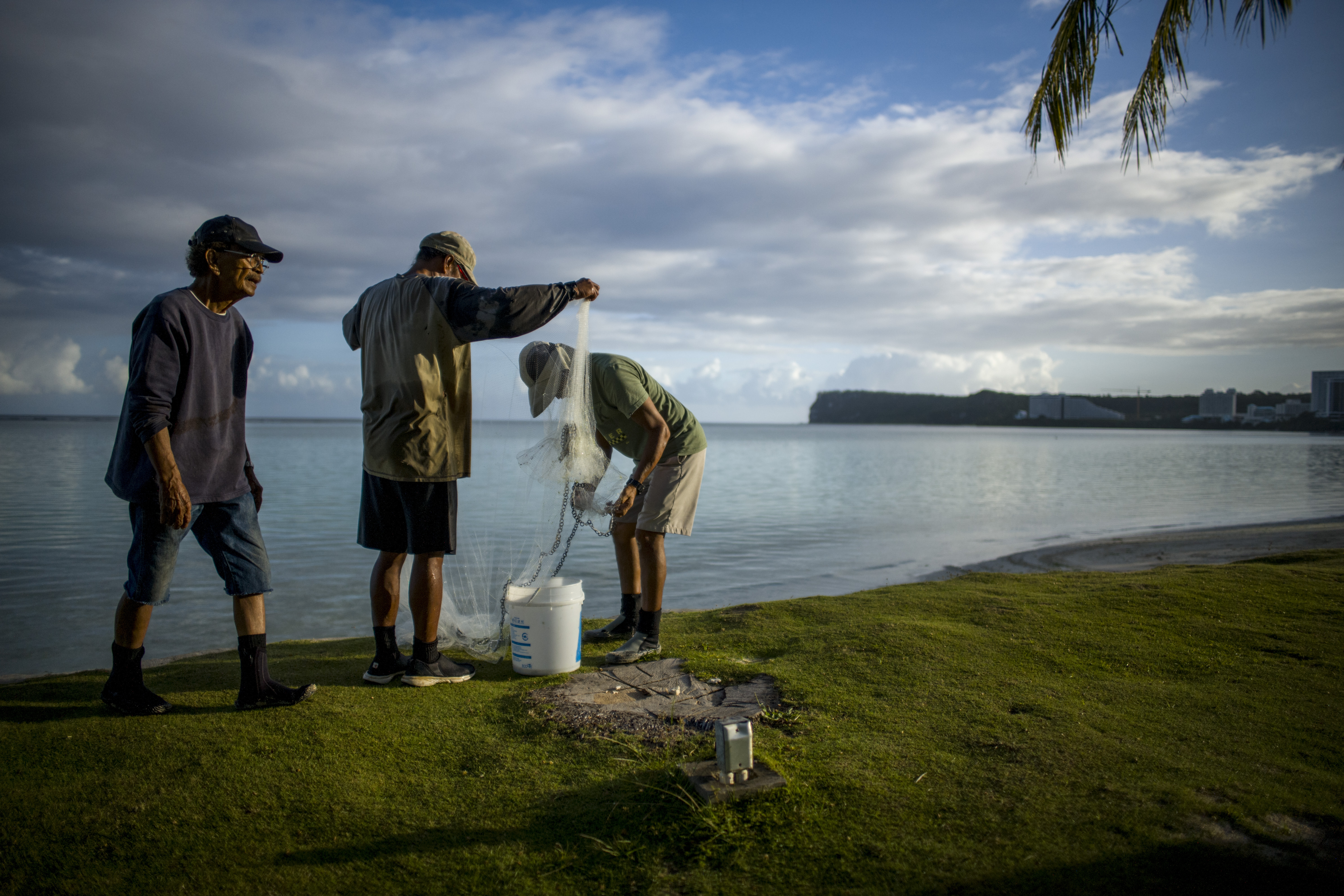
Rivera, at center empties mañåhak from his net or Talaya at Tumon Bay in Guam.
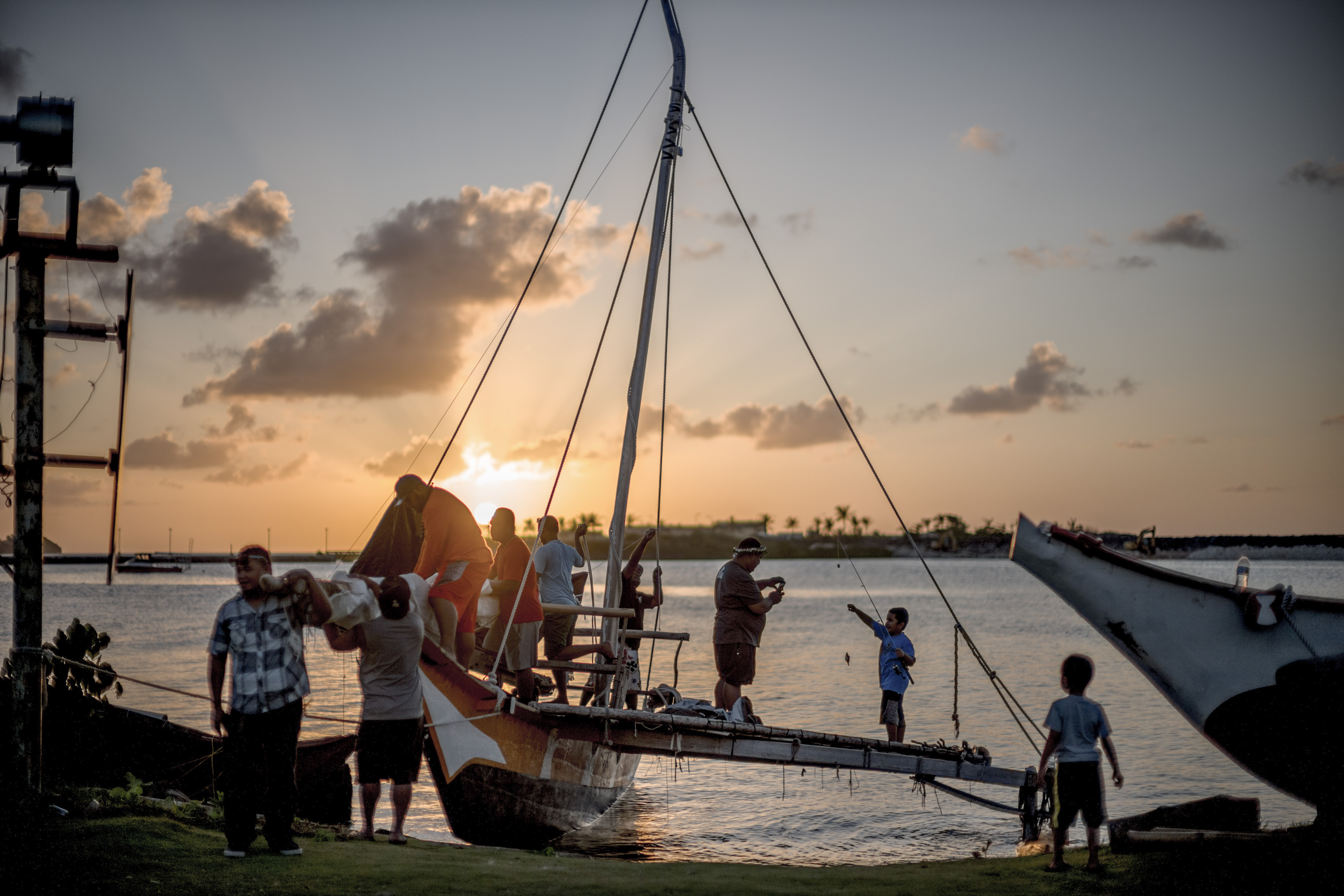
The 29th Guam Micronesia Island Fair (GMIF), "Celebrating the love of culture," with Guam joined by delegations from Palau, Yap, Pohnpei, Marshall Islands, CNMI, Chuuk and Taiwan at the Paseo de Susana in Hagatna, Guam.
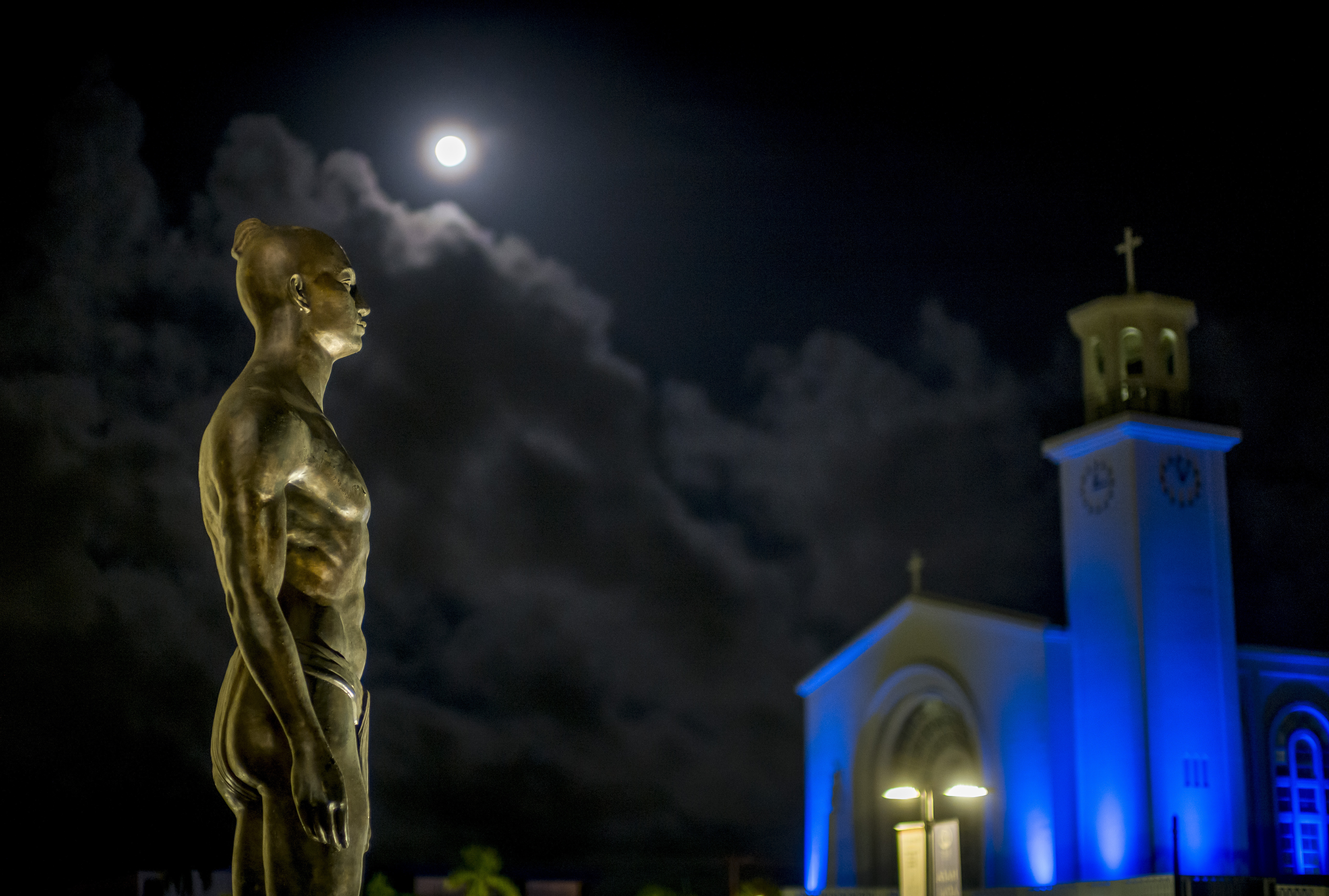
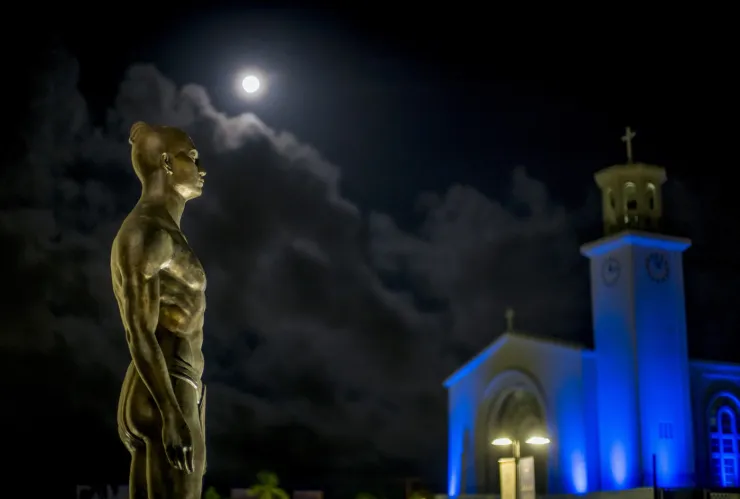
Under a full moon, a statue of an ancient Chamorro in front of the Guam Museum looks at the Dulce Nombre de Maria Cathedral Basilica. The structure is located on the site where the first Catholic church on the United States territory of Guam was constructed in 1669.
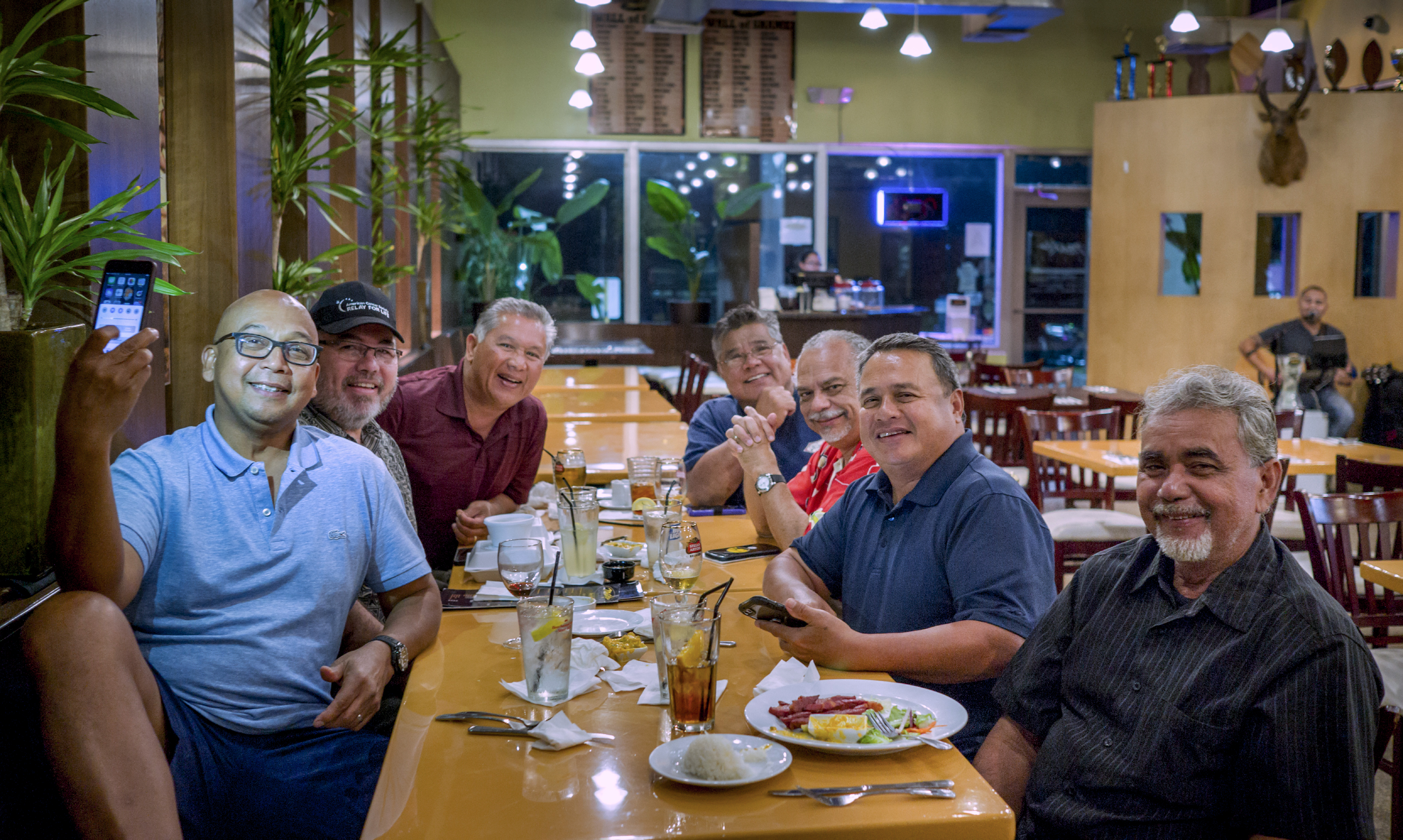
Manny Crisostomo, at left, using his iPhone as an additional light source with his Father Duenas High School classmates during an impromptu get together at Meskela restaurant in Hagatna Guam.
Crisostomo was celebrated by Humanities Guåhan during the Pulitzer Centennial with a gallery show and multiple speaking engagements. Video and images from those presentations are available here.