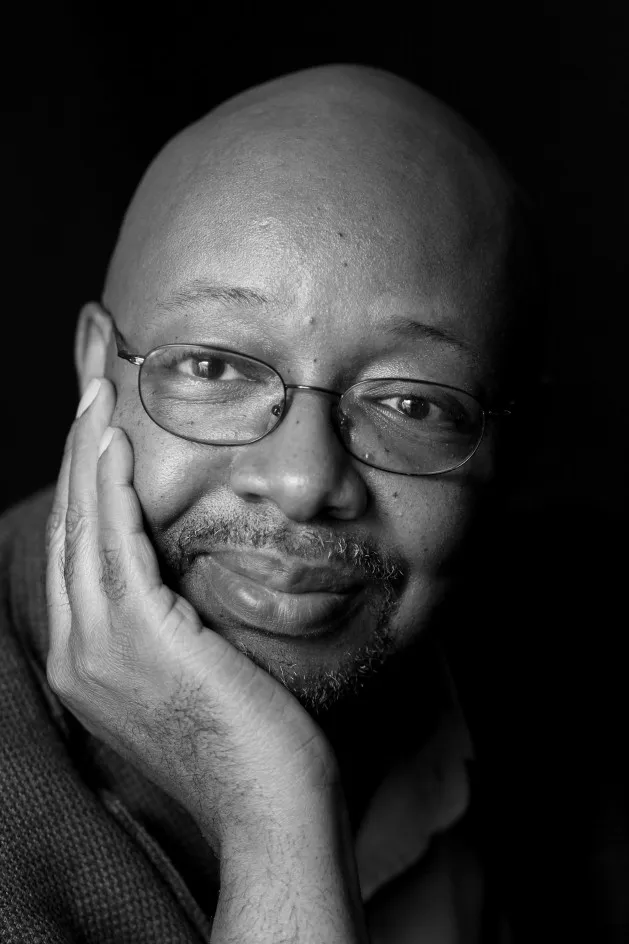
Here’s what it’s like when you win the Pulitzer Prize.
You’re not supposed to know you’ve even been nominated, but you know anyway because journalists are inveterate gossips, so you spend a month trying not even to think the P-word, but everywhere you go, colleagues slap your back and say, “Good luck on the Pulitzer” and then the fateful Monday comes and it’s the longest Monday in the history of Mondays and when the appointed hour finally drags by, everyone gathers around a computer and you’re trying to think of what you’re going to say to console them when they find out — as surely they are about to — that some awful mistake has been made or terrible prank played and while you’re thinking this, everybody suddenly starts cheering because there it is, your name on the screen and you look closer, still figuring it has to be a mistake somehow but no, there it is, your name, and everyone is still cheering and you’re blinded by the light from a TV camera and someone asks you to sum up what this moment means to you and you try to find words of appropriate humility and wisdom and at the end of it, because you are an incorrigible wiseass, you add, like a championship athlete on those old TV commercials, “I’m going to Disney World!” and of course every editor in the country passes on your wise and humble words and “I’m going to Disney World” becomes your reaction for posterity in newspapers around the country.
It’s kind of like that.
And if “I’m going to Disney World” isn’t the dorkiest Pulitzer acceptance speech in history, it’s surely got to be Top Ten.
What I should have said, after saluting my mother and my wife and thanking God, my editors and readers, is this:
You know how kids go through phases? One year, a boy wants to grow up to be a cowboy, the year after that a firefighter, the year after that a football star?
Well, I never went through that. I am a writer. It’s what I’ve always wanted to do. It’s what I’ve always been.
What I mean by that is: It’s my belief that everybody is given a gift, something hardwired into them at birth, some trick they have an innate ability to do. Unfortunately, not everybody recognizes her gift as such. Me, I was lucky — no, blessed. Because I have always been a writer and have always known it. Indeed, I started calling myself that when I was 5.
And that pretty much defined my life, growing up.
When other 5-year-old kids were running around outside, I was following my poor mother around the house reading her my stories. She’s trying to do laundry or get dinner on and all the while she has to nod in the right places and make the appropriate sounds of appreciation as I share my latest epic, complete with sound effects. For the record, all my epics back then were gripping tales about the adventures of a boy superhero named Leonard.
In second grade, my teacher had a standing pact with the class: If everybody had been good, she would set aside five minutes at the end of the day and I would read them one of my stories. Mind you, they regarded listening to my stories not as punishment but as reward. My ego was more than a little pleased with this. I would sit there, ramrod straight, hands clasped on the desk before me, praying for good behavior.
In sixth grade, G. Renee Boring, principal of San Pedro Street Elementary School, gave me a special privilege. After school, I could use the electric typewriters in the office to write my stories, and the mimeograph machine to run off copies. Other kids are rushing home, grateful to be freed from the drudgery of school and I’m feeling like I won the lottery because I get a whole hour to pound on an IBM Selectric or crank the handle on a smelly old mimeograph machine.
In seventh grade, James Barbee, librarian at John Adams Junior High, bought me a subscription to a writers’ magazine. I started sending my poems and stories to every magazine in America. Every magazine in America promptly sent them back.
Finally, when I was a junior in college, I was hired by SOUL, a black entertainment tabloid, first as a stringer and later as its editor. I’m this teenager, but I’m having lunch with Diana Ross, sitting by the pool with Michael Jackson, hanging out backstage with Gladys Knight and all three Pips – and getting paid to do it. I kept wondering if this was even legal.
My plan was to spend a couple of years as an entertainment writer while simultaneously writing the Great American Novel. I figured I would send said novel out, grateful publishers would vie for the privilege of writing me a seven-figure advance check, and the pattern of my life would be set.
Didn’t work out that way, of course. I wrote the novel — wrote a few of them, in fact — and sent them out. Like when I was 12, the publishers all sent them back. And that couple of years I had given myself as an entertainment writer turned into five, turned into 10, turned into 15. In 1991, I landed at the Miami Herald as its pop music critic. I lasted three years at the job until, feeling that if they sent me to another New Kids On The Block interview I might take hostages, I went to my editor with a proposition: how about you just let me have a column where I write about whatever I want and you guys pay me for that?
To my enormous surprise and relief, he said yes. And I have been writing that column ever since, tackling everything from human rights to popular culture to faith to parenting to gun control to politics. And as if that were not more than enough to ask for from one life, Columbia University decided to award me a Pulitzer in 2004 — pending a recount, as Dave Barry always says. A few years after that, publishers finally stopped sending my novels back. My first, Before I Forget, was published in 2009. My latest, Grant Park, came out in 2015.
Okay, so the advance checks have been considerably less than seven figures. But I am not complaining, believe me. Complaining would feel like ingratitude. Complaining would feel like greed.
For as long as I can remember, from those days as a child holed up on my bed reading Erma Bombeck, Beverly Cleary, Stan Lee, I have had an earnest reverence for the art and craft of words, for this magic trick where, using only symbols on a page or screen, you can transmit sounds, smells, fear, love, sights, dreams, information and ideas through the ether straight into the mind of another human being. That reverence has never left me.
I’ve always felt that it is in telling stories — whether the hard facts of the news or the softer contours of fiction — that we as human beings struggle to explain ourselves to ourselves, that we work out answers to the questions of who we are and why we are and what we believe. Everybody tells stories, of course, whether bending elbows at the bar or waiting together for the bus. But a lucky few of us get to define themselves and their work lives by the fact of storytelling.
Outside of my family, I think the thing I am most grateful for in life is that I am one of that lucky few, one of the people who gets to do that magic trick everyday and call it work.
I am a writer.
A few years back I somehow became a writer with a Pulitzer Prize.
And you know what? At this point, I’m thinking maybe I should go to Disney World after all.