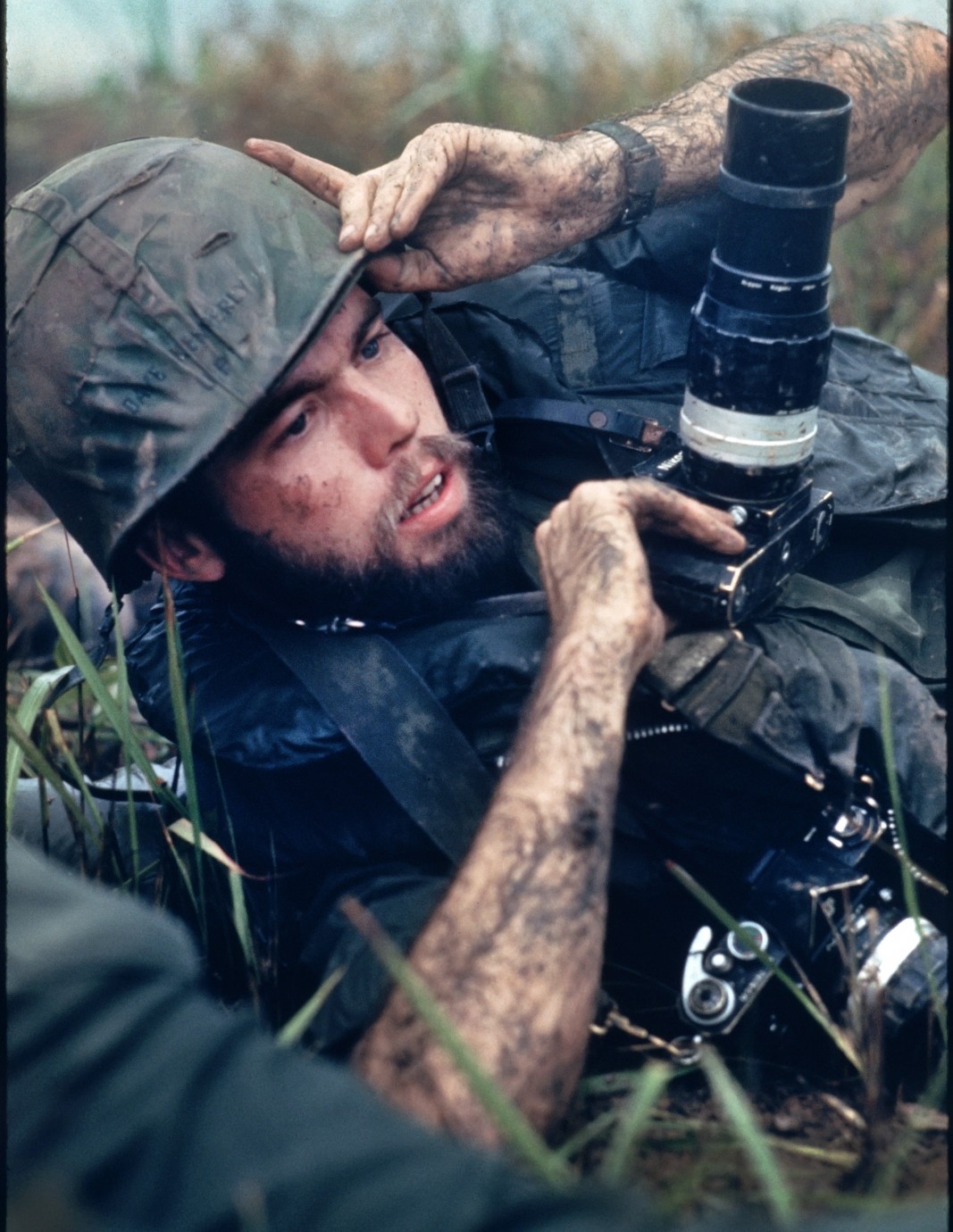
Kennerly in Vietnam
The big announcement in the spring of 1972 came via a telex message to the United Press International office in Saigon, where I was the photo bureau chief. It read: “01170 Saigon-Kennerly has won Pulitzer for Feature Photography, which brings congrats from all here. Now need effort some quotes from him and pinpoint his location when advised for sidebar story, Brannan/NXCables.”
I didn’t believe it. How could I have won my profession’s highest award when I didn’t even know I was entered? I thought it was a mistake or, worse, a prank. Bert Okuley, the news chief at the Saigon bureau, fired back a note. “EXHSG Brannan’s 01170. Are you kidding? If so it isn’t much of a joke. Is there a Pulitzer awarded to a UNIPRESS photographer, and is it Kennerly? Okuley”
Then the wire machine broke down. In those days you couldn’t just pick up the phone and call the States. For three hours we were cut off from the world. When the telex suddenly sprung back to life, messages flooded forth. The first said: “01181 Okuley’s 02054 No kidding and can you reach Kennerly for sudden comment need to know where he was when he got the news, Wood/NXCables”
My favorite congratulatory cable came from my Associated Press competitor Eddie Adams, who had won a Pulitzer for his photo of the chief of the Vietnamese national police shooting a Viet Cong suspect in the head. Before I left for Southeast Asia, Eddie told me I was wasting my time because all the good photos in Vietnam had been taken. His message after I won said, “I was wrong. Congratulations. Eddie.”
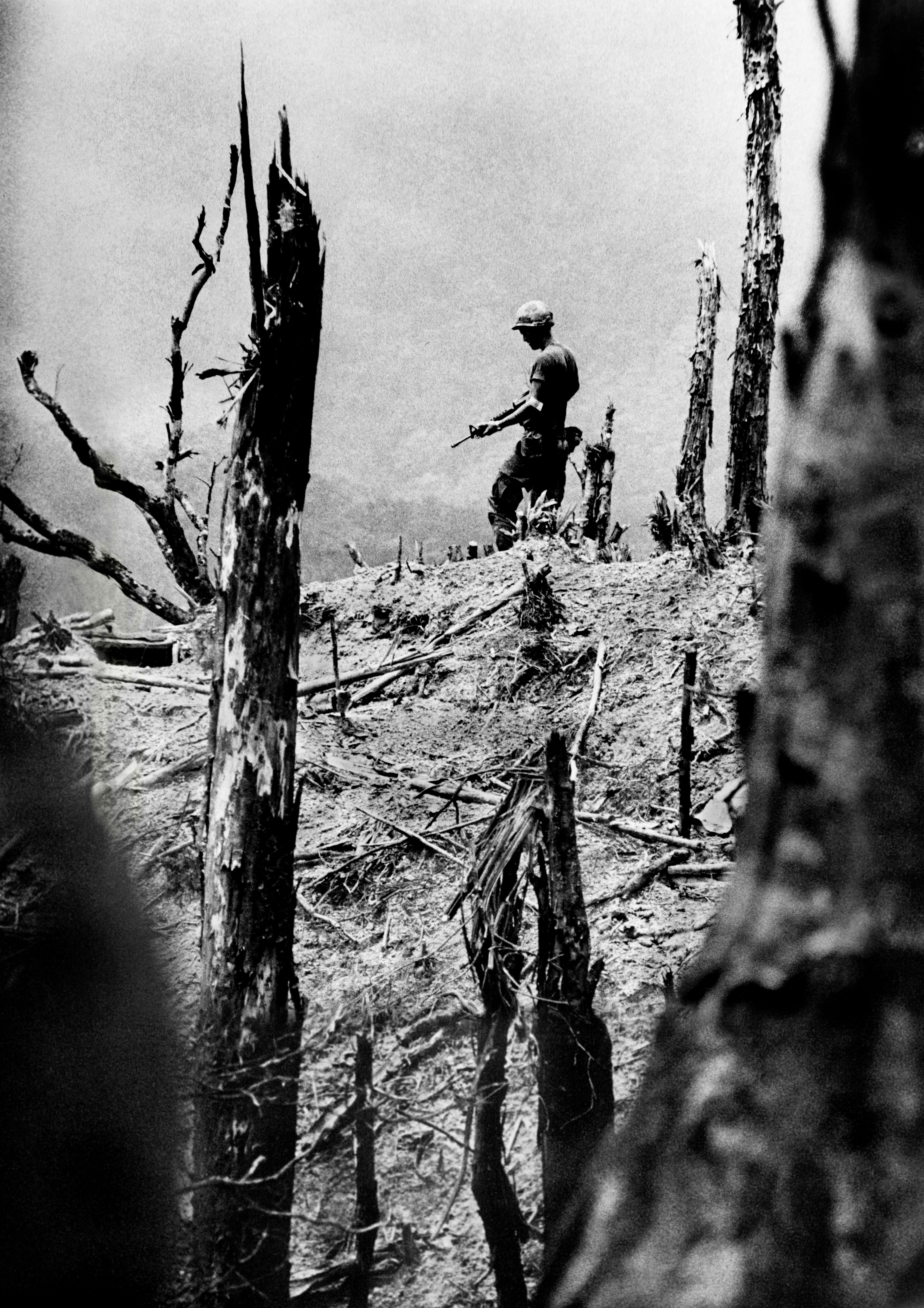
Kennerly's photo of an American soldier walking across a shattered hillside near the A Shau Valley in the mountains outside of Hue.
Weeks later I saw the official citation: “For an outstanding example of feature photography, awarded to David Hume Kennerly of United Press International for his dramatic pictures of the Vietnam War in 1971. ... he specializes in pictures that capture the loneliness and desolation of war.” The representative photo from the portfolio (not knowing a portfolio had been entered, I had no idea what was in it) showed an American soldier walking across a shattered hillside near the A Shau Valley in the mountains outside of Hue.
Later I found out Larry DeSantis, chief photo editor for UPI, had entered me for the Pulitzer. During 1971, as photos of mine crossed his desk, Larry tossed copies of ones he liked in a drawer. At the end of the year he scooped them up and entered them. Larry’s gone now, but I had the chance to tell him he was the greatest photo editor on earth and the award was ours, not just mine.
Years later I visited the Pulitzer archive at Columbia University in New York to see which pictures had won. The portfolio contained eleven photos. Only one, taken at a little firebase named LZ Lonely, was in color. To my surprise there was also a photo from the Muhammad Ali-Joe Frazier “Fight of the Century” in Madison Square Garden on March 8, 1971. That picture, in the fifteenth round, showed Ali in midair as he fell to the canvas after being walloped by a left hook. The fight was my last domestic assignment before I left to cover the Vietnam War. The next day, my twenty-fourth birthday, it appeared on dozens of front pages around the world, including The New York Times. The Pulitzer portfolio also included pictures from Cambodia and of refugees who had escaped from East Pakistan to India. It represented my year in pictures.
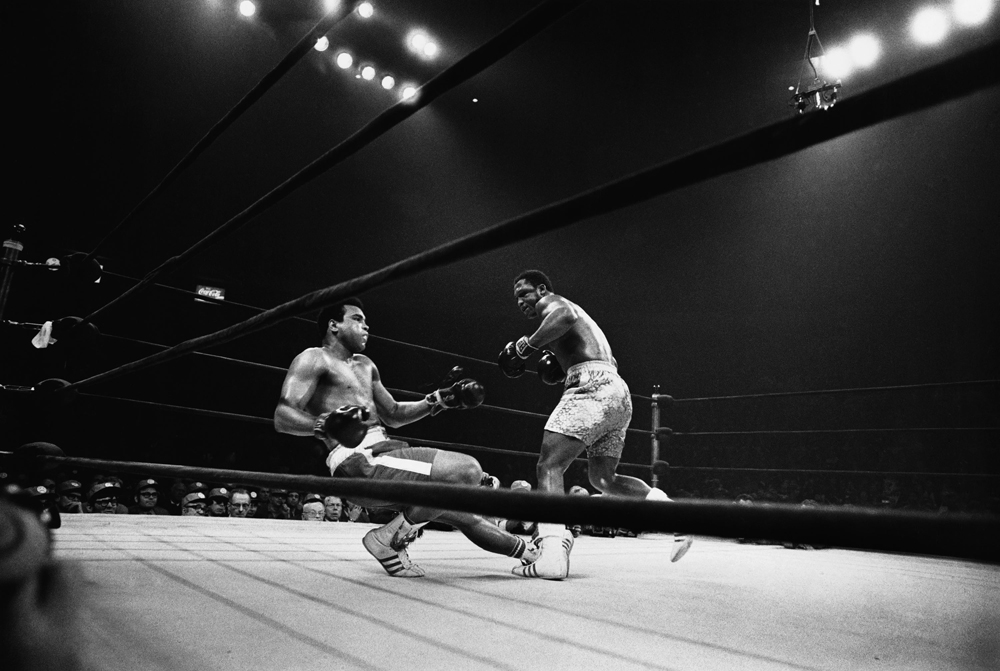
Kennerly's shot of the Ali-Frazier fight
The Feature Photography prize debuted in 1968 when the Pulitzer board split photography into two categories, Feature and Spot News. Spot News became Breaking News in 2000. The Feature category was created for a single photo, a photo essay or, as in my case, a portfolio of pictures taken during a calendar year.
The first Pulitzer in the Feature category went to my late friend and colleague Toshio Sakai, who won for Vietnam coverage in 1968. The Spot/Breaking News category has drawn many memorable war images. Three of the best ever were Joe Rosenthal’s Marines raising the flag atop Mount Surabachi on Iwo Jima, Nick Ut’s napalmed Vietnamese girl running down the road, and Eddie’s Saigon execution photo. I was honored to join the ranks of these great photographers.
But that isn’t the end of the saga of my Pulitzer-winning pictures. The rest of it illustrates how valuable, and in many cases vulnerable, photography can be.
All the images I made for UPI resided in the wire service’s files. The original negative of the GI traversing the devastated hill went missing and was never found. To this day I don’t have an original print, only an excellent copy from a print made at the time.
A common practice at UPI was to cut the roll of thirty-six black and white negatives into sections of three frames each, usually keeping the selected image in the middle with a photo on each side. That was done to allow thirty-five-millimeter film to fit into yellow envelopes that were designed to accommodate the four-by-five-inch negatives shot during an earlier era. Astonishingly UPI chucked the other negatives. In other words ninety percent or so of the images I shot during my five years as a UPI photographer were discarded, including at least a year and a half’s worth of Vietnam pictures. It was heartbreaking.
Photojournalism is a hybrid form. Early news photography was used mainly to illustrate stories. Pictures were not always seen as news documents in their own right. For decades, bulky negatives and prints were disposed of in stunning quantities. For example, several years of photographs of events covered by The Washington Post’s excellent photographers, including classic images from the Watergate hearings and the White House, were trashed to save space.
I’ve embarked on a mission to escape this fate. I hope to collect, preserve, and scan my entire collection. For twelve years, my wife Rebecca and I have been organizing everything I have shot, written, and collected during my fifty-year career as a professional photographer. And the archive continues to grow. I’m still out there shooting!
My dream is to create a digital archive to share with everyone who wants to see and study it. Many times during my career I was the only other person in the room during a historic moment. My archive plan includes marrying images from key events with my thoughts, recollections and collected objects, creating an interactive experience that will transport historians and students behind scenes I saw firsthand.
History isn’t distilled into just a single compelling image, even though that is how it seems, and is how we sometimes remember things. Hundreds, sometimes thousands, of photos of important happenings never see the light of day.
Consider this: On Nov. 7, 2000, I was in the governor’s mansion in Austin, Texas, with the Bush and Cheney families as they awaited the election results. It had been a wild ride that swerved from Gov. George W. Bush losing to winning to tying. One picture I made that night is one of my best. It depicts Gov. Bush, his wife Laura and Lynne Cheney sitting on the couch and Dick Cheney, campaign chairman Don Evans and Florida Gov. Jeb Bush behind them, with former president George H.W. Bush on the phone in the background. The photo has everything: the key players, their expressions of concern, a presidency in the balance.
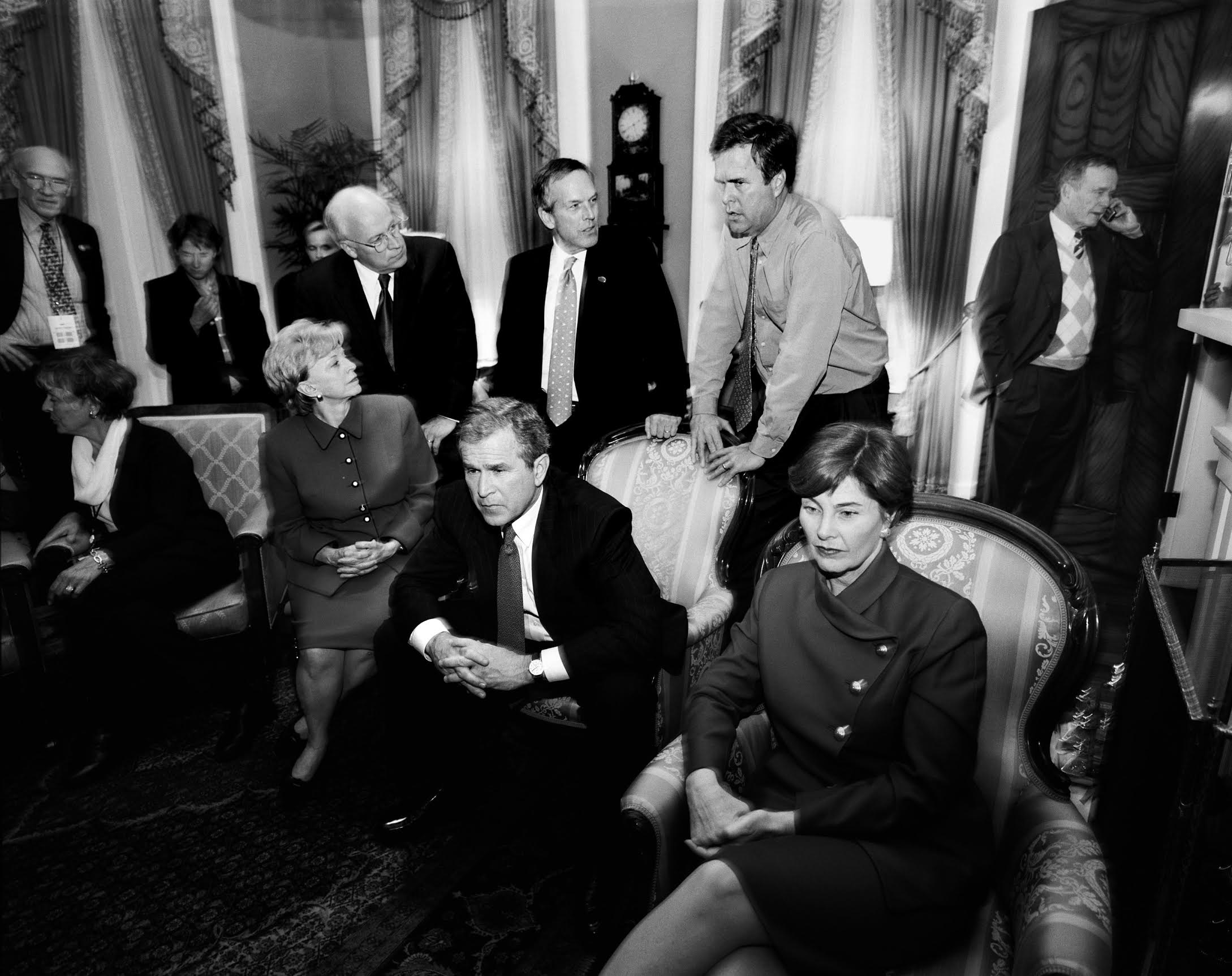
President and Laura Bush await the 2000 election results at the governor's mansion in Austin, Texas.
As good as this image is, it doesn’t tell the whole story. But I did tell the whole story in the dozens of pictures I took. And it was an exclusive: Late in the evening I was the only person in the room other than the participants. My images and detailed recollections will provide an exciting historical document.
And that was only one night of my photographer’s life.