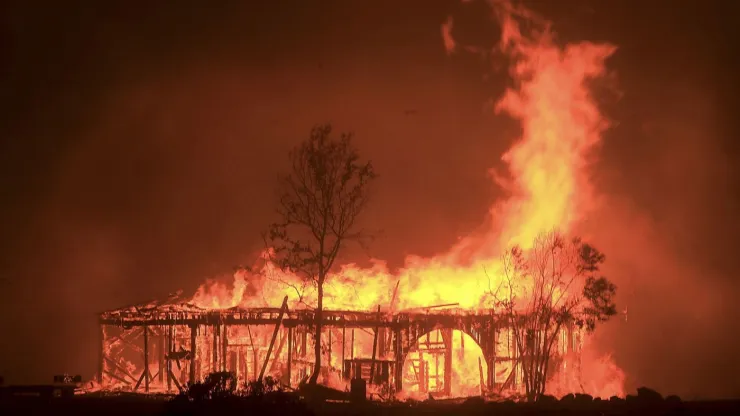
The California wildfires that burn every year are deadly and devastating. Last year, dozens of people lost their lives and property damage resulted in millions of dollars worth of losses, especially in the city of Santa Rosa and in Sonoma County. Through it all, reporters at one small newspaper, The Press Democrat, continued to do their jobs.
Using photography, social media, video and text, The Press Democrat provided reliable information and held officials accountable in real time. We spoke with Catherine Barnett, the executive editor of The Press Democrat, about the experience and winning a Pulitzer Prize.
What was it like to report on this story that must have hit so close to home?
CATHERINE BARNETT: I’ve never known this many people to be affected by a news event, and it was the same for everyone here. More than 5,000 people lost their homes here. As that night unfolded, we just had difficulty grasping what was happening. There wasn’t one of us who didn’t have family or friends or coworkers who lost their homes. We didn’t know it at the time because it was happening so fast, but when I look back at what we did, we were propelled by being a part of it and being a reliable source of information for people who were lost in a sea of rumors. Because you were in the middle of it, you were desperate for that information, too.
How is the process of covering breaking news at The Press Democrat different from working within the regular news cycle?
CB: It’s all digital now. We put up news when we get it. At the time the fire started, there was no physical paper to put out. And, of course, it allowed the interactive piece. It was our job to get out what we could verify and get it out as soon as possible.
How did the wildfire coverage tap into other larger themes, such as displacement of people or environmental issues, and how do you balance that?
CB: One of the things we tried to do after the fire blew through here was to figure out what mattered, and one of the first things was the failure of anyone to be warned. People did not get texts or calls. Because we were on the ground, we understood that. That was the coverage we got out soonest and gave us the most room to do accountability reporting. Within a week or so, the first trial will begin about the harrowing evacuation of elderly dementia patients.
Your team used videos and photos as well as written reporting. How do you think technology has changed the way we cover breaking news?
CB: I was shocked at how our photographer, Kent Porter, was in every single place where the fires were happening in those first few hours. To have that and to have people come to us to see it, it just would not have happened before. It happened because the tech is where they live. The government is not warning us, but they’re there with their phones. Kent is tweeting this stuff out.
Has winning a Pulitzer Prize changed the way The Press Democrat covers breaking news, but also news in general? Why or why not?
CB: What’s unusual about this award is that we’re a small newsroom. But even though we’re a small newsroom, the talent and the commitment to step up and serve the community is there. The recognition is what propels us forward. You have to be able to tell the story on platforms where people can find that information. There was a moment where people were desperate and we were there. You have to just keep trying to hone that. And we’ve always been very mindful when winning an award about being celebratory because it’s tempered by tremendous loss. People don’t have their homes here. But there’s also a sense of community pride, I think because we serve the community. It makes us want to do that kind of job on other topics that affect us that aren’t as dramatic.
Are there other papers that do breaking news coverage that you admire?
So many. I mean, The East Bay Times, the California paper that won the Pulitzer for the Ghost Ship fire, did incredible work and did incredible accountability reporting last year. I mean, the gold standard was obviously The Wall St. Journal after 9/11.