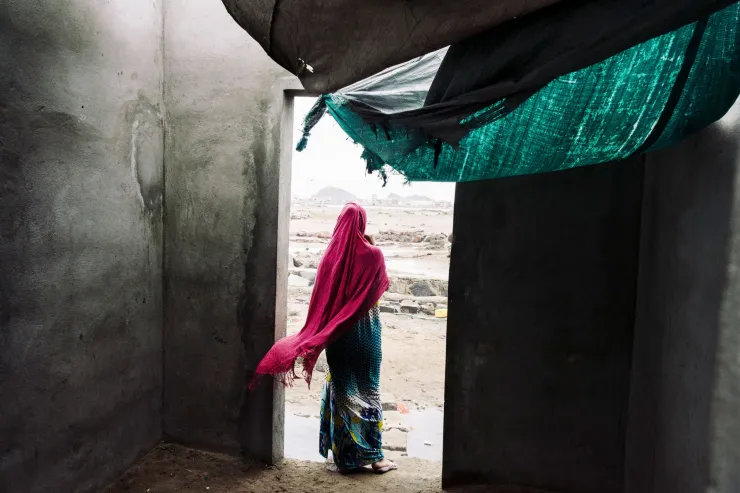
Lorenzo Tugnoli of the Washington Post won the 2019 Feature Photography Prize "for brilliant photo storytelling of the tragic famine in Yemen, shown through images in which beauty and composure were intertwined with devastation."
He spoke to the Pulitzer Prizes about what drew him to the Middle East from his native Italy, the artistry of photo journalism and his book project on artists in Afghanistan.
Pulitzer Prizes: What brought you to the Middle East from Italy? Can you recall the first time you visited Yemen?
Lorenzo Tugnoli: I started working in the Middle East early in my career. I wanted to experience for myself the places that I saw in the news and then fell in love with the area. There are also a lot of similarities between the Middle East and Italy, where I come from: It is the same Mediterranean Sea and the same light, we are both all about religion, food, family and bad politicians.
I traveled to Yemen for the first time in 2018. I went twice, each time for over a month on assignment for the Washington Post. I have been working with Sudarsan Raghavan, the Cairo bureau chief, for a few years now. He decided to go, and I was the natural choice for the photographer to be assigned with him. He has an incredible knowledge of the country and working with him was instrumental for me to understand such a complex political situation. My award-winning photo-story was the result of teamwork: It could have not been possible without the support of my editors at the paper, MaryAnne Golon and Olivier Laurent, and their determination to cover the story deeply and thoroughly.When we first arrived in Yemen in May 2018, there was a very limited coverage of the country. It was before the Khashoggi incident and no big outlet was interested in putting this faraway country on the front page, so it was really important to be part of such a team.
Now it is crucial to keep covering this conflict and this humanitarian crisis. The situation on the ground is getting worse and I hope there will be a chance to go back to continue telling this story.
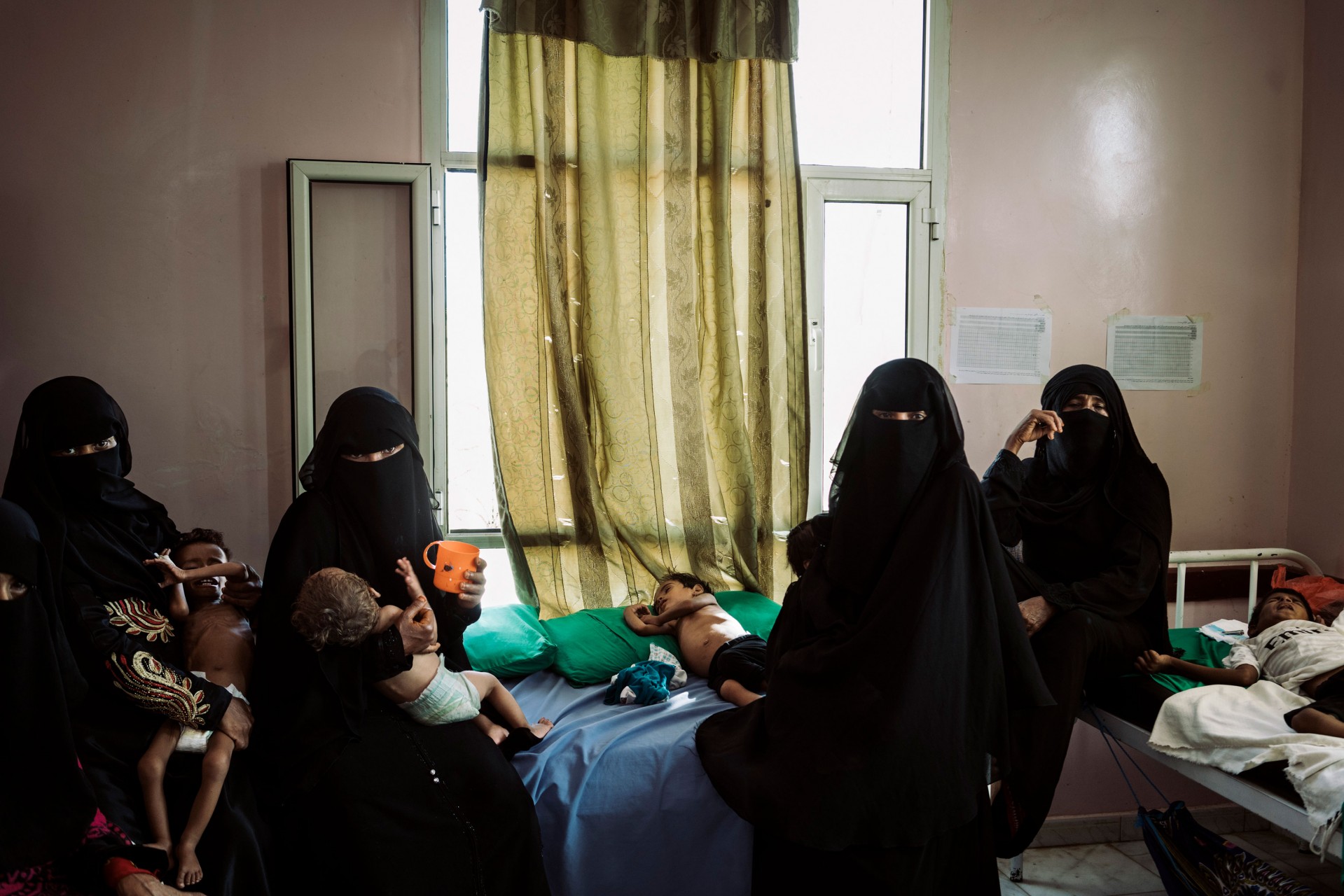
A clinic in Aslam, Yemen, is overcrowded with malnourished children. Mothers and children share beds, and sometimes mattresses are added to the floor to accommodate all the patients. Photo: Lorenzo Tugnoli.
PP: Your prize-winning portfolio includes many images of intimate moments between parents and children. Could you speak to your interest in capturing daily life under such difficult circumstances?
LT: I have always been interested in covering the daily life and struggles of civilians in countries of conflict. This attitude makes it more difficult to produce images that fit the news, but concentrating on these quiet moments has allowed me to bring the observer closer to the subject.
As a photographer and a journalist, I often find myself reflecting on my role and on how we tell the story of places that are considered other. The images I produce are part of the tradition of photojournalism, they are part of a visual dictionary that I inherited and that must be continually challenged and reinvented. I often had the chance to live in the places I photograph and, by trying to learn the local languages, I have tried to build a closer look, focused on people's everyday life as much as on the conflict. I often start from the stories of individuals, or of small groups so that I can give a face and a name to the people who make these grand narratives.
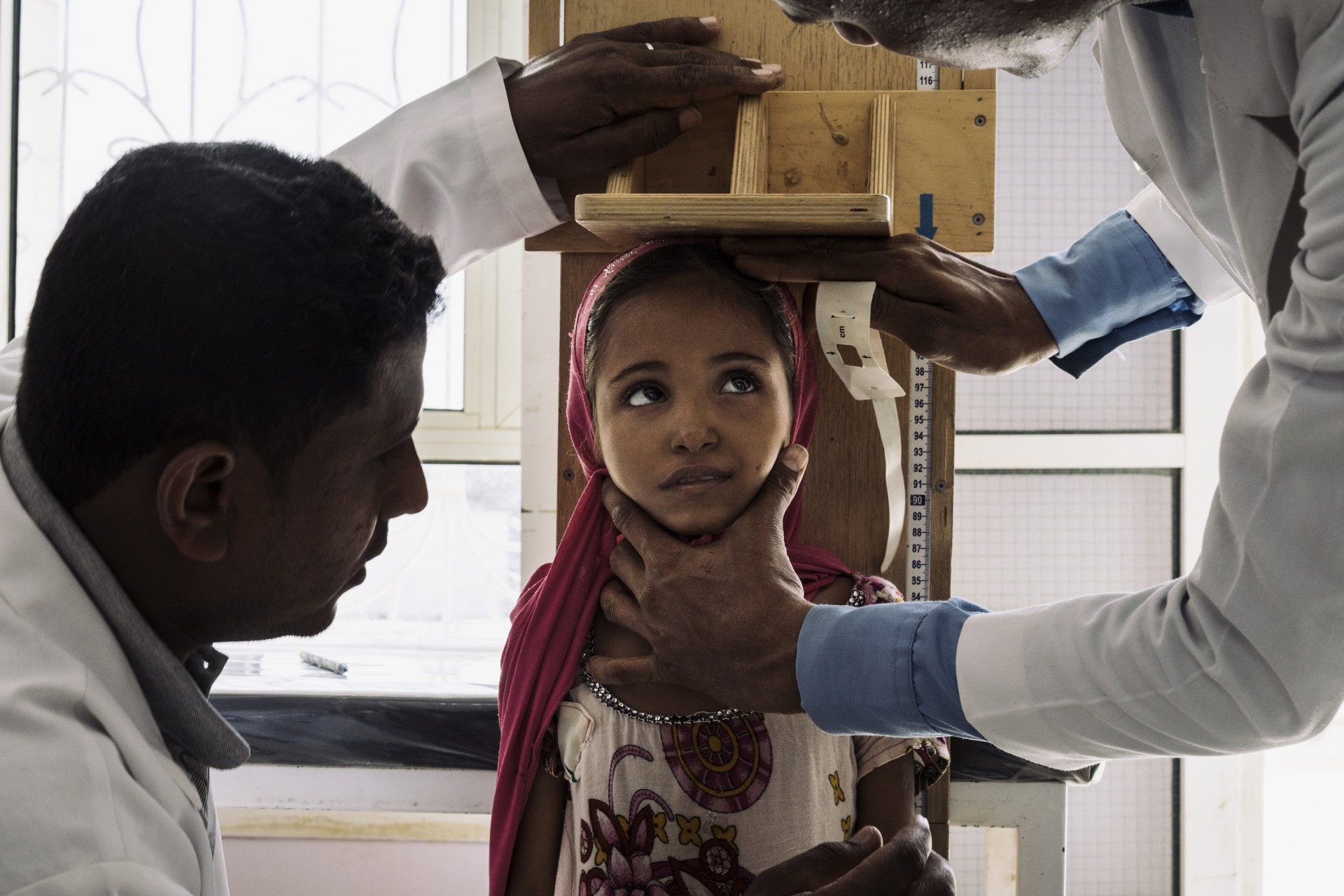
Marwan Hareb Mohammed Abdullah, 10, is measured at a clinic in Aslam, Yemen. She is malnourished but will not be admitted to the clinic because of her age. In families, girls are often the last to be fed. Photo: Lorenzo Tugnoli.
PP: Your bio describes your work as "an ongoing exploration of the humanitarian consequences of conflicts in the region." How do you view a journalist's role in the context of war and famine?
LT: I think photographers and journalists have a responsibility as to how they decide to represent a certain place. Media has the power to influence how this or that story is told, and we are part of this machine.
The way our audience looks at and imagines these distant places, of which they will probably never have direct experience, influences the way they think about the people who live there. Are they dangerous? Are they victims? The way we see these countries then determines our position – and that of the audience – on whether they should be the subjects of the next armed intervention in the name of peace, democracy and progress.
PP: You've documented some of the same countries over many years. How does that continuity affect your body of work?
LT: Countries like Afghanistan and Yemen are visually striking. The beautiful landscapes and the beautiful people that you meet are a great temptation for the photographer and it is really easy to fall for the exotic.
Spending time in such places is what allows me to go beyond these clichés — time makes you see the people in front of your camera as persons and not as interesting subjects.
PP: In addition to the type of photojournalism the Pulitzer Board recognized you for, you have published a book about the daily life of artists in Afghanistan, "The Little Book of Kabul." Could you talk a bit about how your sense of artistry informs your photographic narratives?
LT: I published "The Little Book of Kabul" with Francesca Recchia — during our research for the book we spent time in Kabul with artists and cultural practitioners with whom we connected at a deep artistic level. Even though we came from different backgrounds, we shared a common understanding of art. This experience stayed with me and resonated with the fact that I have always been driven by an interest in the formal aspects of photography, its visual and performative potentialities.
Developing this line of thinking, I started to explore the relation between photography and storytelling and now I spend a lot of time questioning how image-making and the way we decide to tell a story influence one another.
My hope is to further this exploration until I acquire a coherent visual language and conceptual approach across stories as well as geographical locations.