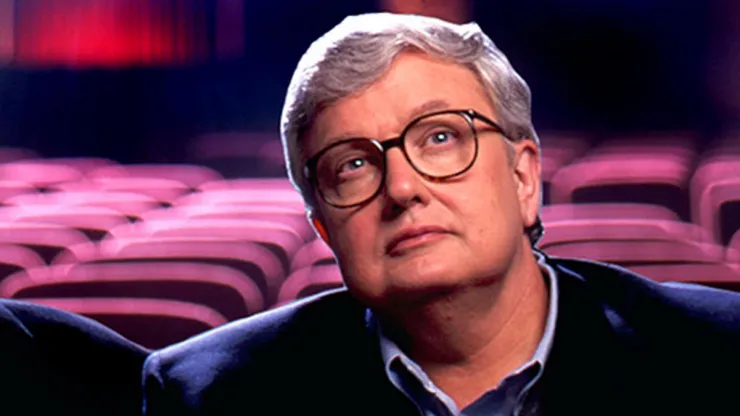
In an introduction to a Mad magazine movie parody issue in 1998, Roger Ebert wrote that Mad had broadened his horizons and opened his mind to the realities of movie-making:
“Mad’s parodies made me aware of the machine inside the skin — of the way a movie might look original on the outside, while inside it was just recycling the same dumb old formulas. I did not read the magazine, I plundered it for clues to the universe. Studying each issue carefully, I learned about standard dialog and obligatory scenes, cardboard characters and giant gaps in plausibility, and Scenes We’d Like to See. Pauline Kael lost it at the movies; I lost it at Mad magazine.
“Today’s moviegoers are surrounded by a sea of cynical media. It was more innocent in the far-off days of my youth in downstate Illinois. It was in Mad magazine, for example, that I was first exposed to the very notion of a foreign language film. I thought all movies were in English. After all, everyone I knew spoke English, didn't they? And had I ever seen a subtitled film? Certainly not. I knew theoretically that in places like France they spoke another language — but even there I figured they had to understand at least enough English to go to the movies.
“Mad ended my illusions with an article satirizing inaccurately-translated foreign subtitles. A hooker under a street lamp made proposals that looked steamy in the drawings but were completely innocent in the subtitles. Come to think of it, that might also have been the first place where I learned about hookers. In my bucolic hometown, surrounded by waving fields of soybeans, the only people who stood under street lamps were waiting for the bus.”
Nineteen seventy-five was a banner year for Roger Ebert. Writing for the Chicago Sun-Times, he became the first film critic to win the Pulitzer Prize for Criticism. And he joined a local public television movie program, "Sneak Preview," as a cohost.
The show, after Gene Siskel of the Chicago Tribune joined as cohost, was shown for a time on PBS nationally and later syndicated as "At the Movies." Siskel died in 1999, Ebert in 2013.
Here is a piece from Ebert’s Pulitzer Prize-winning entry that broaches an important real-world social question. It ran on Jan. 13, 1974.
Where are the roles for actresses?
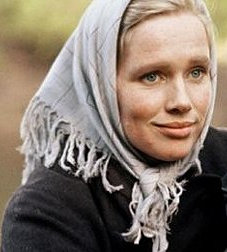
Liv Ullman in 'The Emigrants'
Liv Ullmann won the best actress award of the National Society of Film Critics the other week, but for a moment her chances looked threatened. That wasn’t because she had strong competition, but because her performance in "The New Land" had hardly any competition at all.
So weak were most of the year’s female roles that three of the critics (Paul Zimmerman of Newsweek, Jay Cocks of Time and David Denby of The Atlantic) sponsored a resolution calling on the society to give no award at all in the best actress category. They wanted to register a protest against the lousy (or non-existent) women’s roles in most recent movies. They were outvoted, but not before there was a heated discussion.
Their point was so obvious it hardly needed making. The strong, interesting, three-dimensional women’s roles of movie history — roles that used to played by actresses like Katharine Hepburn, Bette Davis and Joan Crawford — have all but disappeared from the modern film, and instead we get cameo walk-ons by the latest Vogue cover girl or Playboy centerfold.
How many competent women have we seen in the movies lately? I can think of a few: Liv Ullmann, most unforgettably, as the resourceful frontier settler in "The Emigrants" and "The New Land"; Faye Dunaway as the oil well operator in "Oklahoma Crude," and Pam Grier as the crusader against dope in "Coffy." But there weren’t many more.
A few years ago, when Jane Fonda won an Oscar for her performance in "Klute," I pulled out the files and looked over the nominations for best actress and best supporting actress for the previous five years. That made 50 performances and I was a little startled to find that the most popular occupations of women in those movies tended to be prostitution and monarchy. Lots of queens, empresses and princesses and plenty of hookers (in 1972, besides Fonda in "Klute" there was also Julie Christie in "McCabe and Mrs. Miller") but not any women scientists or doctors or even, for that matter, not many intelligent and capable women at all.
Last year’s Oscar nominations reflected some improvement. In addition to Ullmann, nominated for "The Emigrants," there was Cicely Tyson’s magnificent performance in "Sounder" as a sharecropper’s wife who holds the farm and her family together. But then, of course, there were also two nightclub singers (Liza Minnelli in "Cabaret" and Diana Ross in "Lady Sings the Blues") and a hippy-dippy bohemian (Maggie Smith in "Travels with My Aunt").
The worst part of it is that the Oscar nominations represent only the tip of the iceberg; these aren’t merely the best five female performances, but very nearly the only major female performances. There are a few actresses today who are both talented enough and powerful enough to get good roles, but the list is short. It’s headed by Barbra Streisand, and then there are such performers as Minnelli, Glenda Jackson, Jane Fonda, and, to some degree, Ali MacGraw and Liv Ullmann.
But the majority of stars who can be counted on at the box office — who are “bankable” — are male. And so we get the curious phenomenon of movies pairing two males and almost entirely dispensing with female roles. Papillion has Steve McQueen and Dustin Hoffman, for example, and "The Sting" reunites what Pauline Kael calls “the screen’s foremost couple,” Paul Newman and Robert Redford.
It’s a vicious circle. Roles aren’t being written for women, and actresses aren’t being developed who can handle challenging roles. The British supply so many of the best leading ladies simply because their healthy theater trains lots of young actresses and gives them experience. So we get the Redgrave sisters, Julie Christie, Sarah Miles, Janet Suzman, Glenda Jackson and so on.
American actresses, on the other hand, seem to a depressing degree to be drawn from the ranks of fashion models. Faye Dunaway, Ali MacGraw, Cybill Shepherd, Lauren Hutton, Jennifer O’Neil and Samantha Jones were all discovered on magazine covers or in cosmetics ads. They look great but are they ready for Lady Macbeth?
That doesn’t even seem to matter; American movies use women in an almost perfunctory matter. They’re like the chase scene in a cop movie. Exciting while they’re on screen, but (a) not involved in plot development, (b) totally lacking in dialog and (c) depending on choreography, not acting. The three most popular genres, currently, are the cop or urban violence movie, the black movie and the martial arts movie. Women aren’t exactly central to any of their concerns.
In the cop movie "The Seven-Ups," for example, there is only ONE woman who has a speaking role. She plays a nurse. She has two lines of dialog: (1) “Of course” and (2) “Thank you, doctor.” At least she doesn’t have to do a nude scene or carry the hero’s gun. In "Magnum Force," the girl who lives below Clint Eastwood walks on screen and immediately asks if she can make love to him. She can. The only other time we see her, she’s carrying a bag of groceries. So much for the complexity of that character.
Black movies are heavy into macho, and the ads all seem to feature heroes carrying mean-looking custom rifles and automatic weapons that appear to have their origins near the groin. Black women in these movies are almost always sex objects, and a generation of black actresses has grown adept at trying to pull the hero into bed while he slips on his shoulder holster and looks grim.
An interesting recent development has been the success of black movies in which the heroine is the dominant figure, as in "Coffy" and "Cleopatra Jones." These movies don’t necessarily represent better female roles, but at least they may be helpful in correcting stereotyped notions of the black woman as an optional sex object in a world of male violence.
The kung fu movies, most of then, can’t really be taken seriously even in their treatment of male characters. They’re action-filled comic strips, and the good ones are exhilarating at the time but totally lacking in human dimension. Some of them star men, some star women, but none of them star people.
Contrast this bleak picture with the best recent women’s roles. Liv Ullmann was fully a woman in "The Emigrants" and "The New Land." The movies are set, of course, years before Women’s Lib, and one of their most touching moments comes when the Ullmann character determines to continue sexual relations with her husband despite a doctor’s warning that another child will kill her. She keeps house, is a loving wife and good mother. She cooks, sews, does all the traditional female tasks. And yet she brings such dignity and competence to the role that it doesn’t sexually stereotype her; she emerges as her husband’s equal, his partner in their mutual enterprise. The depth of the role eventually persuaded the National Society’s dissenters to drop their protest.
And look at Streisand in her better roles. "The Way We Were" has serious flaws and an unbelievable break-up of a marriage, and its ending falls apart. But Streisand plays a 1930s radical student who never gives up her notions of what’s right; and Redford is attracted to her because she’s different from the vacant sorority girls. She has a mind.
Maybe it’s just that most of the writers and almost all of directors (and about 100% of the producers) are men, and mostly men whose attitudes were formed previous to Women’s Lib. Look at "American Graffiti," even: It’s by a filmmaker in his 30s who obviously remembers the 1962 way of life.
He shows us the boys and girls of that far-off summer, gathered on the last night of vacation and hanging around Mel’s Drive-In. They cruise Main Street in their customized cars, they involve themselves in drag races and intrigues and doomed romantic affairs. And then they go forward into adult life.
In the film’s epilogue we are told what eventually happened to four of the men. One was lost in Vietnam, one cracked up his car, etc. But what about the girls in the movie? No mention of them. They’re all housewives, I guess, or else they grew up and got fitted for roller skates and Mel hired them as carhops for the next generation.