
The Pulitzer Prize jury files contain many disputes, mysteries and maddening silences. But what they mostly contain is evidence of one of the biggest secrets of the Pulitzer process.
The secret is that the juries are at the heart of whatever success the prizes have had during the last century in identifying the best in American letters, drama and music. The book juries in particular face enormous workloads. More than 500 entries showed up in the Fiction category last year, and even some categories with lower numbers produce an enormous page count.
And yet year after year the majority of the juries send the board superb reports. In the early days juries tried to settle on a single winning book and present a few more as also-rans. In recent times juries have been asked to choose three books, all Pulitzer-worthy, in alphabetical order with no preference. They are also asked to give an account of how they arrived at their conclusions.
Here is an exemplary report – one of scores of them in the files. It was written by David Herbert Donald, a professor of American history at Harvard University and a two-time prize winner in Autobiography and Biography, the category he chaired in 1990-91. He sent it in late December 1990 to Robert Christopher, then administrator of the prizes.
Three distinguished books worthy of a Pulitzer Prize
By DAVID HERBERT DONALD
It is my honor to transmit the recommendations of the Biography jury to the Pulitzer Prize Board. The jury this year consisted of Professor Mary Kelley of Dartmouth College, Professor Peter Stansky of Stanford University, and myself as chairman. The following statement has been read and approved by all three members of the jury.
This year nearly one hundred titles were submitted for consideration by the jury. In scale, they ranged from a privately printed pamphlet on the Wright Brothers by Fred C. Fish and Marlin W. Todd, to the three hefty volumes of Otto Pflanze’s Bismarck and the Development of Germany. In quality the range was almost as great.
The members of the jury began reading the submitted works during the summer and have kept steadily at the task until the past week. During this time we have exchanged frequent letters evaluating the titles read and occasionally asking for expert opinion on books we were not sure how to judge. We have also from time to time communicated by telephone and have found these exchanges very helpful. We had planned to hold a conference call this week to make a final choice of candidates, but this proved unnecessary since, quite independently, each of us came up with the same list of finalists.
All three members of the jury were impressed by the number of first-class works entered this year. It is clear that several of the books not included in our final selection would doubtless have been nominees in less bountiful years. For instance, Diedre Bair’s Simon de Beauvoir, Gale Christianson’s Fox at the Wood’s Edge, Ed Cray’s General of the Army: George C. Marshall, Frank Freidel’s Franklin D. Roosevelt: A Rendezvous with Destiny, Paul Mariani’s Dream Song: The Life of John Berryman, Jean Edward Smith’s Lucius D. Clay, and T.H. Watkin’s Righteous Pilgrim: The Life and Times of Harold L. Ickes impressed us as solid, meritorious biographies. Among the autobiographies we especially liked Le Anne Schreiber’s Midstream and Kate Simon’s Etchings in an Hourglass.
But, for reasons that we would be glad to detail if they were desired, none of these seemed equal to the three books that we recommend to the Pulitzer Prize Board. Here they are (in alphabetical order):
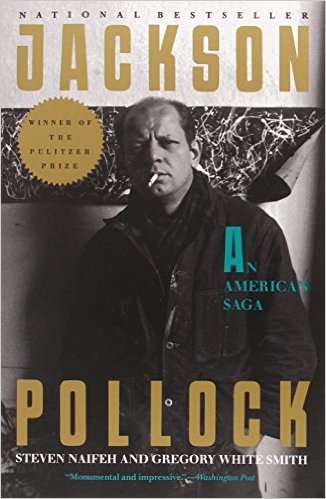 1. Steven Naifeh and Gregory White Smith, Jackson Pollock (Potter). This massive, fully researched biography, appropriately subtitled “An American Saga,” recreates the life and world of America’s most famous twentieth-century painter. The richly textured narrative examines every aspect of Pollock’s life, from his boyhood on a sheep ranch in Wyoming, through his childhood on a hard-scrabble farm in Arizona and his adolescence in Southern California to his mature years in New York. The authors examine Pollock’s insecurities, his tangled relationship with his mother and siblings, and his self-destructiveness, but they never forget that Pollock is important not because he was highly neurotic but because he was a painter who revolutionized his craft and exerted incalculable influence upon the painting of his time. Naifeh and Smith are especially skillful in recreating the rival cliques and shifting loyalties of the New York art world, both in the 1930’s when Pollock was an apprentice and in the 1950’s when he was an acknowledged master. We feel that no better life of an American artist has ever been written.
2. Patricia O’Toole, The Five of Hearts (Potter). Surely the most enchanting* of the biographies we read this year, Ms. O’Toole’s book weaves together the lives of Henry and Clover Adams, John and Clara Hay, and Clarence King (along with a supporting cast that includes Theodore Roosevelt, Mrs. Don Cameron, and scores of others) with singular understanding and great literary skill. The biography is based upon exemplary research. Attentive readers of Ernest Samuel’s authoritative biography may not learn much that is new about Henry Adams, but Ms. O’Toole constructs his life with consummate artistry. She offers a sensitively nuanced treatment of Clover Adams and recreates the neglected lives of Clara Hay and Clarence King. Perhaps Ms. O’Toole’s most remarkable achievement is to make the insufferable John Hay a believable, indeed a sympathetic, figure. The book provides a splendid* picture of the American intellectual and political elite at the turn of the century.
* Professor Stansky prefers the less enthusiastic adjective “charming.”
3. Joseph Frazier Wall, Alfred I. DuPont: The Man & the Family (Oxford University Press). This book, based on prodigious research in archives hitherto little explored, may well be the best biography ever written of an American businessman. But it is a good deal more than that. As the title indicates, Wall tells the story not just of a man but of his complex, versatile, and enormously influential family, from the period of the American Revolution to the present. With great skill Wall has achieved a balance between the public and private Alfred DuPont, between the history of the DuPont enterprises and the DuPont family. Notable is his judicious handling of Alfred DuPont’s marriages and his treatment of his children—a subject that, as one member of the jury remarked, “could have been portrayed as an early twentieth-century Dallas.” We found the whole book fascinating.
Here, then, are the three very different books that we recommend – different in scale, different in research, different in methodology. As members of the Biography jury we are glad that we do not have to choose among them. But all three of us feel very strongly that any one of these three distinguished books is worthy of a Pulitzer Prize in Biography.Of course all of us will be very glad to answer any questions, or to provide further details about our deliberations, should you or members of the Board desire it.