
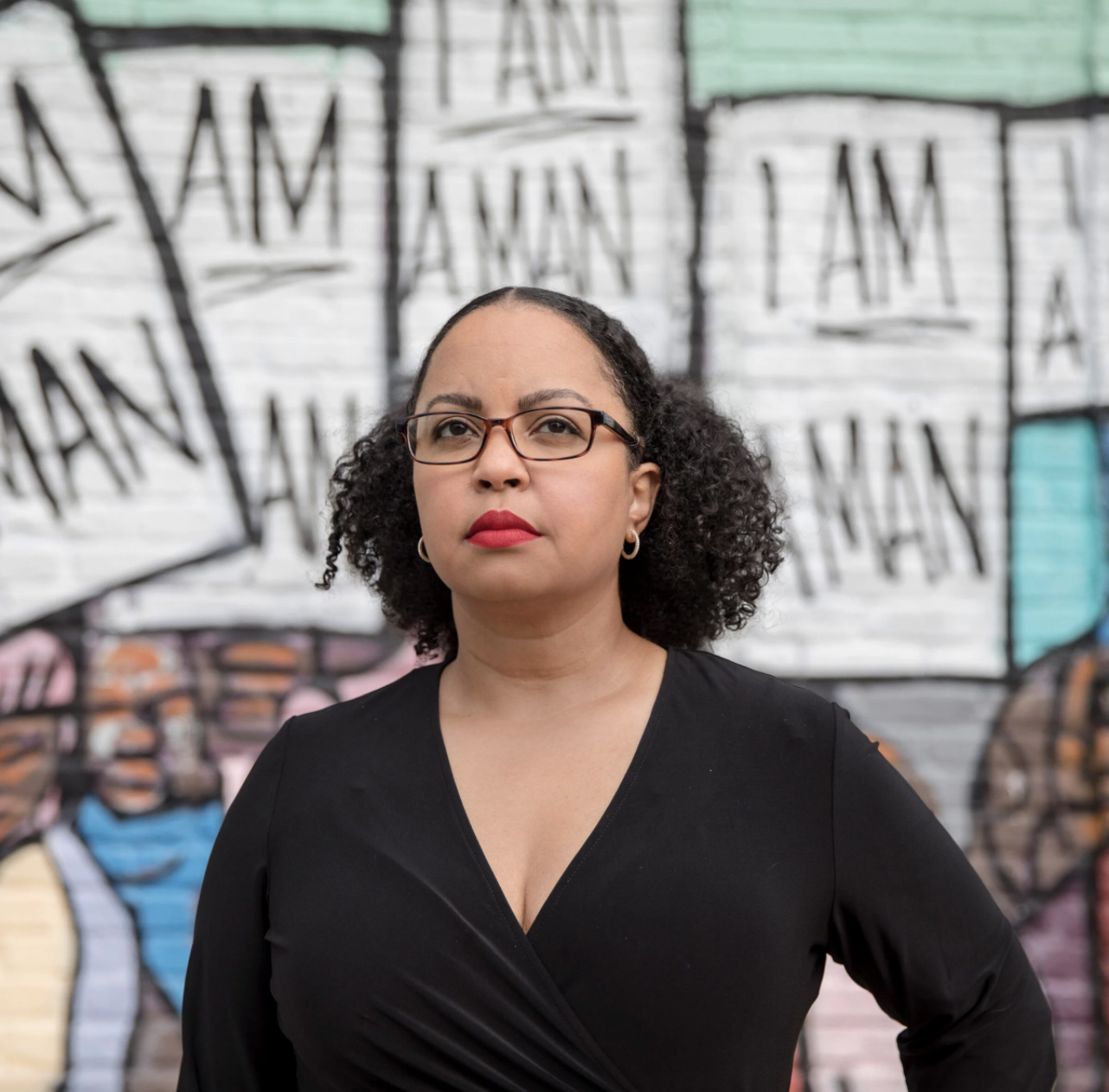
Journalist Wendi C. Thomas
Journalist Wendi C. Thomas was in the courtroom during a federal police surveillance trial when white police officer Sgt. Timothy Reynolds took the stand and said:
“I was following Wendi Thomas,
Wendi C. Thomas.”
Thomas recounted the declaration — and her shock at hearing it — in a piece headlined “The Police Have Been Spying on Black Reporters and Activists for Years. I Know Because I’m One of Them.” The article was produced in partnership with the MLK50: Justice Through Journalism, a member of the ProPublica Local Reporting Network, where Thomas serves as editor and publisher. Previously, Thomas spent 11 years as a columnist at the Memphis Commercial Appeal.
Thomas wrote that Sgt. Reynolds, who is white, recounted that “To get intel on activists and organizers, including those in the Black Lives Matter movement, he’d posed on Facebook as a ‘man of color,’ befriending people and trying to infiltrate closed circles.” She learned that day last August that she was one of the people the officer was following on Facebook. "The ACLU of Tennessee had sued the MPD, alleging that the department was in violation of a 1978 consent decree barring surveillance of residents for political purposes," Thomas wrote.
In addition to recounting how the Memphis Police Department tracked her, Thomas detailed law enforcement’s long history of keeping tabs on African-American citizens in the area. In the 1960s, local police gathered intelligence “not just on activists, but also on teachers’ meetings, a college black student union and labor organizers. That included Martin Luther King Jr., who came to Memphis in the spring of 1968 to stand in solidarity with underpaid and mistreated black city sanitation workers,” Thomas wrote.
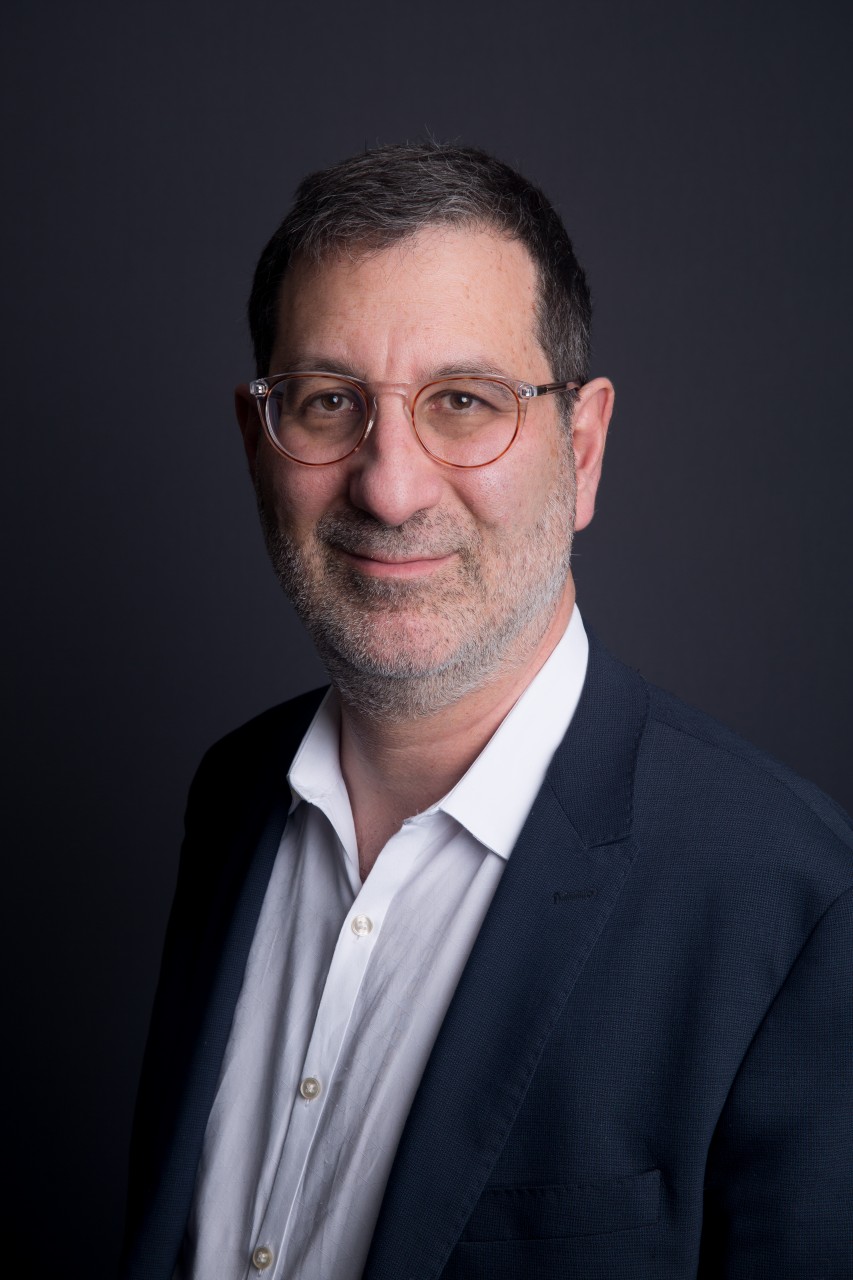
ProPublica Editor-in-Chief and Pulitzer Prize Board Co-Chair Stephen Engelberg
Pulitzer Prize Board Co-Chair and ProPublica Editor-in-Chief Stephen Engelberg spoke to Thomas’ case. Thomas is a contributor to ProPublica’s Local Reporting Network.
“This really does predate all the current stuff,” Engelberg said of intelligence gathering on journalists. The subheading of Thomas’ piece calls her one person “on a long list of prominent black journalists and activists who have been subjected to police surveillance over decades.” As Thomas did in her piece, Engelberg cited the 1978 Kendrick consent degree, which “which barred law enforcement from surveilling protesters for political purposes.”
“The most startling thing about what Wendi has written is that it has resumed,” Engelberg said, even though “earlier outright spying by the FBI, when exposed, was seen as horrific.” If one had “full access to every file in police intelligence, my fear is that it would not be empty,” he added.
“When police use taxpayer-paid time to gather things on reporters,” Engelberg said, which, he added he “fears is not uncommon,” it’s “pernicious.”
“It’s been more than a year since a judge ruled against the city, and I’ve never gotten a clear answer on why the [Memphis Police Department] was monitoring me,” Thomas wrote. She said following publication of her piece, she has heard from many former journalism colleagues and readers expressing concern for her wellbeing, but has yet to hear anything from the Memphis Police Department.
She said she was not surprised by that, citing a combination of factors that combine to make Memphis a “powder keg,” including income inequality, large numbers of low-paying jobs created by the distribution and logistics businesses headquartered there, and unresolved tensions due to a fraught history. “Surveillance is an attempt to keep things from exploding by maintaining the status quo,” Thomas said, adding that if any city should be aware of what it looks like to honor Dr. King’s sacrifice, the “ultimate sacrifice,” and “have more of a handle on social justice issues,” it should be Memphis.
"Writing the piece was very traumatic. I had to revisit a lot of things I would rather not think about," Thomas said.
Engelberg said that public officials, and particularly law enforcement, have an ongoing adversarial relationship with the press and have tried to gather “useful information” on reporters who expose wrongdoing — as Thomas has in extensive reporting on improper billing of Memphis hospital patients.
At a time when American journalists are facing what Engelberg described as “open physical threat,” with police officers clearly firing rubber bullets at photojournalists and more, “literally risking life and limb” to cover the news, intelligence-gathering adds another dimension to the risks faced by reporters. And it’s not just police — he pointed to the private investigators hired by Harvey Weinstein to track 2018 Public Service winner Ronan Farrow’s movements.
At the federal level, Engelberg questioned how reporters such as Bob Woodward and Carl Bernstein, whose work on Watergate in the Washington Post was recognized with a Pulitzer in 1973, will be able to continue to do their investigative work without leaving any electronic breadcrumbs from cell phones or email.
President Trump, whom Engelberg described as “openly hostile to the press” while trying “to make journalists his foil,” is not the first U.S. president to have a difficult relationship with the media, but “the ability of Twitter to spread things has lifted it to a new level.”
“The work of the reporter in every possible way is getting harder,” Engelberg said. Notably, he said to the biggest threat facing journalists — “the economics of the business, and the economics of the country,” leaving “swaths of America where coverage is a huge question mark.”
A democracy is “clearly a much poorer society when the dear leader is unquestioned by society,” Engelberg said. “It’s also a less well functioning society.”
“The press acts as an inspector general on the government. It prods at questionable decisions, some with no political context of any kind. That’s a thing the press can do.”