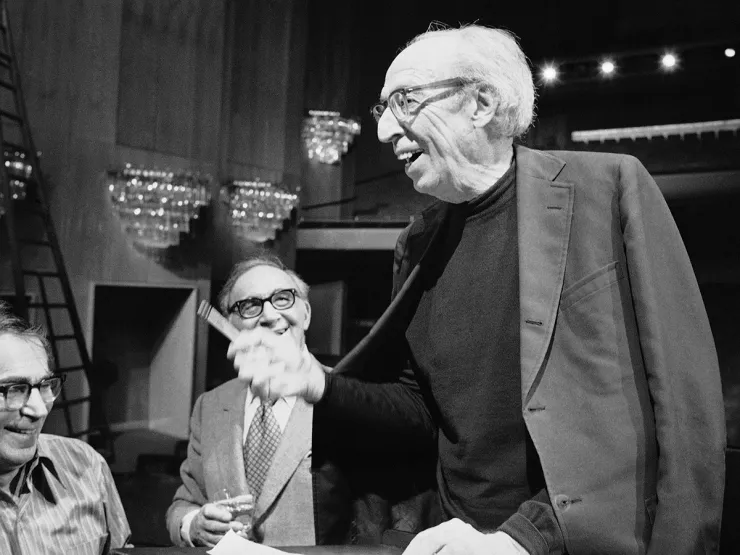
The Pulitzer Prizes celebrated their 50th anniversary with a gala dinner at the Plaza Hotel in New York. Five revered prize winners in five categories agreed to make five-minute speeches under the rubric “Trends in Our Era.”
The first to speak was Aaron Copland, who had won the 1945 Pulitzer Prize in Music for Appalachian Spring. The Music prize was only in its third year then. By the time he spoke, there had been 24 winners.
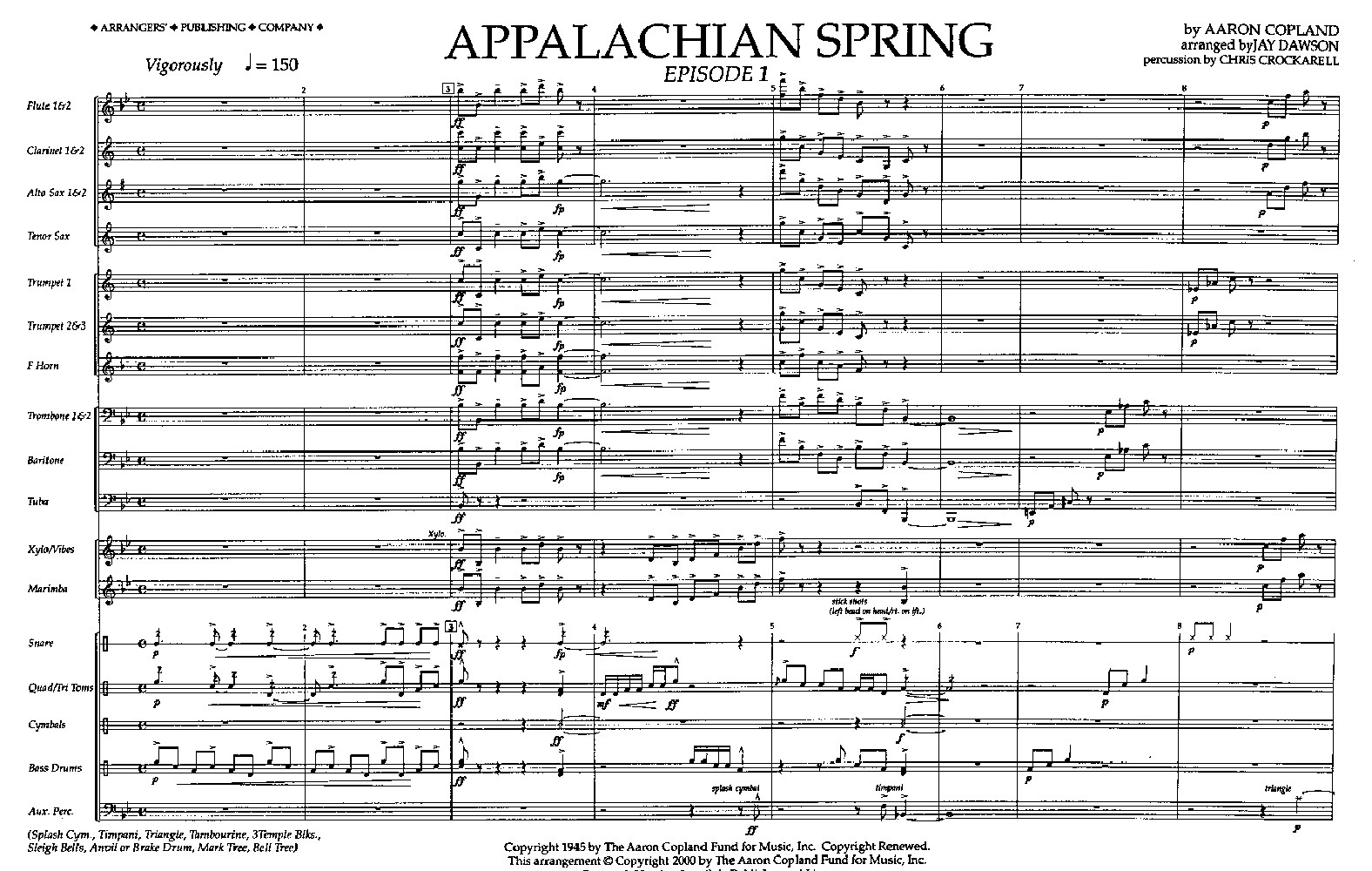
The score for 'Appalachian Spring.'
A Paris-trained composer, Copland nevertheless brought an American touch to his music. He also incorporated jazz in his compositions at an early date.
Of the five speakers on May 10, 1966, he was the most conscious of — and conscientious about — the five-minute limit. He was also aware of the coming computer age and wary of its effects on music.
Here is what he had to say.
‘I am the bearer of brutal tidings’
By AARON COPLAND
I’ve been asked to sort out trends in my field in 300 seconds flat. The first thing that strikes one about music nowadays is the extent to which it has become involved with the Building Trades. At the moment the whole country is suffering from what some wit has called the Edifice Complex. The buildings are brand new, but unfortunately no one has done anything about the audiences. No new trends there. On the contrary, nothing is more staunchly conservative than the music-loving public. They have but one notion: “let the art of music alone, it’s lovely as it is.”
For them I am the bearer of brutal tidings. The plain fact is that we are living in the midst of an unprecedented musical revolution. The art I practice is in the process of being dismantled, broken down into its component parts, and put together in ways never dreamed of.
A brand new factor has now to be taken into account — the injection of science and scientific calculation into our musical thinking. A tone is no longer merely a tone, to be accepted as a fact of nature. It can be taken apart like a mechanism and measured in frequencies, in decibels, in duration and in kinds of attack. It can be reassembled by electronic means, recorded on magnetic tape and tampered with so as to produce every possible sound combination from the most shattering noise to the most delicate tonal mixtures. The resultant composition can then be sent through the mails, played over the radio and heard everywhere.
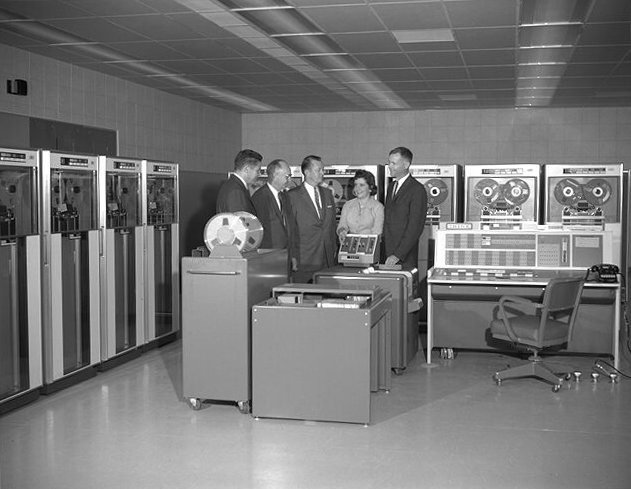
IBM's Computer 7090.
But what I’ve been describing is already at least 10 years old. More recently, IBM has gotten into the act. Computer 7090, if fed the necessary information, can write out its own music and perform it. Isn’t it astonishing how quickly all of us have become accustomed to the idea that we can have a new kind of music: without performers, and even without composers. In such circumstances, it is too much to expect that so-called normal music will remain just as it was in the past.
As usual, it’s the younger generation who spearheads the new musical movement. The compositions they write are often problematical and very difficult to execute. They are composing less and less for large orchestral groups and more and more for small ensembles of dedicated musicians. I have nothing but admiration for this new species of young performer who grapples with the complexities — rhythmic, instrumental and, I might add, notational — of the newer composers.
Avant-garde works are easy to identify — they just don’t sound like the music we are accustomed to hear. Generally they fall into one of two opposed categories: a music of tightest control, where every element is worked out as the result of a pre-compositional plan, or a music that is wayward and unpredictable, relaxedly exploring the charm of chance operations. The curious thing is that when you listen to an avant-garde piece you can’t always tell which category it belongs to.
In either case, don’t look for any tunes, any continuity, any graspable form or any propulsive rhythms. This isn’t a criticism, it’s merely a description of what isn’t there.
What I am trying to say is that, in facing up to the new music, you’re on your own. This is no different from being on your own before the new paintings, the new movies, the new theater, etcetera. It’s just that people are quicker to get with it in relation to the visual and verbal arts and slower — much slower — to swim upstream with the aural art.
Whatever else may be said, there is definitely a sense of adventure in the new music. As a charter member of the revolutionary generation of the '20s, I can sense a similar excitement in the air nowadays. Good luck to them!