Joseph Lelyveld, Former Top Editor of The New York Times, Dies at 86
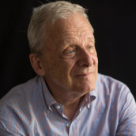
Joseph Lelyveld (1937-2024):
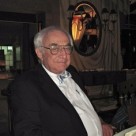
1986 General Nonfiction winner and former New York Times Executive Editor Joseph Lelyveld died Friday at his home in Manhattan from complications of Parkinson's disease, according to an obituary by 1996 Spot News Reporting winner Robert McFadden. He was 86. "Cerebral and introspective, [...] Lelyveld was for nearly four decades one of the most respected journalists in America, a globe-trotting adventurer who reported from Washington, Congo, India, Hong Kong, Johannesburg and London, winning acclaim for his prolific and perceptive articles," McFadden wrote. "Coming home, he rose up The Times's editorial pyramid to its pinnacle, the executive editorship, arguably the most powerful post in American journalism. In his seven years at the helm, from 1994 to 2001, The Times climbed to record levels of revenue and profits, expanded its national and international readerships, introduced color photographs to the front page, created new sections, and ushered in the digital age with a Times website and round-the-clock news operations." During this period, "his staffs won multiple Pulitzer Prizes for reporting — on racial attitudes and contemporary life in America, federal tax loopholes, the work of the Supreme Court, drug corruption in Mexico, Taliban atrocities in Afghanistan and the sale of technology to China, and for feature and deadline reporting. Seventeen members of his staffs were Pulitzer finalists." Although he "retired a week before the terrorist attacks of Sept. 11, 2001," Lelyveld briefly returned to The Times as interim executive editor in 2003 at the behest of then-Publisher Arthur Sulzberger Jr. amid the Jayson Blair scandal, which led to the resignations of his successor, 1992 Feature Writing winner Howell Raines, and Managing Editor Gerald M. Boyd. "Traumatized by the scandal and exhausted by [...] Raines's demands for greater production, the staff largely welcomed the return of [...] Lelyveld, who professed some reluctance, having embarked on a new career writing books and freelance articles. Six weeks later, [1989 International Reporting winner] Bill Keller, a columnist and former Times correspondent who had been [...] Lelyveld’s managing editor and his choice as a successor, was named the executive editor." In a Friday statement, Sulzberger reflected on Lelyveld's career: "Everyone knows Joe as a giant in journalism, but first and foremost he was a thoughtful, compassionate man who cared deeply about his colleagues. He was not only a great executive editor who steered The Times through some challenging moments at the advent of the internet, but he also returned to help heal the newsroom at a very low point. He will be remembered by many for journalistic triumphs and his humanity. I will always remember him as my dear friend." The Cincinnati-born son of Shakespeare scholar Toby Bookholtz and Rabbi Arthur J. Lelyveld (a prominent leader in Reform Judaism who also worked as a civil rights organizer), he was raised by relatives in New York City following his parents' separation. After completing his secondary education at the Bronx High School of Science, Lelyveld earned his undergraduate degree from Harvard in 1958 and an M.A. in history from the institution a year later. In 1960, he took his M.S. from the Columbia University Graduate School of Journalism. Thereafter, he "discovered his passion for writing, especially about international affairs," while completing a Fulbright scholarship in India and present-day Myanmar. "I found, through sheer dumb luck, that newspapering suited a deep need I seemed to have to not know what was going to happen next in my life," he said during a later commencement speech at the Columbia Journalism School. "I found that I thrived on surprise, and that there were people who might pay me to cultivate this instinct." Upon returning to the United States, he began working in the gofer-ish role of a copy boy at The Times in early 1962 before transitioning to "crafting news bulletins for the Times-owned WQXR on the sunrise shift." Beginning his career at The Times in earnest as a general assignment reporter in 1963, he completed a required period on the metropolitan desk (coinciding with preparations for the 1964 New York World's Fair), eventually leading to international assignments in Congo, South Africa (where he "[explored] ordeals and absurdities under [its] apartheid system of racial separation," prompting his expulsion "after 11 months" by the government, which was "displeased with his work") and India (as New Delhi bureau chief). In 1972, he "[undertook] intensive Chinese language studies at Cambridge" in preparation for a potential bureau role in the People's Republic of China; however, the Chinese government "did not permit The Times to open a bureau when [...] Lelyveld completed his training, and from 1973 to 1974 he covered China and Southeast Asia from Hong Kong." Following a tour covering the 1976 presidential campaign in The Times' Washington bureau and a 1977 column on the national mood for The New York Times Magazine, he returned to South Africa in 1980, personally requesting the assignment. "For three years he traveled through crowded Black 'homelands' and white cities, documenting apartheid for Times articles and for his book on South Africa" ("Move Your Shadow: South Africa, Black and White"), which received a 1986 Pulitzer Prize for General Nonfiction alongside "Common Ground: A Turbulent Decade in the Lives of Three American Families" by former Times reporter J. Anthony Lukas. McFadden added: "His second South Africa tour was followed by a two-year posting as a correspondent in London, after which he returned to write for The Times Magazine." He served as foreign editor from 1987-1989 and "succeeded Arthur Gelb as managing editor, the No. 2 job in the newsroom," in 1990, McFadden continued. Gerald M. Boyd lauded Lelyveld's commitment to journalists of color throughout his tenure in senior management. "Not only were there some journalists of color in management, but others held coveted assignments in Washington, on the national staff or abroad," Boyd wrote in his 2010 memoir. In later years, Lelyveld continued writing books (including an account of the final months of Franklin Roosevelt) and was a frequent contributor to The New York Review of Books. He married his wife, Carolyn Fox, a fellow Bronx Science graduate, in 1959 and survived her upon her death in 2004. In addition to his longtime partner, journalist Janny Scott, Lelyveld's survivors include two daughters and a granddaughter.