For the Record


Local journalists arrested in small Alabama town for grand jury story

Local Journalists Arrested Amid Grand Jury Story:


Publisher Sherry Digmon and reporter Don Fletcher of southwestern Alabama's Atmore News "were arrested last week after a story by Fletcher disclosed details of an investigation into the local school board's payments to seven former school-system employees," Paul Farhi of The Washington Post reported Wednesday. Although the arrest was predicated on the allegation that the publication's article was "based on confidential grand-jury evidence" (a felony under many circumstances), it is "not a crime for a media outlet to publish such leaked material, provided the material was obtained by legal means, legal experts said." Longtime media lawyer Theodore J. Boutrous Jr. characterized the case as "extraordinary, outrageous and flatly unconstitutional," noting that "the U.S. Supreme Court has repeatedly held that the First Amendment forbids punishing journalists for publishing information of public importance, even if the information came from a source who broke the law in leaking it." Jane Kirtley, a professor of media ethics and law at the University of Minnesota, "said the Atmore arrests follow a number of other recent cases in which local prosecutors have used warrants, threats and criminal proceedings to harass or pressure journalists," as exemplified by the "controversial police raid this summer on the Marion County Record." According to Farhi, local officials "accused the small Kansas newspaper of illegally obtaining and publishing private records, and sent police and sheriff’s deputies to the newspaper's office and the publisher’s home to seize evidence," with 98-year-old owner Joan Meyer "[dying] a day" after police raided the home she shared with son Eric Meyer, the Record's publisher. Following much criticism, "the county attorney withdrew the warrant and returned seized items to the paper," Farhi added, while the police chief resigned last month. Notably, Digmon also is "a member of the [Escambia County] school board"; in this capacity, she "recently voted against renewing the contract of the county education superintendent — an official who was publicly supported by Stephen Billy, the district attorney" who charged Digmon and Fletcher. Farhi continued: "Also arrested on Friday with Digmon and Fletcher was Veronica 'Ashley' Fore, the Escambia school system's payroll bookkeeper, according to the Atmore News. Fore was also charged with revealing grand jury information and allegedly providing the newspaper with documents that were the basis of its Oct. 25 story. She and her attorney could not be reached for comment. In comments to the Atmore Advance, the prosecutor said he brought charges because disclosure of grand-jury proceedings is 'not allowed. All three of them, [including] the girl [Fore], were all charged with the same thing. But, you just can't do that, and there's no reason for that. Innocent people get exposed, and it causes a lot of trouble for people.'" On Wednesday, "the Associated Press reported that Digmon was arrested again on a separate charge of using her school board position for personal gain in allegedly selling $2,500 worth of ads to the school system [...] Alabama ethics law prohibits public officials from soliciting money and items of value, though it exempts routine business transactions."


Israeli Govt. Denies Rolling Stone a Press Credential After Critical Coverage

Israeli Government Denies Rolling Stone Press Credential in Response to Prior Coverage:


The Israeli government "has denied a press credential to Rolling Stone journalist Jesse Rosenfeld, who has covered Prime Minister Benjamin Netanyahu's administration critically — and the civilians on both sides of the conflict with nuance and sensitivity," the magazine's Ryan Bort reported Monday. "Rolling Stone is not a news organization and we are not dealing with this gentleman [Rosenfeld], thank you," Ron Paz, Israel’s director of foreign press, was quoted in a brief phone conversation before hanging up. (Rosenfeld is a contributing writer for the publication.) Since "the conflict between Israel and Hamas began when Hamas launched a coordinated attack on multiple Israeli targets on Oct. 7," Rosenfeld "has filed several dispatches for Rolling Stone," including reports that "[highlighted] Israelis responding to the initial attacks, as well as the plight of Palestinians living in Gaza during Israel's ongoing siege [...] Rosenfeld spoke to relatives of Israelis who went missing during the conflict, including at least one who blamed Netanyahu for failing to prevent the carnage. He also has "contributed nuanced reporting about how Palestinians are struggling to survive the conflict — as they braced for war earlier this month, as Israel told over a million civilians to evacuate ahead of continued attacks, and as the Gaza Strip lost internet and phone service last week," Bort continued. During the summer of 2023, Rosenfeld "reported [...] on the massive protests triggered by Netanyahu's attempts to radically remake the Israeli judiciary," culminating in "a fierce backlash from organizations friendly to Netanyahu's point of view" after two former Israeli prime ministers were quoted in Rosenfeld's reportage. Rosenfeld, who "has been covering Israeli and Palestinian society since 2007 for Vice, The Daily Beast, The Intercept, and elsewhere," previously "uncovered and investigated Israeli executions of Palestinian fighters during the 2014 Gaza war." According to Bort, "Despite the efforts of Netanyahu's press department, Rolling Stone and Rosenfeld will continue reporting on this war and the region." Co-founded by controversial writer/editor Jann Wenner, his former wife Jane Wenner and venerable music critic Ralph J. Gleason in 1967, the magazine has come under fire in the early 21st century for publishing a 2005 article by Robert F. Kennedy, Jr. that quoted material out of context; a defamatory false 2014 story about an alleged gang rape at the University of Virginia that was subsequently reviewed by the Columbia Journalism School; and a 2016 Sean Penn interview with former Sinaloa Cartel leader Joaquín "El Chapo" Guzmán that spawned a notable ethics debate after it was revealed that Guzmán maintained final editorial control over the article. The magazine has been fully owned by Penske Media Corporation since 2020. 

This new data poisoning tool lets artists fight back against generative AI

Computer Scientists Test Generative AI 'Data Poisoning' Tool:


A team of researchers led by University of Chicago computer scientist Ben Zhao have created Nightshade, "a new tool [that] lets artists add invisible changes to the pixels in their art before they upload it online so that if it's scraped into an AI training set, it can cause the resulting model to break in chaotic and unpredictable ways," Melissa Heikkilä of the MIT Technology Review reported Monday. Heikkilä added: "AI companies such as OpenAI, Meta, Google, and Stability AI are facing a slew of lawsuits from artists who claim that their copyrighted material and personal information was scraped without consent or compensation," as exemplified by recent lawsuits from the comedian Sarah Silverman and 2001 Fiction winner Michael Chabon. Zhao, who specializes in adversarial machine learning and holds a Neubauer chair at the institution, "says the hope is that it will help tip the power balance back from AI companies towards artists, by creating a powerful deterrent against disrespecting artists’ copyright and intellectual property." The team also intends on integrating Glaze (a related tool that "allows artists to 'mask' their own personal style to prevent it from being scraped by AI companies") into Nightshade. The latter program, which will remain open source, "exploits a security vulnerability in generative AI models, one arising from the fact that they are trained on vast amounts of data—in this case, images that have been hoovered from the internet," Heikkilä continued. "Artists who want to upload their work online but don’t want their images to be scraped by AI companies can upload them to Glaze and choose to mask it with an art style different from theirs. They can then also opt to use Nightshade. Once AI developers scrape the internet to get more data to tweak an existing AI model or build a new one, these poisoned samples make their way into the model’s data set and cause it to malfunction." Thus, "poisoned data samples can manipulate models into learning, for example, that images of hats are cakes, and images of handbags are toasters [...] The poisoned data is very difficult to remove, as it requires tech companies to painstakingly find and delete each corrupted sample." Eva Toorenent, an artist who has tested the programs, hopes that it will precipitate a paradigmatic sea change. "It is going to make [AI companies] think twice, because they have the possibility of destroying their entire model by taking our work without our consent," she said. Meta, Google, Stability AI, and OpenAI "did not respond to MIT Technology Review’s request for comment on how they might respond," according to Heikkilä.

Louise Glück, Nobel-Winning Poet Who Explored Trauma and Loss, Dies at 80

Louise Glück (1943-2023):


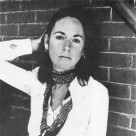
1993 Poetry winner and 2020 Nobel laureate in literature Louise Glück died Friday at her home in Cambridge, Mass. She was 80. The death was confirmed by by Jonathan Galassi, her editor at Farrar, Straus & Giroux, while friend and former colleague Richard Deming "said the cause was cancer," according to Clay Risen of The New York Times. Risen added: "Glück was widely considered among the country’s greatest living poets, long before she won the Nobel Prize. Though she began publishing in the 1960s and received some acclaim in the ’70s, she cemented her reputation in the 1980s and early ’90s with a string of books, including 'Triumph of Achilles' (1985), which won the National Book Critics Circle Award; 'Ararat' (1990); and 'The Wild Iris' (1992)," which received the Pulitzer. He continued: "Her work was both deeply personal — 'Ararat,' for example, drew on the pain she experienced at the death of her father — and broadly accessible, both to critics, who praised her clarity and precise lyricism, and the reading public. She served as the U.S. poet laureate from 2003 to 2004." Although Glück "retained an autobiographical thread" redolent of the Sixties-era confessional poets throygh her oeuvre, "there is nothing solipsistic in her work, especially that of the 1980s, even as she explored intimate themes of trauma and heartbreak," Risen wrote. "Glück’s poems were often brief, a page or less in length, exemplars of her attachment to 'the unsaid, to suggestion, to eloquent, deliberate silence,'" according to Hillel Italie of the Associated Press. "Influenced by Shakespeare, Greek mythology and Eliot among others, she questioned and at times dismissed outright the bonds of love and sex, what she called the 'premise of union' in her most famous poem, 'Mock Orange.' In some ways, life for Glück was like a troubled romance — fated for unhappiness, but meaningful because pain was our natural condition — and preferable to what she assumed would follow." As a result of psychological challenges as a teenager, the Long Island-reared Glück's formal tertiary education was confined to non-degree courses and poetry workshops at Sarah Lawrence College and Columbia's School of General Studies (then largely analogous to the contemporary School of Professional Studies) in the mid-1960s. Glück "was married and divorced twice and had a son, Noah, with her second husband, John Darnow," Italie wrote. Throughout her career, "she taught at several schools, including Stanford University and Yale University, and regarded her experiences in the classroom not as a distraction from her poetry, but as a 'prescription for lassitude,'" Italie continued. "Students would remember her as demanding and inspiring, not above making someone cry, but also valued for guiding young people in search of their own voices." To date, Glück is one of only three American recipients of the Nobel Prize in Literature (including the halcyon Modernist poet T. S. Eliot [1948] and 2008 Special Citation recipient Bob Dylan [2016], usually considered a songwriter) who primarily wrote in verse.

Nevada Supreme Court protects phone, computers of slain reporter

Nevada Supreme Court Protects German's Devices in Landmark Ruling:


The Nevada Supreme Court "has moved to protect slain Las Vegas Review-Journal investigative reporter Jeff German's personal devices in an order released Thursday, which calls for a third-party team to search his journalistic materials as part of the investigation into his murder," according to a Friday report by Katelyn Newberg. The jurists "also wrote that Nevada’s shield law, which protects journalists from forcibly disclosing sources, continues to apply after a reporter’s death," Newberg continued. "To rule otherwise would 'be directly contrary to the statute’s purpose,' according to [the] order, which was signed by Justices Elissa Cadish, Kristina Pickering and Linda Bell." German, who earned a master's degree from Marquette University before covering organized crime in Las Vegas for decades as an investigative reporter and columnist, "was fatally stabbed outside his home on Sept. 2, 2022," according to Newberg. He was 69. Former Clark County Public Administrator Robert Telles "was arrested shortly after and accused of killing German in anger over the reporter’s articles." (Considered to be a "low-level" elected role, the public administrator "secures property of people who pass away in Clark County while a search for family or the decedent's executor is performed" and "administers estates in court when families cannot," according to the office's website.) "The Nevada Supreme Court has firmly upheld the press protections that allowed Jeff German to become one of the best-sourced, most-trusted journalists in the state," Review-Journal Executive Editor Glenn Cook said after the decision was announced. "Most importantly, the court ruled that Nevada’s statutory shield for newsgathering materials and confidential sources does not die when a reporter is killed. And the court also clearly held that allowing Metro and the district attorney to review materials to decide for themselves whether press privilege applies is like the fox guarding the henhouse," he added. Newberg continued: "The shield statute is not absolute 'when a defendant’s countervailing constitutional rights are at issue,' the Supreme Court ruled. But because authorities would have been able to review the devices before the Review-Journal, the proposed protocol would be 'irreparably destroying any privilege the Review-Journal may have.' The justices instead remanded the case back to District Court, and called on the lower court to implement the Review-Journal's plan to have the devices searched by a taint team comprised of former U.S. Magistrate Judge Peggy Leen and former Clark County District Attorney David Roger." Conversely, Metropolitan Police attorneys "have argued the devices need to be searched for evidence that could both help prosecutors and aid in Telles' defense," with the former official (who is representing himself) calling for "a delay in his upcoming trial, in part because he has not received information from German's devices." The justices "also denied a petition from the Review-Journal on Thursday, in which the newspaper asked the Supreme Court to impose sanctions on Metro for searching through German’s phone, which Metro attorney Matthew Christian has stated was done in the 'immediate aftermath of finding the body,'" Newberg wrote.


Kansas police chief who led raid on small weekly newspaper has resigned, official says

Marion Police Chief Resigns Following Press Freedom Incident:


Several weeks after leading an August raid against a venerable weekly newspaper based in his municipality, Marion, Kansas Police Chief Gideon Cody has resigned from his post amid the release of "body camera video of the raid showing an officer searching the desk of a reporter investigating the chief's past," John Hanna, Mark Vancleave and Summer Ballentine of the Associated Press reported Monday. "Cody’s resignation was confirmed to The Associated Press both by Mayor Dave Mayfield and City Council member Ruth Herbel, following an announcement by Mayfield at Monday's council meeting," the reporters added. "Mayfield had suspended Cody on Thursday for reasons that have not been made public. In a text message Monday night to the AP, he said he couldn’t answer questions about the chief’s resignation 'as it is a personnel matter.'" A local prosecutor previously determined that "there wasn't sufficient evidence to justify the search of the Marion County Record or searches at the same time of the publisher's home and Herbel’s home," Hanna, Vancleave and Ballentine wrote. They continued: "The search of the newspaper put Marion, a town of 1,900 residents some 150 miles [...] southwest of Kansas City, at the center of a fierce national debate over press freedoms and cast an international spotlight on Cody and his tactics. Cody faces one federal lawsuit, and others are expected. Cody did not immediately return a telephone message seeking comment about his resignation. His resignation initially was reported by the Marion County Record and the Wichita Eagle." Eric Meyer, a former journalism professor at the University of Illinois who became editor and publisher of the family-owned newspaper in 1998, said that the resignation was "long overdue [...] You know, we had to wait more than six weeks to get him suspended." He continued: "It kind of leads you to believe that there's some smoking gun somewhere that everybody knows about and we're going to try to get ahead of it." According to the AP team, the body camera footage from the raid "shows that after an officer rifled through a desk drawer of the reporter looking into Cody's background, he beckoned Cody over to look at the documents he'd found." The footage was obtained by the AP on Monday through a records request. After opining that he "didn't care" that the newspaper "kept a personal file on [him]," Cody was seen "bending over, apparently to look at the drawer, before the other officer’s clipboard [blocked] the view of what the chief [was] doing," the reporters said. Although Cody obtained the search warrants "by telling a judge that he had evidence of possible identity theft and other potential crimes tied to the circulation of information about a local restaurant owner's driving record," the Record and its attorneys "have suggested he might have been trying to find out what it had learned about his past as a police captain in Kansas City, Missouri," with lawyer Bernie Rhodes asserting to the AP that Cody intended to uncover the publication's sources. The raids also may have violated a "federal privacy law that protects journalists from having their newsrooms searched" and a Kansas law "that makes it more difficult to force reporters and editors to disclose their sources and unpublished material," the reporters continued. 

Head of Hong Kong journalists' group sentenced to jail for obstructing police

Hong Kong Journalists Association Chair Receives Jail Sentence, Surrenders Travel Documents:


Hong Kong Journalists Association Chair Ronson Chan "was sentenced on Monday to five days jail for obstructing police officers in September last year after a case seen by some critics as a further blow to media freedoms in the financial hub," according to Jessie Pang of Reuters. Chan, who pleaded not guilty, "earlier told the court that he had asked the police to show their warrant cards before handing over his document, which all Hong Kong residents must carry," Pang added. "Magistrate Leung Ka-kie found Chan guilty, saying that a fine instead of jail would not reflect the gravity of the offence. Leung also refused to consider community service instead as she said Chan showed no remorse." The arrest did not preclude Chan from completing a scheduled six month fellowship at Oxford University's Reuters Institute for the Study of Journalism while free on bail. Once a paragon of press freedom, the city of Hong Kong (which has been administered as a Special Administrative Region of the People’s Republic of China since 1997) has faced tumult on this front since the passage of a 2020 national security law, with two prominent independent outlets (Apple Daily and Stand News) forcibly closing in 2021. (Chan, who worked for both newsrooms, has since supported himself as a delivery driver.) Founded as a trade union in 1968, the Journalists Association "is one of the last major professional groups in Hong Kong advocating fundamental rights and press freedoms" following the law's enactment. "Everyone can see how the court views the case," Chan said after the hearing concluded. "I think justice is in our heart." Although Chan was released again on HK$30,000 (US$3,800) bail "after his lawyers said he would appeal," he "cannot leave Hong Kong and had to surrender his travel documents," Pang wrote. No date has been set for the appeal.

Lucy Morgan, Pulitzer-winning force of Florida journalism, dies at 82

In Memoriam: Lucy Morgan (1940-2023):


1985 Investigative Reporting winner and former Tampa Bay Times Tallahassee Bureau Chief Lucy Morgan died Wednesday from complications of a fall that occurred in May, according to Times staff member Jay Cridlin. She was 82. "Morgan was renowned for her work from Tampa Bay to Tallahassee, where the press gallery of the Florida State Senate is named in her honor," Cridlin wrote. Richard Bockman, who often edited Morgan's work, opined that "she was as powerful as any politician in the state [...] She had the ear of anybody in the state who she wanted, from governors to prisoners, from drug dealers to prosecutors. She had anybody and everybody. And her goal was to tell stories that needed to be told." In a statement, former Florida Gov. Jeb Bush (R) said that Morgan was "the gold standard as a journalist" while also noting that "she scared politicians that were ethically challenged because they knew nothing would get by her." Although Morgan would go on to serve as the the Times’ Tallahassee bureau chief for more than 20 years, her career in journalism only commenced when when "an editor with the Ocala Star-Banner tracked her down" in her mid-20s "and asked if she'd be willing to cover Citrus County part-time, earning 20 cents per word" as a recently divorced mother of three children. After joining the staff of the then-St. Petersburg Times in 1967, she began to emerge as a high-profile reporter in earnest when a "judge sentenced her to a total of eight months in jail for refusing to name a source" in her investigation of Dade City corruption in 1973; while she did not serve any time in jail, more people began "to trust her with sensitive information," Cridlin wrote. In 1984, Morgan and colleague Jack Reed "began a yearlong investigation relying on Deep Throat levels of secrecy" after a top officer in the Pasco County Sheriff’s Office told Morgan about corruption under then-Sheriff John Short. During their investigation, "the officer’s wife [slipped] confidential documents to Morgan under the door of a department store dressing room" as the sheriff’s office "fought the investigation the whole way, sifting through Morgan's trash and passing out bumper stickers with a picture of a screw next to her name: 'Screw Lucy Morgan,'" according to Cridlin. Ultimately, Short was "removed from office and indicted on corruption charges," while Morgan and Reed received their Pulitzer. (Previously, Morgan's investigation of drug smuggling in Dixie County had been nominated for the 1982 Local General or Spot News Reporting Prize.) "The subjects of Morgan’s stories would tail her car, tap her phone, even flash firearms to try to throw her off track," Cridlin wrote. "But those who feared her pen also respected her. After winning that Pulitzer for investigating Pasco’s sheriff [...] the Florida Sheriffs Association asked her to speak to a group of new sheriffs about how they ought to do their jobs." Morgan married Times Pasco County editor Richard Morgan in 1968, "forming a blended family bonded by loss," as evidenced by the loss of her teenage son in a 1979 auto accident. Along with her two living children, "their blended family grew to include nine grandchildren and eight great-grandchildren." 

James Hoge, Who Led Two Big City Tabloids, Dies at 87

In Memoriam: James F. Hoge Jr. (1935-2023):


Former Pulitzer Prize Board Chair James F. Hoge Jr. died on Tuesday in New York, his son confirmed to The New York Times. He was 87. A cause of death was not disclosed. "Few editors at major American newspapers have been as young as [...] Hoge was when he rose to the top at The Chicago Sun-Times, a tabloid aimed at a working-class readership," wrote Clyde Haberman for The Times in an obituary. "He became the city editor at age 29, editor in chief at 33 and publisher at 44. He shook up the staff, strove for sprightlier writing and, like other newspaper editors in the 1970s, introduced new sections on business, food and fashion. The payoff was six Pulitzer Prizes on his watch: two each for feature photography and criticism and one each for spot news reporting (concerning violence by young radicals in Chicago) and local news reporting (on new evidence in the still-unsolved 1966 murder of Valerie Percy, a daughter of Charles H. Percy of Illinois, then making his first United States Senate race)." In the mid-1970s, Hoge concurrently served as editor of the Chicago Daily News, "a struggling afternoon newspaper" that shared a parent company with The Sun-Times; although he closed its four overseas bureaus "to cut costs," the newspaper (which shared The Sun-Times' working-class appeal by featuring such journalists as 1972 Commentary winner Mike Royko) eventually folded in 1978. Shortly after joining the Pulitzer Board in 1982, he "put together a group that sought to buy The Sun-Times from its parent company, Field Enterprises, but they were no match for Rupert Murdoch and the $100 million he offered," Haberman added. "Hoge left the newspaper once the new owners took over in January. Months later he was back in his hometown, New York, as the publisher of The Daily News, a once-mighty tabloid that had fallen on tough times in a city with a shrinking working class and a growing population of non-English speakers and readers." In 1986, longtime Daily News columnist Jimmy Breslin received the Commentary Prize, but Hoge "foundered when he sought to reduce the overstaffing and featherbedding that had long defined labor practices at the newspaper." According to Haberman, this precipitated "a five-month strike in 1990 and 1991 that was scarred by a few physical attacks on people who did go to work." Hoge left the newspaper after it was acquired by the flamboyant publisher and alleged British-Soviet-Israeli triple agent Robert Maxwell, whose unwieldy media empire collapsed in the months following his November 1991 death. After completing his Pulitzer Board service in 1991, Hoge "became an editor and publisher yet again in 1992, this time at Foreign Affairs, a journal of the Council on Foreign Relations." During his tenure, he "shortened articles, encouraged livelier writing, published six times a year instead of four, launched editions in several languages, nearly doubled the circulation — and made a profit." Upon leaving the publication in 2010, he ended his career as a senior advisor at Teneo, a public affairs advisory firm. Born to a privileged family in Manhattan (his mother, Virginia [McClamroch] Hoge, was a "patron of Carnegie Hall, the Metropolitan Opera and the New York Philharmonic"), Hoge and his brother Warren (who died several weeks ago) became enamored of journalism through their father, a trademark attorney who "would bring home four or five newspapers at a time and leaf through them with his children with look-at-that enthusiasm." He graduated from Phillips Exeter Academy in 1954 and Yale University (with a bachelor's degree in political science) in 1958. Thereafter, he received an M.A. in history (with a thesis on the Wilson administration's foreign policy) from the University of Chicago in 1961. Before first joining the Sun-Times as a Washington correspondent in 1963, he was a Congressional Fellow of the American Political Science Association during 1962–1963. He is survived by his third wife, Kathleen Lacey, a senior managing director at Teneo; a sister, Virginia Verwaal; two sons and a daughter from his first marriage; a son from his relationship with journalist Cynthia McFadden; two stepsons; five granddaughters; and three grandsons.

Pulitzer winner Chabon, other authors sue Meta over AI program

Chabon, Hwang, Other Writers Sue Tech Platforms Over AI Training:


A group of writers (including 2001 Fiction winner Michael Chabon and three-time Drama finalist David Henry Hwang) "sued Meta Platforms in San Francisco federal court on Tuesday, accusing the tech giant of misusing their works to train its Llama artificial-intelligence software," according to Blake Brittain and Katie Paul of Reuters. The group (which also includes authors Matthew Klam, Rachel Louise Snyder and Ayelet Waldman) "said Meta taught the Llama large-language model to respond to human text prompts with datasets that included pirated versions of their writings," Brittain and Paul added. In a "similar proposed class-action lawsuit" filed on Friday against ChatGPT parent organization OpenAI, the authors "said in the OpenAI case that works like books and plays are particularly valuable for AI language training as the 'best examples of high-quality, long form writing.'" In previous lawsuits, OpenAI and other AI companies have "argued that AI training makes fair use of copyrighted material scraped from the internet." Representatives for Meta and the writers declined to comment on the lawsuit. Meta and OpenAI also "were also sued for copyright infringement in July by a separate group of authors that includes comedian Sarah Silverman, part of a growing list of copyright cases against AI companies." Although the Facebook parent company "published a list of datasets used to train its first version of the Llama model, which it released in February," the company "did not disclose training data for its latest version, Llama 2," Brittain and Paul wrote. Meta's Llama 2 language model remains "free to use for companies with fewer than 700 million monthly active users."