For the Record


‘20 Days in Mariupol’ wins best documentary Oscar, a first for AP and PBS’ ‘Frontline’

'20 Days in Mariupol' Wins Academy Award:


Mstyslav Chernov's "20 Days in Mariupol," "a harrowing first-person account of the early days of Russia’s invasion of Ukraine in 2022, won the best documentary Oscar on Sunday night," according to Lindsey Bahr and Christopher Weber of the Associated Press. "A joint production of The Associated Press and PBS' 'Frontline,' statuettes were awarded to Chernov, producer and editor Michelle Mizner and producer Raney Aronson-Rath," a past Pulitzer juror in the Audio Reporting category, Bahr and Weber added. "The Oscar — and nomination — was a first for both Chernov, an AP video journalist, and the 178-year-old news organization. This was the third nomination and first win for 'Frontline.'" Chernov, photographer Evgeniy Maloletka and producer Vasilisa Stepanenko "arrived an hour before Russia began bombing the port city" in 2022, Bahr and Weber continued. "Two weeks later, they were the last journalists working for an international outlet in the city, sending crucial dispatches to the outside world showing civilian casualties of all ages, the digging of mass graves, the bombing of a maternity hospital and the sheer extent of the devastation." In his acceptance speech, Chernov reflected on the emotional toll of the war. "Probably I will be the first director on this stage to say I wish I’d never made this film, I wish to be able to exchange this to Russia never attacking Ukraine," he said. "I wish for them to release all the hostages, all the soldiers who are protecting their land, all the civilians who are in their jails. We can make sure that the history record is set straight and the truth will prevail, and that the people of Mariupol, and those who have given their lives, will never be forgotten. Because cinema forms memories and memories form history." The "work of Chernov, Maloletka, Stepanenko and Lori Hinnant won the 2023 Pulitzer Prize for Public Service and featured prominently that same year in" the AP's Breaking News Photography Prize-winning portfolio, according to Bahr and Weber.

Condé Nast joins CPJ to defend free press

Condé Nast, Committee to Protect Journalists Announce Partnership:


Publisher Condé Nast and the Committee to Protect Journalists (CPJ) "announced a new partnership [...] to help promote journalist freedom and safety," according to a press release issued Thursday. Under the agreement, Condé Nast "will help raise awareness and funds for CPJ by using its platforms and resources, including creative and advertising support linked to World Press Freedom Day, marked annually on May 3 to highlight the crucial role journalists play in holding power to account." The partnership also will encompass featured materials "for attendees of the Vanity Fair Oscar Party, an annual celebration following the award ceremony, now in its 30th year." Additionally, CPJ "will be included in other Condé Nast events throughout the year," the release continued. "It goes without saying that journalism is under pressure around the world—from the business models we operate, to press freedom and safety," Condé Nast CEO Roger Lynch said. “The Committee to Protect Journalists is a vital organization for many reasons, not the least of which is that even in the most trying times, in war and conflict, they are on the frontlines fighting for the rights of journalists to report news safely and without fear. Condé Nast has long been a supporter of CPJ, and I’m thrilled that we are deepening our relationship with them." CPJ CEO Jodie Ginsberg added: "Condé Nast is a world-renowned publisher with an over 100-year history of producing powerful journalism, from Vogue's coverage of World War II through the eyes of celebrated photographer Lee Miller, to Vanity Fair's exposé of the tobacco industry in the 1990s, to The New Yorker's Emmy-award-winning virtual reality documentary on China’s 're-education camps.' I am delighted to be partnering with them in what is a pivotal moment for journalists and journalism." (CPJ and the Pulitzer Prize Board have collaborated on past initiatives, most recently in CPJ's disbursal of a $50,000 grant from the Board to journalists covering the war in Gaza. New Yorker Editor & Staff Writer David Remnick is a member of the Pulitzer Board.)

J-Group Says Hedge-Fund Papers Unwelcome

Report for America Withdraws Support From Hedge Fund-Owned Newspapers:


After sending "hundreds of journalists to buttress shrinking newsrooms" since its 2017 founding, the Report for America national service program "is phasing out its relationships with hedge fund-owned properties — a reviled group that includes some of the country’s largest newspaper companies," Isaiah Jerome Lewis Poole of Richard Prince's Journal-isms reported Sunday. The withdrawal "is the culmination of a two-year estrangement with [...] McClatchy [...], which severed its relationship with Report for America over critical comments by Steven Waldman, the project's co-founder and former president," Poole continued. Kim Kleman, the program's executive director, initially confirmed the decision during a Journal-isms panel on the state of the news industry last week. Having "recruited and supported more than 600 journalists, nearly half of whom are people of color, to work in 338 newsrooms" since its inception, Kleman said the program's "current cohort includes reporters in 198 partner news organizations [...] Of those, 11 are part of the now hedge fund-owned Gannett chain, the largest in the country," alongside a lone McClatchy publication. "We'll continue with those until the corps members graduate," Kleman said. According to Poole, no Tribune-owned newspapers (which also fall under the purview of Alden Global Capital) "are in the current cohort [...] and presumably won’t be eligible to participate as partners" in subsequent cycles. On February 1, 200 NewsGuild members at Tribune publications staged a 24-hour walkout, citing the alleged "strip-mining" of newspapers for profits amid unprecedented layoffs and circulation declines. "We started at Report for America working with what are now hedge fund-owned organizations because we considered ourselves as supporting communities and sometimes those newsrooms owned by those companies were the only game in town," Kleman said. Following a June 2021 Los Angeles Times op-ed in which Waldman lambasted the perceived commodification of hedge fund-owned newspapers as a "real threat to democracy," the Columbia Journalism Review first reported McClatchy's withdrawal from Report for America in November 2021; at the time, the newspaper chain "had 31 Report for America journalists working at 21 of its publications." Kleman added: "We're seeing all kinds of newsrooms with various business models emerge and succeed. When we partner with host newsrooms, we’re making a big bet on them — that with our help, they’ll become more sustainable, and can become beacons for other newsrooms that can learn from their challenges, new ideas and successes. The recent history of hedge-fund ownership, where a focus on profits has often decimated newsrooms, suggests that business model isn't the future for robust local news." She continued: "In our new cohort, which begins in July, we're adding 55 new positions, for a total of 200 positions, including continuing corps members. Yet we got hundreds more applications from newsrooms than we could support. So we have to be very, very choosy, working with newsrooms we believe are committed to investing in their journalism and their communities." Spokespeople at McClatchy and Gannett declined to comment on the decision.

‘Beginning of the End’ as Assange Case Returns to Court

Assange Case Returns to British Court:


Wikileaks founder Julian Assange (who has "been held in a high security prison in southeast London while his lawyers fight a U.S. extradition order") saw his case "[return] to a British court for a two-day hearing that will determine whether he has exhausted his right to appeal within the U.K. and whether he could be one step closer to being sent to the United States," Megan Specia of The New York Times reported Tuesday. Although Assange "did not appear before the court, declining to attend virtually because of ill health," myriad "protesters gathered outside, demanding his release," Specia continued. In the U.S., the 52-year-old publisher and activist "faces charges under the Espionage Act of 1917 that could amount to a sentence of up to 175 years in prison, his lawyers say, although lawyers for the United States government had previously said that he was more likely to be sentenced to between four and six years." She added: "The U.S. charges against [...] Assange date to events in 2010, when WikiLeaks published tens of thousands of secret military and diplomatic documents leaked by Chelsea Manning, an Army intelligence analyst. The files exposed hidden diplomatic dealings and included revelations about civilian deaths in the wars in Iraq and Afghanistan. In May 2019, during the Trump presidency, the U.S. Justice Department accused [...] Assange of violating the Espionage Act by soliciting and publishing secret government information, charges that raise profound First Amendment issues. The Obama administration had considered charging [...] Assange but decided against it because of the threat to press freedom." However, Assange's "life in limbo in London goes back even further" to June 2012, when he "entered the Ecuadorean Embassy in London to escape extradition to Sweden, where he faced an inquiry into unrelated allegations of sexual misconduct and rape that were later dropped," according to Specia. He remained at the embassy until April 2019, when he was "promptly arrested for skipping bail"; weeks later, the Justice Department "unsealed an indictment which charged [...] Assange with 18 counts of violating the Espionage Act, by participating in a criminal hacking conspiracy and by encouraging hackers to steal secret material," Specia wrote. She continued: "Assange's legal team was expected to outline its case on Tuesday, followed by the U.S. Justice Department’s legal team. The judges will then consider the case — which could take hours, days or weeks — before announcing their decision." Although the judges "could allow [...] Assange to appeal his extradition order, in which case a full appeal hearing would be scheduled, opening the door to a new decision about his extradition," a denial of the appeal could see Assange "be sent swiftly to a plane bound for the United States," Specia wrote. (Assange's team also will "challenge his extradition in the European Court of Human Rights in Strasbourg, France," potentially resulting in a hearing there prior to the effectuation of the extradition.) Jameel Jaffer, executive director of the Knight First Amendment Institute at Columbia University, commented on the case in a statement Tuesday morning. "It's a terrible thing that this hearing is necessary," he said. "The U.S. Justice Department should never have charged Assange under the Espionage Act, because the indictment and prosecution of a publisher under this act poses a grave threat to press freedom. The question of whether Assange himself is a journalist is a red herring. The indictment focuses almost entirely on the kinds of activities that national security journalists engage in routinely and as a necessary part of their work—cultivating sources, communicating with them confidentially, soliciting information from them, protecting their identities from disclosure, and publishing classified information. A successful prosecution of Assange on the basis of this indictment would criminalize a great deal of the investigative journalism that is absolutely crucial to our democracy. The Justice Department should drop the Espionage Act charges, which should never have been filed in the first place."

They gave local news away for free. Virtually nobody wanted it.

Participants Largely Eschew Free Newspaper Subscriptions in Political Science Study:


When 2,529 individuals from the Philadelphia and Pittsburgh metropolitan areas were offered free subscriptions to their local newspapers (The Philadelphia Inquirer and the Pittsburgh Post-Gazette, respectively), only 44 participants (constituting 1.7% of the survey pool) accepted, according to Kevin Lind of the Columbia Journalism Review. Dan Hopkins, a political science and communications professor at the University of Pennsylvania, "conducted the study, titled 'Unsubscribed and Undemanding,' in 2021," according to Lind. He added: "The purpose of the research [...] was to assess practical ways to increase interest in local or regional news for an audience that seems more interested in national, partisan media outlets. (The pool of those offered subscriptions was made up of locals who had previously responded to political surveys.) Hopkins said that he was 'surprised and dismayed' when he realized that only 1.7 percent had accepted the free subscription." Hopkins' current research builds on a thesis first articulated in "The Increasingly United States" (2018), where he contends that "declining interest and access to local news forces voters, who are not otherwise familiar with the specifics of their local governments' agendas or legislators, to default to national partisan lines when casting regional ballots [...] as a result, politicians are not held accountable, voters are not aware of the issues, and the candidates who get elected reflect national ideologies rather than representing local needs." During the study, Hopkins and co-author Toni Gorton "sent the free-subscription offers on postcards in the mail and targeted social media messages" in early-to-mid-2021 amid a parallel study "in which they determined the level of engagement with free local news stories (mostly about COVID) on social media." Lind continued: "One returned an invitation to subscribe to the Post-Gazette with a message: '[t]he P-G is an awful newspaper run by horrible bigoted people.' Other comments collected from the social platforms read: 'no thanks! Fake News' and 'GOTTA BE BAD FOR THE MEDIA WHEN YOU CAN’T GIVE THE CRAP AWAY.'" Although the Post-Gazette did not respond to a comment request, Inquirer Senior Director of Special Projects Evan Benn "told CJR that the study was a welcome chance to gain insight into potential subscribers looking for local news, especially given that a grant from the University of Pennsylvania covered the cost of the subscriptions." However, Benn "declined to respond on the record to the substance of the findings." (Inquirer Editor and Senior Vice President Gabriel Escobar is a member of the Pulitzer Prize Board.)

Jon Franklin, Pioneering Apostle of Literary Journalism, Dies at 82

Jon Franklin (1942-2024):


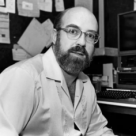
1979 Feature Writing and 1985 Explanatory Journalism winner Jon Franklin died in hospice care (following a recent fall and complications from esophageal cancer) on January 21 in Annapolis, Md., according to Sam Roberts of The New York Times. He was 82. Uniquely the first recipient of the prizes in both categories, Franklin "championed the nonfiction style that was celebrated as New Journalism but that was actually vintage narrative storytelling, an approach that he insisted still adhere to the old-journalism standards of accuracy and objectivity," Roberts added. His first prize was for a Baltimore Sun series that "transported readers into an operating room where a surgeon's agonizing struggle to save the life of a woman whose brain was being squeezed by a rogue tangle of blood vessels illuminated the marvels and margins of modern medicine," while his second winning portfolio "[delved] into the molecular chemistry of the brain and how neurons communicate" through a scientist "whose experiments with receptors in the brain [...] [heralded] treatment with drugs and other alternatives to psychoanalysis," presaging the emergence of SNRI and SSRI medications in the 1990s. Born to an electrician's family in Enid, Okla. in 1942, Franklin "aspired to be a scientist" but faced a peripatetic upbringing, leaving him "educated mostly in what he called the 'universal school for writers' — the novels of Fitzgerald and Hemingway and the short stories in The Saturday Evening Post." In 1959, he dropped out of high school and served in the U.S. Navy for eight years as a journalist, most notably at the Pentagon publication All Hands. Thereafter, he received a bachelor's degree in journalism from the University of Maryland on the G.I. Bill in 1970, joining the Sun as a rewriter shortly thereafter. He left the Sun after his second Pulitzer to become a journalism professor at University of Maryland; although stints as the director of the University of Oregon's creative writing program and another newspaper job at The News & Observer in Raleigh followed, he returned to Maryland as Merrill chair in journalism in 2001 before retiring in 2010. Franklin is survived by his wife, Lynn Scheidhauer, and two daughters from a first marriage that ended in divorce. "The reason we read stories is because we have evolved a wish to understand the world around us,” he reflected in an interview with Harvard's Nieman Foundation in 2004. "The way we do that best is through our own experiences, but if we read a good story it’s like living another person’s life without taking the risk or the time."

L.A. Times to lay off at least 115 people in the newsroom

Los Angeles Times Eliminates 115 Positions:


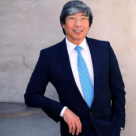
The Los Angeles Times "announced Tuesday that it was laying off at least 115 people — or more than 20% of the newsroom — marking one of the largest workforce reductions in the history of the 142-year-old institution," according to a report by Senior Entertainment Writer Meg James. She continued: "The cuts were necessary because the paper could no longer lose $30 million to $40 million a year without making progress toward building higher readership that would bring in advertising and subscriptions to sustain the organization, the paper’s owner, Dr. Patrick Soon-Shiong, said Tuesday. Drastic changes were needed, he said, including new leaders who would focus on strengthening the outlet's journalism to become indispensable to more readers." In a statement, Soon-Shiong said the decision "is painful for all, but it is imperative that we act urgently and take steps to build a sustainable and thriving paper for the next generation." He also "expressed disappointment that the newsroom guild did not work with management to come up with a plan that he said would have saved jobs," opining that the guild's one-day strike last week "did not help." In an interview, Soon-Shiong asserted he "recognized several months ago that former Executive Editor Kevin Merida" — an incumbent Pulitzer Prize Board member who recently stepped down from the role — and other "high-ranking editors that he put in place were not getting the job done," according to James; however, Merida "has said that he left the paper over disagreements with Soon-Shiong over his role as top editor and strategy, as well as the size of layoffs." Soon-Shiong added: "It is indeed difficult to reflect upon the recent tumultuous years, during which our business faced significant challenges, including losses that surpassed $100 million in operational and capital expenses. Despite these difficulties, we made a deliberate decision to abstain from implementing layoffs within our newsroom during the COVID pandemic, maintaining the newsroom headcount throughout until the last several months despite the losses. Since the acquisition of the Los Angeles Times, we have invested almost a billion dollars, underscoring our dedication to preserving its legacy and securing its future." However, the billionaire South African-American transplant surgeon and biomedical scientist "pushed back on the narrative that The Times was in turmoil" in his interview with the newspaper. "We are not in turmoil," he said. "We have a real plan."

Pitchfork Folded Into GQ as Condé Nast Makes Cuts at Music Publication

Pitchfork Folded Into GQ Amid Layoffs:


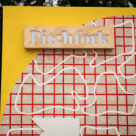
Music news site Pitchfork "is being folded into GQ as part of the ongoing restructuring at Condé Nast," which has owned the brand since 2015, according to Alex Weprin of The Hollywood Reporter. In a Wednesday memo to staff, Condé Nast Chief Content Officer Anna Wintour said that the decision "was made after a careful evaluation of Pitchfork's performance and what we believe is the best path forward for the brand so that our coverage of music can continue to thrive within the company." She added: "Both Pitchfork and GQ have unique and valuable ways that they approach music journalism, and we are excited for the new possibilities together." Editor-in-Chief Puja Patel will leave the publication as part of the consolidation, while other layoffs are anticipated. Founded by Minneapolis teenager Ryan Schreiber (who remained with the company until 2019) during the internet's incipience in 1996, the site initially "established itself as a taste-making institution [...] that could make or break a release from an artist — well known or otherwise — with scathing put-downs or voluminous praise, [becoming] an alternative to Rolling Stone for an audience hungry for a more indie taste," according to Sopan Deb of The New York Times. (The publication's earliest writers could be capricious: although a rave 2001 review of the most recent reissue of The Beach Boys' "Smiley Smile" [1967] played a foundational role in the reassessment of that album -- now generally considered to be on par with the unfinished sessions that preceded it -- early pillorings of Daft Punk's "Discovery" [2001], Prince's "Musicology" [2004] and Wilco's "Sky Blue Sky" [2007] were reassessed as part of Pitchfork's 25th anniversary in 2021.) Although former Condé Nast chief digital officer Fred Santarpia anticipated that its acquisition of Pitchfork would bring "a very passionate audience of millennial males into our roster," the ascendance of "social media and podcasts" led the publication to "[lose] some of the cultural cachet that it possessed two decades ago," Deb continued. In November, Condé Nast "announced it would be laying off 5 percent of its work force, about 270 employees," he wrote.

Baltimore Sun sold to Sinclair chairman David Smith

Sinclair Chairman Purchases Baltimore Sun:


The Baltimore Sun "has been sold by hedge fund Alden Global Capital to David Smith, the executive chairman of the local TV company Sinclair," placing the venerable newspaper under local control "after nearly four decades," Sara Fischer of Axios reported Tuesday. "The Sun has been owned by Alden Global Capital since 2021, when it was acquired as a part of Tribune Publishing, the parent company to the Chicago Tribune, New York Daily News and other local papers," Fischer added. She continued: "In 1986, local owner A.S. Abell Co. — the company belonging to the family of the Sun's original founders — sold the paper to Times Mirror Co. for $500 million. Times Mirror Co. eventually became a part of Tribune Publishing in 2000. The paper, which was founded in 1837, almost sold to a nonprofit backed by Maryland-based hotel billionaire Stewart Bainum Jr. in 2021. That deal fell apart, and eventually, Bainum went on to back a rival non-profit outlet called The Baltimore Banner." In a statement, Sinclair noted that the acquisition was funded by Smith's personal assets and that the publicly-traded broadcast media conglomerate "has no involvement with the transaction"; however, Smith will continue in his present role as executive chairman and chairman of the board of the company. As part of the deal, Smith also acquired various suburban publications affiliated with The Sun, including the Capital Gazette (which received a 2019 Pulitzer Prize Special Citation following the largest killing of journalists in U.S. history in their newsroom on June 28, 2018), the Carroll County Times and the Towson Times. In an interview, Smith said that he "plans to expand the Sun's commercial business by developing new advertising and subscription strategies, including focusing the paper's editorial products more heavily on local community news and video." Although its "backend functions will continue to be operated by Tribune, [...] Smith said he plans to eventually end those arrangements to operate the paper as a standalone business," Fischer wrote. According to Liz Bowie, Emily Sullivan and Cody Boteler of The Baltimore Banner, Armstrong Williams, "a well-known conservative political commentator who hosts a nationally syndicated television show on Sinclair network affiliates," has partnered with Smith in the acquisition, although the percentage of his ownership share remains undisclosed. 

Journalism, media, and technology trends and predictions 2024

Reuters Institute Survey: 'Even More Pressure on the Bottom Line':


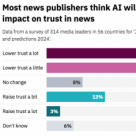
According to a Reuters Institute survey of 314 news executives from 56 countries, only 47% of respondents maintain confidence about journalism's 2024 prospects, while 63% are concerned about the seemingly terminal decline of social media referrals, Senior Research Associate Nic Newman revealed in a report published Tuesday. (The Institute, which receives most of its funding from the Thomson Reuters Foundation, is a unit of Oxford University.) "This will be the year when Search Generative Experiences (SGE) will start to roll out across the internet, along with a host of AI-driven chatbots that will offer a faster and more intuitive way to access information," Newman wrote. He continued: "Following sharp declines in referral traffic from Facebook and X (formerly Twitter), these changes are likely, over time, to further reduce audience flows to established news sites and put even more pressure on the bottom line. In their optimistic moments, publishers look forward to an era where they might break their dependence on a few giant tech platforms and build closer direct relationships with loyal customers. To that end we can expect media owners to build more barriers to content this year, as well as engaging expensive lawyers to protect their intellectual property (IP). At the same time, they’ll be aware that these strategies risk leaving their brands outside in the cold by making it even more challenging to reach younger and less educated audiences – many of whom are already comfortable with algorithmically generated news and have weaker ties to traditional media." According to Newman, publishers "say they’ll be putting more effort into WhatsApp [+61 net score relative to last year's survey] and Instagram (+39) following Meta's decision to open up broadcast channels for publishers. Interest in video networks such as TikTok (+55) and YouTube (+44) remain strong while Google Discover is becoming a more important but volatile referral source. By contrast, publisher sentiment towards Facebook has worsened further this year (-38 net score) along with X/Twitter (-39 net score)." In addition, the majority of respondents "say they plan to create more video (+64 net score), more newsletters (+52), and more podcasts (+47), but broadly the same number of news articles – as they lean into some of the few remaining areas of audience and advertiser growth," with "around half (54%) of respondents [admitting] their companies are mostly focused on maximizing attention rather than being more respectful of their audience’s time (37%)." And while generative AI has become ensconced in the popular imagination, "using AI for back-end news automation (56%) is considered the most important use of the technology by publisher respondents, followed by offering better recommendations (37%) and commercial uses (28%)"; indeed, "publishers are ambivalent about using AI for content creation, which is considered the biggest reputational risk by over half of respondents." He also said that "even more newspapers [will stop] daily print production this year as print costs rise and distribution networks weaken or in some cases reach breaking point," while a a "significant shift towards bundling of digital news and non-news content as large publishers look to lock in existing customers" may also occur. "Forward-thinking news organisations will be looking to build unique content and experiences that can’t be easily replicated by AI," Newman concluded. "These might include curating live news, deep analysis, human experiences that build connection, as well as longer audio and video formats that might be more defensible than text. But they’ll also be focused on using AI technologies to make their businesses more efficient in an increasingly difficult economic climate. At the same time, they will be working to package and distribute content in a way that makes journalism more relevant for different audiences, helping to address issues such as low engagement and selective news avoidance."