For the Record


Guatemalan court orders release of journalist jailed for nearly 2 years on money laundering charges
Zamora Receives 'Conditional Release' Following Two-Year Prison Stint:


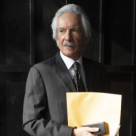
A Guatemalan court has "ordered the release [...] of journalist José Rubén Zamora, jailed for nearly two years on money laundering charges," according to Sonia Pérez D. of the Associated Press. Zamora, an industrial engineer by training who has primarily worked in the media since the mid-1980s (most notably as the founder of three Guatemalan newspapers: Siglo Veintiuno ["21st Century"], El Periódico ["The Newspaper"] and Nuestro Diario ["Our Daily"]) "was sentenced to six years in prison last June for alleged money laundering," Pérez D. added. "But that conviction and sentence were overturned by another court and a new trial ordered." On Wednesday, a judge "ruled that there was no longer justification to keep him in jail, noting that he was not considered a flight risk or a threat to the investigation," ensuring that Zamora "will spend the rest of his time before a new trial on a conditional release." As part of the agreement, Zamora was forced to post a "nearly" $4,800 bond. "During my entire life I have been the victim of attacks, abductions, aggressions for the work that I do,” said Zamora, who was first recognized with Columbia University's Maria Moors Cabot Prize Gold Medal and the International Press Freedom Award from the Committee to Protect Journalists in 1994. (On May 13, the Cabot Prize Board noted in a statement that Zamora's ongoing imprisonment stemmed from a "case that international human rights and press freedom organizations have condemned as revenge for reporting on government corruption"; Pulitzer Administrator Marjorie Miller is a member of the Cabot Board.) According to Pérez D., former Guatemalan human rights ombudsman Jorge Duque has agreed to serve as the guerantor for Zamora's future court appearances. "It is the least I can do," Duque said. "I know him and I know that he will continue facing the process against him." The charges stem] from Zamora allegedly "asking a friend to deposit a $38,000 donation to keep [El Periódico] going rather than depositing it himself," with Zamora maintaining that he did so "because the donor did not want to be identified supporting an outlet in the sights of" former Guatemalan President Alejandro Giammattei, who was essentially barred from entering the United States in January amid State Department accusations of "involvement in significant corruption" (exemplified by "accepting bribes in exchange for the performance of his public functions" in a manner that undermined "the rule of law and government transparency"). Nobel laureate Gabriel García Márquez's foundation also "awarded its excellence in journalism prize to Zamora on Tuesday," Pérez D. wrote.

YouTube to block Hong Kong protest anthem videos after court order

YouTube Blocks Video Links Amid Hong Kong Crackdown:


YouTube said Tuesday that it "would comply with a court decision and block access inside Hong Kong to 32 video links deemed prohibited content, in what critics say is a blow to freedoms in the financial hub amid a security clampdown," according to Jeffrey Dastin and James Pomfret of Reuters. The decision "follows a government application granted by Hong Kong's Court of Appeal requesting the ban of a protest anthem called 'Glory to Hong Kong,'" with judges "[warning] that dissidents seeking to incite secession could weaponize the song for use against the state," Dastin and Pomfret added. "We are disappointed by the Court's decision but are complying with its removal order," the Alphabet unit said in a statement, "saying it shared human rights groups' concerns that the content ban could chill free expression online." The video streamer also vowed to "continue to consider our options for an appeal, to promote access to information." A variety of observers (running the gamut from business consultancies to the U.S. government) believe the ban "will further undermine Hong Kong's international reputation as a financial hub, and raise concerns about the erosion of freedoms and its commitment" to the freedom of information. "Now the question is how far and how aggressive the government wants to go," said George Chen, co-chair of digital practice at the Asia Group. "If you start to send platforms 100 or 1,000 links for takedown every day, this will drive platforms crazy and also make global investors more worried about Hong Kong’s free market environment. How predictable and how stable the policy environment is matters a lot to foreign investors, and Hong Kong is now at a crossroads to defend its reputation." The decision "is not a worldwide first for the U.S. technology sector or Google parent Alphabet, which has restricted items when legally required to do so," Dastin and Pomfret wrote. As early as 2010, Google withdrew its search engine from mainland China, while "Hong Kong officials have been sanctioned by the U.S. government for a sweeping national security crackdown on dissent that has seen many opposition democrats jailed and liberal media outlets and civil society groups shuttered," according to Dastin and Pomfret. Hong Kong does not have an official anthem. "Glory to Hong Kong" "was written in 2019 during widespread pro-democracy protests that year, becoming an unofficial alternative anthem to China's 'March of the Volunteers'" amid the lack of an official anthem. The Hong Kong government refused a request for comment, while a Chinese Foreign Ministry spokesman "has said that stopping the song's spread was necessary for Hong Kong to safeguard national security."

Helen Vendler, poetry critic both revered and feared, dies at 90

Helen Vendler (1933-2024):


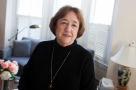
Former Pulitzer Prize Board member Helen Vendler "died April 23 at her home in Laguna Niguel, Calif.," according to Brian Murphy of The Washington Post. She was 90. "Among poets writing in English — and especially Americans — Dr. Vendler stood as a powerful gatekeeper in the same way that top theater critics can make or break a Broadway show," Murphy added. He continued: "For the reading public, meanwhile, she helped bring attention to poets and their work with reviews in the New Republic, the London Review of Books, the New Yorker and other outlets. Her clout grew steadily over more than five decades through a prolific output of reviews and more than two dozen books. She also carried added sway as a longtime poetry judge for the Pulitzer Prize and the National Book Award, as well as a nominator for the 'genius' grants of the MacArthur Foundation." (Prior to joining the Board during the 1990-91 cycle and serving three terms through 1999, Vendler was a Poetry juror in 1975, 1977, 1978, 1980, 1982, 1987 and 1990 cycles, serving as chair from 1982 onward; winners in these cycles ran the gamut from Beat affiliate Gary Snyder [1975] to future U.S. Poet Laureates Rita Dove [1987] and Charles Simic [1990].) "I do understand, I think, what it feels like to be a poet, even though I’m not one," Vendler said after accepting a role at Harvard University in the 1980s. "I was born with a mind that likes condensed and unusual language, which is what you get from poetry." Raised by teachers in a highly religious Boston upbringing, Vendler completed her undergraduate work at Emmanuel College (a small Catholic institution in Boston) because her parents objected to "secular education." She continued her studies in mathematics at the Université catholique de Louvain from 1954 to 1955 before pivoting to literature, completing the equivalent of an undergraduate major as a non-degree student at Boston University before enrolling in Harvard's doctoral program in English. Although the era's sexism ensured conflagrations with several faculty members, mentorships from the influential literary critic I. A. Richards and posthumous 1966 History winner Perry Miller (a founding exponent of the discipline of American studies) ensured a job offer upon the completion of her doctorate, which she declined. After teaching at Cornell from 1960 to 1963, she "she struggled financially as a single mother" upon her divorce from philosopher Zeno Vendler. In 1964, she returned to Boston University, where she spent much of her ensuing career (and becoming a full professor only two years later). Although Vendler played an integral role in the reappraisal of 1955 Poetry winner Wallace Stevens and Herman Melville's hitherto divisive poetic oeuvre, Vendler "was sometimes described as too protective of poetry in its traditional forms and failing to give sufficient recognition of other outlets such as hip-hop, rap and spoken-word poetry slams," Murphy wrote. He added: "In 2011, she engaged in back-and-forth barbs with Dove over the 'The Penguin Anthology of 20th-Century American Poetry,' which Dove edited [...] Vendler asserted that 'multicultural inclusiveness' meant too many poets were represented. 'No century in the evolution of poetry in English ever had 175 poets worth reading,' Vendler wrote in the New York Review of Books, 'so why are we being asked to sample so many poets of little or no lasting value?'" In a rejoinder, Dove said she "would not have believed Vendler capable of throwing such cheap dirt." Vendler also was named a Jefferson Lecturer ("the highest government honor on a scholar of the humanities") by the NEH in 2004 and won the National Book Critics Circle Award for Criticism for "Part of Nature, Part of Us: Modern American Poets" (1980). Survivors include her son, a brother and two grandchildren. While on the Pulitzer Board, Vendler maintained a sense of equanimity in her interview with The Paris Review. “My language is so much the inferior of the poets’," she said. "Even a minor poet has far greater gifts of language than I have."

Attacks on press freedom around the world are intensifying, index reveals

Attacks on Press Freedom Intensify in 2024:


The political abrogation of press freedom (as exemplified by "the detention of journalists, suppression of independent media outlets and widespread dissemination of misinformation") have "significantly intensified in the past year, according to the annual World Press Freedom Index published by Reporters Without Borders (RSF)," Annie Kelly of The Guardian reported Friday. "RSF sees a worrying decline in support and respect for media autonomy and an increase in pressure from the state or other political actors," said Anne Bocandé, the organization's editorial director. "States and other political forces are playing a decreasing role in protecting press freedom. This disempowerment sometimes goes hand in hand with more hostile actions that undermine the role of journalists, or even instrumentalize the media through campaigns of harassment or disinformation." Throughout the world, the "Maghreb and Middle East regions performed the worst in terms of restrictions on press freedom by government forces"; since October 2023, "more than 100 Palestinian reporters have been killed by in Gaza, including at least 22 in the course of their work," Kelly added. Journalists also "have been killed in Sudan, where there have been serious attempts to curb independent reporting of violence and civil war," while the "situation for media professionals in Syria [also has] deteriorated, with journalists who have fled press repression in their home country threatened with expulsion from neighboring Jordan, Turkey and Lebanon." Additionally, Latin America is "showing alarming indicators of political repression of journalism," Kelly continued; in particular, newly elected Argentinian President Javier Milei has "boasted about his assault on the free press and [...] shut down the country’s biggest new agency," while "sustained political [attacks]" against the press have continued in Peru and El Salvador. According to the RSF's report, the United States fell 10 places in the worldwide ranking (to No. 55) "as it prepares for the 2024 elections amid growing distrust in the media, which is at least in part fuelled by open antagonism from political officials, including calls to jail journalists [...] In several high profile instances, local law enforcement has carried out chilling actions, including raiding newsrooms [as evidenced by the August 2023 police raid of the Marion County Record in Kansas] and arresting journalists [including the recent arrest of a television news reporter at a Cal Poly Humboldt student demonstration]." More broadly, "the inability of journalists to cover subjects related to organized crime, corruption or the environment for fear of reprisals poses a major problem" throughout the Americas, the RSF said. Kelly continued: "Repression of the free press also worsened in the Asia-Pacific region. The RSF says that the region's dictatorial governments have been tightening their hold over news and information with 'increasing vigor' in countries such as Afghanistan, where the Taliban have all but destroyed independent journalism, and North Korea and China's 'all-out persecution' of local media. Vietnam and Myanmar also fell in the rankings this year due to their pursuit of mass imprisonment of media professionals." The RSF also "painted a bleak picture of the increasing use of artificial intelligence, calling its use in the arsenal of disinformation for political purposes 'disturbing,' with deepfakes being used to influence the course of elections."

Evan Gershkovich has spent a year in a Russian prison

Gershkovich Marks One Year in Russian Prison:


Wall Street Journal reporter Evan Gershkovich has now spent one year of wrongful detainment in a Russian prison, Sara Fischer of Axios reported Friday. Gershkovich "is the first U.S. journalist to be arrested and held on spying charges in Russia since the Cold War," Fischer added. "The 32-year-old U.S. citizen was arrested on March 29, 2023 for espionage charges that both he and The Journal vehemently deny. His arrest has sparked among press freedom activists who worry Russia is using his detainment as a bargaining chip with the U.S. over its war with Ukraine." Following a Friday appearance at Moscow City Court, his "pre-trial detention was extended this week for the fifth time, until at least June 30," Fischer continued. Gershkovich's detention has coincided with increased enforcement of a "punitive fake news law passed soon after Russia invaded Ukraine, [...] [making] it much harder for the Western press to cover the war from Russia on the ground," she wrote. Although Gershkovich's "wrongful detainee" designation has enabled the U.S. State Department to transfer his case to a special division with hostage resources, "efforts to release him and former U.S. Marine Paul Whelan, who is also being held on espionage charges, have come up short" despire successful "negotiated prison swaps with Russia for former U.S. Marine Trevor Reed and WNBA [player] Brittney Griner in recent years," Fischer continued. Wall Street Journal Assistant Editor Paul Beckett (whose full-time portfolio encompasses the Gershkovich case) has confirmed that "drumming up media attention has been critical in ensuring [his] release remains a priority for the government," adding: "If he's forgotten — if he slips down the priority list — then the vital things that do need to happen to bring them home won't happen." As part of this work, Gershkovich's bank and email accounts have remained open, according to Fischer. The Journal also "has assembled a slew of programs to call attention to Gershkovich's case this weekend, including a global run across 12 cities, a 24-hour read-a-thon, [a] social media blitz" and a partially blank Friday print front page symbolizing Gershkovich's lost work during the previous year. Born in Princeton, N.J. in 1991 to Jewish immigrants who left the former Soviet Union in 1979, Gershkovich received a degree in English and philosophy from Bowdoin College in 2014. Following a 2016-17 stint with The New York Times, he worked as a Russia-based journalist for The Moscow Times (2017-2020) and Agence France-Presse (2020-2022) before joining The Journal in January 2022.

Julian Assange wins temporary reprieve from extradition to US

Assange Extradition Delayed in United Kingdom:


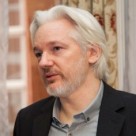
The U.K.'s extradition of WikiLeaks founder Julian Assange to the United States "was put on hold on Tuesday after London's High Court said the [U.S.] must provide assurances he would not face the death penalty," according to a report by Michael Holden and Sam Tobin of Reuters. They continued: "U.S. prosecutors are seeking to put Assange, 52, on trial on 18 counts, all bar one under the Espionage Act, over WikiLeaks' release of confidential U.S. military records and diplomatic cables. After Britain gave the go-ahead for his extradition last year, Assange's lawyers in February launched a final attempt in the English courts to challenge that decision. In their written ruling, which Assange's wife Stella described as 'utterly bizarre,' two senior judges provisionally gave him permission to launch a full appeal against extradition on three grounds, but only if the U.S. failed to provide 'satisfactory assurances' to the issues raised. These were that Australian-born Assange arguably would not be entitled to rely on the First Amendment right to free speech as a non-U.S. national and, while none of the existing charges carried the death penalty, he could later face a capital offense such as treason, meaning it would be unlawful to extradite him." They continued: "The judges invited the U.S. authorities to provide assurances on these matters, saying if they were not forthcoming by April 16, then Assange would be granted permission to appeal. However, they rejected his lawyers' argument the case was politically motivated or that he would not receive a fair trial. They also said his accusation that CIA officials had planned to kidnap or murder him could not be considered should he be allowed an appeal. A further hearing has been scheduled for May 20, with his extradition - which his campaign team said could have been imminent depending on the ruling - put on hold." Wikileaks "first came to prominence in 2010 when it published a U.S. military video showing a 2007 attack by Apache helicopters in Baghdad that killed a dozen people, including two Reuters news staff," Holden and Tobin wrote. "It then released thousands of secret classified files and diplomatic cables that laid bare often highly critical U.S. appraisals of world leaders which the U.S. said imperilled the lives of their agents." The U.S. maintains that Assange is being prosecuted "for the criminal act of conspiring with former U.S. Army intelligence analyst Chelsea Manning to unlawfully obtain [documents]" rather than for the act of publication itself. The publisher/activist "has now spent more than 13 years battling various legal cases in Britain, spending seven of these holed up inside the Ecuadorean Embassy in London after skipping bail and the last five in a maximum security jail," prompting brother Gabriel Shipton to allege that Assange is now suffering from "rapidly deteriorating physical and mental health." Although Assange lawyer Jen Robinson remains circumspect about the U.S.'s objectives, Nick Vamos (the "former head of extradition at Britain's Crown Prosecution Service") said "it should be straightforward for the U.S. to provide the guarantees." If the High Court ultimately upholds the decision, Assange's only recourse is to appeal the decision to the European Court of Human Rights.

Condé Nast’s Owners Set to Reap a $1.4 Billion Windfall From Reddit

Newhouse Family to Profit From Reddit Windfall:


The Newhouse family (which controls Condé Nast and myriad other publications through its Advance Publications holding company) may earn as much as $1.4 billion from the Thursday initial public offering of Reddit on the New York Stock Exchange, according to Michael M. Grynbaum and Mike Isaac of The New York Times. Condé Nast acquired the social media site (whose minimalistic, "subreddit"-oriented interface harkens back to the interest-oriented Usenet newsgroups and bulletin board systems that presaged the contemporary internet) "for a mere $10 million in 2006, later spinning it out into a stand-alone company," Grynbaum and Isaac added. They continued: "With its anarchic culture of amateur commenters, Reddit is a far cry from the meticulously curated guides to haute living in the Condé Nast stable. But its public offering will reward an early and prescient bet on the company by the Newhouses, who own roughly one-third of the outstanding shares. Advance, which also has major stakes in Charter Communications and Warner Bros. Discovery, among other investments, is privately held, and its finances are closely guarded. It is uncertain whether Condé Nast itself would benefit from the value of the Reddit stock; representatives declined to comment. Both Charter and Warner Bros. have seen significant dips in their stock price over the past year." Under a lockup period, Advance will be prohibited from selling its stake (in excess of 42 million shares) for six months. "In a sense, the Newhouses’ prospective windfall is in keeping with a business strategy set by the family’s patriarch, Samuel I. Newhouse, a real-life Horatio Alger who rose from poverty to create one of the country’s richest media dynasties," Grynbaum and Isaac wrote. "Newhouse, who founded Advance in 1922, was an early specialist in distressed assets, buying up struggling newspapers at cut-rate prices and turning them into profit makers. Condé Nast itself was a fading grande dame when Newhouse bought the publisher in 1959, sensing opportunity in fashion magazines." Employees of the media company are currently bracing for additional layoffs amid an ongoing dispute with its union, stagnant advertising revenue and the recent reclassification of once-au courant music news site Pitchfork under the aegis of GQ. (Pulitzer Prize Board member David Remnick is the editor of The New Yorker, a Condé Nast publication. Two-time Pulitzer winner John Archibald, a columnist for the Advance-owned al.com, will be featured next week in a live event and podcast under the Pulitzer on the Road imprimatur.)

USA Today Publisher Gannett to Drop Associated Press Content Across All Publications

Gannett to Drop Associated Press Articles Across All Publications:


Newspaper publisher Gannett "will stop using the Associated Press' content starting next week, a significant blow to the not-for-profit wire service collective that still relies heavily on its premium memberships," Natalie Korach of The Wire reported Tuesday. According to an internal memo from Chief Content Officer Kristin Roberts, a past Pulitzer juror, the decision will eliminate "AP dispatches, photos and video" from all of Gannett's publications. "We create more journalism every day than the AP," Roberts wrote, adding that the cessation of the institutional subscription "will give us the opportunity to redeploy more dollars toward our teams and build capacity where we might have gaps." The decision "ends a deep and decades-long relationship between the world’s largest news organization and the publisher of what would become – and still is – the nation's most widely distributed print newspaper" in USA Today, Korach added. "For years, editors at the AP generated items for USA Today’s famous 'News From Around Our 50 States' page; AP news, reviews and photos have been a staple in Gannett-owned local morning and afternoon editions for generations." An AP spokesperson said that the news organization was "shocked and disappointed to see this memo [...] Our conversations with Gannett have been productive and are ongoing. We remain hopeful Gannett will continue to support the AP beyond the end of their membership term at the end of 2024, as they have done for over a century." In a statement, Gannett said that the decision "enables us to invest further in our newsrooms and leverage our incredible USA Today Network of more than 200 newsrooms across the nation as well USA Today to reach and engage more readers, viewers and listeners." Gannett's local publications include the Detroit Free Press, The Indianapolis Star and the Democrat and Chronicle of Rochester, New York.

Attempts to Ban Books Accelerated Last Year

Domestic Book Ban Attempts Accelerated in 2023:


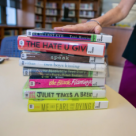
In 2023, 4,240 discrete books "were targeted for removal from libraries, up from 2,571 titles in 2022, according to a report released Thursday" by the American Library Association, Alexandra Alter of The New York Times reported this week. She added: "Those figures likely fail to capture the full scale of book removals, as many go unreported. The American Library Association, which has tracked book bans for more than 20 years, compiles data from book challenges that library professionals reported to the group and information gathered from news reports. [...] The stark rise in book challenges comes as libraries around the United States have emerged as a battleground in a culture war over what constitutes appropriate reading material. While book bans aren’t new, censorship efforts have become increasingly organized and politicized, with the rise of conservative groups like Moms for Liberty and Utah Parents United, which encourage their members to file complaints about books they deem inappropriate and have lobbied for legislation that regulates the content of library collections." Emily Drabinski, the group's president, said that she "[wakes] up every morning hoping this is over [...] What I find striking is that this is still happening, and it's happening with more intensity." Alter continued: "Some librarians and free speech advocacy groups are also alarmed by the rise in book removals and challenges at public libraries. Book challenges at public libraries rose by 92 percent in 2023 compared to the previous year, totaling 1,761 individual titles. In school libraries, challenges rose by 11 percent, according to the report." In contrast to previous ban attempts, "librarians and school districts are now seeing more complaints that demand the removal of multiple titles, sometimes dozens or even hundreds of books," according to the report. Nearly 50 percent of the books that elicited challenges "feature L.G.B.T.Q. characters, or deal with race and racism," the report continued; these include such titles as John Green's "Looking for Alaska" and Maia Kobabe's "Gender Queer." Deborah Caldwell-Stone, director of the ALA's Office for Intellectual Freedom, has remained sanguine about the future of librarianship despite the findings. "My sincere hope is that we aren't talking about this in a year, that we'll see a growing understanding that libraries need to serve everyone. There's always going to be books on the shelves that we might not agree with, but they're there for another reader."

The public is paying the price for local government secrecy

Public Forced to Absorb Costs of Increased Local Government Secrecy:


A new report by Stephanie Sugars of the U.S. Press Freedom Tracker (a project of the Freedom of the Press Foundation and the Committee to Protect Journalists) explores how local taxpayers are often forced to shoulder the financial burdens (most notably legal bills) related to public requests for heretofore undisclosed information. "Case in point: In November 2023, the residents of San Jose, California, were forced to finance a $500,000 payment to the San José Spotlight, a nonprofit newsroom, after it prevailed in its public records lawsuit against the city and former Mayor Sam Liccardo," Sugars wrote. "A Santa Clara County judge found that Liccardo — who is now campaigning for a U.S. congressional seat — used private emails and text messages for city business in order to shield the communications from disclosure. The judge ordered the city to release hundreds of pages of improperly withheld records and pay the outlet's attorneys fees. But, Spotlight co-founder and CEO Ramona Giwargis said, it's community members, not the public officials, who are paying the price." In an interview, Giwargis continued: "I heard from a lot of residents later saying that this is unfair. Taxpayers are on the hook now for half a million dollars because city officials didn’t follow the law." According to Sugars, "more than $1.6 million in attorneys fees — from coffers filled by taxpayers — was awarded to journalists and news outlets suing state and local officials for public records access" in the past year. For example, the Worcester (Mass.) Telegram & Gazette received $180,000 in municipal funds early last year "to cover attorneys fees following a county Superior Court judge's ruling that the city had illegally withheld records concerning police misconduct investigations," while "residents of Las Vegas, Nevada underwrote the Las Vegas Metropolitan Police Department's $620,000 in payments to the Las Vegas Review-Journal" last month "following two separate rulings from the Nevada Supreme Court that the department had violated" Nevada's public records law. "It is a shame that governmental entities so often spend public money to fight against transparency when in the end it is taxpayers who are forced to foot the bill," said Ben Lipman, the Review-Journal's chief legal officer. "For each of these awards, journalists or news organizations first sued for access to public records under the state's Freedom of Information, or Sunshine, law," Sugars added. "A court then determined that officials had wrongfully withheld public records. The parties then reached a settlement or a judge awarded attorneys fees and costs." David Cuillier, the director of the Joseph L. Brechner Freedom of Information Project, "wrote a 2019 report on public records access in the United States using information gathered by MuckRock, a nonprofit news site that files and shares public records requests at the state and federal levels." He "told the Tracker that updated research showed the percentage of state and local records requests fulfilled by government agencies dropped by more than half over a 12-year period: from 63% in 2010 to 31% in 2022. The numbers varied widely between states, he said, with fulfillment rates ranging from 67% in Washington to just 10% in Alabama." He added: "The planets are aligning for a more secretive universe, because as the government gets more adept at hiding things, there are fewer people pushing back. With newsrooms shrinking and civil society organizations going out of business, these forces that we had to protect democracy and access to information are disappearing."