For the Record


Investment in digital media slows, years after venture-backed boom
Digital Media Investment Slows:


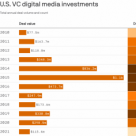
Nascent digital media properties "are attracting far less cash compared to the venture-backed media boom of 2014 and 2015, according to new data from Pitchbook," Sara Fischer of Axios reported Tuesday. Despite such outliers as "an unnamed company made up of a group of D.C.-based veteran journalists" which said it has "raised more than $10 million to launch a new politics and tech website" in July, total investment has declined to $115 million in 2021 from a peak of $1.1 billion in 2015, with more venerable outlets (such as Vice) "struggling to raise enough capital to finance" public offerings through special purpose acquisition companies (SPACs). However, "some companies that show high growth potential have been able to draw bigger investments over time," as exemplified by continued funding rounds for The Athletic and BuzzFeed's recent acquisition of Complex in a $1.5 billion SPAC deal. "Many of these startups gain enormous traction leveraging the nimble freedoms of the startup world, only to wind up selling to corporate titans when growth slows down," added Fischer, who noted that parenting publisher Spider Studios recently sold to Bustle Digital Group for "around $150 million" after first raising $10 million in 2017.


Bloomberg and Ebony strike content sharing deal

Bloomberg, Ebony Announce Partnership:


Bloomberg Media and Ebony have "announced a year-long content-sharing collaboration to cross-pollinate the Bloomberg Equality and Ebony audiences through original content, brand exposure initiatives and custom reports," according to Chris Rouch of Talking Biz News, who cited reporting from Mark Stenberg of Adweek. Stenberg added that the "tie-up will drive new—potentially paying—audiences, and more ad revenue." In a statement, Bloomberg Senior Executive Editor Jacqueline Simmons reflected on the decision: "Ebony has been a Bible for the Black community, and Bloomberg Media is a data powerhouse. Following the events of 2020, we felt that the combination of this iconic brand and our ability to parse the numbers that show where the inequities are could create a powerful pairing of data with faces." The decision comes amid a slowdown in digital subscription growth following an early pandemic growth spurt that saw Bloomberg top 300,000 subscribers for the first time in its 31-year history, prompting the news organization to "seek out new audiences to convert." Ebony, which relaunched as a startup-themed digital publication in March after filing for bankruptcy in July 2020, "will need to grow its audience rapidly to compete for advertising budgets against its quickly consolidating peers," said Stenberg. "Because both publishers report on different aspects of the Black community–Ebony covering culture, Bloomberg Equality covering business and policy–the pairing hopes to benefit both parties by sharing complementary, though not redundant, readerships."

Sewell Chan is The Texas Tribune’s next editor-in-chief

Chan Joins Texas Tribune:


Past Pulitzer juror and Los Angeles Times Editorial Page Editor Sewell Chan will join The Texas Tribune as its next editor-in-chief, co-founder and CEO Evan Smith announced Thursday. "A visionary journalist with a commitment to innovation, he has a sophisticated sense of the relationship between civic engagement and a healthy democracy — never more important than in a moment when more Texans than ever are clamoring for reliable, credible nonpartisan journalism," said Smith. "He's terrific at every aspect of the job, from writing and editing and to inspiring and marshaling the troops. By reputation, he outworks everyone in our business. We’re so excited to have a steady hand on the wheel and a fresh set of eyes on everything we do and how we do it." He added: "At the end of a cruel year and a half of news that took a toll on every one of us, we're ready to be on the road to recovery. An EIC with Sewell’s gentle, empathetic, collaborative style, with his humility and modesty, and with his winning personality is a must have. We'll be in great hands." A native of New York City, Chan holds degrees from Harvard (becoming the first in his immigrant family to graduate from college) and Oxford Universities. He contributed to The New York Times' 2009 Breaking News Reporting Prize-winning coverage of Governor Eliot Spitzer's resignation.

Scoop: Politico staffers mount unionization effort

Politico Staffers Explore Unionization:


Staffers in Politico's newsroom "are actively mounting an effort to unionize with the NewsGuild," Sara Fischer of Axios reported Wednesday. Belying the unionization drive of recent years, the Arlington, Va.-based political journalism website "is one of the largest newsrooms to have resisted organizing efforts in the past," ensuring that "a successful unionization drive would be a major win for newsroom labor groups." In a statement, a spokesperson said that Publisher Robert Allbritton "understands that the decision to form a union is the choice of the newsroom employees who would be impacted by it, and Politico would respect the process and the majority decision of those employees." The union drive encompasses employees of Politico and E&E News, an energy and environment-oriented trade publication acquired by the news site last year. A source told Fischer that "the integration of E&E News has been a factor in the push to unionize," as Politico's management has recognized that the acquisition "presents cultural challenges" amid the pandemic. However, "two staffers Axios has spoken to that do not support a unionization effort say they are skeptical of any union efforts being motivated by editorial skirmishes with leadership," while some people feel that a recent wave of performance raises "could possibly be an effort to dissuade employees from unionizing." 

Facebook Disables Access for NYU Research Into Political-Ad Targeting

Facebook Disables Access for NYU Advertising Researchers:


Facebook has "disabled a New York University research project's accounts and access to the platform, effectively shutting down a study of the social-media giant’s targeting of political ads," Meghan Bobrowsky of The Wall Street Journal reported Wednesday. The NYU Advertising Obervatory, an initiative launched last September by the institution's Brooklyn-based Tandon School of Engineering, "recruited more than 6,500 volunteers to use a special browser extension to collect data about the political ads Facebook shows them." Shortly after the project commenced, the platform "demanded the researchers cease collecting the data," prefiguring Tuesday's action. "NYU's Ad Observatory project studied political ads using unauthorized means to access and collect data from Facebook, in violation of our Terms of Service," Product Management Director Mike Clark said in a statement. Clark added that the extension "also gathered data about users who didn’t install it or consent to its collection." In a statement, NYU computer science doctoral candidate and project lead Laura Edelson maintained that the platform is using privacy as a "pretext, and that it shouldn’t have veto power" over researchers: "The work our team does to make data about disinformation on Facebook transparent is vital to a healthy internet and a healthy democracy." The decision also was condemned by Democrat Senator Mark R. Warner of Virginia, a "longtime critic of the company," and Senator Amy Klobuchar (D-Minn.), who last month "introduced a bill that would strip online platforms of their liability protections if their technology spreads misinformation" stemming from the COVID-19 pandemic and other public-health emergencies. "For several years now, I have called on social media platforms like Facebook to work with, and better empower, independent researchers, whose efforts consistently improve the integrity and safety of social media platforms by exposing harmful and exploitative activity," said Warner. "Instead, Facebook has seemingly done the opposite. It's past time for Congress to act to bring greater transparency to the shadowy world of online advertising, which continues to be a major vector for fraud and misconduct." 

What’s Really Behind the 1619 Backlash? An Interview With Nikole Hannah-Jones and Ta-Nehisi Coates.

Hannah-Jones, Coates Offer Career Insights, Recommend Pulitzer-Winning Work:


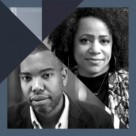
In a ruminative joint interview with past Pulitzer juror and New York Times Opinion Columnist Ezra Klein, 2020 Commentary winner Nikole Hannah-Jones and 2016 General Nonfiction finalist Ta-Nehisi Coates discussed the craft of nonfiction writing, including such examples as Kathryn Schulz's 2016 Feature Writing Prize-winning "The Really Big One" and "Five Days at Memorial," the 2013 expansion of Sheri Fink's 2010 Investigative Reporting Prize-winning chronicle of exhausted doctors amid the floodwaters of Hurricane Katrina. "It's about what happens in the hospitals after Katrina," Hannah-Jones said of the latter piece. "And one, she's just an amazing writer at storytelling, but it is the most powerful and important investigative reporting that I've seen and it's just the clinic. So you want to really break down how does one do an investigation in a most impossible situation. It's a brilliant example of that. And I just thought of Sheri Fink, she's both a medical doctor and a journalist, so a slight overachiever, but you could also see that knowledge in the sensitivity of her reporting." Coates, who recently joined the tenured faculty of Howard University alongside Hannah-Jones, also reflected on the evolving pedagogies of the digital age: "I always tell my students, we live in a time wherein people could be doing all sorts of things besides reading you. You are in competition with a smartphone. You're in competition with a video game console. You're in competition with HBO Max and Apple and all sorts of streaming options at this point. You have to write with a sense of immediacy. And so I think there's something really, really, really important about teaching that about it, imparting that lesson to young people, especially at this moment. And at the same time, I think it's good for me. I think it's actually good for me to do that."

Hedge Fund Buys Paper. Hedge Fund Closes Paper.

Local Maryland Weekly Shutters in Alden Transition:


The Bowie Blade-News, "a 41-year-old weekly newspaper in Bowie, Md., published its final print edition on Thursday, two months after its parent company, Tribune Publishing, was sold to the New York hedge fund Alden Global Capital for $633 million," according to Marc Tracy of The New York Times. An unsigned note on the bottom of the final front page acknowledged the closure and directed readers to The Capital Gazette, a sister publication also acquired by Alden. "It will be missed," said Una Cooper, the communications manager for Bowie, a small suburban city situated midway between Annapolis (where The Capital is based) and Washington. "As late as 2012, we did a survey of our residents and asked them the first place they got their news, and the majority said, 'The Blade-News.'" In a guest essay published in the final edition, she added: "I am firmly convinced that reporters and the local newspapers that they write for play a vital role in cities and towns all over this great country. Not only do they keep residents informed, they help to foster a sense of community as residents embrace local causes and share each other's news." Executives at Tribune and its Baltimore Sun Media Group subsidiary declined to comment on the decision. Last month, 73 staff members and an unknown number of nonunion employees at Tribune newspapers took buyouts even as the parent company "reported being profitable," amassing $250 million in cash on its balance sheet. "People go into local news reporting because they’re passionate about providing a good quality news product to the community," said Annie Martin of The Orlando Sentinel. "Every time we have a buyout or a layoff, our newsroom is diminished in some way; it hurts our ability to serve the community."

Pearson bets on direct-to-student subscription shift

Pearson Pivots to Subscriptions:


Educational publisher Pearson "is today launching an app offering US students access to all 1,500 of its titles for a monthly subscription of $14.99," according to Andrew Edgecliffe-Johnson and Bethan Staton of the Financial Times. In an interview, CEO Andy Bird (a former Disney executive) likened the shift to the emergence of streaming services: "Essentially we're going to move from the ownership to the access model, just as the music industry moved from the ownership of a song to Spotify and iTunes [...] [With streaming service] Disney+ they know everyone who watched 'Black Widow' and they start to create that relationship." Users of the app "will have the option of paying $9.99 a month to access a single textbook for a minimum of four months, or paying $14.99 a month for the entire Pearson library," marking a steep discount from 'Campbell Biology,' an introductory text in the discipline currently priced at more than $220. Thomas Singlehurst, an analyst at Citi, remained circumspect about the decision. "The point with Netflix is it offers really tremendous value for money for a huge choice," he said. "That's not the purpose of college textbooks — you need specific texts for each course." Association of American Colleges and Universities Associate Vice President of Pedagogical Innovation Eddie Watson said some instructors "would push back in favor of open access models, including a range of publishers": "Maybe the access agreement, or pressure from students with subscriptions, means faculty are compelled to go for a textbook which isn’t necessarily the best for the course. The risk is it precludes other options that might be more open and more affordable."

Gawker: The Return

Gawker Returns Under Bustle Ownership:


A long-gestating Bustle Digital Group-owned revival of Gawker "went live on Wednesday," more than three years after the company initially acquired the dormant brand, according to Katie Robertson of The New York Times. "The current laws of civility mean that no, it can't be exactly what it once was," said Editor in Chief Leah Finnegan in a reader's note, “but we strive to honor the past and embrace the present. We are here to make you laugh, I hope, and think, and do a spit-take or furrow your brow." Gawker, which "became synonymous with an irreverent style that all but defined digital media in the 2000s," was founded by British journalist/entrepreneur Nick Denton in 2002 and operated out of his SoHo apartment for many years. In 2016, a judge "ruled against the company in an invasion-of-privacy lawsuit that concerned the publication of a sex video and that was brought by Hulk Hogan, the former professional wrestler," precipitating the bankruptcy of parent company Gawker Media and the divestiture of its sister publications (including the sports & culture-oriented Deadspin and video game news site Kotaku) to Univision. It was subsequently revealed that the lawsuit was funded by billionaire Palantir Chairman Peter Thiel, who was "angered by a Gawker post that reported, without his permission, that he is gay." Bustle Digital Group CEO Bryan Goldberg "paid $1.35 million for the Gawker name at a bankruptcy auction" in July 2018, although two revival attempts under the company's aegis failed to manifest. Finnegan, who worked as a staff writer in the Denton-era newsroom, refused a 2020 offer to lead the site before acquiescing in January. "If there is one website that could get me sued into oblivion, then it is almost certainly Gawker," Goldberg said. "Let's face it — do we think that Bustle or Nylon Magazine is going to pick a petty and ill-conceived fight with a deca-billionaire? Probably not."

Daniel Hale, who leaked information on U.S. drone warfare, sentenced to 45 months in prison

Hale Sentenced in Espionage Act Case:


U.S. District Judge Liam O’Grady sentenced former National Geospatial-Intelligence Agency contractor Daniel Hale to 45 months in prison "for violating the Espionage Act" Tuesday, saying his 2014 disclosure of alleged drone "kill lists" to The Intercept "went beyond his 'courageous and principled' stance on drones," according to Rachel Weiner of The Washington Post. "You are not being prosecuted for speaking out about the drone program killing innocent people," O’Grady said. "You could have been a whistleblower […] without taking any of these documents." Hale's attorneys "argued that the disclosures provided a valuable public service," as the documents revealed that 90% of the people killed during a months-long operation in Afghanistan were not the intended targets. The erstwhile intelligence analyst "also disclosed the criteria for placing a person on the terrorism watch list, information that Muslim civil rights lawyers said in a letter to the court had helped them challenge the constitutionality of that system." Leak prosecutions "were rare until the Obama and Trump administrations, when they became increasingly common." Although the Biden administration "has banned the use of secret orders and subpoenas to obtain journalists’ information," the Justice Department "is still pursuing an espionage case against WikiLeaks founder Julian Assange that began under Trump." After enlisting in the United States Air Force in 2009, Hale, now 33, was detailed to the National Security Agency and the Joint Special Operations Command in the final months of his tour, where he helped identify potential targets for assassination.