For the Record


The Marshall Project Founder Neil Barsky to Step Down as Board Chair

Marshall Project's Barsky Steps Down:


Marshall Project co-founder Neil Barsky is stepping down as its board chair after seven years, the digital news organization announced Thursday. He will continue to serve as an advisor to the outlet. Barsky founded the site (which specializes in coverage of the U.S. criminal justice system)  to "elevate the criminal justice issue to one of national urgency, and to help spark a national conversation about reform." Since its 2015 founding, the organization "has grown to a staff of 54 with an annual budget over $11 million, winning two Pulitzer Prizes and driving wide-reaching impact on the criminal justice system, both nationally and locally." Liz Simons, a co-founder and chair of the board of the Heising-Simons Foundation (which works "to advance sustainable solutions in climate and clean energy, enable groundbreaking research in science, enhance the education of our youngest learners, and support human rights for all people") will succeed Barsky as board chair. "I founded The Marshall Project with the belief that journalism, done honestly and well, has infinite power to drive change," said Barsky. "I am extremely gratified by all we've achieved, and am particularly proud that with new chair Liz Simons, Susan Chira as editor-in-chief and Carroll Bogert as president, we have successfully passed the baton to a new generation of leaders. We are in superb hands." A former reporter for The Wall Street Journal and the New York Daily News who specialized in award-winning coverage of former President Trump's businesses, Barsky eventually transitioned to a career in finance, founding such notable hedge funds as Midtown Research and Alson Capital Partners. "Neil Barsky has left an indelible mark on both nonprofit journalism and criminal justice reform, creating an institution with integrity and lasting impact," said Simons. "I am honored to follow in his footsteps and lead the Board of The Marshall Project at this urgent moment in the national conversation on policing and justice."


Journalists Maria Ressa and Dmitri Muratov are awarded the Nobel Peace Prize.

Journalists Receive Nobel Peace Prize:


The Nobel Peace Prize was awarded Friday to two leading journalists and exponents of press freedom -- Maria Ressa of the Philippines and Dmitri Muratov of Russia -- for "their courageous fight for freedom of expression, which is a precondition for democracy and lasting peace," according to Shashank Bengali and Marc Santora of The New York Times. "They are representatives of all journalists who stand up for this ideal in a world in which democracy and freedom of the press face increasingly adverse conditions," the Norwegian Nobel Committee (which is responsible for selecting the Nobel Peace Prize Laureates under the terms of Alfred Nobel's will) said in a statement following the Oslo-based announcement. Ressa, who has served as a Fulbright scholar and previously was honored as Time's Person of the Year for her work against disinformation, "has been a constant thorn in the side of President Rodrigo Duterte, her country’s authoritarian president." Her digital publication Rappler "has exposed government corruption and researched the financial holdings and potential conflicts of interest of top political figures" in addition to conducting "groundbreaking work on the Duterte government's violent antidrug campaign." In a Facebook Live appearance after receiving the award, she said she hopes for "energy for all of us to continue the battle for facts." Muratov, who co-founded the independent Russian newspaper Novaya Gazeta with Mikhail Gorbachev (having employed funds from his 1990 Nobel Peace Prize for the venture) and others in 1993, has continued to serve as its editor-in-chief "despite a near constant barrage of harassment, threats, violence and even murder" throughout Vladimir Putin's regime. Since its founding, six of the paper's journalists have been assassinated, including the celebrated Second Chechen War correspondent Anna Politkovskaya. "Despite the killings and threats, editor in chief Muratov has refused to abandon the newspaper’s independent policy," the Committee added. "He has consistently defended the right of journalists to write anything they want about whatever they want, as long as they comply with the professional and ethical standards of journalism." Muratov said that he ignored numerous unidentified calls from Norway before a communications aide relayed the news immediately before the announcement. "We will use this award to fight for Russian journalism, which they’re now trying to repress," he said.

Announcement Regarding Steve Coll, Dean of Columbia Journalism School

Coll to Step Down as Columbia Journalism School Dean:


Columbia Journalism School Dean Steve Coll will step down from the role at the end of June 2022 following nine years of service, Columbia University President Lee Bollinger announced Thursday. "When I appointed Steve in 2013, he was a renowned journalist, widely admired for his in-depth reporting on politics, finance, and national security, and a two-time winner of the Pulitzer Prize," Bollinger said. "Steve's life experiences gave him a special vantage point for appraising the present and future of journalism, and it served him, and us, exceedingly well during his tenure as Dean. In his understated way, Steve dedicated himself to transforming the School by building new programs and attracting outstanding, award-winning faculty to educate and shape the next generation of journalists." During his tenure, Coll launched such initiatives as the Ira A. Lipman Center for Journalism and Civil and Human Rights, currently directed by 2018 Commentary finalist Jelani Cobb. "We celebrate journalists for the role they play in promoting freedom of thought, information, and ideas, and in advancing the search for knowledge and sustaining democracy," Bollinger continued. "They bear the closest kinship to academic scholars. No one person embodies those roles, at the very highest levels, or with more commitment, than Steve Coll. We are admiring as well as grateful for all he has done to ensure that our School of Journalism remains at the pinnacle of its field." In the tradition of such predecessors as Osborn Elliott, Joan Konner and Nicholas Lemann, Coll will remain on the School's faculty.

Magazine Publisher Meredith Agrees to Be Sold to Barry Diller’s IAC

Meredith Acquired by Diller's IAC:


The Barry Diller-owned IAC/InterActiveCorp "has reached a roughly $2.7 billion deal to buy magazine publisher Meredith, a bet on online publishing that will combine brands such as People, Better Homes & Gardens and Investopedia," Maria Armental and Jeffrey A. Trachtenberg of The Wall Street Journal reported Wednesday. As part of the agreement, the Des Moines-based company will merge with IAC's Dotdash digital-publishing unit and operate as Dotdash Meredith under the aegis of Dotdash CEO Neil Vogel. The $42.18-a-share deal, which is expected to close by the end of the year, "would add an array of lifestyle publications like Real Simple, Allrecipes and InStyle to Dotdash's existing portfolio, which includes Brides, Serious Eats and TripSavvy," according to Armental and Trachtenberg. "They are perfectly aligned," said Diller. "One will help the other." Meredith Chairman/CEO Tom Harty added: "Nowhere else will you find such a premium portfolio of media assets under one roof. We are thrilled to join forces to accelerate Meredith's digital future." The deal follows IAC's recent divestment of "online-dating behemoth Match Group and video-hosting and sharing platform Vimeo," while Meredith agreed to sell its local television affiliates to Gray Television earlier this year. "Meredith is the largest magazine media company in the world and has very solid roots in print," said magazine consultant Samir Husni. "Will IAC have the same focus on print that was placed by the current Meredith team, or will they put greater emphasis on data and digital expansion? Meredith has a very good database; it will be better used with the digital power of IAC."

Tina Turner’s Music Interests Acquired by BMG

Tina Turner's Music Interests Acquired by BMG:


Berlin-based international music conglomerate BMG announced Tuesday that it has "bought a portfolio of rights associated with Tina Turner and her music catalog, including her share of her solo recordings and publishing assets, and rights to her name and image," Chris Willman of Variety reported yesterday. Although the success of music publishing-based investment company Hipgnosis Songs Fund has prompted a recent vogue for publishing catalog sales (such as the $300 million acquisition of 2008 Special Citation recipient Bob Dylan's songwriting interests by Universal), the broader Turner deal builds upon Irving Azoff's February plan to actively monetize the Beach Boys' intellectual property, with both parties agreeing to "maintain and develop her musical treasure trove and safeguard her inspirational legacy." In a statement, Turner said that the "protection of my life’s work, my musical inheritance, is something personal," adding: "I am confident that with BMG and [record company] Warner Music my work is in professional and reliable hands." BMG CEO Hartwig Masuch also lauded Turner's enduring relevance. "Tina Turner's musical journey has inspired hundreds of millions of people around the world and continues to reach [a] new audience," he said. "We are honored to take on the job of managing Tina Turner's musical and commercial interests. It is a responsibility we take seriously and will pursue diligently. She is truly and simply the best." Although Turner (who began a two-decade stint with former husband Ike Turner's Kings of Rhythm in 1957 before launching one of the most notable comebacks in the history of popular music in the 1980s) has spent much of the 21st century in semi-retirement, "her public profile is higher than it’s been in years, if not decades, thanks to a run of projects that includes a Tony-winning Broadway musical, an inspirational book and, just this year, an HBO documentary," according to Willman. BMG "said it expects to make additional announcements in the coming weeks as it and other companies face an increasingly competitive market in acquiring pop superstars' assets, as 'part of BMG’s long-term strategy to create a 21st century home for the most iconic music rights in popular music history.'"

Substack launches "Writer in Residence" program

Substack Launches 'Writer in Residence' Program:


Substack "is launching a 'Writer in Residence' program that will spotlight one new creator throughout their journey in building a Substack for one month," Sara Fischer of Axios reported Friday. The publishing platform hopes that the initiative "will 'enrich the entire Substack community' by providing creators and readers with a person to learn from as they launch a new project from scratch," according to Head of Writer Development Hanne Winarsky. Cartoonist and writer Adrian Tomine (known for the 2015 graphic short story collection "Killing and Dying" and the Drawn & Quarterly comic book series "Optic Nerve") will be the first person to hold the role. "It was [an] out of blue invite from Substack," said Tomine, who intends to "take advantage of how interactive and visual the medium is" by producing a newsletter that will "[showcase] everything from the types of tools and materials he uses to illustrations" and other graphics. While "[experimenting] with different formats and techniques" in the semiweekly newsletter, Tomine will "[receive] guidance and support from Substack about best practices, including other writers he could team up with or learn from." Following the end of the residency, the artist "gets to keep his subscriber list" and can continue the publication at his discretion. "They left it completely open," he said. "The title will transfer over to a new person, but my newsletter is free to continue if I want it to." Added Winarsky: "This is not about trying to get somebody a massive [email] list immediately, [but allowing for] experimentation that will benefit the entire community."

How a Bet on Virtual Events Is Paying Off for TechCrunch

TechCrunch Benefits From Virtual Events:


Following a January decision to keep all events virtual for the remainder of the year, Yahoo-owned technology news site TechCrunch " is on track to record its best year of revenue in company history, an achievement in which its lucrative events business played a sizable role, said Joey Hinson, its senior director of operations," Mark Stenberg of Adweek reported Tuesday. By year's end, the publisher "will have orchestrated eight events in total, in addition to its weekly recurring series, ExtraCrunch Live," with attendance and sponsorship revenue climbing 77% and 144% (respectively) since last year. The news organization's flagship TechCrunch Disrupt event (which features prominent panelists "in technology, media, government and venture capital") "grew its sponsorship revenue by 58% and drew 42% more sponsors compared to the year prior, including brands like Ford and Mayfield" and speakers ranging from Peloton CEO John Foley to Canva CEO Melanie Perkin. "Since the pandemic set in, we've developed a bunch of different solutions to adapt to it and, in the process, created a portfolio business that’s been growing at a very strong rate," said Hinson. "The team has been really open to figuring out ways to provide value even though we’re not in person." Although publishers with robust digital operations (such as Bloomberg News and The Washington Post) have been able to invest in digital events, "For others, the twin benefits of lower costs and almost limitless audience size have not compensated for the loss in in-person event sponsorship and ticket price revenue," Stenberg added. "The emergence of the delta variant has further complicated publishers' plans to return to in-person and hybrid events, making the need for a solid strategy for virtual-event sponsorship revenue even more pressing."

Capital Gazette gunman sentenced to five life terms without parole for killing five in newsroom shooting

Capital Gazette Gunman Sentenced to Five Life Terms Without Parole:


An Anne Arundel County judge "sentenced the man who blasted his way into the Capital Gazette newsroom and killed five people to six life sentences" Tuesday, "five without the possibility of parole, plus 345 years — all to be served consecutively," according to Alex Mann and Lilly Price of the newspaper. Judge Michael Wachs "handed down the sentence" to Jarrod Ramos "after hearing from survivors of the mass shooting and the family members of Gerald Fischman, Rob Hiaasen, John McNamara, Rebecca Smith and Wendi Winters, who died in the attack." Ramos also was "sentenced to more than 220 years" for related assault and firearms offenses. "To say the defendant showed a callous and cruel disregard for the sanctity of human life is simply an understatement," said Wachs. "What I impose is what the defendant deserves." Following a 12-day trial, a jury in July found Ramos (who pleaded guilty to his entire indictment in October 2019 under Maryland's "not criminally responsible" statute, analogous to the insanity plea in other states) to be responsible for the 2018 massacre, resulting in a prison sentence instead of indefinite medical treatment. The verdict "came after roughly half a dozen delays of the trial for legal reasons and because of the coronavirus pandemic." A dozen survivors and family members of the slain gave statements at the sentencing. "The real victim impact is that he's gone when he deserved to be here. He deserved to enjoy seeing his recognition, to enjoy this time in his life, and I was so hoping to see it and experience it with him, and pay him back for all the kindnesses that he gave to me," said Andrea Chamblee, the widow of John McNamara. "Now I never will." Ramos, who was "described as having no friends and living most of his life with his cat in a one-bedroom apartment" in nearby Laurel, Md., had long "ruminated over a 2011 Capital Gazette column" about a previous harassment conviction, "[filing] a dizzying array of lawsuits trying to rectify his gripe with the newspaper, the woman he tormented and attorneys for both" before ultimately planning the attack. In 2019, the Capital Gazette was awarded a Pulitzer Prize Special Citation "[honoring] the journalists, staff and editorial board [...] for their courageous response to the largest killing of journalists in U.S. history in their newsroom [...], and for demonstrating unflagging commitment to covering the news and serving their community at a time of unspeakable grief." 

TikTok Claims the App Now Tops 1 Billion Monthly Active Users

TikTok Claims 1 Billion Monthly Active Users:


Video-based social media platform TikTok "claims it now counts more than 1 billion monthly active users" (or MAUs), Todd Spangler of Variety reported Monday. The "tremendous popularity of TikTok" (which remains owned by Chinese company ByteDance following the 2020 Donald Trump-TikTok controversy) among users from the Millennial and Generation Z cohorts "has inspired copycat features from YouTube (with YouTube Shorts) and Instagram (Instagram Reels)," Spangler added. "[Over] a billion people from around the world come to TikTok to be entertained, inspired or discover something new, like sports, music, arts and culture, fashion, DIY and more," said COO Vanessa Pappas said in a Monday video. Instagram announced that it reached 1 billion MAUs in June 2018 (some eight years after the app launched), while the multimedia instant messaging app SnapChat reached the 500 million threshold in May. Although it "originally drew a fanbase for lip-syncing music videos, soundtracked by snippets of songs," the app "has expanded to other categories and added other features, like expanding the maximum length of a video to 3 minutes from 60 seconds, and the ability to share sound clips with other users." A 2020 viral TikTok video of Nathan Apodaca lip syncing to Fleetwood Mac's 1977 hit "Dreams" while skateboarding down a highway and drinking Ocean Spray cran-raspberry juice prompted a notable revival of the song, culminating in it re-charting in the Billboard Top 20 last October. Although ByteDance "hired ex-Disney exec Kevin Mayer in May 2020 to become CEO of TikTok and COO of ByteDance" as regulatory tensions began to escalate with the Trump administration, the company promoted Pappas (its former U.S. general manager) to COO and installed former Xiaomi CFO Shou Zi Chew as chief executive in April as the situation began to de-escalate under President Biden. The new administration "officially revoked" former President Trump's order this summer. "TikTok runs on a content graph so we consider us as more of an entertainment platform," Sofia Hernandez, TikTok's head of North American business marketing, said at Variety’s Entertainment and Technology Summit earlier this month. “What we're finding is our users are spending a movie’s worth of time consuming content on TikTok on a daily basis. So, while people will go check social platforms they came to watch TikTok."

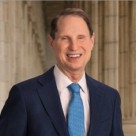
Wyden, Eshoo Question Big Five Publishers Over Their Library E-book Practices

Wyden, Eshoo Question Major Publishers:


In a letter issued last week, Senate Finance Committee Chair Ron Wyden (D-Oregon) and Rep. Anna Eshoo (D-California) "presented a wide-ranging set of questions to the Big Five publishers regarding their practices in the library e-book market," according to Andrew Albanese of Publishers Weekly. The correspondence references “exorbitant costs and burdensome restrictions” that may be "draining resources from many local libraries,” forcing the institutions to "make difficult choices to try and provide a consistent level of service” to their communities. "E-books play a critical role in ensuring that libraries can fulfill their mission of providing broad and equitable access to information for all Americans, and it is imperative that libraries can continue their traditional lending functions as technology advances," the lawmakers added. Albanese said that the letter "[seeks] a wide range of information not only on the publishers' digital library practices, but also on the economics of the market," including the "total revenue from e-book licenses from 2018 to 2020 as well as profit margins for each publisher’s top 100 sellers in both print and digital, from library sales and from the consumer market." The inquiry "comes after a decade of tension and an especially fraught past two years in the digital library market, highlighted by Macmillan's controversial (and since abandoned) experiment to embargo new release e-book titles to libraries" and the importance of digital borrowing in the wake of the COVID-19 pandemic. In addition, Maryland and New York recently passed laws "requiring that publishers who make e-books available to consumers in the state must also make those works available to libraries on 'reasonable' terms." The letter requests responses from Big Five representatives by October 7.