For the Record


The Atlantic adds 9 writers to new newsletter platform

The Atlantic Adds Several Writers to Newsletter Platform:


Following recent reports of a major newsletter expansion, The Atlantic rolled out its new program Tuesday with "with nine contracted writers, including Charlie Warzel, Molly Jong-Fast and Nicole Chung," according to Sara Fischer of Axios. The magazine "is hoping that new writers will attract more subscribers, which are key to [its] goal of becoming profitable next year," CEO Nick Thompson told Fischer. "My hope is that newsletters will be a net positive contributor to our bottom line in 2022, helping us get to profitability," he said. In addition to such figures as Warzel (a Montana-based technology specialist and former New York Times opinion writer who has operated an independent Substack since April), Jong-Fast (a popular Twitter figure who has written for Vogue and The Daily Beast) and Chung (a former managing editor of The Toast), the writers include "Lifehacker's Jordan Calhoun, political commentator David French, author and screenwriter Xochitl Gonzalez, international affairs specialist Tom Nichols, African-American studies scholar Imani Perry [and] writer Yair Rosenberg." While The Atlantic will maintain editorial control over the newsletters, "all of the contractors are allowed to continue work on projects not affiliated with The Atlantic, like outside podcasts or events." Neither Thompson nor Editor-in-Chief Jeffrey Goldberg "would comment on the contractor's compensation packages," with Vox previously reporting that they would be pegged to subscriber goals. Existing subscribers to imported newsletters "will automatically start receiving new Atlantic newsletters" alongside a yearlong complimentary subscription to the magazine. Following this period, they will need to pay for an Atlantic subscription to access the newsletters. "I think that newsletter writers will in general be certainly more pithy than an Atlantic feature and probably even more pithy than an Atlantic web post," said Thompson. "I wasn't looking for topics so much as I was looking for excellent writers," Goldberg added. "The important thing for me is that they are honest and interesting."


Justice Dept. Sues Penguin Random House Over Simon & Schuster Deal

Justice Department Sues Random House Over Proposed Simon & Schuster Acquisition:


The Justice Department has "sued to stop Penguin Random House, the largest publisher in the United States, from acquiring its rival Simon & Schuster, as part of a new drive in Washington against corporate consolidation," Elizabeth A. Harris, Alexandra Alter and David McCabe of The New York Times reported Tuesday. With "more than 300 imprints worldwide and has 15,000 new releases a year," the $2.18 billion deal could substantially enlarge the behemoth. “If the world's largest book publisher is permitted to acquire one of its biggest rivals, it will have unprecedented control over this important industry,” Attorney General Merrick Garland said in a statement. "American authors and consumers will pay the price of this anticompetitive merger — lower advances for authors and ultimately fewer books and less variety for consumers." Penguin Random House "said it planned to fight the challenge and hired Daniel Petrocelli as its trial lawyer." The chair of O’Melveny's trial practice, Petrocelli "successfully defended AT&T and Time Warner against the Justice Department when it tried to block their $100 billion merger." In a joint statement, the publishers said that Penguin Random House had not planned “any reduction in the number of books acquired or in amounts paid for those acquisitions," further asserting that the "rationale for bringing the companies together [...] was to find efficiencies that would save money on the back end." However, some publishing figures consider internal bidding rules that would enable imprints to bid against one another to be "cold comfort given the scale Penguin Random House has already achieved and how much more of the market it would gain if the two companies combine," with agent Ayesha Pande characterizing the milieu as "basically closing the barn door after the horse has bolted." The suit follows President Biden's signature of an "executive order focused on spurring competition across the economy" and the nomination of Jonathan Kanter (a longstanding critic of Big Tech) to serve as the assistant attorney general of the Department's antitrust division.

Facebook Renames Itself Meta

Facebook Enters the 'Metaverse':


Facebook "took an unmistakable step toward an overhaul" Thursday, "de-emphasizing [its] name and rebranding itself as Meta," according to Mike Isaac of The New York Times. The change "was accompanied by a new corporate logo designed like an infinity-shaped symbol that was slightly askew." Apps such as Instagram, WhatsApp and the company's flagship platform will continue to operate under the broader Meta umbrella in a manner reminiscent of Google's 2015 restructuring as Alphabet. "The move punctuates how Mark Zuckerberg, the chief executive, plans to refocus his Silicon Valley company on what he sees as the next digital frontier, which is the unification of disparate digital worlds into something called the metaverse," Isaac wrote. "At the same time, renaming Facebook may help distance the company from the social networking controversies it is facing, including how it is used to spread hate speech and misinformation." At a virtual event announcing the change, Zuckerberg "telegraphed that his company was going beyond today's social networking, which Facebook has been built on since it was founded 17 years ago," with the company instead redefining its mission around a "composite universe melding online, virtual and augmented worlds that people can seamlessly traverse"; as part of the renaming, its virtual reality and augmented reality divisions will now operate as Facebook Reality Labs. Isaac added that the name change is "largely cosmetic," with Zuckerberg retaining his chairman/chief executive role alongside majority voting power. Chief Technology Officer Andrew Bosworth "has also said the metaverse will need significant technological breakthroughs to happen and that the company was working on new versions of virtual reality and augmented reality hardware to make them smaller, less expensive and more immersive." However, Zuckerberg remains sanguine about the prospects of a post-mobile internet paradigm. "You're really going to feel like you’re there with other people," he said. "You're not going to be locked into one world or platform."

Publishers are seeing increases in advertiser requests around climate and sustainability coverage

Publishers: Advertisers Support Climate, Sustainability Sponsored Content: 


For a wide range of publishers (including the BBC, Bloomberg, Financial Times, Group Nine Media and The Economist), advertisers are "sending out more requests [...] to pitch campaign or sponsorship opportunities around their solutions-based journalism, showing a growing interest this year in publishers’ coverage of climate and sustainability," according to Sara Guaglione of Digiday. As many as 20% of Bloomberg's top 50 proposal budgets are centered on sustainability, while ad revenue from the climate-focused Bloomberg Green has "increased 144% from January 2020 to January 2021." Additionally, the Financial Times "has seen a tenfold increase in request in proposals (RFPs) year over year from advertisers seeking to align themselves with the FT’s climate, sustainability and ESG content," according to Brendan Spain, the newspaper's vice president of advertising for the Americas. Guaglione added that "brands like Tiffany, Ralph Lauren and General Motors 'wouldn't typically' be a client of Bloomberg but are coming to the publisher for work in thought leadership around climate and sustainability," according to Anne Kawalerski, Bloomberg Media's global chief marketing officer. "Instead of having a partner sponsor an event or work with us on a piece of research, or run ads in the newspaper, we are bringing that work together and designing it for the long term [...] It's not on a one-off here or a separate project there," said Claudia Malley, president/managing director partnerships at Economist Impact. "We've created a platform to raise the exposure and raise the level of engagement around this work."

AP, Chainlink to bring trusted data onto leading blockchains

AP, Chainlink Partner in Blockchain Agreement:


The Associated Press announced Thursday that it will "make its trusted economic, sports and race call datasets available to leading blockchains via Chainlink, the world’s largest decentralized network of oracles, enabling smart contracts on any blockchain to securely interact with the AP's real-world data," according to a press release. Through Chainlink nodes, which connect secure blockchain environments with external data, the datasets "will be supplied and sold directly to applications running across various blockchains" with cryptographic verification from the news organization. Political race calls, economic data, sports outcomes and business financials will be available under the agreement. "AP has established itself as one of the most trusted independent news organizations in the world for real-time news in all formats. Given its large and continually growing repository of facts and data, combined with Chainlink’s proven oracle infrastructure for providing reliable data feeds across leading blockchain networks, it makes sense for the AP to launch a Chainlink oracle node and support innovation within emerging smart contract industries," said William Herkelrath, managing director at Chainlink Labs. Dwayne Desaulniers, AP's director of blockchain and data licensing, added: "Chainlink technology is the ideal way to provide smart contract developers anywhere in the world with direct, on-demand access to AP's trusted economic, sports, and race call data. Working with Chainlink allows this information to be compatible with any blockchain. The open-source software is reliable, secure, and widely used across leading blockchain networks." AP first collaborated with Everipedia to publish U.S. political race calls on Ethereum in 2020 before pursuing a media non-fungible token program and "delivering data to feed and inform digital generative artworks." (AP Vice President and Editor at Large for Standards John Daniszewski is a co-chair of the Pulitzer Prize Board.)

Kat Downs Mulder named chief product officer and managing editor at The Washington Post

Washington Post Bridges Newsroom-Engineering Divide, Expands Editorial Roles:


The Washington Post's Kat Downs Mulder "will take on [a] new, truly hybrid role" between the publication's newsroom and engineering divisions as chief product officer and managing editor, Executive Editor Sally Buzbee and CIO Shailesh Prakash announced Tuesday. "This move will help accelerate digital innovation across The Washington Post, which has never been more important as we work to modernize the way we tell stories, further grow subscriptions and evolve in the digital space," said Buzbee and Prakash. "Kat will continue to oversee journalists focused on storytelling in video, audio, photos, graphics and design, as well as news curation, audience development and emerging news products," they added. "In addition, she will now run the product teams and newsroom engineering, which drive the development of The Post’s website, apps, subscriptions, internal tools and more. This combination will help expand our audience and deepen connections with new and loyal readers by increasing the cohesion of our teams, further aligning our product and editorial roadmaps and accelerating the development of the next generation of news products." Prior to serving as a managing editor, Muller was The Post's vice president of product and design and previously led the newspaper's graphics department. According to Paul Farhi, the appointment coincides with Buzbee's elevation of Cameron Barr (the managing editor for news and features who previously served as interim editor following Marty Baron's retirement) to the new position of senior managing editor ("effectively making him the second-in-command in the newsroom's hierarchy"), while Managing Editor for Diversity and Inclusion Krissah Thompson "will add responsibility for climate and environmental coverage, features reporting and recruitment" to her portfolio. Last month, The Post announced that it "will hire 41 new assignment and assistant editors," ultimately employing about 1,050 journalists, "a 50 percent increase since 2016." Buzbee also "plans to fill an opening for a fourth managing editor to supervise a broad portfolio of topics, including politics and government, health and science, national security, and the metro and sports staffs" alongside several deputy managing editor vacancies.

Scoop: James and Kathryn Murdoch's next media investment

James and Kathryn Murdoch to Fund AP Climate Hub:


James and Kathryn Murdoch "are nearing a deal to make a multi-million dollar investment to support the formation of a new climate reporting hub at the Associated Press," Sara Fischer of Axios reported Tuesday. The younger son and daughter-in-law of Australian-American media proprietor Rupert Murdoch, the couple "has increased their investments in media projects in the past few years" via their nonprofit Quadrivium Foundation, which was launched in 2014 "to fund groups focused on the advancement of democracy, technology and society, scientific understanding, climate change and ocean health." Murdoch, who attended American schools (including Horace Mann and Harvard) and oversaw his family's British newspapers before serving as the chief executive of 21st Century Fox from 2015 to 2019, resigned from the board of holding company News Corp. last year after "citing disagreements with the editorial content published by the company, which is home to The Wall Street Journal and other publications." The climate operation will employ as many as 20 journalists also while drawing on the support of other donors. According to Fischer, the news organization "is already working with several foundations, including the Rockefeller Foundation, Howard Hughes Medical Institute and Walton Family Foundation, to fund climate and environment coverage." Its standards (overseen by current Pulitzer Prize Board Co-Chair John Daniszewski, a vice president and editor-at-large) stipulate "editorial independence when working with such partners," Fischer added. The Murdochs were founding donors for The 19th (a nonprofit newsroom focused on covering the intersection of gender, politics and policy co-founded by Pulitzer Prize Board member Emily Ramshaw) and previously donated $5 million to a local news initiative under the aegis of the American Journalism Project in September. Additionally, the pair "funds a nonprofit led by conservatives called Defending Democracy Together, which publishes The Bulwark, a center-right news site founded in 2018 in opposition to Trumpism."
 

Nicholas Kristof Leaves New York Times as He Considers a Political Run

Kristof Leaves New York Times Amid Political Aspirations:


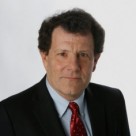
1990 International Reporting and 2006 Commentary winner Nicholas Kristof is leaving The New York Times "as he considers running for governor of Oregon, a top Times editor said in a note to the staff on Thursday." According to the newspaper's Marc Tracy, Kristof, 62, "has been on leave from The Times since June, when he told company executives that he was weighing a run for governor in the state where he grew up." On Tuesday, he filed paperwork organizing a campaign committee with the Oregon secretary of state, strongly indicating that a campaign will commence. In an email announcing his departure, 2015 Editorial Writing winner and Opinion Editor Kathleen Kingsbury said that Kristof "had redefined the role of opinion columnist and credited him with 'elevating the journalistic form to a new height of public service with a mix of incisive reporting, profound empathy and a determination to bear witness to those struggling and suffering across the globe.'" Publisher A. G. Sulzberger echoed her sentiments: "Nick is one of the finest journalists of his generation. As a reporter and columnist he has long embodied the best values of our profession. He is as empathetic as he is fearless. He is as open-minded as he is principled. He didn't just bear witness, he forced attention to issues and people that others were all too comfortable ignoring." Kristof joined The Times as a reporter in 1984 after earning degrees from Harvard and Oxford, the latter as a Rhodes Scholar. After serving as an associate managing editor with a purview encompassing the newspaper's Sunday edition, he became an opinion columnist in 2001. "This has been my dream job, even with malaria, a plane crash in Congo and periodic arrests abroad for committing journalism," Kristof said in a statement. "Yet here I am, resigning — very reluctantly." He added: "I've gotten to know presidents and tyrants, Nobel laureates and warlords, while visiting 160 countries. And precisely because I have a great job, outstanding editors and the best readers, I may be an idiot to leave. But you all know how much I love Oregon, and how much I've been seared by the suffering of old friends there. So I've reluctantly concluded that I should try not only to expose problems but also see if I can fix them directly." Throughout his tenure at The Times, Kristof has retained ownership of Kristof Farms, an erstwhile cherry orchard (later reconfigured by Kristof and his wife, fellow 1989 International Reporting winner Sheryl WuDunn, as an apple orchard and grape vineyard) in the inner exurbs of the Portland metropolitan area that was initially acquired by his parents in 1971. 

Martin Sherwin, Prize-winning Biographer of Oppenheimer, Dies at 84

Martin J. Sherwin (1937-2021):


2006 Biography winner Martin J. Sherwin died on October 6 at his home in Washington, D.C. from complications of lung cancer. He was 84. An influential historian of the nuclear age, the Brooklyn-bred Sherwin graduated from James Madison High School in the borough's Sheepshead Bay district, then an intellectual incubator for such contemporaries as the late Supreme Court Associate Justice Ruth Bader Ginsburg and singer-songwriter Carole King. According to Sam Roberts of The New York Times, he mined uranium in Wyoming as a summer job during his undergraduate studies at Dartmouth College, presaging his later interests. While serving thereafter as a U.S. Navy intelligence officer during the Cuban Missile Crisis in 1962, Sherwin and his colleagues in San Diego "learned of American plans to disperse military aircraft to Mexico beyond the reach of Soviet rockets" and joked that Baja California "would be a delightful place to die," an anecdote he invoked in "Gambling With Armageddon: Nuclear Roulette from Hiroshima to the Cuban Missile Crisis," a comprehensive history of the epoch published last year. Following his military service, Sherwin entered graduate school, earning his Ph.D. in history (with a dissertation on the relationship between American scientists, the atomic bomb and American diplomacy) from UCLA in 1971. For much of the Seventies, he was a lecturer and research associate at Princeton, where he mentored 2014 History finalist Eric Schlosser and Katrina vanden Heuvel, the publisher of The Nation. In between completing a 1975 monograph on the legacy of Hiroshima and becoming the founding director of the Nuclear Age History and Humanities Center at Tufts (an affiliation that later evolved into a tenured professorship) in 1986, Sherwin began work on a book that was envisaged as the definitive biography of J. Robert Oppenheimer, the polymathic wartime head of the Los Alamos Laboratory and "father of the atomic bomb" whose security clerance was ultimately revoked amid much acrimony during the Second Red Scare. When two decades of research culminated in a bout of what his future collaborator would later characterize as "'biographer’s disease' — the inability to stop researching and to start writing," he initiated a fruitful collaboration with Kai Bird, an author and longtime Nation contributor who currently serves as the executive director of the Leon Levy Center for Biography at the CUNY Graduate Center. Together, they completed "American Prometheus," which received the 2006 Biography Prize and shed much new light into various facets of Oppenheimer's personal and professional lives, as exemplified by an unprecedented analysis of the January 1944 suicide of his onetime girlfriend and voluble interlocutor, psychiatrist Jean Tatlock. The book also will serve as the basis for Christopher Nolan's "Oppenheimer," currently scheduled for release in the summer of 2023 with Cillian Murphy cast in the eponymous role. Sherwin also served as a historical advisor on "The Day After Trinity," a 1980 Academy Award-winning documentary that juxtaposed revelatory, contemporaneous interviews with several Manhattan Project scientists (including Columbia physicist Robert Serber, one of Oppenheimer's closest protégés and the later companion of Kitty Oppenheimer) against declassified archival footage. In his later years, Sherwin divided his time between Aspen and the Washington area, where he held the distinguished appointment of university professor at George Mason. According to Hillel Italie of the Associated Press, Sherwin and Bird recently were at work on a book proposal centered on the "extraordinary but true story of a crew of B-29 bombers who were captured off the coast of Japan at the end of World War II and saved from execution by an English-speaking Japanese commander who brought them to Hiroshima so they could see for themselves the devastation" of the bombing. "Even as his body was giving out, he was still interested and his mind was alert," Bird said.

The Atlantic wants to hire newsletter writers — and it wants their subscribers, too

Atlantic Explores 'Semi-Independent' Newsletters:


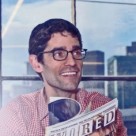
In a convergence of two antipodean media trends (including the vogue for "journalists setting up their own newsletters instead of working for big, established publishers" and "big, established publishers with robust business models or big backers — or both — consolidating their power by hoovering up talent"), The Atlantic "is launching a newsletter offering that wants to bring writers under [its] umbrella (and paywall) while letting them stay semi-independent," according to Recode's Peter Kafka. Unlike a similar initiative from The New York Times (which recently unveiled discrete, subscriber-only newsletters by the likes of past Pulitzer juror Kara Swisher and Jay Caspian Kang), The Atlantic intends to "[recruit] writers who are already in the paid newsletter business." In a structure reminiscent of Paramount's early 1970s association with The Directors Company (a venture with studio board oversight co-owned by Peter Bogdanovich, Francis Ford Coppola and William Friedkin), the newsletter writers will be offered "some sort of base payment with the ability to make additional money if they hit certain subscriber goals" in lieu of a full-time employment contract. Although writers in the program will get to retain their list of subscribers if they decide to end the arrangement, the magazine intends to convert all preexisting subscriptions into Atlantic subscriptions, potentially netting readers savings of $45/year or more. "[Newsletter] writers will have some light oversight from Atlantic editors, though it's unclear what exactly that will entail," Kafka added. "We root for writers even when they're not Substackers, so we’re glad to see a trend toward more ownership for writers,” said Hamish McKenzie, a co-founder of the now-ubiquitous publishing platform that has inspired much of the recent newsletter resurgence. "We've always advocated for writers to have full ownership of their content and audiences, and we applaud every step in this direction." While an Atlantic spokesperson declined to comment to Kafka, the decision follows the installation of former Wired Editor-in-Chief Nick Thompson (pictured) as the magazine's chief executive in February.