For the Record


Alden Global Looks to Buy Newspaper Publisher Lee Enterprises

Alden Global Capital Initiates Lee Enterprises Offer:


New York-based hedge fund and "newspaper consolidator" Alden Global Capital "has made a proposal to take Lee Enterprises private in a deal that values the company at around $141 million," Adriano Marchese and Benjamin Mullin of The Wall Street Journal reported Monday. Under the terms of the proposal, Alden Global would acquire the Iowa-based media company (which owns such newspapers as The Buffalo News, the St. Louis Post-Dispatch and the Missoulian) at $24 per share in cash. In a statement issued late Monday, Lee Enterprises "said it had received Alden’s bid and would review it." The bid follows Alden's successful acquisition of Tribune Publishing (including the Chicago Tribune and the New York Daily News) earlier this year and a failed bid to acquire Gannett in 2019. Although the hedge fund "has been criticized by its employees and industry experts for aggressive cost-cutting," its executives maintain that the reductions help to maintain otherwise unprofitable newspapers. "We believe that as a private company and part of our successful nationwide platforms, Lee would be in a stronger position to maximize its resources and realize strategic value that enhances its operations and supports its employees in their important work serving local communities," the fund said in a letter to Lee's board of directors. The publisher initially filed for bankruptcy in 2011 following its significant acquisition of Pulitzer, Inc. (the longtime family-owned proprietor of the Post-Dispatch and the Arizona Daily Star) in 2005. Although Warren Buffett's Berkshire Hathaway holding company refinanced the Pulitzer debt in 2013 and established a five-year agreement to allow Lee Enterprises to manage its media operations in 2018, the former company sold these assets to Lee for $140 million last year, with Buffett asserting that Lee "[was] best positioned to manage through the industry's challenges" at the time. Last week, The Journal reported that Iranian hackers "infiltrated Lee's computer systems as part of a broader effort to spread disinformation about the 2020 presidential election."

Jamal Khashoggi’s fiancee urges Justin Bieber to cancel Saudi Arabia performance

Khashoggi Fiancee Urges Performance Cancellation:


The fiancee of assassinated Washington Post columnist Jamal Khashoggi "has called on Justin Bieber to cancel his performance" in the kingdom's second-largest city of Jeddah, currently scheduled for December 5, according to a Reuters staff report published Sunday. Khashoggi, a nephew of the arms dealer and parapolitical figure Adnan Khashoggi, held several high-profile editorial positions in the Saudi Arabian media after serving with the Saudi General Intelligence Directorate. He was "killed and dismembered in 2018 after walking into the Saudi consulate in Istanbul the day before his wedding" as fiancee Hatice Cengiz waited outside. In an open letter published by The Post, Cengiz (a Turkish scholar and activist) enjoined Bieber to cancel the performance to "send a powerful message to the world that your name and talent will not be used to restore the reputation of a regime that kills its critics." She continued: "Do not sing for the murderers of my beloved Jamal. Please speak out and condemn his killer, [Crown Prince and de facto head of government] Mohammed bin Salman. Your voice will be heard by millions." A Canadian national, Bieber is one of several artists (including A$AP Rocky, David Guetta and Tiesto) scheduled to perform at the concert, which is tied to the Formula One Saudi Arabian Grand Prix. Human Rights Watch has urged the musicians to speak out against human rights discrepancies in the kingdom, noting that the country "has a history of using celebrities and major international events to deflect scrutiny from its pervasive abuses." Investigations by UN Special Rapporteur Agnès Callamard and the United States intelligence community have determined that Khashoggi was executed by a Saudi murder squad in a "premeditated, state-sanctioned extrajudicial killing."

How obituaries got a jolt of new life in the Internet era

Obituaries Enjoy Digital Resurgence:


Previously a "sleepy corner of journalism," obituaries have gained a new cachet in the digital era as "well-crafted obit[s] [...] blending history and biography, triggering nostalgia or perhaps even the reader's own feelings of mortality" attract significant readership, Paul Farhi of The Washington Post reported Wednesday. In response to the surge, many news organizations "have bolstered their stockpiles of pre-written obits, known as 'pre-writes' or 'advancers,' creating vast portfolios of deaths foretold," with The New York Times compiling as many as 1,850 pre-written obituaries and The Washington Post maintaining about 900 pieces. "We’ve ratcheted it up in the last few years," said Mike Barnes, senior editor of the Hollywood Reporter, which has stockpiled approximately 800 preexisting obituaries written for a wide range of notable figures in the entertainment industry. "It's gotten to be so competitive," he added, reflecting on the 500 obituaries he has written over the past decade. Hillel Italie, an Associated Press books and publishing reporter who often writes obituaries of leading cultural figures, has ascribed the phenomenon in part to "Baby Boomer nostalgia," citing the widespread response to news about the death of Rolling Stones drummer Charlie Watts in August, although recent Times obituaries for younger figures (including actor Michael K. Williams and "comedian's comedian" Norm Macdonald) have attracted more than 1 million readers. Despite the "morguing" of pre-written obituaries, writers did not have material prepared for Macdonald and actors James Gandolfini and Chadwick Boseman, all of whom "died unexpectedly" at relatively young ages. News organizations also are augmenting coverage of prominent figures in "government, academia, medicine and business" with obituaries that feature "women, people of color, members of the LGBTQ community [and] even the homeless," as exemplified by The Times' "Overlooked" series of notable figures and Boston Globe Obituaries Editor Bryan Marquand's focus on lesser-known individuals. "I believe everyone has one good story in them," said Kay Powell, a former obituaries editor for the Atlanta Journal-Constitution who often wrote about local subjects, including a woman who performed at Martin Luther King Jr.’s funeral. "It's up to us to find it and write it."


U.S. and China Agree to Ease Restrictions on Journalists

U.S., China Ease Journalist Restrictions:


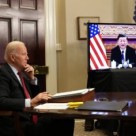
The United States and China "announced an agreement on Tuesday to ease restrictions on foreign journalists operating in the two countries, tempering a diplomatic confrontation that led to the expulsion of some American reporters from China during the last year of the Trump administration," Michael D. Shear of The New York Times reported Tuesday. Under the agreement (which was announced shortly after President Biden and President Xi Jinping of China completed a virtual summit that did not encompass any discussions pertaining to the agreement), The Wall Street Journal, The Washington Post and The Times "will be allowed to send journalists back to China, though it remained unclear whether the specific correspondents expelled last year will be permitted to return to work there." In a statement, the State Department characterized the agreement as "initial steps" toward further progress. The United States, which has since limited visas for Chinese journalists to 90 days, also will "provide yearlong visas for the foreign reporters, renewable annually." Administration officials "described the agreement as a result of months of negotiations aimed at resolving some of the escalating tensions between the two superpowers" as they continue to vie for "economic and public relations superiority around the globe." According to Shear, it remains unclear if the agreement "fully reverses the expulsion actions that China took against the three newspapers last March, as the coronavirus pandemic was just beginning to spread out of that country" in light of the ambiguity concerning the ability of experienced journalists to return. While The Times and The Post declined to comment on the matter, Wall Street Journal Publisher Almar Latour said that the newspaper is "encouraged by the reported direction of these negotiations and [continues] to believe that independent, accurate reporting from within China serves [its] readers and serves China itself." Orville Schell, the director of the Center on U.S.-China Relations at the Asia Society and the former dean of the University of California, Berkeley Graduate School of Journalism, said the agreement represented a "serious effort" in improving the working relationship between both countries: "They were trying to find some area where they could show some concrete progress. They decided that this was a good one." Schell, who "helped facilitate conversations between State Department officials and leading journalists several months ago to discuss the issue," added that the decision is indicative of Xi's potential understanding of the importance of the news media. "They do recognize that to have any kind of an economic relationship you do need to have some sort of journalistic interchange," he said. "During the Cold War, we had just such an understanding with Russia. There was an agreement that Russians got the same number here and we got the same number there."

The end of “click to subscribe, call to cancel”? One of the news industry’s favorite retention tactics is illegal, FTC says

Federal Trade Commission Investigates 'Retention' Subscription Practices:


The Federal Trade Commission "recently made it clear that it sees the practice" of call-to-cancel policies among news subscriptions "as 1) one of several 'dark patterns that trick or trap consumers into subscriptions' and 2) straight-up illegal," according to Sarah Scire of NiemanLab. "The FTC vowed to ramp up enforcement on companies that fail to provide an 'easy and simple' cancellation process, including an option that’s 'at least as easy' as the one to subscribe," she added. Under the enforcement reforms, all companies must make "'clear and conspicuous' disclosures, including 'each deadline by which the consumer must act in order to stop the charges,' 'the amount (or range of costs) the consumer will be charged or billed,' and 'all information necessary to cancel the contract.'" Similarly, customer service representatives and other marketers "should not, among other things: hang up on consumers who call to cancel; place them on hold for an unreasonably long time; provide false information about how to cancel; or misrepresent the reasons for delays in processing consumers’ cancellation requests." While newspaper-owning hedge funds like Alden Global Capital have counted on furtive increases in subscription prices as a key part of their business strategy, "most U.S. news organizations don’t give readers an easy way to cancel online," with The New York Times still requiring subscribers to " to talk to someone if you want to unsubscribe, either by starting a live chat or by picking up the phone," Scire continued. 

A family run Iowa newspaper gets the spotlight

'Storm Lake' Premieres on PBS:


Co-founded by 2017 Editorial Writing winner Art Cullen in 1990, Iowa's Storm Lake Times will take the spotlight in "Storm Lake," a new documentary by Beth Levison and Jerry Risius premiering on PBS' Independent Lens vertical at 10 p.m. Eastern time Monday. In an interview with Kristen Hare of Poynter, Levison and Risius discussed the genesis of the project. A 2018 New York Times guest essay by Cullen advocating for more immigration to towns like Storm Lake "really blew me away,” Levison said. "Art's voice was just so clear and sensible and unique." In March 2019, the duo began filming, returning to Iowa at regular intervals through the COVID-19 pandemic and the 2020 U.S. presidential election. Although the newspaper "lost more than 50% of its advertising revenue in the first week of the pandemic" and the Cullen family considered closing the publication, they ultimately soldiered on. "[They] were thrown a lifeline through the PPP program and were able to limp through the pandemic," said Risius. "Given Storm Lake is a meat-packing town, their reporting was tantamount to keeping the community informed about the spread of the virus, about the local hospital news and medical advice to keep the community healthy and safe. It was their lowest moment financially, but simultaneously, perhaps the most important reporting of their newspaper’s life.  For us, it showed the importance of a local news source – that they persisted in reporting, not knowing how they were going to fare throughout the pandemic: even physically alive, or financially solvent." Hare added: "'Storm Lake' shows one family, one newspaper and one town, but the filmmakers hope viewers will think about their own communities, local news and how they could support newsrooms that are critical, and in many cases, in critical condition." On Monday afternoon, Cullen, Levison and Risius also will appear alongside PEN America Program Director of Digital Safety and Free Expression Viktorya Vilk and Society of Professional Journalists Greater Los Angeles Chapter Vice President Ashanti Blaize-Hopkins at "Saving Local News: The Story of The Storm Lake Times," a virtual panel sponsored by PEN America.

Updating The Verge’s background policy

The Verge Updates Standards Policy:


Tech news site The Verge "is updating [its] public ethics policy to be clearer in [its] interactions with public relations and corporate communications professionals," Editor-in-Chief Nilay Patel announced Wednesday. "We're doing this because big tech companies in particular have hired a dizzying array of communications staff who routinely push the boundaries of acceptable sourcing in an effort to deflect accountability, pass the burden of truth to the media, and generally control the narratives around the companies they work for while being annoying as hell to deal with," he continued. "The main way this happens is that big companies take advantage of a particular agreement in the media called 'background.' Being 'on background' means that they tell things to reporters, but those reporters agree to not specifically attribute that information to a person by name. Oftentimes, companies will make things significantly worse and also insist that background information be paraphrased, further obscuring both specific details and the source of those details." Under the new guidelines, "the default for communications professionals and people speaking to The Verge in an official capacity will be 'on the record,'" although the publication "will still honor some requests to be on background" at its discretion and "only for specific reasons that we can articulate to readers." Patel further illustrated the perceived "trend [...] to increasingly treat background as a default or even a condition of reporting," with a food delivery company allegedly "[insisting] on discussing the popularity of chicken wings on background" and a major car company’s head of communications allegedly falsely maintaining that an April Fools’ joke "was actually real on background." He reiterated: "You have to ask [for on background attribution], and we have to agree. Every single time."

New York Times’ Wirecutter Writers Plan Strike Around Black Friday

Wirecutter Journalists Plan Black Friday Strike:


Journalists at The New York Times' Wirecutter product review site "plan to strike during [its] peak traffic period around Black Friday, joining a recent wave of threatened work stoppages by U.S. workers," Josh Eidelson of Bloomberg reported Monday. More than 90% of the site's employees authorized the work stoppage, which may last for more than one day, according to the NewsGuild of New York, which also represents 1,300 editorial and business employees at The Times. Members "plan to protest what they say is the company’s refusal to agree to an initial collective bargaining agreement with significant guaranteed wage increases," with additional pay beyond "across-the-board" 0.5% increases contingent on "management's discretion" about who receives it. "We look forward to continuing to work towards an agreement with the Wirecutter Union in our standard process at the negotiating table," said Times spokesperson Danielle Rhoades Ha. "Our compensation proposal is more generous than what they’ve described and seeks to maintain a similar compensation structure for Wirecutter employees with programs in place for others at the Times Company." The NewsGuild also has filed a National Labor Relations Board complaint alleging that New York Times Company management "violated federal law by 'refusing to provide relevant information requested by the union' related to contract talks." Following the common business model of review sites, Wirecutter "generates revenue for the company via subscriptions, digital ads, and commissions on purchases via affiliate links." The barganing unit believes that a strike "would deprive the company of sought-after fresh content for at least 24 hours during the busiest week for its site, as customers seek out the brand’s carefully-researched reviews to help them pick their Black Friday and Cyber Monday purchases." In August, the NewsGuild facilitated a shorter half-day work stoppage for New York Times technology employees seeking union recognition. "Workers in industries of all sorts are recognizing that the last 40 years have seen an enormous shift of the profits of their labor going not to themselves in any meaningful way but to shareholders and management and for a lot of reasons are now finally saying no, enough is enough,” said Tim Heffernan, a member of the Wirecutter bargaining committee.

McClatchy to decline future Report for America participation, following hedge-fund critiques

McClatchy Withdraws From Report for America Following President's Hedge Fund Critiques:


Chatham Asset Management-owned McClatchy "will not participate in the next Report for America cycle" after Report for America co-founder and President Steven Waldman said that hedge funds have “a track record of cutting the reporting staff of local newsrooms to increase profits” in a recent op-ed for The Washington Post, the Columbia Journalism Review's Feven Merid reported Friday. According to Merid, Waldman "has written and spoken critically about the perils of hedge-fund ownership on numerous occasions, even as Report for America has placed journalists in newsrooms owned by hedge funds." In an email to CJR, McClatchy Senior Vice President of News Kristin Roberts "would not confirm the company' plans" and did not respond to queries about Waldman's critiques. "Part of the rationale behind our partnership with RFA was extending coverage," she said. "We have shown that we can and should and these beats are now shifting into the core." Currently, 31 Report for America journalists work for the publisher (which owns such newspapers as the Miami Herald, The Sacramento Bee and The Kansas City Star) covering a disparate array of beats, including "housing, local government, climate change, COVID-19, gun violence, and communities of color." Corps members "typically serve two years in a partnering news outlet," with the deadline "for participating newsrooms to renew their current corps members for a second or third year" falling on November 15. Christina Lords, who was fired as the editor of the McClatchy-owned Idaho Statesman in January after tweeting about her inability to secure a Microsoft Excel license for a journalist, said that the program enabled the newspaper to fill a long-vacant education reporter position: "We were trying to figure out how do we pay people a livable wage for their work to cover our communities," said the editor, who now helms the newsroom of the nonprofit Idaho Capital Sun. "One of the ways to do that was through Report for America.” In an interview with CJR, Waldman said that he would welcome McClatchy's future participation in the initiative. "The McClatchy partnership has been fantastic, and some of our best reporting has been done in McClatchy newsrooms," he said, adding: "Our mission is to strengthen local news. There’s no avoiding the destructive effect some hedge funds have had on local communities, and it would be irresponsible for me to censor myself." Following six generations of family ownership, McClatchy was acquired by the fund at a bankruptcy auction in July 2020.

US to cover costs for journalists under legal pressure

USAID to Cover Embattled Journalists' Legal Expenses:


USAID Administrator Samantha Power has announced that the federal government "will offer funding to help journalists overseas survive frivolous lawsuits meant to silence them as part of a campaign to support democracy," according to Shaun Tandon of Agence France-Presse. Power, a former reporter who received the 2003 General Nonfiction Prize, said that the Biden administration was establishing the Global Defamation Defense Fund to counter what she characterized as a "crude but effective tactic" to silence journalists. "We will offer the coverage to survive defamation claims or deter autocrats and oligarchs from trying to sue them out of business in the first place," she said during an appearance at Georgetown University's School of Foreign Service. Democracies must set rules "as autocrats grow savvier in their attempts to control and manipulate people," Power added. "We need to help support a free and fair global press to hold leaders to account." The establishment of the fund is indicative of a broader allocation by the administration toward local advocacy efforts, including programs that combat corruption and sexual violence. "Despite broad support for a shift, the percentage of US assistance globally that goes through local groups has inched up only from four to six percent over the past decade," Tandon wrote. The agency also will promote the work of religious groups and establish a "separate fund to streamline bids for contracts" as part of the effort.