For the Record


FTC report assails social networks’ privacy, safety practices
FTC Analyzes Social Media Privacy, Safety Practices:


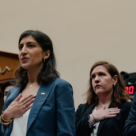
The Federal Trade Commission "rebuked social media and streaming companies including YouTube, Amazon and Facebook on Thursday, accusing them of failing to adequately protect users from privacy intrusions and safeguard children and teens on their sites," according to Cristiano Lima-Strong and Naomi Nix of The Washington Post. In a 129-page staff report, the independent federal agency "summed up a years-long study of industry practices by accusing the companies of not 'consistently prioritizing' users' privacy, broadly scooping up data to power new artificial intelligence tools and refusing to confront potential risks to kids," the reporters continued. "FTC Chair Lina Khan, a Democrat whose aggressive oversight of the tech giants has drawn plaudits from liberals and conservatives alike, said the report shows how companies’ practices 'can endanger people’s privacy, threaten their freedoms and expose them to a host of harms.' The findings on child safety were 'especially troubling,' she added." The report is based on post-2020 "[compelled] information" from nine digital platforms or their parent companies, including Amazon, Meta, Google's YouTube, Twitter (now X), Snap, TikTok owner ByteDance, Discord, Reddit and Meta-owned WhatsApp. According to the report, the aforementioned platforms have "collected troves of data on users and nonusers, often in 'ways consumers might not expect,' and many of the guardrails put in place to protect that information were erected only in response to global regulations," according to Lima-Strong and Nix. "While the companies are increasingly mining that data to launch AI products, the agency found, consumers typically lacked 'any meaningful control over how personal information was used' for them. The findings, the authors wrote, revealed 'an inherent tension between business models that rely on the collection of user data and the protection of user privacy.' The agency's Democratic leadership has spoken out before against 'commercial surveillance' practices they say have come to dominate Silicon Valley." Spokespeople for several of the platforms contested the findings of the report, with Google's José Castañeda maintaining that the Alphabet-owned company "has the strictest privacy policies in our industry." In particular, the report noted that many of the surveyed companies "'bury their heads in the sand when it comes to children' on their sites [...] Many claimed that because their products were not directly targeted at children and their policies did not allow children on their sites, they knew nothing of children being present on them." Lima-Strong and Nix added: "The study's release arrives as lawmakers at the federal and state levels push to pass expanded protections for children’s privacy and safety. Dozens of states have passed laws to that effect over the past year, and a key House committee advanced a pair of bills Wednesday that would mark the most significant update to child online safety laws in decades. But those efforts face opposition from tech industry and business groups that say they trample on users' free speech rights, force companies to collect more data and stifle innovation."


Plans unveiled for National Mall memorial for slain journalists

Plans Unveiled for National Mall Journalists' Memorial:


The Fallen Journalists Memorial Foundation unveiled plans Monday for Washington D.C.'s "first public memorial to celebrate press freedom and honor the journalists who have been slain while doing their jobs," according to Michael Brice-Saddler of The Washington Post. He added: "A bird's-eye view shows that the glass prisms, 300 in all, coalesce from the outside in to form a 9-foot-tall cylindrical space — creating the epicenter" of the National Mall-based memorial, which is enmeshed in a "lengthy but necessary regulatory process" that will result in the anticipated completion of the Fallen Journalists Memorial in 2028. Brice-Saddler continued:  "The memorial is planned for one-third of an acre between Independence and Maryland avenues and Third Street SW, bordered by the National Museum of the American Indian and the Voice of America Building. John Ronan, the project’s lead architect, said in an interview that his idea to use a transparent material like glass arose from the core journalistic principle to shed light on concealed issues. And arranging the glass structures in a seemingly accidental manner on the memorial's border, Ronan said, suggests how journalists use 'seemingly disconnected facts' to compose a news story." In addition, the memorial's developers "have said they selected the location because of its view of the Capitol — underscoring the watchdog role journalists are supposed to play in a democracy." The memorial's center cylinder will feature a "remembrance hall" with a circular glass lens containing the text of the First Amendment. Like other Washington memorials, the structure "will light up" at night "in a glow that Ronan likened to a 'beacon of truth.'" Brice-Saddler continued: "The Fallen Journalists Memorial Foundation was launched in 2019, one year after a gunman shot and killed five employees at the Capital Gazette, then owned by Tribune Publishing, in Annapolis. David Dreier, the former congressman and chair of Tribune Publishing, started the foundation and said he was inspired to seek the memorial after the deadly Gazette shooting and upon the realization that the Newseum — a former D.C. museum dedicated to journalism — was shutting down. Congress approved the memorial in 2020, and the foundation last year got a thumbs-up from the U.S. Commission of Fine Arts to come up with its design. In the coming months, the Fine Arts and the National Capital Planning commissions will offer feedback on the design — which could change — before it can move forward, said Barbara Cochran, the foundation’s president. The National Park Service will issue a construction permit once that approval is granted and the foundation raises 110 percent of the money necessary for its construction. The memorial is funded entirely by private donations, and its founders say they so far have raised and have commitments totaling $23 million, about 46 percent of a $50 million goal that includes construction costs and money for an endowment that will be used to maintain the memorial and create educational programming and events." 


Media leaders and philanthropists join forces to revitalize local news in Los Angeles

American Journalism Project Announces Los Angeles Local News Initiative:


The American Journalism Project's L.A. Local News Initiative has raised $15 million "to grow and support robust, independent local press in the region" amid a drastic decline in "local journalism resources," the nonprofit announced Monday. (Pulitzer Prize Board member Jelani Cobb is a director of the organization, while past Pulitzer juror Richard Tofel is a member of its Advisory Circle.) According to the press release, the Initiative "will launch a nonprofit organization that will operate and support local newsrooms in Los Angeles to provide coverage at neighborhood, regional, and state levels in service of L.A. communities [...] The initiative aims to increase the volume of coverage that enables residents to take effective action and navigate life on a local level, and that represents all L.A. communities in public discourse. It will also increase accountability journalism that keeps in check the billions of dollars in government and private spending affecting the Angelenos." Former La Opinión Editor/Publisher/CEO Monica Lozano will chair the organization's board, which also will include Pulitzer Board member and former Los Angeles Times Executive Editor Kevin Merida, Spectrum News anchor Giselle Fernandez, Eli and Edythe Broad Foundation President Gerun Riley and American Journalism Project Chief Investment Officer Michael Ouimette. "Without local journalism, we lose accountability, history, and a connection to our communities," Lozano said. "The coalition of media organizations, philanthropies, and individuals who’ve come together to revitalize local news in Los Angeles are building toward a future where we have a resilient, sustainable, independent local press that holds decision makers to account, and equips all Angelenos to thrive and engage in their communities." Fernandez added: "This effort comes at a critical moment. Local news in L.A. is in jeopardy and trust in traditional news media is at a low, giving rise to misinformation and an assault on the truth. We've lost our common story—we no longer have a shared set of facts. So our coalition is standing up for the free, independent, unbiased press that is critical for democracy, and we'll need broad local support to change this trajectory." During the planning stage of the initiative, research encompassing "input from nearly 900 Angelenos spanning 244 ZIP codes with a wide range of ages, genders, races, ethnicities, incomes, and professions" revealed that "residents lack information focused on important local issues unique to their neighborhoods"; residents also "said they felt their perspectives weren’t represented in the media and that they wanted more information they could use to become more civically engaged, to stay safe, and to thrive." Residents also are interested in "accountability reporting focused on their local municipalities." With Boyle Heights Beat ("a bilingual community newsroom that has grown to become a trusted primary source of community news in Boyle Heights and East L.A.") now under its aegis, the nonprofit will "launch new, similar publications in additional communities beginning next year, and is making investments in LAist, part of member-supported multi-platform public media organization Southern California Public Radio, and CalMatters, a nonprofit, nonpartisan newsroom committed to explaining California politics and policy. The release continued: "LAist and CalMatters will report on L.A. region wide issues and California issues from a local perspective, respectively, and make their reporting available free for republishing so that more Angelenos can access the news and information from their preferred sources. In addition, the initiative has formed collaborative partnerships with 20 media outlets and universities throughout L.A. which have already begun working together to leverage the strengths of each outlet, bringing more journalism to more people. Initial collaborations include one around election coverage and engagement, in which LAist, CalMatters, Boyle Heights Beat, and others are working together to make their voter resources accessible to more people through content sharing, joint events, and cross promotion of voter surveys." Merida added: "Los Angeles is too large and complex for all of our media outlets to work in silos. We have an exciting opportunity here — to work together to create journalism that reflects and truly serves every corner of the region."

Opinion | The future is not all bleak: Poynter president Neil Brown talks about a new report on the state of journalism

Former Pulitzer Co-Chair Reviews State of Contemporary Journalism in New Report:


The Poynter Institute has released "OnPoynt — Values Rising: Trends and traction in journalism and the news industry," a "new, first-of-its-kind report [...] examining current trends in the news and media industry" published in conjunction with Magnet Media. In an expansive interview with Senior Media Writer Tom Jones, past Pulitzer Prize Board Co-Chair and Poynter President Neil Brown (who served as one of the report's lead writers/editors/researchers alongside Aaron Sharockman, Alex Mahadevan and Caryn Baird) discussed the impetus for the revelatory project and its implications. "We’ve been talking about doing this for two basic reasons," Brown said. "First, the general coverage of the news industry paints a drumbeat of negative news. And I get that. The journalism industry has always bent over backwards as a sort of sign of its credibility to talk about its challenges, warts and all. That's what we do with other institutions, politicians, people we cover, we try to point out the problems and suggest answers. So when it comes to our own issues, I think it's a well-intended and, frankly, honorable approach to being transparent about what’s going on. No doubt about it – we are in an industry where news organizations are getting smaller and the relationships with our customers have changed in difficult to navigate ways. There’s been a climate of layoffs, revenue and audience challenges." He added: "I think we haven't freshened the story to note that while things are changing and going away, there are new things stepping up in their place. Maybe not the exact same things, but that's evolution, really. We have new organizations coming in and doing or trying new approaches, new experiences, either to serve audiences that have been abandoned by traditional news organizations, or attracting brand new audiences who weren’t into journalism. And they're doing it with new and interesting forms. I believe the news industry, of which Poynter has a particularly unique advantage to see, has been doing more of that, and yet that's not getting as much notice." In particular, Brown's team noted the coalescence of The Baltimore Banner, a comprehensive nonprofit digital newsroom that launched in 2022 under the financial aegis of Choice Hotels International CEO Stewart W. Bainum, Jr.'s family foundation. "It took a chance with upfront funding and fundraising and it’s now taken root, and it announced the other day that it was starting a five-person education coverage team at a time when other news organizations may, in fact, be cutting back on their education coverage," Brown continued. "Their newsroom headcount is about 80. Well, that’s bigger than pretty much every local news organization here in Florida and in most states, and they’re only 2 years old. And there’s still the Baltimore Sun, which probably has a comparable staff plus TV news and more. So Baltimore seems to be increasingly well served. That's an interesting advance. Does it negate the cuts and difficulties in other markets, including recently Tampa Bay? No." Brown also discussed the impact of Lookout Santa Cruz (which received the 2024 Breaking News Reporting Prize for its "detailed and nimble community-focused coverage" of epochal January 2023 floods and mudslides in the eclectic northern California community) and AL.com (which has received several Pulitzers since Advance Publications' longstanding Alabama regional newspapers metamorphosed into the statewide digital news site): "The Lookout provided so much service journalism in ways that years and years ago, the main or larger news organization in town might have provided, or perhaps the leading TV station does provide. It was such effective service journalism with a very small staff that you could see how they are connected to their community as a journalistic enterprise providing value. Well we don't talk about that as much. Or how about the growth and journalistic success at AL.com. It is a statewide journalism enterprise that has embraced the traditions of papers like the Birmingham News but moved to a digital initiative that is among the largest local news operations in the country. It is doing Pulitzer Prize-winning work through traditional and new products. There's a lot of good print stuff in the journalism field still out there, too, from community weeklies to magazines. But these things aren't getting as much attention. Too much of the coverage is about the losses and pining for when can we go back to the old days? We all know we’re not going back to the old days." Brown also noted that synergistic collaborations between traditional journalists and platform-era content creators may be increasingly feasible. "All I know is, even those [content creators] where they make their partisan biases clear had some pretty interesting reports and got some pretty interesting stuff. Individuals — influencers, creators —  are reaching audiences in ways that audiences find very, very compelling, but they don't have an institution behind them. Meanwhile, institutions are struggling because they don’t have the personalities. So the question is, can one group borrow from the other? I ask, is there something the institutions can learn from them, like how to tell stories differently? Take Dave Jorgenson of The Washington Post who is on TikTok. Or Jamelle Bouie of The New York Times on TikTok. They're reaching a whole new set of audiences that are not going to subscribe to The New York Times but they’ll read his column or listen to his column on TikTok, or that style of storytelling. And those, of course, are very traditional examples."

Man Sentenced to 27 Months in Prison for Harassing Journalists

New Hampshire Man Sentenced to 27 Months in Prison, Supervised Release for Role in Public Radio Case:


Tucker Cockerline, 33, of Salem, N.H., "was sentenced on Aug. 27 in federal court in Boston to 27 months in prison and three years of supervised release [...]  for his role in the harassment and intimidation of New Hampshire Public Radio journalists whose homes were vandalized after the radio station published a story that was critical of a local businessman," Amanda Holpuch of The New York Times reported Sunday. Cockerline was part of a group of men who allegedly "spray-painted vulgar and threatening language on the homes" of reporter Lauren Chooljian, her parents and editor Daniel Barrick after the newsroom published a 2022 investigation of "allegations of sexual misconduct against Eric Spofford, who had owned the state's largest network of drug and alcohol rehabilitation centers," Holpuch continued. Spofford filed a defamation lawsuit against New Hampshire Public Radio that was ultimately dismissed ten months ago; according to Holpuch, he "was not named in the federal criminal complaint or the news release from the U.S. attorney's office, and he has said that he had nothing to do with the vandalism." In addition to Cockerline, three men — Eric Labarge, Michael Waselchuck and Keenan Saniatan — "have been indicted in connection to the harassment," Holpuch continued; Labarge and Waselchuck pleaded guilty and are awaiting sentencing, while Saniatan is expected to plead guilty later this week. "Journalists are accustomed to covering crime rather than becoming victims of crime," past Pulitzer juror Jim Schachter, the president and chief executive of New Hampshire Public Radio, said on Sunday. "If this sentencing and the attention this case has drawn discourage others from attacking journalists just doing their jobs, a greater good will have come from this ugly episode." Chooljian's 2022 investigation earned a national Edward R. Murrow Award, while "The 13th Step" (a podcast about the original investigation and the harassment that ensued) was nominated for the 2024 Audio Reporting Prize.

SPIN Magazine Returning to Print With Editor-in-Chief Bob Guccione Jr.

SPIN Magazine Returns to Print Under Founder:


Venerable music magazine SPIN will return to print as a quarterly under the aegis of founder Bob Guccione Jr., who will serve as editor-in-chief of a full editorial staff, Chris Eggertsen of Billboard reported Tuesday. "This is more than just a return to our roots; it's a bold leap into the future," CEO Jimmy Hutcheson said in a statement. "We're bringing back the raw, unfiltered spirit of SPIN that resonated with so many readers, and we're doing it with a modern twist that reflects the evolving landscape of music and culture. It's exciting to see others like The Onion, Nylon and even LIFE going back into print. In today's noisy digital ecosystem, print plays a fun and new role for all readers of all ages." According to a press release, the first issue of the revival will feature a reminiscence by Jane's Addiction bassist Eric Avery alongside an interview with comedian Bill Maher and a profile of paleoconservative activist Ammon Bundy, who has been a fugitive on contempt of court charges since late 2023. In addition to offering subscriptions, the publication "will be available at stores including Barnes & Noble, Books-A-Million, Indigo/Chapters (Canada), Hudson News, independent stores in New York City and independent record stores across the U.S.," Eggertsen wrote. He added: "Guccione founded SPIN in 1985 and established the magazine as a preeminent music publication before selling it to Miller Publishing in 1997 for $43.5 million. In late 2012, SPIN ceased publication of its print magazine after being acquired by Buzzmedia, which later became SpinMedia. In 2016, SpinMedia’s music brands (SPIN, VIBE and Stereogum) were acquired by the Hollywood Reporter-Billboard Media Group, which sold SPIN and Stereogum to private equity firm Next Management Partners in 2020. Guccione rejoined the SPIN brand as a creative advisor shortly thereafter." During its halcyon period in the late 1980s and early 1990s, SPIN offered pathbreaking coverage of such incipient forms as indie rock, hip-hop, alternative country, contemporary electric blues and a litany of post-downtown jazz subgenres, with past Pulitzer juror John Leland emerging as one of its most notable writers.

No Joke: The Onion Thinks Print Is the Future of Media

‘Major Shift in Media Landscape Occurs Every 6 Seconds’: The Onion Relaunches Print Edition for Subscribers:


Venerable satirical media company The Onion "began distributing a print edition for the first time in more than a decade and will soon deliver it monthly to everyone who subscribes to its site," constituting a "throwback to the publication's roots as a campus weekly in the late 1980s," Benjamin Mullin of The New York Times reported Friday. Mullin added: "The print edition is part of a variety of perks that the company plans to offer online subscribers, who pay $5 a month," said Ben Collins, a former NBC News journalist who now serves as chief executive of The Onion's parent company, Global Tetrahedron. The company plans to offer "invites to live events, access to The Onion’s archive of physical papers and sponsorship of ambitious editorial projects," such as a video parodying the proliferation of news-adjacent recipe sites. Collins, whose company commenced operations in April, hopes that the subscription benefits will result in the publication becoming profitable before the end of the year. "At the same time, The Onion is reducing its reliance on certain kinds of advertising," Mullin continued. "A month ago, it stopped running digital ads from the company Taboola, a purveyor of attention-grabbing links. Most of the ads in this month’s print edition — for Ashley Madison, WeWork and Chick-fil-A — are fake, but there are some genuine promotions for The Onion. One of the ads: 'It’s That Sweater You Clicked On Once. We Found a Way to Follow You Into Print Media, Too.'" Founded in the febrile cultural milieu of Madison, Wisconsin in 1988, The Onion gained traction as a cult sensation throughout many Midwestern college towns in the early 1990s before becoming a mainstay of Millennial adolescence (arguably comparable to Mad magazine's analogously formative appeal among the Boomer cohort) when it initiated a web presence in 1996. (In a 1999 interview with Entertainment Weekly, longtime comedy writer/actor Bob Odenkirk said that the publication contained "the best comedy writing in the country.") Over the past decade, however, the publication "has changed hands three times. It was bought by the Spanish-language television company Univision, the digital publisher G/O Media and, this year, Global Tetrahedron [...] Along the way, there have been layoffs, tense contract negotiations and even the sale of The Onion’s sister site," cultural criticism-oriented The A.V. Club, Mullin continued. "But its 15 staff members are hoping the worst is behind them. Under the owner of Global Tetrahedron, Jeff Lawson, a co-founder of the tech company Twilio, the publication has enjoyed a relatively calm period." Although Collins joked that it isn't formally credentialed, The Onion (which is based in Chicago) "will hand out its new print edition next week at the Democratic National Convention," with Executive Editor Jordan LaFlure arguing that the "major influx of influential journalists" is a "perfect opportunity" to debut the print edition. "I think for the same reason that 18-year-old kids are buying Taylor Swift on vinyl, we can introduce those same kids to the notion that a print publication is a much richer way to consume media," LaFlure said.

TikTok push alerts include fake news and weeks-old tsunami warning

Report: TikTok Push Alerts Encompass Fake News, Outdated Weather Warnings:


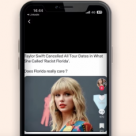
TikTok "has been sending inaccurate and misleading news-style alerts to users' phones, including a false claim about Taylor Swift and a weeks-old disaster warning, intensifying fears about the spread of misinformation on the popular video-sharing platform," Stephanie Stacey of the Financial Times reported Sunday. She added: "Among alerts seen by the Financial Times was a warning about a tsunami in Japan, labelled 'BREAKING,' that was posted in late January, three weeks after an earthquake had struck. Other notifications falsely stated that 'Taylor Swift Cancelled All Tour Dates in What She Called 'Racist Florida'' and highlighted a five-year 'ban' for a US baseball player that originated as an April Fool's Day prank. The notifications, which sometimes contain summaries from user-generated posts, pop up on screen in the style of a news alert. Researchers say that format, adopted widely to boost engagement through personalized video recommendations, may make users less critical of the veracity of the content and open them up to misinformation." Major social media platforms "are facing greater scrutiny to police their platforms, particularly in a year of major national elections, including November’s vote in the US," Stacey continued. "The rise of artificial intelligence adds to the pressure given that the fast-evolving technology makes it quicker and easier to spread misinformation, including through synthetic media, known as deepfakes. TikTok, which has more than 1 billion global users, has repeatedly promised to step up its efforts to counter misinformation in response to pressure from governments around the world, including the UK and EU. In May, the video-sharing platform committed to becoming the first major social media network to label some AI-generated content automatically." The Swift claim, which "mirrored" an unlinked article "published in May in the satirical newspaper The Dunning-Kruger Times, resulted in at least 20 users "[clicking] on the notification" and viewing a TikTok video "repeating the claim," even though the users did not follow the account. "The way in which those alerts are positioned, it can feel like the platform is speaking directly to [users] and not just a poster," said Kaitlyn Regehr, who teaches digital humanities at University College London. The ByteDance-owned platform "declined to reveal how the app determined which videos to promote through notifications, but the sheer volume of personalized content recommendations must be 'algorithmically generated,' said Dani Madrid-Morales, co-lead of the University of Sheffield’s Disinformation Research Cluster."

Judge rules that Google ‘is a monopolist’ in US antitrust case

Judge Adjudicates Google 'Monopoly' in Seminal Antitrust Case:


United States District Judge Amit Mehta ruled Monday that Google "violated U.S. antitrust law by maintaining a monopoly in the search and advertising markets," according to Lauren Feiner of The Verge. Mehta wrote: "After having carefully considered and weighed the witness testimony and evidence, the court reaches the following conclusion: Google is a monopolist, and it has acted as one to maintain its monopoly [...] It has violated Section 2 of the Sherman Act." Mehta's ruling "represents a major victory for the Department of Justice, which accused Google of illegally monopolizing the online search market," Feiner continued. "Still, Mehta did not agree with all of the government’s arguments. For example, he rejected the claim that Google has monopoly power in one specific part of the ads market. He agreed with the government, however, that Google has a monopoly in 'general search services' and 'general search text advertising.'" She added: "It's not yet clear what this ruling will mean for the future of Google’s business, as this initial finding is only about the company’s liability, not about remedies. Google’s fate will be determined in the next phase of proceedings, which could result in anything from a mandate to stop certain business practices to a breakup of Google's search business." In a statement, Google President of Global Affairs Kent Walker vowed that the Alphabet division would "remain focused on making products that people find helpful and easy to use" despite ongoing litigation. "This landmark decision holds Google accountable," United States Assistant Attorney General for the Antitrust Division Jonathan Kanter said in a statement. "It paves the path for innovation for generations to come and protects access to information for all Americans." The decision also was "applauded" by longtime search rival DuckDuckGo. "The journey ahead will be long," Senior Vice President for Public Affairs Kamyl Bazbaz said. "As we are seeing in the EU and other places, Google will do anything it can to avoid changing its conduct. However, we know there is a pent up demand for alternatives in search and this ruling will support access to more options." Feiner continued: "Mehta rejected Google's arguments that its contracts with phone and browser makers like Apple were not exclusionary and therefore shouldn't qualify it for liability under the Sherman Act. [...] He said the framework from the last landmark tech monopoly case, US v. Microsoft, was in fact relevant to the current case against Google. While Google argued that, unlike Microsoft, it maintained pretty consistent actions before and after it became dominant in the market, Mehta said that's irrelevant since the same conduct can be exclusionary when done by a dominant player, even if it's not when it's done by a smaller one." However, Mehta "declined to impose sanctions on Google for failing to preserve chat messages relevant to the case — something the Justice Department characterized as destroying evidence," noting that his decision "should not be understood as condoning Google's failure to preserve chat evidence [...] Google avoided sanctions in this case. It may not be so lucky in the next one." The case is part of a new wave of antitrust litigation brought by the federal government against major technology companies, including analogous monopolization lawsuits against Amazon, Apple and Meta that may go to trial in the near future; meanwhile, Google will "go to trial against the DOJ a second time [...] over a separate challenge of its advertising technology business" on September 9 in Virginia. 

WSJ Reporter Evan Gershkovich Is Free

Kara-Murza, Gershkovich Freed in Major Prisoner Swap:


The Russian government freed wrongly convicted Wall Street Journal reporter Evan Gershkovich and 2024 Commentary winner Vladimir Kara-Murza "as part of the largest and most complex East-West prisoner swap since the Cold War, in which he and more than a dozen others jailed by the Kremlin were exchanged for Russians held in the U.S. and Europe, including a convicted murderer," the newspaper's Drew Hinshaw, Joe Parkinson and Aruna Viswanatha reported Thursday. They continued: "Gershkovich and other Americans left Russian aircraft at roughly 11:20 a.m. ET at an airport in Turkey’s capital, Ankara. Gershkovich was then transported to an aircraft lounge on a Turkish bus. Russia had kept the 32-year-old behind bars for more than a year on a false allegation of espionage. It sentenced him in a hurried and secret three-day trial to 16 years in a high-security penal colony." In addition to Kara-Murza (a "British-Russian dissident" who had been sentenced to 25 years in prison on spurious treason charges), Moscow "also released former Marine Paul Whelan [and] journalist Alsu Kurmasheva." The agreement "involved 24 prisoners and at least six countries, and came together after months of negotiations at the highest levels of governments in the U.S., Russia and Germany, whose prisoner, Russian hit man Vadim Krasikov, emerged as the linchpin to the arrangement," the reporters added. Shortly before announcing his intention not to seek the Democratic presidential nomination on July 31, President Biden "called the prime minister of Slovenia, whose country was contributing two convicted Russian spies to the swap, to secure the pardon necessary for the deal to proceed; last week, CIA Director William J. Burns (who served as the George W. Bush administration's ambassador to Russia and as deputy secretary of state in the Obama administration) "traveled to Turkey last week to meet his counterpart there and finalize the logistics for the swap," according to Hinshaw, Parkinson and Viswanatha. The Journal team added: "The exchange is emblematic of a new era of state-sponsored hostage-taking by autocratic governments seeking leverage over rivals. It was negotiated as tensions soared between Russia and the West over the war in Ukraine. It also offers sobering evidence of the asymmetry between the U.S. and Russia in this new, piratical order. Putin can order foreigners plucked from restaurants and hotels and given lengthy prison sentences on spurious charges—something an American leader can’t do. As the U.S. sought over the course of a year to extract Gershkovich, Whelan and others without offering Krasikov in return, senior Russian intelligence officials had made clear there was no deal without him. German officials eventually agreed, extracting their own price of a dozen Russian prisoners in return."