For the Record


TikTok Collected U.S. Users’ Views on Gun Control, Abortion and Religion, U.S. Says

DOJ: TikTok Collected User Data on Social Issues:


TikTok "collected data about its users' views on sensitive topics and censored content at the direction of its China-based parent company, the Justice Department said Friday, making its most forceful case to date that the video-sharing app poses a national-security threat," according to Georgia Wells and Sadie Gurman of The Wall Street Journal. The reporters continued: "The sensitive topics TikTok tracked included the views of its U.S.-based users on gun control, abortion and religion, the Justice Department said. [...] The Justice Department made the details public in court filings late Friday in response to a federal lawsuit TikTok filed in May arguing that a new law requiring a sale or ban of the popular social-media app violates the free-speech rights of millions of Americans under the banner of national security. The measure bans Chinese-backed TikTok in the U.S. unless its parent company, ByteDance, divests itself of the platform by mid-January." A TikTok spokesperson said that the platform "believes a TikTok ban would violate the First Amendment rights of its 170 million users." According to the Justice Department, a software tool "lets U.S. employees of TikTok and ByteDance, also based in China, collect user information based on a user's content, including their views" on the aforementioned subjects, Wells and Gurman wrote. "Intelligence reporting further demonstrates that ByteDance and TikTok Global have taken action in response to PRC demands to censor content outside of China," wrote Casey Blackburn, assistant director of national intelligence at the Office of Economic Security and Emerging Technology, in a court filing buttressing the government's position. The Justice Department "also said TikTok had a history of censoring content and manipulating its algorithm at the direction of ByteDance," although the platform maintains that the "app's U.S. algorithm is stored with its American partner, Oracle, and that the algorithm is trained on U.S. user data and supervised by employees within the unit, which is officially called TikTok U.S. Data Security," according to Wells and Gurman. They continued: "The Justice Department said TikTok’s proposal to store U.S. user data in servers based in the U.S. isn’t sufficient to protect the data, in part because TikTok employees relied on ByteDance-developed software to share information and, at times, sent significant amounts of restricted U.S. user information over this software to colleagues in China. The Justice Department said it based its conclusions in part on revelations that the TikTok employees had sent significant amounts of restricted U.S. user data to colleagues in China using ByteDance’s internal communication system called Lark. ByteDance operated Lark on servers in China, which meant these communications were stored there and accessible to ByteDance employees located in China, according to the Justice Department." The Wall Street Journal has previously reported that TikTok shared "private information" (including a user’s email, birth date and IP address) to elements outside of its Project Texas unit, while the platform also tracked "users who watched gay content." According to the Pew Research Center, more than half of U.S. adults between the ages of 18 and 29 use TikTok.

Evan Gershkovich Sentenced to 16 Years in Russian Prison After Wrongful Conviction

Gershkovich Sentenced to 16 Years in Russian Prison:


Wall Street Journal reporter Evan Gershkovich "was sentenced to 16 years in a high-security penal colony, after being wrongfully convicted in a hurried, secret trial that the U.S. government has condemned as a sham" on false espionage charges, colleague Georgi Kantchev reported for The Journal Friday. He added: "The court's Friday verdict—after three days of hearings—was widely viewed as a foregone conclusion, since acquittals in Russian espionage trials are exceedingly rare. Gershkovich was afforded few of the protections normally accorded to defendants in the U.S. and other Western countries. After reading the ruling, the judge asked Gershkovich if he understood. Gershkovich, standing in the dock and wearing a dark T-shirt emblazoned with a small image of a frowning face, responded with a nod. He gave a brief wave before being removed by security officers." In a statement, Dow Jones CEO/Wall Street Journal Publisher Almar Latour and Editor in Chief Emma Tucker condemned the verdict. "This disgraceful, sham conviction comes after Evan has spent 478 days in prison, wrongfully detained, away from his family and friends, prevented from reporting, all for doing his job as a journalist," they said. "We will continue to do everything possible to press for Evan's release and to support his family. Journalism is not a crime, and we will not rest until he's released. This must end now." The Russian government "produced no public evidence to support their allegations, which Gershkovich, the Journal and the U.S. government have vehemently and repeatedly denied," Kantchev continued. Kremlin spokesperson Dmitry Peskov would not comment on the possibility of a prisoner exchange with the United States. "I'm leaving that question without an answer," he said. "There is a charge of espionage, so this is a very, very sensitive area." Gershkovich, a 32-year-old U.S. citizen, "has been imprisoned since March of last year, when he was detained by the country’s Federal Security Service, or FSB, while on a reporting assignment in Yekaterinburg, around 900 miles east of Moscow," Kantchev continued. "In June, Russian prosecutors approved an indictment of Gershkovich, falsely alleging that he was gathering information about a Russian defense contractor on behalf of the Central Intelligence Agency. In fact, Gershkovich, who was accredited as a foreign correspondent by Russian authorities, was in Yekaterinburg and elsewhere in the Sverdlovsk region for the sole purpose of reporting for The Journal. Russia's detention of the American journalist has commanded public attention worldwide and prompted the White House to work to secure his release. His case has played out against a background of heightened tensions between Moscow and Washington in the wake of Russia's full-scale invasion of Ukraine in February 2022."

Hong Kong journalist group head says she was fired by WSJ amid press freedom row

Hong Kong Press Group Chair Alleges Retaliatory WSJ Firing:


The new chairperson of the Hong Kong Journalists Association (HKJA) "said she was fired by The Wall Street Journal on Wednesday after she refused demands from senior editors at the paper to sever ties with the organization and to not advocate for media freedoms," according to James Pomfret and Jessie Pang of Reuters. Selina Cheng, who has covered China's burgeoning electric vehicle industry for the publication since 2022, "was elected on June 22 to be the HKJA's new chairperson at a time of mounting pressure by authorities under a national security crackdown that has seen reporters arrested and liberal media outlets closed," Pomfret and Pang continued. However, Cheng has alleged that her U.K.-based supervisor enjoined her to withdraw from the election; when she refused, WSJ World Coverage Chief Gordon Fairclough traveled to Hong Kong to dismiss her in person, citing a "restructuring move." Fairclough did not respond to Pomfret and Pang's request for comment, while Reuters was "not able to establish the reason for Cheng's dismissal." In a statement, a spokesperson for The Wall Street Journal said that the newspaper "has been and continues to be a fierce and vocal advocate for press freedom in Hong Kong and around the world." Cheng, a 32-year-old native of the special administrative region, "also accused her former employer of a double standard in its advocacy of press freedom, noting its aggressive lobbying for the release of its reporter Evan Gershkovich, who has been detained in Russia for more than a year," according to Tiffany May of The New York Times. May added: "Freedom of speech, once a hallmark of Hong Kong that separated it from the Chinese mainland, has been curtailed since Beijing cracked down after huge antigovernment protests roiled the city in 2019. Independent news outlets critical of the Hong Kong authorities have been raided and shuttered. Editors have been put behind bars during lengthy trials. A survey by the Foreign Correspondents' Club of Hong Kong found that 70 percent of journalists in the city have engaged in self-censorship. While many civil society groups have dissolved under the crackdown, the journalists' union has vowed to carry on even as it has been singled out repeatedly for public criticism by Hong Kong leaders who insinuated that it had an antigovernment bent. Most of the union's members work at local news outlets, though it is open to any journalist in Hong Kong." Additionally, The Journal "announced changes to its Asia operations" in May "as it seeks to shift '[its] center of gravity in the region from Hong Kong to Singapore,'" Pomfret and Pang reported. Cheng has vowed to remain chairperson of the Journalists Association. "The [jobless] situation I am facing is temporary, but I think the responsibility of safeguarding press freedom is longer-term and more important than a job or salary," she said.

US journalist Masha Gessen convicted in absentia by Russian court

Gessen Convicted in Absentia by Russian Court:


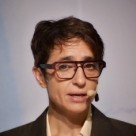
Russian-American journalist Masha Gessen "has been convicted in absentia by a Moscow court on charges of spreading false information about the military and was sentenced to eight years in prison," the Associated Press reported Monday. The Moscow-born Gessen, a U.S.-based staff writer for The New Yorker and opinion columnist for The New York Times, "is a prominent critic of the Russian president, Vladimir Putin, and an award-winning writer," the report continued. "Russian police put Gessen on a wanted list in December, and Russian media reported the case was based on statements [Gessen] made about atrocities in the Ukrainian town of Bucha in an interview with a popular Russian online blogger. In the interview, which has been viewed more than 6.5m times on YouTube since September 2022, Gessen and blogger Yury Dud discussed atrocities in the Ukrainian town of Bucha earlier that year." Although Ukrainian troops discovered "at least" 400 bodies of men, women and children amid signs of torture upon retaking Bucha, the Russian government has "vehemently denied their forces were responsible" despite prosecuting public figures who have discussed the atrocities. "The prosecutions were carried out under a Russian law adopted days after the invasion of Ukraine began that effectively criminalized any public expression about the war deviating from the Kremlin narrative," the report continued. "Russia maintains that its troops in Ukraine only strike military targets, not civilians." Gessen, who identifies as nonbinary and trans and uses they/them pronouns, emigrated to the United States with their family to the United States in 1981. Following two decades as a journalist in Russia, they returned to the United States in 2013 amid the virulent recrudescence of anti-LGBT legistation in Russia. Because of their dual nationality, Gessen is "unlikely to face imprisonment in Russia on the conviction unless they travel to a country with an extradition treaty with Moscow," the report added. "Since the war began in February 2022, Russia has cracked down harshly on dissent and also has targeted Americans," according to the AP. "There have been 1,053 criminal cases in Russia against anti-war protesters, according to the OVD-Info rights group, which tracks political arrests and provides legal aid."

A week and a half ago, Goldman Sachs put out a 31-page-report (titled "Gen AI: Too Much Spend, Too Little Benefit?”) that includes some of the most damning literature on generative AI I've ever seen. And yes, that sound you hear is the slow deflation...

Circumspection Follows Goldman Sachs Generative AI Report:


According to a Substack article by public relations specialist Edward Zitron, the late June release of a skeptical 31-page Goldman Sachs report on generative AI has led to increased scrutiny of the field due to the exigencies it addresses, including unprecedented power grid demands. "The report includes an interview with economist Daron Acemoglu of MIT (page 4), an Institute Professor who published a paper back in May called 'The Simple Macroeconomics of AI' that argued that 'the upside to U.S. productivity and, consequently, GDP growth from generative AI will likely prove much more limited than many forecasters expect,'" Zitron wrote. "A month has only made Acemoglu more pessimistic, declaring that 'truly transformative changes won't happen quickly and few – if any – will likely occur within the next 10 years,' and that generative AI's ability to affect global productivity is low because 'many of the tasks that humans currently perform [...] are multi-faceted and require real-world interaction, which AI won't be able to materially improve anytime soon.'" Zitron added: "The reality is that generative AI isn't good at replacing jobs, but commoditizing distinct acts of labor, and, in the process, the early creative jobs that help people build portfolios to advance in their industries. The freelancers having their livelihoods replaced by bosses using generative AI aren't being 'replaced' so much as they're being shown how little respect many bosses have for their craft, or for the customer it allegedly serves. Copy editors and concept artists provide far-more-valuable work than any generative AI can, yet an economy dominated by managers who don't appreciate (or participate in) labor means that these jobs are under assault from [large language models] pumping out stuff that all looks and sounds the same to the point that copywriters are now being paid to help them sound more human." He continued: "The most fascinating part of the report (page 10) is an interview with Jim Covello, Goldman Sachs' head of global equity research. Covello isn't a name you'll have heard unless you are, for whatever reason, a big semiconductor-head, but he's consistently been on the right side of history, named as the top semiconductor analyst by II Research for years, successfully catching the downturn in fundamentals in multiple major chip firms far before others did. [...] Covello believes that the combined expenditure of all parts of the generative AI boom — data centers, utilities and applications — will cost a trillion dollars in the next several years alone, and asks one very simple question: 'what trillion dollar problem will AI solve?' He notes that 'replacing low-wage jobs with tremendously costly technology is basically the polar opposite of the prior technology transitions [he's] witnessed in the last thirty years.'" Although the generative AI boom is frequently compared to the mid-Nineties emergence of the commercial internet following the halcyon 1969-1993 era of networked computing, Covello has noted that "even in its infancy, the internet was a low-cost technology solution that enabled e-commerce to replace costly incumbent solutions [...] AI technology is exceptionally expensive, and to justify those costs, the technology must be able to solve complex problems, which it isn't designed to do." Brian Janous, who oversaw Microsoft's energy strategy from 2011 to 2023, "[detailed] numerous nightmarish problems that the growth of generative AI is causing to the power grid" in the Goldman Sachs report; these run the gamut from "the centralization of data center operations for multiple big tech companies in Northern Virginia" (which "may potentially require a doubling of grid capacity over the next decade") to 40-70 month wait times for new power projects seeking to connect to the grid, marking a 30% increase in the past year. Zitron added: "In essence, on top of generative AI not having any killer apps, not meaningfully increasing productivity or GDP, not generating any revenue, not creating new jobs or massively changing existing industries, it also requires America to totally rebuild its power grid, which Janous regrettably adds the U.S. has kind of forgotten how to do." He continued: "Generative AI is not going to become AGI, nor will it become the kind of artificial intelligence you've seen in science fiction. Ultra-smart assistants like Jarvis [from Marvel's Iron Man franchise] would require a form of consciousness that no technology currently — or may ever — have — which is the ability to both process and understand information flawlessly and make decisions based on experience, which, if I haven't been clear enough, are all entirely distinct things. Generative AI at best processes information when it trains on data, but at no point does it 'learn' or 'understand,' because everything it's doing is based on ingesting training data and developing answers based on a mathematical sense or probability rather than any appreciation or comprehension of the material itself. LLMs are entirely different pieces of technology to that of 'an artificial intelligence' in the sense that the AI bubble is hyping..."

She won a Pulitzer for exposing how the country's poorest state spent federal welfare money. Now she might go to jail.

Wolfe, Ganucheau Face Jail Threat Amid Defamation Lawsuit:


2023 Local Reporting winner Anna Wolfe and her editor (past Pulitzer juror Adam Ganucheau of Mississippi Today) "have been hit with a court order requiring them to turn over internal files" (including the identities of confidential sources) in a pending defamation lawsuit from former Mississippi Gov. Phil Bryant that may result in jail time for lack of compliance, Ken Dilanian and Laura Strickler of NBC News reported Tuesday. "If one of us goes to jail, we will be the first person to go to jail in the Mississippi welfare scandal,” Wolfe said, alluding to "the eight indictments that stemmed from the imbroglio, none of which has yet resulted in a sentence." She added: "How can I make promises to sources that I'm going to keep them confidential if this is possible?" Dilanian and Strickler continued: "The case has drawn attention beyond Mississippi as an example of how public figures can make life difficult for news organizations long before they have ever presented evidence of the 'actual malice' needed to prove defamation cases. Mississippi Today, the independent nonprofit organization that employs Wolfe and Ganucheau, is asking the state Supreme Court to overturn the order. Bryant appointed four of the nine justices. 'Breaching the confidentiality of sources violates one of the most sacred trusts — and breaks one of the most vital tools — in investigative journalism,' Ganucheau wrote in a recent New York Times op-ed. 'No serious news organization would agree to this demand.'" They continued: "The plaintiff in the defamation case is Phil Bryant, who was governor when the scandal erupted, first with a report by the state’s auditor, then with a blizzard of coverage by Mississippi Today. Bryant — who has not been charged with a crime and says he did nothing illegal — claims the online news organization wrongly accused him of criminal conduct." Although Bryant declined to be interviewed, attorney Billy Quin maintains that the former official was not involved in the alleged misconduct. "I didn’t sue them because they exposed $77 million worth of misspending. He applauds them for doing that,” Quin said. "The suit is about defamation." However, the "question of Bryant’s role in the spending was a key topic of reporting in the series of articles that won the Pulitzer, dubbed 'The Backchannel,'" Dilanian and Strickler wrote. "The investigation, published in a multi-part series in 2022, revealed for the first time how former Gov. Phil Bryant used his office to steer the spending of millions of federal welfare dollars — money intended to help the state’s poorest residents — to benefit his family and friends, including NFL Hall of Fame quarterback Brett Favre,” Mississippi Today reported following the 2023 Pulitzer announcement. "The fact is, I did nothing wrong," Bryant said in a May 2023 statement. "I wasn't aware of the wrongdoings of others. When I received evidence that suggested people appear to be misappropriating funds, I immediately reported that to the agency whose job it is to investigate these matters." Bryant "did not sue after the articles were published in April 2022, and, in fact, the statute of limitations on defamation claims in Mississippi lapses after one year." However, in recorded remarks at a February 2023 journalism conference in Miami, Mississippi Today CEO Mary Margaret White said that the funds were "embezzled by a former governor and his bureaucratic cronies." According to Dilanian and Strickler, "embezzlement is a crime, and Bryant has never been charged, let alone convicted [...] There has been no indication he is a target of an ongoing federal investigation into the welfare fraud scandal." They continued: "To win a defamation lawsuit, a public figure has to show that someone published false information with 'actual malice,' or a reckless disregard for the truth. Quin said that's why he needs the newspaper’s internal emails and the names of confidential sources, something journalists are loath to ever provide. The order asks that the materials first be handed to the judge, who will decide whether any of the evidence is relevant to a claim of defamation." Both Wolfe and Ganucheau reflected on the potential implications of the case. "It would have a chilling effect for the sources coming forward," Ganucheau said. "It would have the effect of making the journalists in Mississippi second-guess how they collect what they collect and whether they should in the first place." Wolfe added: "It makes it harder to do my job. I mean, I'm working on a story right now that I think is of great significance and that I now feel like I’m going to get sued over, as well. It feels like now, anything that I try to report is going to be met with the same level of gaslighting and intimidation and scrutiny. So it definitely impacts my day-to-day." 

Sewell Chan Appointed Executive Editor of Columbia Journalism Review

Sewell Chan Appointed CJR Executive Editor:


Native New Yorker and incumbent Pulitzer Prize Board member Sewell Chan will return to his hometown as the executive editor of the Columbia Journalism Review (effective September 16), the Columbia Journalism School announced Thursday. "Sewell Chan possesses a deep well of experience, incredible insights into the challenges confronting media at this moment and an abiding passion for journalism," said Jelani Cobb, Dean and Henry R. Luce Professor of Journalism and a non-voting member of the Board. "We could not be more excited about working with him as he charts a new course for Columbia Journalism Review." Since 2021, Chan has served as editor in chief of The Texas Tribune, leading the nonprofit digital newsroom to its first Pulitzer nomination and its first National Magazine Award. Previously, Chan was deputy managing editor and then editor of the editorial page at the Los Angeles Times, where he oversaw Robert Greene's 2021 Editorial Writing Prize-winning opinion journalism on criminal justice reform. From 2004 to 2018, Chan worked at The New York Times "as a metro reporter, Washington correspondent, deputy op-ed editor and international news editor," according to the news release. His career began in 2000 at The Washington Post. After growing up in an immigrant family, Chan became the first in his family to finish college, receiving his undergraduate degree in social studies from Harvard and a master's degree in politics from Oxford on a British Marshall Scholarship. In addition to the Pulitzer Board, Chan is a member of the boards of the Henry Luce Foundation, Freedom House, Reporters Committee for Freedom of the Press and Harvard Magazine. He also serves on the national judging panel of the Livingston Awards, the Council on Foreign Relations and PEN America. "Journalism faces challenges from all sides: technological disruption, changing business models, rising misinformation and threats to democracy," Chan said. "Since 1961, Columbia Journalism Review has been vital to understanding journalism ethics and decision-making and the future of our craft. I believe CJR must be an essential voice for working journalists worldwide as they grapple with these challenges, while helping the public understand what journalists do and why it matters more than ever." Rebecca Blumenstein, the chair of the CJR board and president, editorial at NBC News, added: "The Columbia Journalism Review has a storied and important role in covering journalists and journalism. No one is better suited than Sewell to take CJR to new heights and audiences around the country and the world, in this challenging and crucial moment for the press. I know I join Dean Cobb and the entire CJR board in saying that we look forward to working with Sewell."

Assange Agrees to Plead Guilty in Exchange for Release, Ending Standoff With U.S.

Assange Agrees to Guilty Plea:


WikiLeaks founder Julian Assange "agreed to plead guilty on Monday to a single felony count of illegally obtaining and disclosing national security material in exchange for his release from a British prison, ending his long and bitter standoff with the United States," Glenn Thrush and Megan Specia of The New York Times reported Monday. Assange, now 52, "was granted his request to appear before a federal judge at one of the more remote outposts of the federal judiciary, the courthouse in Saipan, the capital of the Northern Mariana Islands, according to a brief court filing made public late Monday," the journalisats continued. "He is expected to be sentenced to about five years, the equivalent of the time he has already served in Britain, according to a law enforcement official familiar with the terms of the agreement. [...] It was a fitting final twist in the case against [...] Assange, who doggedly opposed extradition to the U.S. mainland. The islands are a United States commonwealth in the middle of the Pacific Ocean — and much closer to Mr. Assange's native Australia, where he is a citizen, than courts in the continental United States or Hawaii. Assange is scheduled to appear in Saipan at 9 a.m. local time on Wednesday and is expected to fly back to Australia 'at the conclusion of the proceedings,' Matthew J. McKenzie, an official in the Justice Department's counterterrorism division, wrote in a letter to the judge in the case." In a statement on social media platform X, Australian Prime Minister Anthony Albanese lauded the development. "The Australian government has consistently said that Mr. Assange's case has dragged on for too long, and that there is nothing to be gained by his continued incarceration," Albanese wrote. "We want him brought home to Australia." Thrush and Specia added: "Barring last-minute snags, the deal would bring to an end a prolonged battle that began after [...] Assange became alternately celebrated and reviled for revealing state secrets in the 2010s. Those included material about American military activity in Iraq and Afghanistan, as well as confidential cables shared among diplomats. During the 2016 campaign, WikiLeaks released thousands of emails stolen from the Democratic National Committee, leading to revelations that embarrassed the party and Hillary Clinton’s campaign. In 2019, a federal grand jury indicted [...] Assange on 18 counts related to WikiLeaks’ dissemination of a broad array of national security documents. Those included a trove of materials sent to the organization by Chelsea Manning, a former U.S. Army intelligence analyst who handed over information about military planning and operations nearly a decade earlier. If convicted, [...] Assange could have faced a maximum of 170 years in a federal prison. Until Monday evening, [...] Assange had been held in Belmarsh, one of Britain's highest-security prisons, in southeast London." During his imprisonment, Assange "was confined to a cell for 23 hours a day, eating his meals off a tray alone, surrounded by 232 books and allowed only an hour a day for exercise in a prison yard, according to an account published in The Nation this year." Assange's wife, human rights attorney Stella Assange, also discussed the developments. "This period of our lives, I am confident now, has come to an end. What starts now, with Julian's freedom, is a new chapter." 

Robert Winnett will not join The Post as editor

Winnett Pivots From Post Following Unprecedented Appointment:


Incoming Washington Post newsroom chief Robert Winnett "will not take the job and will remain at the Daily Telegraph in London, according to a memo obtained by The Post on Friday," the newspaper's Elahe Izadi and Isaac Stanley-Becker reported Friday morning. Post CEO and Publisher Will Lewis "confirmed that Winnett had withdrawn from the position, relaying the news 'with regret' in a note to Post staff," Izadi and Stanley-Becker added. "Rob has my greatest respect and is an incredibly talented editor and journalist," Lewis wrote. "The leadership at The Telegraph Media Group are reaffirming his continued role as deputy editor." The decision "came after days of turmoil at The Post, triggered by the abrupt exit of executive editor Sally Buzbee as well as questions about the past practices of both Winnett and Lewis — veterans of London newsrooms that operate by different rules than their American counterparts," Izadi and Stanley-Becker continued. "Winnett has spent his entire career in British journalism and was practically unknown in American media circles. Lewis had announced that Winnett would join The Post after the November U.S. presidential election, and oversee the traditional news division" in a unique tripartite arrangement alongside incumbent Opinion Editor David Shipley and former Wall Street Journal Editor in Chief Matt Murray, who will oversee a third division centered around social media and service journalism after serving as interim executive editor during the 2024 presidential election cycle and its immediate aftermath. "Since then, reports have surfaced raising questions about the reporting methods used by Winnett, as well as by Lewis when he worked as a journalist in Britain," Izadi and Stanley-Becker wrote. "A Post investigation published Sunday revealed Winnett’s connections to a confessed con artist turned whistleblower who has admitted using illegal methods to gain information for stories in Britain's Sunday Times, a paper where Winnett worked before joining the Telegraph. The New York Times also reported that Winnett and Lewis had based some stories on stolen records, and raised new questions about a payment made to obtain information that led to a 2009 investigation into government corruption that shook the British political establishment and led to several officials' resignations. [...] Paying sources for information is considered unethical in most American newsrooms. So is misrepresenting oneself as anything other than a journalist to obtain confidential information as part of newsgathering, a practice referred to as 'blagging.' While blagging is illegal in the U.K., The Post reported that legal experts have said it is defensible if the information obtained is in the public's interest." Previously, Lewis "worked for Rupert Murdoch’s News International to help with the corporate cleanup in the wake of the phone-hacking and police bribery scandal that led to the closure of the News of the World tabloid. Lewis then went on to serve as the publisher of the Wall Street Journal and CEO of Dow Jones, also Murdoch-owned properties," during Murray's tenure with the newspaper, according to Izadi and Stanley-Becker. "An ongoing civil case related to the cleanup does not name Lewis as a defendant, but a judge has allowed plaintiffs to air allegations that Lewis and others tried to suppress information about the hacking. He has denied wrongdoing, and has previously said that his role in the phone-hacking cleanup was to safeguard journalistic values and practices, such as protecting sources."

Chicago Public Media unions seek CEO’s immediate ouster amid a no-confidence vote

Chicago Public Media Unions Seek Chief Executive Ouster Amid No-Confidence Vote:


Unionized journalists at WBEZ's newsroom and the Chicago Sun-Times "voted overwhelmingly to seek outgoing Chicago Public Media CEO Matt Moog's immediate removal, expressing a lack of confidence in his leadership in a letter released Tuesday," according to  Dave McKinney and Dan Mihalopoulos of WBEZ. "The no-confidence votes from WBEZ’s SAG-AFTRA union local and the Chicago Newspaper Guild at the Sun-Times come after Moog defended the CPM board's decision to issue lay-off notices to 14 employees in April amid declining revenues, including nine unionized content creators at WBEZ," McKinney and Mihalopoulos added. "In a letter to CPM's board of directors Tuesday, union leaders said 86% of unionized journalists at the radio station and newspaper participated in the vote, with 96% wanting Moog gone now. The letter also demanded no layoffs or buyouts during the rest of Moog's tenure and his ouster, along with an appointment of an interim CEO. The letter also sought greater transparency by the news outlets’ main governing board." The unions added in a statement: "Under Mr. Moog’s stewardship, we have seen a loss of talented and expert staffers and continued revenue declines, stunting our efforts to achieve sustainability even as we receive generous foundation support that should fuel growth." Following initial allegations of a hostile work environment in December, Moog said he would step down pending the appointment of a replacement; after the effectuation of the layoffs, Moog "indicated he would leave in August." Moog also released a statement Tuesday afternoon: "After fifteen years of service to the organization as a board member and CEO, it saddens me to be personally attacked for taking the necessary and responsible steps to reduce expenses to offset the financial impact of declining broadcast and print audiences. I thank the board of directors and the executive team for their partnership and full support of those steps to ensure the long-term financial sustainability of the organization." Concurrently, board head Robert Pasin "praised Moog's tenure as CEO and made clear the organization has no intention of forcing him out, saying, 'Matt will remain the CEO until we have a new leader in place.'"