For the Record


Slate Names Ex-HuffPost Editor as Its New Top Editor

Slate Names Former HuffPost Editor to Top Role:


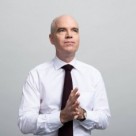
Slate "has named Hillary Frey, a former top editor at HuffPost, as its new editor in chief," Katie Robertson of The New York Times reported Wednesday. In a memo to staff, Chief Executive Dan Check said that Frey was "the exact right person to lead Slate’s newsroom in this new phase of growth,” as evidenced by years of experience and her comprehension of "the challenges and opportunities of this current news environment." A formative digital media outlet initially created in 1996 by former New Republic editor Michael Kinsley under the aegis of Microsoft, it was purchased by The Washington Post Company in 2004 and remains under the control of former Pulitzer Prize Board member Donald E. Graham through The Slate Group. However, the publication "has struggled in recent years to find its way in the new media landscape and figure out a sustainable business model" and has been without a top editor since January, when Jared Hohlt stepped down. Hohlt, "who had the job for three years, will soon join The New York Times's T Magazine," Robertson added. Frey, who currently holds an appointment at the CUNY Craig Newmark Graduate School of Journalism, "was previously the executive editor of HuffPost, a role she left in 2021 after HuffPost was acquired by BuzzFeed." She has held editorial roles at NBC News, Adweek, Yahoo News and Fusion. "I feel a very longstanding, deep connection with Slate and what they do," Frey said in an interview this week. "Being smart, being irreverent, having fun, putting out just great and interesting ideas that may be sitting right in front of you but nobody has put into words yet and just having really sharp analysis." In February, The Times reported that Graham Holdings "enlisted the help of a consultant to help shore up Slate's business, who told staff members that the outlet was not profitable and she would be advising on ways to make the business stronger." 

Musical ‘A Strange Loop’ leads the 2022 Tony nominations, with 11 nods

Pulitzer-Winning 'Strange Loop' Leads Tony Nominations:


The 2020 Drama Prize-winning "A Strange Loop" — "the raucously witty tale of a struggling Broadway composer by Michael R. Jackson — has to be considered the early front-runner for" the Tony Award for Outstanding New Musical after "[garnering] the most nominations, 11, of any of the 29 productions that received recognition from the panel of 29 Tony nominators," past Pulitzer juror Peter Marks of The Washington Post reported Monday. 650 "producers, designers, actors and other theater people will now cast their votes" for the awards, which will be announced on June 12 at Radio City Music Hall. Also nominated in the New Musical category is the Michael Jackson jukebox musical "MJ the Musical" (with a book by two-time Pulitzer winner Lynn Nottage), while Nottage's "Clyde's" and 2008 Drama winner Tracy Letts' "The Minutes" (itself a 2018 Drama finalist) have been nominated for Best New Play. The 75th awards cycle "is a return to traditional form for the Tonys, which were forced by the coronavirus shutdown in March 2020 to scrub the festivities that year," resulting in "the awards for the truncated 2019-20 season" being announced last September. "It appears that the nominators concluded there were so many worthy performances they couldn’t narrow down their lists to the traditional four or five nominees," Marks added. "As a result, there are seven actors vying for best actor in a play, among them all three of the stars of 'The Lehman Trilogy,' an epic 3 ½-hour account of the 140-year rise and demise of the Lehman Brothers investment house. They are Simon Russell Beale, Adam Godley and Adrian Lester." In addition, "the lack of a category for performance by an ensemble is felt keenly this year, as several plays and musicals in contention seem worthy of such a prize. These include 'The Minutes' and 'Take Me Out,' among the plays, and 'Six,' 'Girl From the North Country' and 'A Strange Loop,' among the musicals."

Announcement from President Lee C. Bollinger

Bollinger to Conclude Presidential Service in 2023:


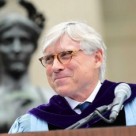
Columbia University President Lee Bollinger has announced that he will step down from the role after more than two decades of service on June 30, 2023. "I cannot begin to express what it has meant to me to serve in this role for this magnificent University for over two decades," said Bollinger in a statement. "Certainly, it has been a defining experience of my life. It has also been an especially high pleasure to do so at the beginning of the new century and in a period of rising intellectual excellence across the institution. No university in the world is more committed to the life of the mind or possessed of the will to bring knowledge and ideas to the service of humanity. Columbia is remarkably agile, creative, fresh, and experimental. I am certain that the conditions are present for an even more brilliant future in the decades ahead. And I will leave confident that our potential and aspirations will be realized." He continued: "For myself, I entered academic life nearly 50 years ago believing that being a professor is a noble calling, and, so, I am thrilled to return to that mission full-time. I am profoundly grateful to everyone for their partnership and friendship, but I am especially thankful to my wife, Jean, whose contributions within and through Columbia have been many, whose life as an artist has been made at times somewhat more difficult by mine, and whose very existence makes me a better person." Raised in Santa Rosa, Calif. and Baker City, Ore., Bollinger received his bachelor's degree in political science from the University of Oregon in 1968. After earning his law degree from Columbia in 1971, he completed judicial clerkships with Judge Wilfred Feinberg of the Second Circuit Court of Appeals (1971–1972) and Chief Justice Warren Burger of the Supreme Court (1972–1973); the latter post coincided with such landmark decisions as Roe v. Wade and Miller v. California, both adjudicated in 1973. Thereafter, he entered academia, joining the faculty of the University of Michigan Law School in 1973 and ultimately ascending to its deanery in 1987. He then served as provost of Dartmouth College from 1994 to 1996 before assuming the presidency of the University of Michigan for six years. In June 2002, he succeeded minister and theologian George Erik Rupp as president of Columbia. A First Amendment specialist throughout his career, Bollinger also served as the named defendant in two epochal affirmative action-related Supreme Court cases (Grutter v. Bollinger and Gratz v. Bollinger) stemming from his Michigan presidency. Per the Plan of Award, the president of Columbia University serves as a permanent member of the Pulitzer Prize Board for the duration of the appointment.

Joe Kahn Is Named Next Executive Editor of The New York Times

Kahn Named Times Executive Editor:


2006 International Reporting winner Joe Kahn will succeed Dean Baquet as executive editor of The New York Times, Publisher A. G. Sulzberger announced today. "For many people, especially those who have worked alongside Joe — a brilliant journalist and a brave and principled leader — this announcement will come as no surprise," Sulzberger wrote in a memo to the Times staff. "Joe brings impeccable news judgment, a sophisticated understanding of the forces shaping the world and a long track record of helping journalists produce their most ambitious and courageous work." According to the newspaper's Michael M. Grynbaum and Jim Windolf, "In elevating Kahn, Sulzberger chose a veteran journalist steeped in the values of traditional newspaper reporting and editing to lead an institution undergoing enormous change. After decades devoted to the 'daily miracle' of the print edition, The Times is focused on a digital future and competing for audiences around the world." Kahn, who currently serves as the publication's managing editor, "spearheaded the paper's efforts to re-engineer its newsroom for the speed and agility required of modern media" by "[dismantling] the print-focused copy desk, [expanding] the use of real-time news updates and [emphasizing] visual journalism as much as the written word." The eldest son of a Staples co-founder, Kahn served as president of the Harvard Crimson while completing his undergraduate degree in history. After completing graduate work in East Asian studies at the university, he began covering China for The Dallas Morning News, ultimately contributing to the newspaper's 1994 International Reporting Prize-winning staff entry. Following assignments at The Wall Street Journal and the Dow Jones-owned Far Eastern Economic Review, he joined The Times in 1998. Outgoing Executive Editor Dean Baquet, a recipient of the 1988 Investigative Reporting Prize, is scheduled to step down from the role in June. Although he declined to discuss his plans with Grynbaum and Windolf, Sulzberger wrote that the journalist "will remain at The Times to lead an exciting new venture."

“An immediate drop in content”: A new study shows what happens when big companies take over local news


'[An] Almost Immediate Drop in Content': Academics Study Local News: 


A study "published late last month in New Media & Society [...] provides further evidence of the devastating consequences of corporate ownership" for local news outlets subsumed by such companies as Alden Global Capital and Sinclair Media, Shraddha Chakradhar of NiemanLab reported yesterday. The study, which was authored by incoming McGill University graduate student Benjamin LeBrun and computational literary scholar Andrew Piper, "looked at a sample of 31 corporate-owned papers and 130,000 articles published by these outlets before and after they were acquired," according to Chakradhar. The study found that "acquisition leads to a significant, but not disproportional, decrease in the volume of local content produced by local newspapers, while "coverage of local places in the periods following acquisition is significantly more concentrated than coverage in the periods prior to acquisition. Additionally, articles written as shared regional content "are significantly less local—and discursively more national" than unique local articles. "What was so shocking to me is that all the acquisitions led to staffing changes almost immediately and an almost immediate drop in content,” said LeBrun. Piper added: “I was a little surprised that the proportionality didn’t really shift. In other words, the newsrooms that are left are still kind of dividing their attention between local, national, regional [news], so that whoever’s left kind of keeping the ship afloat." While the authors conceded that these findings "aren’t particularly new, they help to confirm what was already known," with both scholars harboring an undergirding desire to "translate a lot of all the intuitions that many of us had, about what was happening, and to kind of introduce ways that we can look at it on a larger scale [and] begin to answer potentially more complex questions about what’s happening." 

Library of Congress Acquires Neil Simon Papers

Library of Congress Acquires Neil Simon Papers:


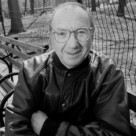
The Library of Congress has acquired the personal papers of 1991 Drama winner Neil Simon from his widow, actress Elaine Joyce, Sarah Blair of The New York Times reported Monday. The archive includes such curios as early drafts of the Pulitzer-winning "Lost in Yonkers" and "Brighton Beach Memoirs" (titled "Louie the Gangster" and "The War of the Rosens," respectively), unproduced film scripts (including "The Merry Widows," a potential vehicle for Bette Midler and Whoopi Goldberg) and various awards, including his Pulitzer Prize, a special Tony Award and at least two Golden Globe statuettes. Other items run the gamut from a pair of eyeglasses to handwritten letters to such peers as two-time Drama winner August Wilson. Senior Music Specialist Mark Eden Horowitz added that the Library "plans to develop a digital tool similar to the ones they have to search other collections of work by theater professionals like Simon’s close friends Bob Fosse and Gwen Verdon" after it finishes cataloguing the collection. He "also hopes that not just researchers, but also producers, might dive into the archives — and that some of the unproduced works might be staged, and the unfinished ones perhaps completed," as exemplified by "A Foggy Day," an unproduced musical based on the songs of Pulitzer-winning brothers George and Ira Gershwin. "It's so frustrating," he said. "I desperately want to know how they end." 

Villanueva backs off investigation of Times reporter who revealed cover-up

LASD Denies Suspect Allegations Against Reporter:


Los Angeles County Sheriff Alex Villanueva has denied that he considered a Los Angeles Times reporter to be a suspect in a criminal leak investigation after a conflicting Tuesday announcement elicited an immediate "barrage of criticism" from politicians and press freedom groups, the newspaper's Harriet Ryan and Brittny Mejia reported Wednesday. The law enforcement official, whose purview primarily encompasses municipal police services for unincorporated communities and 40 cities within Los Angeles County, "lashed out at Times staff writer Alene Tchekmedyian during a morning news conference in which he suggested two longtime foes leaked her" a March 2021 surveillance video "showing a deputy kneeling on the head of a handcuffed inmate." Villanueva went on to "[exhibit] a list of possible felonies under investigation, including conspiracy, burglary and unauthorized use of a database [...] When pressed by reporters on whether he was investigating Tchekmedyian specifically, the sheriff replied, 'All parties to the act are subjects of the investigation.'" The remark was immediately countered by Pulitzer Prize Board member Kevin Merida, the newspaper's executive editor, who issued the following statement: "His attempt to criminalize news reporting goes against well-established constitutional law. We will vigorously defend Tchekmedyian's and the Los Angeles Times' rights in any proceeding or investigation brought by authorities." Thereafter, Los Angeles County Supervisor Hilda Solis, "who along with other supervisors has clashed with the sheriff repeatedly, followed hours later with a pledge to ask California Atty. Gen. Rob Bonta to 'investigate his pattern of unconscionable and dangerous actions like the one today.'" At 6:46 p.m. on Tuesday evening, Villanueva issued a new statement: "I must clarify at no time today did I state an L.A. Times reporter was a suspect in a criminal investigation. We have no interest in pursuing, nor are we pursuing, criminal charges against any reporters." The news organization "published a report last month that described how Sheriff’s Department officials worked to cover up the [...] incident because they feared it would paint the department in a negative light." More recently, the newspaper "reported on a legal claim in which a department commander alleged that Villanueva participated in the cover-up, telling underlings, 'We do not need bad media at this time.'" Villanueva "has denied being involved in the cover-up, saying he learned of the violent detention eight months after it occurred and immediately launched an investigation into it."

New Members Elected in 2022

American Academy Announces 2022 Inductees:


2007 History winner Hank Klibanoff, 2008 Drama winner Tracy Letts and two-time Criticism winner Wesley Morris are among 261 individuals elected to the American American Academy of Arts & Sciences as part of its 2022 class, the organization announced Thursday. "We are celebrating a depth of achievements in a breadth of areas," said David Oxtoby, the Academy's president. "These individuals excel in ways that excite us and inspire us at a time when recognizing excellence, commending expertise, and working toward the common good is absolutely essential to realizing a better future." Co-founded by John Adams, John Hancock and other prominent figures in 1780, the Academy identifies as "an honorary society that recognizes and celebrates the excellence of its members and [as] an independent research center convening leaders from across disciplines, professions, and perspectives to address significant challenges." Other 2022 inductees include network algorithmics pioneer George Varghese, political philosopher Wendy Brown, writer Ishmael Reed, singer-songwriter Buffy Sainte-Marie and Public Theater Artistic Director Oskar Eustis.

Total Number of U.S. Statehouse Reporters Rises, but Fewer Are on the Beat Full Time

Pew: Total Number of U.S. Statehouse Reporters Rises; Fewer Full-Time:


A Pew Research Center study released Tuesday "finds that the total number of reporters assigned to the 50 state capitols to inform citizens about legislative and administrative activity has increased by 11% since 2014, the last time this study was conducted." However, the increase "comes largely from two main developments: new nonprofit news outlets that are employing statehouse reporters, and a shift to more part-time statehouse reporting," with only 850 full-time reporters on the beat compared to 904 in 2014. "Being fully devoted to this coverage often provides the greatest opportunity to engage with the statehouse and produce stories that go beyond the basic contours of daily news," said the study's authors. "The remaining 911 statehouse reporters either cover the beat part time, are students/interns (whether at a university-run news service or at another news outlet) or are other supporting staff." In addition, "nonprofit reporters alone (whether full time or less than full time) now constitute 20% of the statehouse corps, up from 6% in 2014." (This categorization excludes  public radio and television stations and nonprofit university news organizations, which are grouped separately. While "newspaper statehouse staffing declined the most between the two studies," the category "still accounts for the largest portion of reporters nationally," encompassing "448 statehouse reporters [...] down from 604 – 38% of the total – in 2014." Additionally, the total number of statehouse reporters increased in 31 states between 2014 and 2022, with "about one-third of states – 16 in total – [experiencing] decreases" and three (Connecticut, South Carolina and South Dakota) "[retaining] the same overall numbers of statehouse reporters." The authors added: "The largest increase and decrease at the state level – Nebraska and Missouri, respectively – are attributable to a major increase or loss of student reporters covering the statehouse. Still, some states also have experienced notable changes in the number of full-time statehouse reporters. This includes California, which has 21 more full-time reporters on the beat than in 2014, and Texas, where there are now 16 fewer full-time reporters covering the Capitol than there were eight years ago." 

Maria Ressa’s Plan to Defend Facts

Angwin Interviews Ressa:


In a new interview with Markup Editor-in-Chief/Founder and 2003 Explanatory Reporting Prize contributor Julia Angwin, 2021 Nobel Peace Prize laureate Maria Ressa "describes how she wants to hold the tech platforms accountable while increasing investment in journalism," particularly through her work as co-chair of the International Fund for Public Interest Media. "If you want to see the worst of what can happen with disinformation and media manipulation, look to countries in the Global South," said Ressa, who emigrated from Manila to the United States when she was 9 years old before returning to the Philippines to pursue a career in journalism after graduating from Princeton University. "In 2016, it only took six months for President Duterte to destroy our trust in existing institutions. And I'm not out of the woods. [...] The goal of the International Fund for Public Interest Media is to help the Global South, where the worst damage by these American companies has been done. Helping independent media survive becomes critical in the Global South, where we don’t have the philanthropy you have here. Currently, only 0.3 percent of development funds go to the media. If we can raise funding to one percent, then you will give journalists a fighting chance. Is it an uphill battle? Yes, but as more people begin to understand the impact of technology on our information ecosystems and on journalists, it is getting easier." In the conversation, Ressa also explores potential reforms for tech platforms. "Facebook, for example, is the world’s largest delivery platform of news, and yet this platform doesn’t distinguish between fact and fiction. In fact, they actually give preferential treatment to the distribution of lies because that will keep you scrolling longer," she said. "We need to hold them accountable for the amplification, make data uses more transparent, and take away the insidious manipulation. That's where regulation needs to start. The EU has the Digital Services Act and the Digital Markets Act, which just last week went through. However, it's taken two years to get here, and it’s not going to be out in time to help us with our elections. [...] We need the checks and balances we have to extend to the digital world. There is only one world, and to pretend like the virtual world is something different is just a way for companies to continue making bucketloads of money at our expense. We are all victims of this insidious manipulation, and it must stop. Democracy is impossible if we do not have a shared set of facts."