For the Record


Some News on the Future of Washington City Paper
Washington City Paper Ends Print Edition:


In an unsigned note to readers, the Washington City Paper announced Friday that it is "becoming a digital-first publication and will no longer offer a regular print edition" after a continuous 41-year run. "This was a difficult but necessary decision, and one that many of our peer publications nationwide have had to make over the past decade," the letter continued. "We held on as long as we could, but our current way of operating was no longer sustainable and the change will let us focus our efforts on being the best digitally native publication we can be." The newspaper also announced several layoffs, including roles held by longtime photographer Darrow Montgomery, Creative Director Nayion Perkins and Sports Editor Kelyn Soong. "We look forward to seeing you online, where the vast majority of our audience already consumes our journalism," the editors added. "Thank you for your loyalty, and know that we will work diligently to maintain the trust you have placed in us to serve you over all these years." Spun off from the Baltimore City Paper by co-founders Russ Smith and Alan Hirsch in 1981, the alternative weekly's alumni include incumbent Pulitzer Prize Board Co-Chair Katherine Boo, 2016 General Nonfiction finalist Ta-Nehisi Coates, 2018 Commentary finalist Jelani Cobb, posthumous 2015 Commentary finalist David Carr and past Pulitzer juror Clara Jeffery. Following ownership stints by Chicago Reader and Creative Loafing, it was acquired by Washington metropolitan area-based venture capitalist and philanthropist Mark Ein in late 2017.
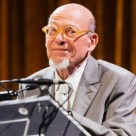
Richard Howard, Acclaimed Poet and Translator, Is Dead at 92

Richard Howard (1929-2022):


1970 Poetry winner Richard Howard died Thursday in Manhattan. He was 92. His husband, David Alexander, "said the cause was complications of dementia," according to William Grimes of The New York Times. A professor emeritus of professional practice in writing at Columbia's School of the Arts, Howard was an adroit translator (having worked on disparate texts by the likes of Charles de Gaulle, E.M. Cioran and Tzvetan Todorov) who was best known for "intellectually finespun verse, replete with abstruse historical references, [that] often addressed the reader directly as 'you' in words spoken by characters as various as Sir Walter Scott, John Ruskin and Edith Wharton. "In his hands," wrote Grimes, "a verse style most closely associated with Robert Browning re-emerged as a surprisingly nimble vehicle, allowing Howard to weave his way through a welter of poetic subjects." Howard's Pulitzer-winning "Untitled Subjects" includes "15 dramatic monologues spoken by Victorians and Edwardians both eminent (Sir Walter Scott) and obscure (a secretary to William Gladstone, the British prime minister)"; published decades later, "The Masters on the Movies," a section in "Talking Cures" (2002), offers hypothetical "responses of famous writers to Hollywood films: Henry James to 'Now, Voyager,' Rudyard Kipling to 'King Kong.'" His final collection, "A Progressive Education" (2014), is rooted in his own primary education at the progressive Park School in the Cleveland metropolitan area and consists entirely of imagined letters "written collectively by a class of sixth graders in Sandusky, Ohio, circa 1950." Born in Cleveland to "an impoverished Jewish woman who put him and a younger sister up for adoption," Howard grew up without a consistent father figure "in a mansion that belonged to his adoptive maternal grandmother, whose late husband had been a successful merchant." After graduating from Shaker Heights High School, he received his undergraduate degree from Columbia College of Columbia University in 1951; there, he studied under 1940 Poetry winner Mark Van Doren and shared classes with such literary luminaries as 1995 Poetry finalist Allen Ginsberg and editor Robert Gottlieb, who later hired Howard to translate the second and third volumes of de Gaulle's memoirs. He stayed on for a year at the Graduate School of Arts and Sciences before studying modern French poetry in 1952-53 at the Sorbonne on a fellowship from the French government. After returning to Cleveland (where he worked as a lexicographer at the World Publishing Company for several years), he settled in New York, publishing his first translations in 1958 and his first volume of verse (the Auden-inspired "Quantities") in 1962. Beginning in 1970, Howard also served as the editor of the Braziller Poets series, helping to popularize the work of 1990 Poetry winner Charles Simic, 2018 Poetry winner Frank Bidart and 2003 Poetry finalist J. D. McClatchy. In addition, he was poet laureate of New York State from 1993 to 1995, the poetry editor of The Paris Review and a professor of English at the University of Houston from 1987 to 1997, when he returned to Columbia.

Conde Nast Employees Form Union With NewsGuild

Conde Nast Employees Form NewsGuild Bargaining Unit:


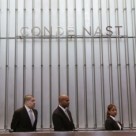
More than 500 editorial, video and production employees from various Condé Nast properties (including Condé Nast Entertainment, Vanity Fair, Vogue, GQ, Bon Appétit, Glamour, Architectural Digest) have announced their intention to form a union represented by the NewsGuild of New York, according to Alex Weprin of The Hollywood Reporter. The NewsGuild represents employees in recognized unions at other Condé Nast publications, including The New Yorker, Wired, Ars Technica and Pitchfork. "The current workplace culture at Condé Nast allows many people of color and women to be consistently silenced by management," said Epicurious social media staffer Kaylee Hammonds in a statement. "It’s no longer enough to play-act a commitment to diversity, or apply bandaid solutions to issues of discrimination. We’re unionizing today across the company so that this hypocrisy that currently thrives at Condé Nast can be remedied." NewsGuild of New York President Susan DeCarava echoed these sentiments in a separate statement: "Workers at Condé Nast have organized hundreds of their colleagues with one shared goal: to raise standards and fight for better working terms and conditions. This is an opportunity for Condé Nast management to work more collaboratively with employees and be held accountable in addressing long-standing concerns about equity, inclusion, fairness and diversity. I'm excited to welcome these workers into the Guild and proud to join them in their fight to improve their workplace."

Lee quietly slashes jobs following hostile takeover attempt

Lee Enterprises Eliminates Jobs Following Takeover Attempt:


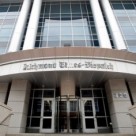
Lee Enterprises "has been quietly laying off top editors and other staff across its local papers," Sara Fischer and Kerry Flynn of Axios reported Tuesday. The cuts "come after an unsolicited takeover bid from Alden Global Capital, a hedge fund known for consolidating local news for profit," Fischer and Flynn added. In addition to three layoffs at the Richmond Times-Dispatch, the Bristol Herald Courier "laid off its city editor in early February," while the Omaha World-Herald "laid off at least two editors in February." The Greensboro News and Record and the Winston-Salem Journal's executive editor "was laid off in February, according to two sources familiar with the situation," and The Free Lance-Star of Fredericksburg, Virginia "lost its executive editor." After Lee enacted a "poson pill" tactic "to give Lee shareholders more time to review Alden's proposal," Alden "quickly tried to nominate directors to Lee's board, which Lee promptly rejected. A court sided with Lee in February, precipitating the reelection of "all three of Lee's board nominees at its March shareholders meeting." Former and current staffers "suggested to Axios that Lee is using Alden's track record of buyouts and cuts to try to dissuade investors from approving a hostile takeover, even though Lee itself has cut from its newsrooms in recent years," most notably amid the pandemic in 2020. In a statement on Twitter, the Omaha World-Herald Guild has opined that "rational folks would be right to question why Lee is dolling out that much money to executives during a hostile takeover attempt, let alone while they gut newsroom and newspapers." Although Lee's stock "skyrocketed to a high of $43.21 in January," the company now trades at $26 per share — "just two dollars north of Alden's bid, which it hasn't budged on," according to Fischer and Flynn.

Spotify updates Loud & Clear site including 2021 payouts stat of $7bn

Spotify Announces 2021 Royalties:


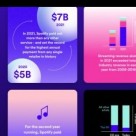
Spotify announced Thursday on its Loud & Clear data website that it "paid more than $7 billion to music rightsholders in 2021, up from $5 billion in 2020 and $3.3 billion in 2017," according to Stuart Dredge of Music Ally. The platform "has now paid out more than $30 billion since its launch in 2008," he continued. Although the service "estimates that its payments accounted for around a third of the $12.5 billion streaming revenues earned by the three major labels in 2021" (with the remainder "made up of payments to independent labels and [via distributors] to self-releasing artists, as well as to publishing rightsholders"), only 1,040 artists (up from 460 in 2017) "generated more than $1 million of payouts from Spotify" last year, with "16,500 artists are generating more than $50,000 a year; 9,500 more than $100,000; and 2,170 more than $500.000." Dredge added: "There are important caveats to these figures, as there always have been. An artist whose music earns $10,000 of recordings royalties from Spotify might only see $2,000 of that if they are on a 20 percent royalties deal with their label," with further divisions potentially manifesting if they are in a band. Moreover, artists "working through distributors, or on label deals where they get a bigger share of royalties, will obviously get more," while additional songwriting royalties are often divided between several co-writers in contemporary popular music. Upon withdrawing most of his oeuvre from the platform in February, singer-songwriter David Crosby alleged that “[Spotify doesn't] pay us properly [...] Their proportion is wrong. They're making billions with a b and they're paying out pennies with a p. That's not OK. It's not OK in that it took away half my income, and it's not OK in that, especially, it makes it impossibly difficult for young people to make it in the business. [...] I'm not willing to lick their boots because I need their pitiful $1.57 they're paying me." In an interview with Music Ally, Spotify Vice President/Global Head of Music Product Charlie Hellman implicitly countered these allegations. "We’re seeing so many artists level up," he said of the five-to-seven-figure tiers in the company's data. "All of those different thresholds have more than doubled since 2017." Nevertheless, Hellman conceded that as many as 200,000 acts on the platform had "some form of live event listed online" in 2019, affirming the renewed importance of live performances in artists' revenue streams as royalties from physical products continue to dwindle. "The industry is half as top-heavy and half as star-concentrated as it was in the heyday of the CD era compared to now,” said Hellman. "There's a lot more programming capacity and user attention being spread around to a broader community of artists. [...] What the data is revealing to us is that the pathways to success are much more diverse and much more open than they've been in the past."

Top Editors to Leave BuzzFeed News Ahead of Newsroom Cuts

Top Editors Leave BuzzFeed News:


BuzzFeed News Editor in Chief Mark Schoofs "said in an email on Tuesday to staff members that he would be stepping down" from the role, asserting that the division will be "[accelerating] its timeline to become profitable and that it would need to shrink to do so," according to Katie Robertson of The New York Times. Schoofs, who received the 2000 International Reporting Prize while based at The Village Voice, added that the media company "hoped to achieve this through voluntary buyouts rather than layoffs." Deputy Editor in Chief Tom Namako and Executive Editor of Investigations Ariel Kaminer also will be leaving the publisher, with Namako announcing in a separate tweet that he will suceeed David Firestone as executive editor of NBC News Digital. In a third email, Chief Executive Jonah Peretti announced layoffs affecting 1.7 percent of the company's workforce (primarily clustered in BuzzFeed's video team, subsidiary Complex Networks' editorial team and BuzzFeed's business and administrative team) while reiterating that the news division would have to "prioritize the areas of coverage our audience connects with the most." Concurrently, in its first earnings report as a public company after it began trading on the Nasdaq index in December, BuzzFeed said revenue "grew by 18 percent to $145 million in the most recent quarter, compared with the previous year," while profit "rose to $41.6 million, up 29 percent from the same period the year before."

Minneapolis city attorney subpoenas reporters in police brutality suit

Minneapolis City Attorney Subpoenas Journalists in Police Brutality Suit:


The Minneapolis City Attorney's Office "has served subpoenas on three Twin Cities journalists who covered" the George Floyd protests in mid-2020, Matt Sepic of MPR News reported Friday. According to Sepic the subpoenas "are part of the city's defense of a lawsuit that freelance photographer Linda Tirado filed in 2020 after a police projectile partially blinded her." The journalists include local Fox affiliate reporter Jared Goyette (then employed as a freelancer), Minnesota Reformer reporter Max Nesterak and Andy Mannix of the Star Tribune. Although police projectiles also struck the trio, they did not sustain severe injuries. In a statement to MPR News, the city asserted that the subpoenas were predicated on the trio being named by plaintiff as "persons with information [...] Therefore, they are being deposed to determine what information they have regarding her lawsuit." The Minnesota Reformer (a nonprofit digital newsroom) "has vowed to 'protect our newsgathering rights' from the city's 'ham-handed effort to intimidate journalists with burdensome legal action,'" while Star Tribune Senior Managing Editor Suki Dardarian said that the metropolitan daily "also expects to challenge the subpoena that Mannix received." Tirado, who resides in Nashville, Tenn., "came to Minneapolis to document the unrest and was attempting to photograph a line of police officers on May 29, 2020, near the 3rd Precinct police station." In a federal lawsuit, she said that police "shot her with a paintball-type round, marking her backpack with green dye before hitting her in the face with a foam projectile." The round allegedly damaged her left eye. Although the litigation brought on by Tirado and Ethan Marks (who "lost an eye to a similar projectile the day prior while assisting with a neighborhood cleanup effort near the looted Target store across Lake Street") is still pending, Soren Stevenson "reached a $2.4 million settlement with the city after an officer shot him in the eye as he was protesting near University Avenue and Interstate 35W on May 31, 2020."

Broadcasters Must Disclose Foreign Government-Sponsored Programming, Per FCC Rule

FCC: Broadcasters Must Disclose Foreign Sponsorship:


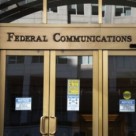
After unanimously adopting a foreign government sponsorship identification rule in April 2021, the Federal Communications Commission (FCC) set a March 15 compliance date for the new measure, Ethan Shanfeld of Variety reported Tuesday. The clause "is meant to increase transparency, notifying the American public when a foreign government or its representatives are attempting to persuade them," Shanfeld added. It will "[go] into effect immediately for new partnerships and must be implemented within six months from the Federal Register publication date for existing lease agreements." Although foreign governments and their affiliates are prohibited from obtaining U.S. broadcast licenses, many entities "can and often do lease time on U.S. airwaves." Under the new rule, these arrangements must be disclosed during the broadcast and included in the relevant station's Online Public Inspection File. "With the adoption of these rules, the FCC took action to bring more transparency to foreign government-sponsored programming airing on public airwaves," said Jessica Rosenworcel, the agency's chair. "In light of recent events, this effort — which is all about transparency — has taken on new importance. It is essential that audiences know when a broadcast station has been compensated to air content coming from a foreign government." The imposition of the rule follows Twitter's recent effort to "[label] tweets that contain content from Russian state-affiliated media."

‘Minute-to-Minute Triage’: Weighing News Against Safety in Russia

News Organizations Grapple With Russian Censorship Law:


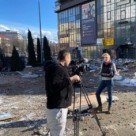
Editors and other news executives "are engaged in a high-stakes debate about risk in Russia" as the potential consequences of a censorship law that "effectively [criminalizes] accurate reporting on the war in Ukraine" come into focus, Tiffany Hsu and Michael M. Grynbaum of The New York Times reported Wednesday. "When it comes to a potential threat to somebody, that far and away outweighs everything else in the consideration," said Michael Bass, CNN’s executive vice president of programming. "It would be better for our reporting and our coverage of the story to continue reporting every single day and multiple times a day from Russia, but an assessment had to be made of what can be done for your people." The broadcast news organization " ceased broadcasting in Russia, joining other Western news outlets — including the BBC, Bloomberg News and ABC News — that temporarily or partly suspended their Moscow-based operations" within hours of the censorship law's effectuation. According to Amnesty International, as many as 150 Russian journalists have fled the country to escape the potential consequences of the law, which has been characterized by staffer Marie Struthers as a "scorched-earth strategy that has turned Russia’s media landscape into a wasteland." Many news entities "have scrambled to find a working solution as the cohort of credible outlets shrinks and threatens to leave audiences inside and outside the largest nation in the world blind to its dealings," a milieu amplified by the March 13 death of American documentary filmmaker Brent Renaud in a suburb of Kyiv; the Monday hospitalization of Fox News correspondent Benjamin Hall following a coverage-related injury; and Russian state television employee Marina Ovsyannikova's on-air protest against the war, precipitating her detainment and a 30,000 RUB fine. "There are many other parts of the world where it is unsafe to be a journalist and where newsrooms are having these debates and discussions," said Damian Radcliffe, who holds the Carolyn S. Chambers chair in journalism at the University of Oregon. “But what’s different here is that this is such a huge, high-profile story that those internal debates are playing out in the public domain in a much more overt way.” Although some publishers (most notably Condé Nast and the Canadian Broadcasting Corporation) have suspended their Russian operations entirely and others have taken more intermediate measures (The New York Times "said it would move its editorial staff out of Russia," while The Washington Post "said it would protect Moscow-based journalists by removing bylines and datelines from certain stories"), German public broadcasters ARD and ZDF "said they planned to resume reporting from Moscow after a suspension," while the BBC "said last week that 'after careful deliberation' it would restart its English-language reporting from Russia," relying on shortwave radio and digital channels like TikTok. "There are no challenges that are insurmountable today in the digital world — we just need to be agile," said Alen Mlatisuma, a managing editor of Voice of America.

Journalists tend to understate — not exaggerate — scientific findings, study finds

Study: Journalists Understate Scientific Findings:


A new study from University of Michigan School of Information Ph.D. student Jiaxin Pei and assistant professor David Jurgens has found that "journalists tend to understate the claims of scientific papers," Angela Fu of Poynter reported Tuesday. "The findings presented in the science news are actually lower than the certainty of the same scientific findings presented in the paper extracts," said Pei. The doctoral candidate and Jurgens "compared hundreds of thousands of paper abstracts with corresponding news articles reporting on those papers’ findings" by "[calculating] certainty levels in scientific abstracts and news articles pulled from Altmetric, which tracks news stories mentioning scientific papers." The researchers "then built a computer model that could replicate these calculations, allowing them to analyze hundreds of thousands of articles and papers." Although the study does not pinpoint any "definitive answers as to why journalists understate scientific findings, Jurgens hypothesized that one reason may be that reporters believe it is better to err on the side of caution." The duo "also examined how 'journal impact factor' — their proxy for measuring quality of science — affects the way journalists present scientific conclusions," finding that the provenance of the journal "did not seem to influence how reporters described scientific uncertainty." Pei cautioned that this could be a problem as leading journals tend to have a more rigorous reviewing process. As they continue their research, Pei and Jurgens have published "code that allows journalists and scientists to calculate certainty levels in their writing" and will talk to journalists to "determine what tools they could use to improve" their work. "There are a lot of open questions in this field (natural language processing)," Pei said. "With more efforts in this area, we’ll be able to provide tools and systems for journalists to cover science."