For the Record


Barry Sussman, Washington Post editor who oversaw Watergate reporting, dies at 87
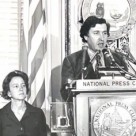
Barry Sussman (1934-2022):


1973 Public Service contributor Barry Sussman died Wednesday at his home in Rockville, Md. from complications of an apparent gastrointestinal bleed, according to Emily Langer of The Washington Post. He was 87. Although he was "omitted entirely" from Alan Pakula's 1976 William Goldman-scripted adaptation of "All the President's Men" (which instead emphasized the managerial decisions of Metropolitan Editor Harry M. Rosenfeld, Managing Editor Howard Simons and Executive Editor Ben Bradlee, later a Pulitzer Prize Board member, "for dramatic reasons"), the Brooklyn-reared Sussman directly oversaw Bob Woodward and Carl Bernstein's coverage of the incipient Watergate scandal as The Post's city editor. "Paired by Mr. Sussman," wrote Langer, "Woodward and Bernstein — known collectively as Woodstein — became the most famous reporters in American journalism with their incremental and inexorable revelations of the political sabotage, corruption and coverup that began with the Watergate break-in, sent numerous Nixon associates to prison and ultimately precipitated Nixon’s resignation on Aug. 9, 1974. During their reporting, [...] Sussman was detailed to serve as special Watergate editor." Although journalist Alicia C. Shepard later reported that Sussman was "deeply wounded" by his elision in the film, fellow Watergate editor Leonard Downie Jr. (who succeeded Bradlee as executive editor in 1991) confirmed his outsized role in the investigation: "Barry was essential for The Post’s Watergate [coverage], just as essential as Bob and Carl." In "The Powers That Be," his 1979 history of the 20th century media industry, 1964 International Reporting winner David Halberstam characterized Sussman as "the perfect working editor at exactly the right level [...] Almost from the start, before anyone else at The Post, [Sussman] saw Watergate as a larger story, saw that individual events were part of a larger pattern, the result of hidden decisions from somewhere in the top of government which sent smaller men to run dirty errands." While he had hoped to collaborate with the reporters on "All the President's Men," Shepard "quoted Woodward as saying that 'it was a reporter’s story to tell, not an editor’s,' and that [...] Sussman’s 'role is fully laid out in the book.'" Instead, Sussman wrote "The Great Cover-Up" (1974), a competing chronicle which remains in print to this day. After graduating from Brooklyn College with a degree in English and history in 1956, Sussman briefly worked at a New York advertising agency before taking a reporting job with Bristol Herald Courier in rural southwest Virginia. "Rapaciously curious, and with a savant-like recall of detail," wrote Langer, "he rose in just over a year to become the newspaper's managing editor." In 1965, he joined The Post as an editor of suburban coverage. Following Watergate, he "became The Post's first in-house pollster, helping to found the Washington Post-ABC News poll" in addition to writing a weekly polling column. After a brief stint as managing editor for national news at United Press International in 1987, he operated a survey research firm and consulted with a variety of international newspapers. He is survived by his wife, Peggy Earhart; two daughters; and four grandchildren.
Fed judiciary says yes to free PACER searches. Here are the details so far

Federal Judiciary Greenlights Free PACER Searches:


A report from the Judicial Conference of the United States' "closed-door March 15 meeting showed that the policymaking body greenlighted making PACER searches free for non-commercial users in any future overhauls of the system," Nate Raymond of Reuters reported Tuesday. Raymond added that "work on building a new case management and electronic filing system with modern technology is already underway," although the report did not specify a completion date. Under the current rules, non-commercial users (including many journalists) "are [...] charged $0.10 per page to search for cases through PACER, which stands for Public Access to Court Electronic Records," while downloads cost "$0.10 per page with a cap of $3 per document, excluding transcripts." Notably, the judiciary "did not approve removing charges for downloads." The plan dovetails with Congressional consideration of the Open Courts Act, "a bill that would require the judiciary to update PACER and make downloading filings free for the public." A bipartisan majority of the Senate Judiciary Committee "advanced the bill to the full Senate for its consideration" last December, while the U.S. House of Representatives "during the last Congress passed a similar bill in 2020." According to Raymond, the judiciary "has raised concerns about the bill's impact on its own efforts to modernize PACER and how eliminating user fees would affect revenue to support it." Under current projections, the judicial branch of the federal government will collect "about $142 million in fees this fiscal year" from PACER searches and downloads. "After years of fighting Congressional efforts to make PACER free, it is great to hear that the courts are now embracing the idea that members of the public shouldn't be gouged to access public court records," said Democratic Senator Ron Wyden of Oregon, who co-sponsored the Open Courts Act. 

Supreme Court Blocks Texas Social Media Law That Would Prohibit Platforms From ‘Censoring’ Users Based on Viewpoint

Supreme Court Blocks Texas Social Media Law:


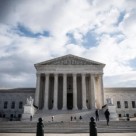
The U.S. Supreme Court issued a ruling Tuesday "blocking a Texas law aimed at preventing big social media services from 'censoring' users or content based on viewpoint," according to Todd Spangler of Variety. The court "ruled 5-4 to block the law, which is pending a challenge before a federal appeals about whether it is constitutional," with an unusual alignment encompassing Chief Justice John Roberts and Associate Justices Stephen Breyer, Brett Kavanaugh, Amy Coney Barrett and Sonia Sotomayor. The court "did not provide a reason for why it upheld a lower court's injunction preventing the Texas law from taking effect pending appeal." The emergency application adjudicated by the Supreme Court was "filed by two tech industry groups, representing companies including Meta, Google, TikTok and Twitter, which had claimed that the Texas law 'would compel platforms to disseminate all sorts of objectionable viewpoints,' including 'neo-Nazi or KKK screeds denying or supporting the Holocaust.'" Under Texas law HB 20, social media platforms with more than 50 million active monthly users would be unable to "block, ban, remove, de-platform, demonetize, de-boost, restrict, deny equal access or visibility to, or otherwise discriminate against expression." As early as December 2021, Judge Robert Pitman of the Western District of Texas "issued a preliminary injunction blocking the law," citing the "First Amendment right to moderate content disseminated on their platforms." In a dissenting opinion, Associate Justice Samuel Alito characterized the injunction as "a significant intrusion on state sovereignty," adding that that Texas "should not be required to seek preclearance from the federal courts before its laws go into effect." He continued: "[It] is not at all obvious how our existing precedents, which predate the age of the internet, should apply to large social media companies. [...] Social media platforms have transformed the way people communicate with each other and obtain news. At issue is a groundbreaking Texas law that addresses the power of dominant social media corporations to shape public discussion of the important issues of the day." Texas Attorney General Ken Paxton has asserted that social media platforms are the "21st-century descendants of telegraph and telephone companies: that is, traditional common carriers," arguing that "the First Amendment doesn’t prevent the government from 'keeping the platforms’ communications pathways open through common-carriage requirements.'" Last week, a federal appeals court "ruled that a Florida law similar to [...] HB 20 was unconstitutional because social media platforms' content-moderation activities 'constitute 'speech' within the meaning of the First Amendment. [...] The Florida law was designed to prohibit social media companies from banning politicians, political candidates or 'journalistic enterprises.'"

Minneapolis settles lawsuit with Linda Tirado, journalist blinded in one eye during May 2020 unrest

Minneapolis Settles Lawsuit With Blinded Journalist:


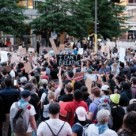
The Minneapolis City Council "agreed to pay a $600,000 settlement" Thursday "in a lawsuit brought by writer and photojournalist Linda Tirado, who was blinded in one eye by a police projectile while covering protests in May 2020," according to Tony Webster of the Minnesota Reformer. The reporter "joins an ever-growing list of bystanders and journalists receiving large settlements from the city due to the behavior of police officers in the days after the police murder of George Floyd, raising still more concerns about the city’s management of the unrest," Webster continued, with an independent auditor recently determining that "a vast, vast void in consistent rules of engagement or control" manifested during the city's response to the event. Tirado "started covering American civil unrest starting with the police killing of Michael Brown in Ferguson, Mo., in 2014" and has since written about protests in various locales, including Chicago, Washington, D.C. and the 2016 occupation of Oregon's Malheur National Wildlife Refuge. After arriving in Minneapolis to cover the George Floyd protests, a police officer allegedly "pointed a projectile launcher at her and shot her in the face with a 40mm impact round, rupturing her left eye and causing a brain injury." Although protesters secured aid from medics, ultimately facilitating her hospitalization and "immediate surgery," Tirado lost eyesight in her left eye. In an interview with the Reformer, she said that a "part of her career effectively ended May 29, 2020," forcing her to use a walker to partially compensate for a lack of depth perception. She also has faced cognitive difficulties stemming from the injury. In a ruling last year, a federal judge opined that "Tirado’s experience as a journalist during the George Floyd protests and her injuries are serious and troubling. [...] That numerous other journalists experienced similar, seemingly unjustified incidents involving less-lethal munitions and other measures is even more troubling, as the allegations plausibly suggest an unconstitutional custom carried out by [Minneapolis Police] officers of targeting journalists for unlawful reprisals." As part of the settlement, the city of Minneapolis has "[denied] wrongdoing" and "has never admitted the officer fired the projectile that hit Tirado." Since her release, Tirado has increasingly gravitated toward photography. "The only time I feel like I have two eyes now is when I’m looking through a viewfinder," she said. "It's a remarkable adaptive device."

Morton L. Janklow, Agent for Best-Selling Authors, Dies at 91

Morton L. Janklow (1930-2022):


Longtime literary agent Morton L. Janklow died Wednesday from complications of heart failure at his home in Water Mill, N.Y. He was 91. According to 1996 Spot News Reporting winner Robert D. McFadden of The New York Times, Janklow "was arguably America’s most powerful independent literary agent"; over the course of his career, he represented "such hugely successful commercial writers as Barbara Taylor Bradford, Sidney Sheldon, Danielle Steel and Judith Krantz." His agency also represented several former presidents (including 2002 Biography finalist Jimmy Carter and Ronald Reagan) "as well as Pope John Paul II, whose collection of essays, 'Crossing the Threshold of Hope,' was published around the world in 1994." McFadden added that Janklow's "power [...] was partly a result of economic changes in the book world. [...] After many years of dominance by publishers that all but dictated marketing strategies and the size of authors' advances and royalties, several factors — a consolidation of publishers into a handful of major houses, the decline of independent bookstores, the rise of discount bookstore chains — forced publishers to rely increasingly on the sale of best sellers. Many major publishers would not even read unsolicited manuscripts. Agents became the first to see the work of unknown authors, and agents' judgments, often based on sales potential and not public interest or literary merit, largely determined what publishers bought and presented to the reading public." Although he represented such esteemed figures as two-time Biography winner David McCullough, Janklow "did not court stylists [...] and he was criticized for promoting the lesser literary lights of romance novelists and celebrity memoirists." Born in Queens, Janklow graduated from Far Rockaway High School at the age of 16 and received a degree in political science from Syracuse University in 1950. After earning his LL.B. from Columbia Law School in 1953, he "practiced law in the Army and later, briefly, in Manhattan," also contracting a near-fatal fungal infection during his military service. Following a career in corporate law, Janklow began working as an agent in 1972. He initially represented 1978 Commentary winner and future Pulitzer Prize Board member William Safire, a fellow native New Yorker who also attended Syracuse in the late 1940s; this soon led to work from former White House Domestic Affairs Advisor John Ehrlichman (who worked alongside Safire in the Nixon administration) and other elite media and political figures. Janklow also was a director of various cultural and educational institutions, including the City Center of Music and Drama, the Film Society of Lincoln Center and the Jewish Museum. He is survived by his second wife, Linda LeRoy Janklow (the "daughter of the film director Mervyn LeRoy and the granddaughter of Harry Warner, a founder of Warner Bros."), their two children, six grandchildren and his sister, Alice Drucker.

Inside Bloomberg Media’s regional expansion plan into an economically uncertain U.K.

Bloomberg Media Plans Regional News Expansion:


As part of its ongoing efforts to "push beyond financial circles," Bloomberg Media plans to "expand regional editions in promising markets where it already has a strong editorial base," as exemplified by the United Kingdom, Seb Joseph of Digiday reported Tuesday. "We've been here in the U.K. for a long time with a newsroom of over 500 journalists and analysts, but we've always served the core reader that is the Bloomberg terminal customer that has used our news service," said David Merritt, a senior executive editor at Bloomberg News. "But we've never thought about packaging and promoting our work to the broader audience in the UK who are interested in business and finance." In an effort to compete with "the likes of the Financial Times and the Times — staples of business journalism in the U.K.," Bloomberg has hired several prominent journalists to work out of its U.K. newsroom, including BBC presenter Emma Barnett, Politico London Playbook writer Alex Wickham and NBC News reporter Olivia Solon. According to Joseph, readers who "follow those high-profile hires are more important than ever to publishers that are trying to become less reliant on advertising and more dependent on subscriptions and other direct business models." Added Merritt: "You need more personalities to pull people in these days. You look at the site today and you’ll see there are the headshots of the columnists — that's new. We're leaning a lot more into that. If you clock on a story there's an option now to follow the author so you can get alerts for everything that person says and does." Duncan Chater, managing director of Bloomberg Media in Europe, also noted that the surfeit of ad inventory from myriad sources (including "TV, online, at events, even on podcasts") offers significant opportunities for marketers beyond subscriptions. Nevertheless, 66% of Bloomberg Media's 380,000 digital subscribers "pay the full price" for the product. "Dwindling trust, differentiation and budgets have heaped pressure on marketers to demonstrate the value and impact of their brands," said Joseph. "Capitalizing on that angst is key for a media business that generates around 90% of its advertising revenue from branded content. The rest of the ads business is built on a mix of programmatic direct and programmatic guaranteed deals."

Pentagon seizes foreign reporter’s phone during official travel

Pentagon Seizes Reporter's Phone During Official Travel:


An Air Force public affairs officer "seized a foreign reporter's phone and would not allow him to use his electronics while traveling with" Deputy Secretary of Defense Kathleen Hicks on Sunday, Lara Seligman of Politico reported yesterday. The reporter, who was subsequently identified as Reuters National Security and Foreign Policy Correspondent Idrees Ali, who has "covered the Pentagon for six years." Ali, who tweeted a photo of the confiscated device, is not a U.S. citizen. "This policy was the first time I had experienced this after covering dozens of Pentagon trips across three administrations," he wrote. "It means that we can't do the very thing I'm supposed to on these trips, which is write stories." Prior to boarding the Sunday flight at Joint Base Andrews, Ali "was told of a new rule mandating that foreigners flying on Air Force planes using top secret classification would be prohibited from using their electronics on the flight," precipitating the seizure of his phone ten minutes later. Another reporter on the trip was allowed to retain their devices as a U.S. national. In a statement, In a statement, Air Force Brig. Gen. Patrick Ryder characterized the incident as a "miscommunication" before adding that the policy would be reviewed going forward. "Like everyone serving in uniform, U.S. Air Force aircrews are expected to protect classified information aboard their aircraft," he said. "In accordance with a new policy, the aircrew in this case applied a more restrictive approach to communication security, which led to a miscommunication about the reporter's use of personal electronic devices on the aircraft." Ryder also said that Ali will be exempt from the policy for the duration of the trip, which encompasses meetings between Deputy Secretary Hicks and senior military and government leaders (including Supreme Allied Commander Europe Gen. Tod D. Wolters and Commander, United States Africa Command Gen. Stephen J. Townsend) in Norway, the United Kingdom and Germany. "We respect the role of a free press and welcome them aboard our flights," he continued. "We regret the inconvenience we caused this reporter." According to Seligman, reporters of many nationalities — typically those in the Pentagon press pool who have a Pentagon badge and have undergone a background check — routinely accompany top defense officials on official travel" and "receive access to classified information [...] Officials frequently brief reporters on and off the record during the flights, and reporters typically file stories from the planes using their devices." 

Proposed Russian legislation threatens to shut down all independent media

CPJ: Proposed Russian Legislation Threatens to Shut Down All Independent Media:


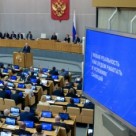
The Committee to Protect Journalists has called on the Russian State Duma to "withdraw a draft law that would facilitate the arbitrary shutdown of media outlets and increase the number of journalists prosecuted for sharing information," according to a Wednesday press release. "The State Duma, the lower house of Russia’s legislature, is set to consider legislation that would allow authorities to invalidate the registration and accreditation of media outlets without a court order and hold newsrooms accountable for information they republish, according to multiple news reports," the release continued. "The Duma was initially scheduled to consider the bill during its May 18 session, but the examination was postponed to May 24, Aleksei Obukhov, editor for independent news outlet Sota.Vision, told CPJ via messaging app. On March 4, President Vladimir Putin enacted amendments to the Russian criminal code imposing prison terms for spreading 'fake' information about the country’s military. On March 25, Russian legislators expanded the law and introduced punishment for 'false' coverage about the country’s government agencies abroad." In a statement, CPJ Europe and Central Asia Program Coordinator Gulnoza Said condemned the proposed legislation. "While the Russian landscape of independent media has been drastically shrinking since the adoption of the legislation on 'fakes' about the Russian army and government agencies abroad, this bill is a further blow to press freedom and effectively prevents the existence of any reporting that contradicts the government’s policy," he said. "The State Duma should not pass this proposed legislation, and authorities must allow the media to work freely." Were it to be enacted as law, the bill "would give the Prosecutor General's Office the power to arbitrarily invalidate the registration and revoke the license of media outlets by simply submitting a request to Russia's state media regulator, Roskomnadzor, according to CPJ’s review of the bill." Actionable violations would range from "discrediting the Russian military" to "distributing anti-war appeals" and "disrespecting authorities," including the dissemination of "false information" about the Russian military. Additionally, Russian journalists would be "liable for republishing information," while the Prosecutor General's Office would be granted the right "to ban foreign media from Russia and revoke [...] correspondents' accreditations as a retaliatory measure." The bill will be considered during the Duma's May 24 session. CPJ "emailed the [...] Duma for comment but did not receive any reply."

GOP-Led Legislation Would Force Breakup of Google’s Ad Business

Bipartisan Legislation Would Force Breakup of Google's Ad Business:


A bipartisan group of senators "introduced legislation Thursday that would take aim at conflicts of interest in the advertising technology industry and force Google to break up its dominant online-ad business," according to Keach Hagey of The Wall Street Journal. Co-sponsored by Sens. Mike Lee (R., Utah), Ted Cruz (R., Texas), Amy Klobuchar (D., Minn.) and Richard Blumenthal (D., Conn.), the Competition and Transparency in Digital Advertising Act "is among the most aggressive of the legislative proposals circulating in Congress that aim to rein in the power of Big Tech," Hagey added. Under the legislation, companies "processing more than $20 billion in digital ad transactions annually" would be prohibited "from participating in more than one part of the digital advertising ecosystem." If enacted into law, the bill would immediately affect Google, which emerged as "the dominant player at every link in the chain that connects buyers and sellers of online advertising" by "[operating] tools that help companies sell and purchase ads, as well as the auction houses, or exchanges, where transactions happen in split seconds" in the aftermath of its 2008 acquisition of early digital advertising company DoubleClick. The company's advertising business "generated $31.7 billion in revenue in 2021." Congressional aides expect that a companion House bill (co-sponsored by Reps. Ken Buck [R., Colorado] and Pramila Jayapal [D., Washington]) may be introduced as early as Thursday. "When you have Google simultaneously serving as a seller and a buyer and running an exchange, that gives them an unfair, undue advantage in the marketplace, one that doesn’t necessarily reflect the value they are providing," said Lee. "When a company can wear all these hats simultaneously, it can engage in conduct that harms everyone." Affected companies (likely including Facebook parent company Meta) "would have a year from the enactment of the legislation to comply with the new rules." If passed, according to Hagey, the legislation "would be the most significant change to antitrust law in a generation" by "[amending] the Clayton Act of 1914, one of the two laws that form the foundation of American antitrust law—and which hasn’t been amended since the 1970s." A Google spokesperson asserted that digital advertising tools "help American websites and apps fund their content, help businesses grow, and help protect users from privacy risks and misleading ads [...] Breaking those tools would hurt publishers and advertisers, lower ad quality, and create new privacy risks. And at a time of heightened inflation, it would handicap small businesses looking for easy and effective ways to grow online. The real issue is low-quality data brokers who threaten Americans’ privacy and flood them with spammy ads."

Jelani Cobb Appointed Dean of Columbia Journalism School

Jelani Cobb Appointed Dean of Columbia Journalism School:


2018 Commentary finalist Jelani Cobb will succeed two-time Pulitzer winner Steve Coll as dean of the Columbia Journalism School effective August 1, Columbia University President Lee Bollinger announced today. Cobb, who joined the School's tenured faculty in 2016, currently serves as the Ira A. Lipman Professor of Journalism and Director of the Ira A. Lipman Center for Journalism and Civil and Human Rights. "Jelani is a highly distinguished and renowned journalist and historian," Bollinger said. "Since 2012, he has worked for The New Yorker, as a contributor and currently as a staff writer, offering in-depth analyses of a wide array of subjects, ranging from electoral politics and policing to filmmaking and stand-up comedy. He has authored books on the election of President Barack Obama and the history of hip hop, and he recently co-edited an anthology of portraits of Black life in America. His essays and opinions have been published in The Washington Post, The New Republic, Essence, Vibe, The Progressive, and TheRoot.com. Jelani’s expansive resume also includes reporting for 'Whose Vote Counts,' the Peabody Award winning documentary series with Columbia colleague June Cross, from PBS FRONTLINE, Columbia Journalism Investigations, and USA Today." A native of Queens, Cobb earned his undergraduate degree from Howard University and a Ph.D. in history from Rutgers University. He is the recipient of fellowships from the Fulbright and Ford Foundations and received the Sidney Hillman Award for Opinion and Analysis Journalism in 2015. "Jelani's vision for the future of the Journalism School is one that embraces the vital role of journalism in our society, on a local and global scale, and the need to ensure our graduates are as well prepared as possible for an incredibly dynamic and changing field," Bollinger added. "I am grateful to the members of the search committee for their careful and tireless work throughout this selection process—we are all delighted with this outcome and look forward to seeing how, as Dean, Jelani will shape the future of journalism education." The incumbent dean of the Journalism School has served as an ex officio member of the Pulitzer Prize Board since 1975; in this capacity, he, she, or they may participate fully in the Board's work and deliberations save for voting on the winners.