Auburn Citizen , by William O. Dapping
Biography
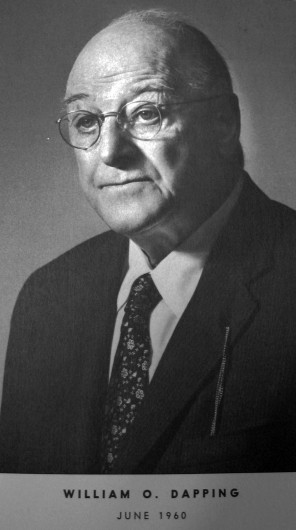
William O. Dapping Dies at 89
Headed Newspaper in Auburn
Auburn, N.Y. Aug. 2, 1969--
William Osborne Dapping, a Pulitzer Prize-winning journalist, who retired as managing editor of The Auburn Citizen-Advertiser in 1960, died last night. He was 89 years old.
Mr. Dapping's wife, Ina, died in 1964. A sister, Caroline, survives.
A funeral service will be held at 10 A.M. Monday at Lester E. Brew Funeral Chapel.
-------------
Leader in Community
Mr. Dapping, was known as an ardent Democrat and a leader in conservation and comunity activities.
He won a special Pulitzer award of $500 in 1930 for his coverage of the Auburn State Prison riot of Dec. 11, 1929, in which eight convicts and the chief keeper were killed.
Mr. Dapping had been a Democratic presidential elector every four years since 1932. He voted for Franklin D. Roosevelt four times and once each for Harry S. Truman, John F. Kennedy and Lyndon B. Johnson. An operation in November kept him from voting last year.
Mr, Dapping was born in New York City on June 12, 1880, and graduated in 1905 from Harvard. He served on The Harvard Crimson under his classmate, Franklin D. Roosevelt, the editor.
Upon graduation, he began as reporter on The Citizen and over the next 12 years rose to editorial writer, editor, managing editor and president of WMBO, the affiliated radio station.
Mr. Dapping advised Mrs. Louise M. Gillette, mother of Chester E. Gillette, in the final days of her vain fight to prevent his execution in Auburn Prison. Theodore Dreiser based his "American Tragedy" on the Gillette Case.
Mr. Dapping was formerly chairman of the New York State Group of the Associated Press, president of the Associated Dailies of New York and head of the State Publishers Association.
He formerly served as president of the Cayuga County Sportmen's Association, chairman of the Conservation Committee of the Finger Lakes Association, president of the New York State Fish, Game and Forest League, and adviser to the State Conservation Department
Published Augus 3, 1969, The New York Times