
Roger Sessions

For his life's work as a distinguished American composer.

Winning Work

Written between 1927 and 1935, the Violin Concerto (crafted for solo violin and, wryly, an orchestra without violins) was not performed by a professional orchestra until 1947 after legendary soloist Albert Spauling failed to grasp the finale. Although it constitutes Sessions's turn toward abstraction, critic Ruth Dreier has characterized the piece as a Whitmanesque pageant belying the composer's stodgily "academic" reputation in which "one’s breath is taken away by the sheer audacity of a youthful composer coupling joyously, openly and accessibly with his muse." Alien as it may sound to many contemporary listeners at first listen, the Concerto's exciting wave-like structure makes for an engrossing experience.

As noted by musicologist Andrea Olmstead, a key component of Sessions's artistry was his disavowal of nationalism (including the Americana of Copland and others) as an aesthetic force. In many ways, this extended to a lack of engagement with the varieties of popular culture intertwined with these provocations. For Sessions, "the idea," according to Olmstead, "was to create an 'ideal inner world.'" With his Sixth, Seventh and Eighth Symphonies (1966-1968), however, Sessions consciously fashioned "a kind of series connected with the events of that time"—namely, the Vietnam War. Breathlessly cinematic in its scope, the dolorous Seventh invokes the banality of war while also hearkening back to the frenetic letters Sessions would write to his mother while studying at Harvard. In this sense, the preservation of the interiority and intimacy of his visions was a lifelong concern.

Sessions's only major opera, Montezuma (c. 1940-1962; with Giuseppe Antonio Borgese), a dramatization of the fall of the Aztec Empire, is often cast as his magnum opus. In line with much of his oeuvre, it was first performed as an unsuccessful German translation in 1964 and did not receive its New York premiere until 1982. (A recording of the 1976 American premiere by Sara Caldwell's Opera Company of Boston is included above.) Sessions himself characterized the opera as "difficult, hard to play, hard to sing"; lacking the verve of so many of his successful pieces (perhaps attributable to its long gestation) and weighed down by Borgese's cumbersome libretto, it invites comparisons to one of his main antecedents: Alban Berg, who strove for a more successful fusion of crypto-Romanticism and twelve-tone technique in Wozzeck (1930) and Lulu (1929-1935). 

What sets Montezuma apart despite these shortcomings is its pioneering engagement with a non-Western culture. Much as modernist poetry turned to Chinese ideograms (Ezra Pound) and Mayan hieroglyphs (Charles Olson) for inspiration, Sessions's work anticipates the more refined pluralism of the postmodern era.
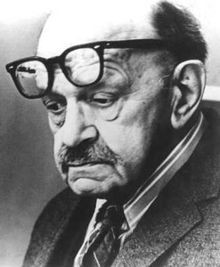
Biography

In what proved to be a fitting capstone to a unique career, Roger Sessions occupies a special place in the annals of the Pulitzer Prizes. As of this year, the composer is the only Special Citation recipient in Music who went on to receive a regular Prize in his lifetime. (In the related idiom of musical theater, Rodgers and Hammerstein also shared in a Drama Prize for South Pacific in 1950 after their special award for Oklahoma! in 1944.)

Unlike his student Milton Babbitta fellow Special Citation awardeeSessions's legacy continues to elude contextualization decades after his death. Having studied under the renowned post-Romantic composer Ernest Bloch at the Yale School of Music, he gradually assimilated many of the innovations of the European avant-garde following an eight-year stay on the continent, most notably the twelve-tone compositional style of Arnold Schoenberg.

But Sessions did not stay tethered to any one school. In her groundbreaking 2015 doctoral dissertation (Reconsidering America's Modern Composers, 1940-1970), Anoosua Mukherjee of Washington & Jefferson College argues that his "rapprochement of vestigial tonality and nascent twelve-tone thinking was too ascetic a position for populists like Aaron Copland"—a onetime colleague who is now historicized as Sessions's compositional foil—"and too regressive for serialists like... Babbitt."

According to Allan Kozinn of The New York Times, this helped to facilitate a peculiar environment in which Sessions "did little to promote performances or recordings of his works" even as "[he] had developed considerable recognition among his colleagues." In reviewing a biography of the composer by longtime Sessions confederate Frederik Prausnitz, Mukherjee contends that Session's "career volleyed between professional recognition and artistic frustration." 

Yet even as Sessions "carefully navigated the tonal-atonal divide" to the point of historical neglect, he played a vital role in the pedagogical infrastructure of postwar art music. A deft academic politician, he moved from Princeton University to the University of California, Berkeley as a full professor of music in 1946 due to the perceived marginalization of theory and composition as an area of studyand only returned in 1953 following a year of negotiations in which the formation of a theory and composition faculty was a key stipulation. Alums of that program include such recent Prize winners as Caroline Shaw and Julia Wolfe.

At Princeton and Julliard, where he taught as a retiree from 1965 to 1985, Sessions continued to work with traditional forms like the symphony and sonata when these modes were often eschewed entirely in favor of what Mukherjee characerizes as the Cold War-era "stylistic issue of defining a unique national music." By remaining committed to these strands of traditionalism in the Atomic Age, Mukherjee asserts that Sessions and three of his peers (multiple Prize winners Walter Piston & William Schuman and 1951 contender David Diamond) helped to indirectly lay the groundwork for the revival of these forms in vastly different contexts at the dawn of the postmodern era.

Sources: Reconsidering America's Modern Composers, 1940-1970 by Anoosua Mukherjee (Ph.D. dissertation, New York University, 2015); Roger Sessions: How a "Difficult" Composer Got That Way by Frederik Prausnitz (Oxford UP, 2002); Roger Sessions: A Biography by Andrea Olmstead (Routledge. 2012); "Seeking a Broader Audience for Roger Sessions" by Allan Kozinn (The New York Times, November 13, 1988)

Winners in Special Citations and Awards

1974 Prize Winners