Rochester (NY) Times-Union, by Richard Cooper and John Machacek
Winning Work
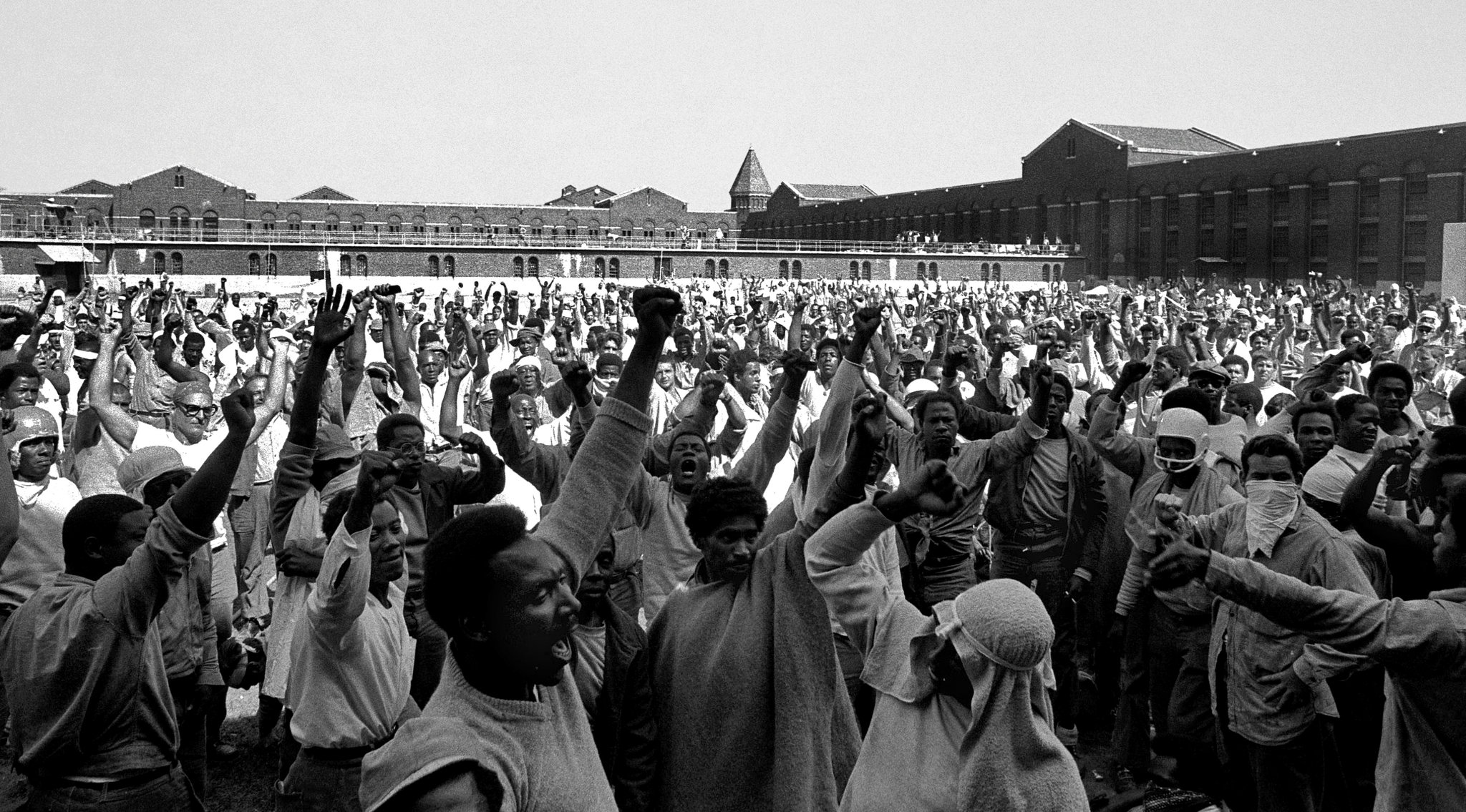
Inmates at Attica shouted their demands during a negotiating session with state corrections officials in September 1971. (Associated Press)
Autopsies show that hostages killed in yesterday’s police assault on Attica Correctional Facility died of gunshot wounds, not cut throats, the Monroe County medical examiner who did the autopsies said yesterday.
“All died of gunshot wounds,” Dr. John F. Edland said. “There were no throats cut, nor was there any kind of mutilation.”
Gerald T. Houlihan, State Department of Corrections spokesman, said yesterday that several hostages had died of slashed throats.
Dr. Edland said the guards held as hostages appeared to have died yesterday morning, when police attacked the prison.
Caliber of the bullets and who fired the guns that killed the hostages have not been determined.
Order has been restored to Attica Correctional Facility today--in stark contrast to yesterday’s violent battle in which police wrested control from rioting inmates who took over a large section of the prison early Thursday.
The death toll rose to 40 today when guards found the bodies of two more prisoners.
Medical teams worked to save lives among scores of wounded inmates.
Prison officials began moving 1,200 convicts to other state facilities.
An investigation of the uprising was started by Wyoming County Dist. Attny. Louis R. James. State Attny. Gen. Louis J. Lefkowitz said his office would aid in the probe.
Robert E. Fischer, deputy attorney general in charge of the Statewide Organized Crime Task Force, arrived at 10:15 a.m. and entered without comment.
The nation’s most violent and deadly penal confrontation in 40 years took place at Attica yesterday. Today it was quiet, gray and rainy as officials tried to identify dead inmates and piece together what led to the bloodshed.
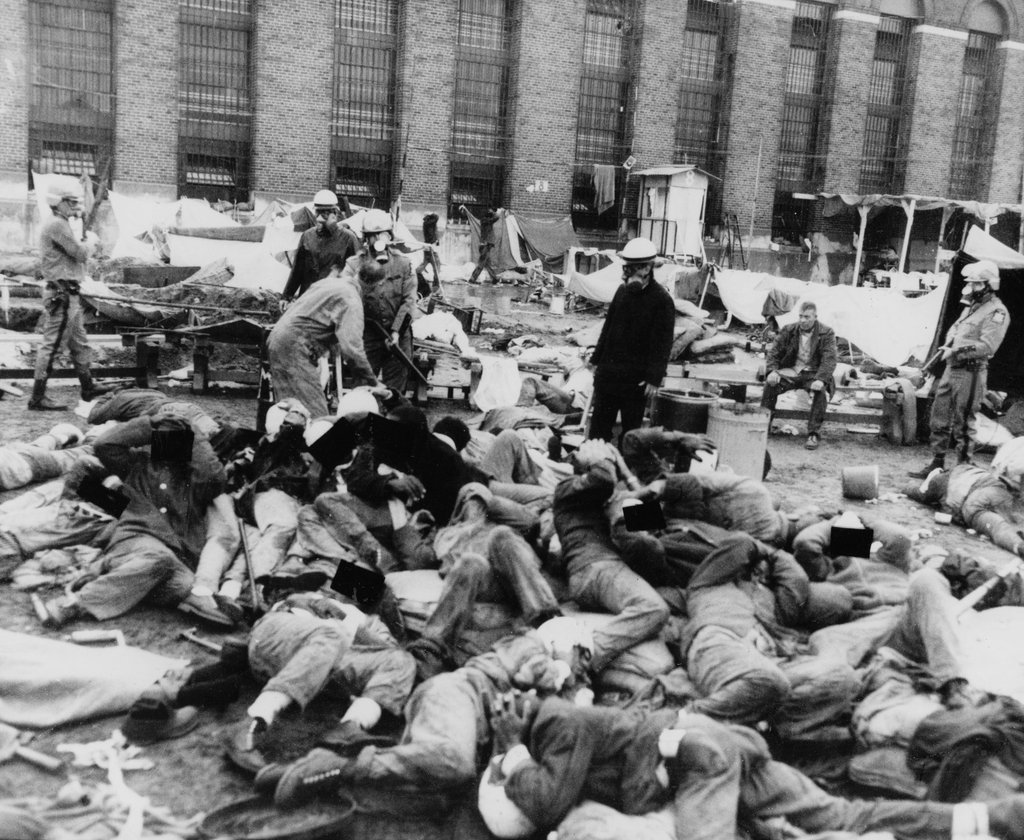
Aftermath of the uprising (Associated Press)
Thirty-nine persons--30 inmates and nine guards held as hostages--died. Another guard, William E. Quinn, 28, who had been released Thursday, died Saturday of head injuries suffered in the initial riot.
Two hostages and two inmates had been killed before yesterday’s police assault, state officials said. Both hostages had been dead for some time, although officials declined to say how long. One had been castrated, State Corrections Commissioner Russell G. Oswald said.
The two murdered inmates were found in a cell and apparently had been stabbed to death by fellow prisoners, administrators said.
“Some of the crimes that took place in there bordered on atrocities,” Commissioner Oswald said.
Oswald, who ordered yesterday’s attack, confirmed that autopsies prove the two hostages had been killed before the attack.
The bodies of 28 men, including the nine hostages, killed in yesterday’s assault were brought to the medical examiner’s office about 12:10 today for autopsies.
About his decision to assault the prison, Commissioner Oswald said he would do it again if circumstances warranted.
He said the convicts had armed themselves with bats, homemade knives and tear gas grenade launchers, and were continuing to make more intricate weapons.
“To delay the action any longer would not only jeopardize innocent lives but would threaten the security of the entire correctional system of this state,” Oswald said.
Early today, U.S. District Judge John Curtin of Buffalo ordered prison officials not to interrogate prisoners on the events of the last four days until the prisoners had been counselled by attorneys.
He ordered that attorneys be allowed to enter the prison to interview and counsel inmates and to be present when inmates were questioned. The order also required that doctors and nurses be admitted to the prison.
The team, made up largely of New York City residents, including 12 medical personnel from Lincoln Hospital in the Bronx, said through a spokesman that they made the court move to involve “the court into this now.” William E. Hellerstein, of New York, and a team member, said they wanted to head off possible reprisals against the rebel inmates.
The medical-lawyer team tried to enter the facility at 3 a.m. today, but were turned away at the gate. A guard told them he could allow no one into the facility without permission of corrections department officials.
State officials said they would answer the federal injunction at a hearing in Buffalo today.
Twenty-eight of the bodies were brought to the Monroe County Medical Examiner’s office at 12:10 a.m. today for autopsies. By 9 a.m. the autopsies had been completed on eight of the hostages’ bodies and five of the prisoners.
Dr. Edland, medical examiner, said the service had been requested by James, Wyoming County district attorney. They said the results of the autopsies would be made public after they were given to James.
President Nixon telephoned Gov. Rockefeller to express support for the governor’s action, the White House said.
Yesterday was only the second time that Rockefeller had ordered out the National Guard. The first time was in 1964 when the guard was called into duty during the Rochester civil riots.
Following yesterday’s onslaught, Rockefeller said: “The tragedy was brought on by highly organized revolutionary tactics of militants who rejected all efforts at a peaceful settlement, forced a confrontation and carried out cold-blooded killings that they had threatened from the outset.
“Our hearts go out to the families of the hostages who died at Attica,” he said.
More than 100 prisoners were injured or wounded in the fighting yesterday. Three state troopers were hurt and treated in area hospitals.
Richard Smith, a Buffalo school teacher who volunteered medical skills acquired as a medic in Vietnam, predicted after seeing the injured that the death toll would rise.
“It resembled the aftermath of war,” Smith said.
It is estimated that 500 hardcore militants took part in the rebellion, with another 700 inmates not under control of prison authorities while the insurrection lasted. Officials said 55 percent of the facility’s 2,200-inmate population is black and that 65 percent of those involved in the uprising were black.
The day after 43 hostages and inmates were killed at Attica Prison, Times-Union reporter Richard Cooper was returning to his office after an almost 24-hour stint outside the prison. His city editor had heard that most of the bodies of the hostages and prisoners were being brought from Wyoming County to Monroe County for autopsies because facilities were better here. Cooper was asked to go to the Monroe County Medical Examiner’s Office to get the autopsy results, because Cooper had the best contacts there.
Dr. John F. Edland, the medical examiner, declined to release the results until all 27 autopsies were finished. But as Cooper left, he learned from a supervisor in the office the startling fact that none of the dead hostages’ throats had been slashed by prisoners. Cooper relayed the information to his editors, who sought confirmation at the prison, in Albany and from the examiner himself.
Reporter John Machacek was sent to pursue the story with Edland. He succeeded in getting confirmation from Edland by diligent pursuit, and around noon Sept. 14 Edland’s confirmation made the front page of The Times-Union. The story was supplied to the Associated Press, which led its national story with this new information.
The reporters showed initiative, diligence and thoroughness in getting the facts, checking them and relaying them to readers.
John L. Dougherty
Managing Editor
Ephemera related to this entry (including the original typescript of the 1971 Local General or Spot News Reporting jury report and an oral history of Richard Cooper taken at our Centennial Kick-Off in January 2016) will be available at our History Project page (TBD).
Biography
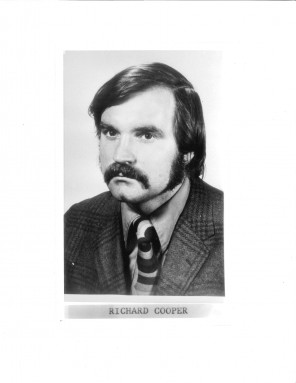
Richard Cooper was born Dec. 8, 1946 in Grand Rapids, Mich. He attended Grand Rapids Junior College and was graduated from Michigan State University in 1969. He went to work for the Rochester Times-Union after graduation and has covered the sheriff’s office, federal court, general assignments and the police beat. He is married and has a son.
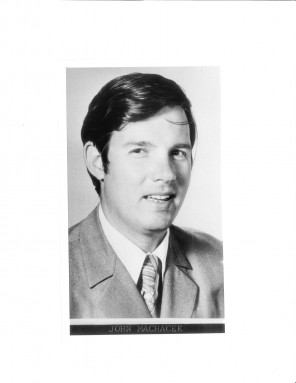
John Machacek was born Feb. 18, 1940 in Cedar Rapids, Iowa. He received a bachelor of arts degree in journalism from Marquette University in 1962. Machacek began his news career as a general assignment reporter at the Milwaukee Sentinel in 1962. He moved to the Albany, NY Knickerbocker News in 1964 where he covered suburbs and education. He is married and has a daughter.