Finalist: Mike Reicher, Lynda Mapes, Fiona Martin and Kevin Clark of The Seattle Times
Nominated Work
By Mike Reicher
The coho salmon has already conquered the Ballard Locks fish ladder, swum 17 miles through urban Seattle waterways and powered through a tunnel under nine lanes of Interstate 405.
It faces a gantlet of pipes and concrete tunnels ahead, the legacy of human development over once-pristine habitat. Next up is a nearly 300-foot pipe beneath an indoor shooting range and a parking lot.
If the coho makes it through, all the way to the upper reaches of this obscure stream in Bellevue, it will find the single most expensive construction project in the state’s costliest-ever salmon-recovery undertaking: $110 million for new bridges to carry Interstate 90 and local traffic high above a restored creek.
But just a third of a mile farther upstream, the fish will slam into a pile of boulders and junk metal, before confronting two concrete pipes perched 5 feet above the streambed. Surveyors determined no salmon could make that leap.
Yet the Washington State Department of Transportation ignored those barriers on Sunset Creek and hundreds of others like them across Western Washington in its massive effort to restore salmon habitat. And the estimate has now doubled to as much as $7.8 billion — the cost of replacing the Highway 99 viaduct along Seattle’s waterfront, twice over, plus change.
WSDOT greenlit the Sunset Creek project anyway in its race to comply with a federal court order won a decade ago by Northwest tribes. By 2030, the state is required to tear out hundreds of poorly designed concrete or metal pipes called culverts that block fish passage under state highways.
WSDOT and Gov. Jay Inslee’s administration aren’t factoring in — because the court order doesn’t require it — the countless other culverts owned by municipalities, railroads, homeowners and others that block salmon migration.
A Seattle Times analysis of available project design reports found that for every barrier WSDOT fixes, nine others upstream and two downstream partially or fully block fish migration. The state or other owners may fix some of them, but most are not scheduled for removal.
The pace of construction has picked up dramatically in the past few years, which drivers can see in snarled traffic and torn-up roadways. Washington is now spending about $1 million a day to meet the deadline.
In some cases, the work has restored good salmon habitat.
In many others, WSDOT and the Inslee administration have narrowly focused on fulfilling the terms of the court order and haven’t seized opportunities to prevent their investments from being ineffective or even worthless.
Now the state needs $3.5 billion to $4 billion more than the Legislature previously allocated — more than half of WSDOT’s annual budget. But the doubling costs would buy a relatively small amount of habitat and require construction on Interstate 5, I-90 and other major highways.
Western Washington tribes are willing to wait generations for the current state investments to pay off — the long game. The tribes, as well as the state, contend that removing these man-made stream barriers now is essential for salmon recovery.
However, as the state barrels toward the court deadline, and key salmon and steelhead trout species continue to decline, the Inslee administration isn’t asking one simple question:
Is all this construction actually helping salmon?
Where are the fish?
When salmon return from the ocean to spawn, some species swim high into streams and tributaries, passing through road culverts. Young salmon also traverse culverts while rearing.
But because of flawed design or poor maintenance, many culverts impede salmon. They can be too narrow and create a “fire hose” effect, or too steep for juveniles. Or — like the one on Sunset Creek — they are so high that even the most athletic fish can’t make the leap.
WSDOT is now targeting some culverts that the state itself acknowledges may be “stranded investments,” on streams where consultants noted “poor quality” habitat. Salmon recovery experts have scratched their heads, wondering why the state chose some streams.
“Does the public know we’re spending billions on culverts that fish won’t be able to reach?” said Carl Schroeder of the Association of Washington Cities. “I don’t think so.”
The state doesn’t really know if fish are even getting through its new stream crossings, nor is it required to by the court order. It could try, by studying salmon returning to those streams, but it rarely even counts them.
WSDOT surveys streams for spawning fish once or twice after a project’s completion, providing only a snapshot that could miss salmon returning days or even years later.
Over the past decade, surveyors hiked upstream of 84 completed projects and counted a total of 834 fish, though one project accounted for 495 of them. More than half of the surveys found no fish.
The Inslee administration hasn’t asked for more funding for fish counts. Instead, WSDOT says it is focused on construction and making sure the new projects are not barriers to salmon.
Inslee blames the court order for the state’s predicament.
“There is a federal judicial decision — which is the supreme law of the land — which has ordered the state of Washington to do this work on a designated number of culverts,” Inslee said in an interview. “If you want to criticize the prioritization of these investments, you need to focus your criticism on the federal judicial system — not the state.”
Some culvert replacements are bringing salmon back to long-lost spawning grounds. Like dogs rushing through a new gap in a backyard fence, salmon have quickly repopulated some streams after barriers were removed. Other projects help with water quality or protect roads from damage as climate change intensifies storms. But those aren’t the goals of the court order — or the gusher of taxpayer money.
“You have to start somewhere,” said Kim Rydholm, WSDOT’s fish-passage project manager. “Some of these sites we get immediate fish use and immediate benefit, but for others it’s part of a bigger picture.”
Many in salmon recovery, including tribal leaders, say the WSDOT work will unlock other investments in salmon habitat in the future.
“They are opening up very needed and critical habitat,” said Ed Johnstone, chair of the Northwest Indian Fisheries Commission, which represents tribes in ongoing discussions with WSDOT. “Our salmon are in trouble for many reasons. Culverts are chief among them.”
Others agree that replacing barrier culverts is critical but say the state needs a smarter approach.
“Salmon recovery funding is not limitless,” said Jessica Helsley, government affairs director at the nonprofit Wild Salmon Center, which works on salmon protection and restoration in Pacific Rim countries. “At the end of the day, when money runs out, we want to be sure it actually benefits fish.”
“Salmon are our buffalo”
At the beginning of the 20th century, white industrialists overfished salmon, built hydroelectric dams, straightened streams and botched hatchery practices. Salmon runs collapsed.
The state Department of Fisheries called out road culverts as culprits as early as 1949 in a pamphlet called “The Salmon Crisis.” The next year, the state attorney general found that fish-blocking culverts violated state law.
Despite knowing about the barriers, engineers over the last century continued to use crude designs to pass water under roads, the fish an afterthought — if considered at all.
Salmon runs — and the tribes’ catch — kept dropping. Yet fishing was their right. The tribes in present-day Western Washington signed treaties in the 1850s that ceded millions of acres of land, but they retained their “right of taking fish” where they always had.
In 2001, a group of 21 tribes sued the state to repair or replace its fish-blocking culverts. WSDOT had been fixing some culverts, but slowly. The tribes built their case on the landmark 1974 federal court Boldt decision, which affirmed the tribes’ treaty right to fish and split the catch 50-50 with non-Indians. It also established tribes as co-managers of the fisheries.
“Salmon are our buffalo,” Johnstone said during the ensuing trial. “It is intertwined within our culture. Our songs, our ceremonies, our subsistence coincide with the salmon. When salmon are not plentiful, we suffer.”
The state argued that replacing its culverts alone wouldn’t necessarily bring back salmon. Other landowners had barriers downstream of the state highways, lawyers and state witnesses pointed out.
“So we have to replace culverts even where no salmon can reach them,” state Solicitor General Noah Purcell told the U.S. Supreme Court during appeals. “And that is an utter waste of public funds.”
That was an excuse, lawyers for the tribes argued: “The fact that someone else may have done wrong does not relieve the State of its own obligations under the treaty.” The tribes also showed that many of the other barriers only partially blocked fish.
Federal district court Judge Ricardo Martinez sided with the tribes. He noted that the tribes were assured that their fishing rights were secure, and “these assurances would only be meaningful if they carried the implied promise” that white settlers wouldn’t harm then-plentiful salmon stocks.
In 2013, he issued an injunction requiring the state to make its culverts passable for salmon and steelhead.
First, Martinez ordered the state — in consultation with the tribes — to compile a list of all fish-blocking culverts under state-owned roads in the tribes’ fishing areas, which cover territory west of the Cascade Mountains and north of the Columbia River watershed.
The most impactful part of the order was its schedule: WSDOT had to identify its culverts with 200 meters or more of upstream habitat, then by 2030 repair or replace enough of them to open 90% of the potential habitat above.
The quality of the salmon habitat didn’t matter. That list is still the basis for WSDOT’s construction plan.
The 9th U.S. Circuit Court of Appeals upheld Martinez’s injunction, and it was affirmed by the U.S. Supreme Court in a tied vote, with no written opinion.
The injunction requires the state to count every foot upstream of the WSDOT culvert, including tributaries, as “potential habitat” — until the next natural barrier, such as a waterfall, or the end of potential fish use.
That means the state ignores non-state-owned culverts and dams on the stream — whether or not those have replacement plans — as it adds mileage toward the 90%.
Because the state assumes the other barriers will eventually be fixed, “we turn a blind eye” when assessing a stream for its potential habitat gain, said Christy Rains, a former fish passage manager for the Department of Fish and Wildlife.
Sunset Creek, for example, has five fish-blocking culverts upstream of I-90. Yet the Department of Transportation counts almost all of the creek as “potential” salmon habitat and says its project will open up more than 1.5 miles’ worth, despite the impassable blockage one-third of a mile above its massive project.
“Are they just concerned about scoring points with Judge Martinez’s injunction order, or are they really concerned about recovering salmon?” said Paul Simmerly, who has lived by Sunset Creek since 1958 and, after learning of the WSDOT project, has drawn maps of the stream’s barriers. “Yes, we owe it to the tribes, but what is the best way to spend the money to create the most salmon?”
Tribes, though, see the longer-term value in WSDOT projects. The agency’s culverts are typically the most expensive barrier to replace in a watershed, so the state and tribes believe the WSDOT spending will kick-start other habitat improvements in the same area, eventually creating near-ideal salmon streams.
“Maybe there are certain streams or projects that don’t have immediate benefits we’d like to see,” said Brett Shattuck, a senior scientist at the Tulalip Tribes. “But it is that linchpin — you’ve just removed the biggest impediment.”
A salmon “moonshot”
In the years following Martinez’s decision, the Inslee administration made little progress. By June 2021, WSDOT had repaired or replaced just 86 of the roughly 430 barriers needed to meet Martinez’s 2030 deadline.
Construction ramped up dramatically in the past two years, after the Legislature finally funded the program. As of this year, WSDOT had fixed 146 injunction barriers, and it has identified 281 more (some of which are under construction) that would bring it to 90% of total habitat by 2030.
Roger Millar, the head of WSDOT, said the task is monumental: “It’s equivalent of a moonshot,” he said. “I mean, we’ve been asked — we’ve been directed to — remediate generations of environmental damage in a very short period of time.
“And are we going to make mistakes?” he added. “Yeah. Have we made mistakes? Probably. But you know, you’ve got a team that’s gone from zero to being within reach of the moon — of really opening this habitat up, and meeting the letter and the intent of the injunction. And that frankly should be celebrated.”
Last fall, the state took a closer look at its remaining culverts, and WSDOT revealed it had a problem. By the end of 2024, the department will have committed all $3.8 billion previously pegged for culverts, but that amount will only open up 80% of the habitat.
To reach the last 10% — replacing about 100 culverts — WSDOT estimates it could cost up to $4 billion more. For context, $4 billion would buy a whole new electric ferry fleet.
Washington lawmakers are growing skeptical. Sen. Curtis King, R-Yakima, the ranking Republican on the Senate Transportation Committee, hopes the state goes back to court for relief.
“To spend $4 billion to fix 10% of your culverts — to have a minimal effect of what you’re going to accomplish here — something needs to be done differently,” King said. “We ought to go talk to the tribes and file suit, and explain to them the situation. They’re rational people. Let’s talk to them and figure something out.”
The new price tag, and the pending deadline, will likely force a conversation about trade-offs. Martinez’s clerk said he declined to comment due to the potential for “future proceedings.” Attorney General Bob Ferguson, whose office represented the state in appealing Martinez’s order, also declined an interview request “due to ethical and legal reasons,” his spokesperson said.
John Sledd, who represented the tribes in the culverts case, said at a recent tribal conference that the mounting costs could have “real political consequences” as funds are potentially shifted from other programs, some of them “programs that the tribes care about.”
“So there are some really tough choices that need to be made,” he said.
A focus on mileage
In pristine salmon habitat, lush plants shade a stream and keep it cool. Logjams and gravel bars slow the water, creating pools for salmon to rest. The stream bends and curves, and side channels form nurseries for young salmon.
But Duffner Ditch in Whatcom County is another story. Beginning north of the Canadian border, it shoots straight for 4 miles through farmland, gathering agricultural runoff from smaller ditches. It flows under driveways and roads, and fish might get blocked at multiple crossings.
Its bottom is sandy or muddy, and some stretches are full of invasive weeds. It can run dry in summer months. It lacks oxygen, but does have crappie and other exotic fish species that prey on juvenile salmon.
When part of Duffner Ditch was targeted by WSDOT, a consulting firm considered whether it could support salmon at any stage of life. It determined the chances were “severely limited by these conditions.” Downstream, a privately owned tide gate blocked fish from even entering Duffner Ditch.
Yet the Department of Transportation replaced not one barrier on Duffner Ditch, but two — for more than $4.5 million. They landed on the list created after the 2013 injunction, and WSDOT said the projects would open up more than 5 miles of “potential habitat.”
“It’s almost laughable,” said David Beatty, a retired professor who has worked on salmon restoration in the area for decades. “Just because a stream has been designated a tributary of a larger creek, it doesn’t mean that is the type of habitat you’d invest a lot of money to get fish to.”
On some projects, “the habitat might not be the best place to propagate salmon,” Tom Jameson, the fish passage division manager at the state Department of Fish and Wildlife, acknowledged. “Some of those might be stranded investments right now.” But he emphasized other projects have outsized benefits for salmon.
Meanwhile, other salmon recovery projects — even those that help Chinook salmon, the food source for endangered southern resident orcas — struggle to secure state funding. The WSDOT projects don’t benefit Chinook as much as other species because they typically spawn in sections of streams too wide for culverts.
In the early years of the culvert replacement program, WSDOT relied on a scoring system, developed by the state Department of Fish and Wildlife, to weigh costs and benefits of projects, including whether they would help endangered salmon.
But it has now largely abandoned the scoring system — and its focus on quality of the habitat. Instead, in a race to hit Martinez’s 2030 deadline, the state is focusing almost entirely on how much mileage is upstream.
“Are we prioritizing for the ecological needs of salmon first, or are we prioritizing for places where WSDOT is already doing work?” said Helsley, from the Wild Salmon Center. “Why not say, OK, here are the top, highest priority culverts … and go tackle those ones, because that is what the fish need now? That’s not what Washington does.”
Since Martinez issued his injunction, the state knocked off the most cost-effective projects first before turning to increasingly complex ones: those requiring the construction of multiple bridges, relocating onramps and offramps, and extra engineering to deal with poor soil conditions. Some are in dense urban areas. One in Port Angeles might require the state to buy a hotel to secure property rights.
Costs have skyrocketed in recent years as crews are stretched thin amid a nationwide surge in transportation construction. All this leads to the astonishing run-up in costs to get the last 10% of habitat.
“As you go down the list, you’re getting less and less habitat,” said Rydholm, the WSDOT manager.
Missed connections
Last year, Christian Berg, who evaluates the city of Bainbridge Island’s culverts, was working on a grant application for a key salmon stream while WSDOT replaced a culvert for $13 million on the other side of the island.
The project brought traffic to a standstill on Highway 305, the island’s main artery. Drivers could see dozens of mature trees’ upturned roots, some as wide as a semitruck, ripped out to make way for a new bridge and to remove the culvert that had been deemed nearly impassable for salmon.
Months after WSDOT began construction, Berg said he wasn’t sure if the state had reached out to the city about that creek — or the city-owned culvert just 200 yards downstream. That culvert lets some fish pass but blocks others, depending on the creek’s flow level, according to a city report.
“It wouldn’t have been our top choice islandwide where we’re trying to restore fish passibility,” Berg said of the WSDOT project site. “I’ve been curious myself about how they picked that stream.”
Across Western Washington the same conundrum plays out: The WSDOT projects are being built on streams that may or may not make sense for the local groups engaged in salmon restoration. In the 11 years since Martinez’s order, WSDOT has primarily acted alone.
Millar, the state Transportation secretary, said the agency is doing its best to work with other groups but acknowledged it may have missed opportunities.
“Collaboration is a priority for the DOT, but our role is not to be responsible for restoring all of the habitat in the Pacific Northwest. We are a partner in that,” he said. “When you’re addressing 430-plus barriers and a multibillion-dollar program all over Puget Sound, on both sides, are we going to miss something? Absolutely.”
The state Department of Fish and Wildlife has identified more than 17,000 fish-blocking culverts across the state, the vast majority of them not owned by WSDOT. Private parties, such as railroads and homeowners, are responsible for the largest number, followed by county governments. Local governments are potential targets of future litigation by tribes enforcing their treaty fishing rights.
At Sunset Creek in Bellevue, the city has considered fixing the section upstream of the WSDOT culvert — the barrier requiring the 5-foot leap. But so far, the city project hasn’t ranked high enough for funding in its capital budget, Bellevue Utilities Planning Manager Eric LaFrance said.
The disconnect between WSDOT and projects prioritized by cities and counties is due to a lack of coordination by the Inslee administration. As WSDOT spends billions fixing its culverts, an alphabet soup of state agencies is also distributing more than $25 million a year for locally owned fish-blocking barriers, but the state is not ensuring a portion of those projects are even in the same watersheds.
In 2020, the Legislature called on departments within the administration to fix that disconnect with a statewide strategy. After four years, including a delay during the pandemic, they’re still working on it and expect to finish a draft by the end of this year, said Jameson, the fish passage manager.
Inslee said the state can’t always fix other habitat problems on the streams where WSDOT is working.
“I think most of the, quote, ‘misprioritizations’ are the result of two things: one, people refusing to accept the fact that we’re stuck with the federal decision, and two, a lack of recognition that we don’t have infinite resources,” Inslee said.
The federal government has also steered more than $1 billion to state and local governments, tribes and nonprofits around the country for removing fish barriers in the 2021 Bipartisan Infrastructure Law.
But because the state’s long-delayed strategic plan wasn’t ready, it has been a scattershot of applications from Washington cities, counties and others. In the first round of a major grant program, 23 projects were funded in Washington, but only one was tied to a WSDOT project — missing an opportunity to fix barriers upstream and downstream of the big state investments.
“It’s a bit frustrating when, on the federal side, we have a once-in-a-generation opportunity,” Helsley from the Wild Salmon Center said. “Yet when that funding hit the ground, we weren’t ready.”
‘Unbelievably expensive’
Doug MacDonald, who was the head of WSDOT until his retirement in 2007, has watched with increasing frustration as the department implements the federal injunction. He sees rigid compliance with the court order — without considering if the work is actually recovering salmon.
Construction companies and consultants are getting hundreds of millions of dollars of work, as politicians hail culvert projects throughout Western Washington.
“The only thing that’s not being asked is, ‘Where are the fish?’” MacDonald said. “The injunction is not inscribed on a tablet. It’s just the beginning of the story.”
The parties in the case — the state and the tribes — could come together to negotiate changes that could make the state spending more effective. Indeed, during appeals, U.S. Supreme Court Justice Stephen Breyer asked what would happen if the state found it would be “unbelievably expensive” to replace five culverts that “would really save only three fish.”
A tribal lawyer told the court that the state could ask Martinez to modify the terms of the injunction. That hasn’t happened — yet.
Staff reporter Isabella Breda contributed to this story.
Credits
Reporting: Mike Reicher
Editing: Jonathan Martin
Project management: Laura Greanias
Copy editing: Laura Gordon
Graphics & illustrations: Fiona Martin, Mark Nowlin
Web design: Frank Mina
Print design: Rita Wong
Videography: Ramon Dompor
Photography: Kevin Clark
Photo editing: Bettina Hansen
Engagement: Ryan Nguyen
By Mike Reicher
LAKE FOREST PARK — Ron Ricker remembers hauling 5-gallon buckets full of small smooth stones — the right size for spawning salmon. It was 1961, and he was preparing to replace gas pumps over a stream through Lake Forest Park.
The new pumps would sit above a three-sided concrete culvert, with Lyon Creek flowing through it, along a gravel streambed intended to welcome migrating fish.
Today, the state is taking that same portion of Ricker’s property through eminent domain, also to help salmon. It will force the demolition and closure of his business, Ballinger Automotive, after more than 60 years of operation.
The Washington state Department of Transportation is planning to restore this section of the creek when it replaces its culvert under Highway 104, more commonly known as Ballinger Way Northeast, as part of a $13 million investment on Lyon Creek.
That project is a tiny part of Washington’s largest salmon recovery program ever, costing somewhere between $3.8 and $7.8 billion, which was the subject of a Seattle Times investigation this year. Under a federal court order, the state is tearing out and replacing hundreds of Western Washington culverts — typically concrete or metal pipes under highways — because they block salmon migration.
The Times investigation found that some of the projects, which can cost upward of $100 million each, were essentially worthless for salmon migration today because other barriers block fish upstream or downstream. Nonetheless, WSDOT has accelerated the work to meet a court-imposed 2030 deadline.
As they pass by these culvert construction projects, drivers might be snarled in traffic temporarily. But for Ricker, his employees and longtime customers, there’s no getting around it. At age 87, he’s now pushed into retirement and his mechanics face unemployment.
Up and down the stream, Ricker points out, there are other obstacles to migration. Some have been replaced, and some let a portion of fish through. But others — like a city culvert a quarter-mile upstream — will continue to block all fish after the state completes its project. In this way, Lyon Creek is like many others The Times examined.
“You can put a fancy, gold-plated stream crossing here,” Ricker said, “but what’s the point?”
A spokesperson for the department declined to discuss its eminent domain action — the taking of private property for public use — because it was in legal proceedings. In an email, the agency said, “The process is not taken lightly and that is why there is state law, procedures and even a court process if necessary to ensure state policies are followed.”
The federal court order and the 2030 deadline are the result of a lawsuit filed by 21 tribal nations. They argued that the culverts had to be replaced to protect their treaty fishing rights, as salmon and steelhead trout stocks declined in part due to the state-owned barriers. In 2013, federal judge Ricardo Martinez ordered the state to remove a majority of the state’s fish-blocking culverts by the end of this decade.
The Muckleshoot Indian Tribe, which has been involved in the WSDOT project design, did not respond to a request for comment.
Creek used to “run red“
Before nonnative people settled this area that drains into what’s today known as Lake Washington, hundreds of streams and tributaries supported Chinook, coho, sockeye and other fish species, said Tom Murdoch, the executive director of the nonprofit Adopt A Stream Foundation.
Urban development like the auto shop and its pavement had a cumulative negative impact. They stripped away surrounding plants that helped keep Lyon Creek cool, which is good for spawning salmon, and free from pollutants.
“It’s a classic stream in an urban environment with all the problems associated with urbanization,” Murdoch said.
“We used to have a lot of salmon in Lyon Creek,” said Katie Phillips, a project manager for the City of Lake Forest Park who works on culverts. “The creek used to ‘run red,’ people say.”
The WSDOT culvert on Ballinger Way is too narrow for the stream, according to state records, causing a “fire hose” effect when the creek is running high, blocking salmon migration. Also, Ballinger Automotive’s culvert — the one Ricker built in the 1960s — has collapsed, completely blocking salmon.
In recent years, government agencies have steadily chipped away at other barriers along Lyon Creek, including the replacement of four undersized culverts at the mouth of Lyon Creek where it enters Lake Washington. Lake Forest Park replaced another culvert downstream of Ricker’s auto shop, and plans to do yet another in conjunction with the WSDOT project.
But much work remains to be done. WSDOT plans another culvert replacement on a tributary of Lyon Creek for $10 million. And the city-owned culvert just a quarter-mile upstream of the shop is slated for removal, but the timing is uncertain.
Still, even with all the public investment, salmon will have a hard time traversing portions of Lyon Creek. Some privately owned culverts downstream, for instance, partially block migration, letting some but not all fish through, depending on conditions. Homeowners and others that impede migrating salmon are technically violating state law, but today the state doesn’t force people to replace their culverts. Officials are still developing rules to encourage or force compliance.
“WSDOT barriers are often the most expensive in a system. When we correct our barriers, it leaves less expensive barriers that likely will score higher for grant funding,” WSDOT spokesperson Barbara LaBoe said in an email.
More than 7 miles of Lyon Creek and its tributaries are upstream of the auto shop. Based on the federal court order, WSDOT could count all of that as “potential” salmon habitat the agency has opened, despite other barriers on the stream. This metric — the amount of potential habitat upstream — is driving WSDOT’s project choices as it races toward the 2030 deadline, not the quality of habitat, The Times investigation found.
WSDOT makes an offer
For now, the focus is on the section of stream near Ballinger Automotive. WSDOT will try to simulate natural stream conditions within the confines of asphalt and other development built over generations.
Transportation officials offered Ricker $124,000 for a triangle-shaped parcel carved out of his land, plus the temporary use of another area for construction equipment, an amount that accounts for the cost to clean up polluted soil, Ricker said. He says it’s not enough compensation, and aims to make his case in court. A trial date has been set in January.
WSDOT moved to take the property, as allowed under state law. Typically, government agencies try to avoid taking private land because of its impact on residents and businesses, but WSDOT said in court filings that it was necessary. A judge ruled in June that taking the property was for a valid public use.
Dan Junkers, the auto shop’s general manager, has been working at the shop for 30 years. He recorded a voicemail announcing the closure and has been telling customers individually the shop can’t help them any longer.
“It was rough,” he said. “People were genuinely upset.”
On a recent Tuesday, Margaret Salmi stopped by in her Toyota Rav 4, which she has been getting serviced at Ballinger Automotive for years. She also owns a Toyota Tacoma with 397,000 miles on it, she says proudly, thanks in part to the shop’s mechanics.
“We trust them.” said Salmi, 65, who grew up in Lake Forest Park. “The work was always reasonable and right on.”
She tried to entice one of the mechanics to move the business to a nearby shop — “You could move with all your customers…” — but he said they couldn’t find a workable space.
WSDOT showed Ricker three options for leasing other auto shops, he said, in Bothell and Mountlake Terrace. One had no parking and was too big (Ballinger Automotive has just two bays). The others would cost between $6,000 and $12,000 per month in rent, which he said would require the company to triple its volume.
“We don’t owe anything” on the current property, Ricker said. “We’re scot-free.”
Ballinger Automotive has a base of roughly 800 customers, he said, and until recently would be booked out for three weeks.
This isn’t the first time Lyon Creek and the culvert stopped Ricker’s business. On New Year’s Eve 1996, a massive rainstorm swelled the creek and the culvert cracked under the gas pumps. The pavement caved in, creating a gaping sinkhole (Ricker blamed the city’s undersized culvert downstream for backing up). He got rid of the gas station and has since operated the repair shop only.
Ricker said that he’s tried to bring state, city and tribal leaders together to figure out a fix for this stretch of Lyon Creek that would also save his shop. He held off on repairing his own culvert, he said, because any construction would have to be coordinated with the state’s replacement, which was not scheduled until recently.
“We tried, off and on, for 25 years to get an audience,” Ricker said. “Nobody ever wanted to sit down and do a collaborative approach.”
In the past few years, as the 2030 deadline loomed, WSDOT ramped up its huge culvert replacement program in Western Washington and the Legislature funneled billions of dollars to various projects. One of the biggest is on Interstate 90 in Bellevue, costing $110 million to install bridges over a stream that, like Lyon Creek, still has other salmon barriers.
Some neighbors have come to Ballinger Automotive’s defense. One posted on the social media site Nextdoor, calling on customers to write to the state Attorney General’s Office with their concerns.
“Well, chalk one up for the salmon and a zero for a family business,” Dr. Nina Svino, whose dental office is near Ballinger Automotive, said in an email. “A neighborhood business. Not a huge chain that has the resources to go anywhere. A good neighbor. Gone for good. A loss that can’t be replaced.”
But facing a court-ordered deadline, Ricker and his mechanics moved out last week.
By Mike Reicher and Lynda V. Mapes
PORT ANGELES — The Washington State Department of Transportation is planning a giant salmon restoration project here that could require buying out a motel owner, tearing down the building and excavating the highway culvert beneath it, at a price tag of some $100 million.
Yet even after all this work, salmon wouldn’t be able to swim up most of the stream.
As WSDOT races to replace hundreds of culverts by 2030 to meet a court deadline, lawmakers and at least one tribal leader are asking whether projects like this make sense.
A group of 21 tribes sued the state in the early 2000s to force the replacement of culverts that, because of their design or lack of maintenance, block salmon and steelhead trout migration. A federal judge, based on the tribes’ treaty fishing rights, ordered the state to fix or replace problem culverts running beneath state highways.
That’s how this project on White Creek landed on the state’s list. By the state’s math, the culvert replacement would open nearly 4 miles of “potential” habitat. But the court-ordered calculation doesn’t account for other problems that affect salmon, including a polluted old mill site, a partial blockage downstream on Ennis Creek and 10 more blockages upstream of the motel.
In reality, many salmon wouldn’t even be able to access White Creek, the state’s own survey shows. Near the Strait of Juan de Fuca, a city-owned concrete slab blocks fish passage under most conditions, according to the survey.
Now lawmakers and tribes are reexamining the court order, proposing new ways to target salmon restoration funds — a delicate “balancing act,” as one tribal leader put it.
The state’s culvert repair program is its largest salmon recovery effort ever, with $3.95 billion already allocated to replace salmon barriers with natural streambeds. To meet the looming deadline, WSDOT last fall asked for up to $4 billion more, prompting fresh skepticism from legislators, who’ve grown increasingly concerned that the state plans aren’t always the best way to help salmon. And just last month, the department revised the request to $5 billion to account for culverts that have structurally failed over the past year.
A Seattle Times investigation this spring highlighted how WSDOT spending is creating stranded restoration projects with limited value today because the state program doesn’t fix other problems in the same watersheds, like barriers owned by other parties. White Creek is a classic case, with its other salmon-blocking barriers upstream and downstream of the state’s culvert. And the potential spectacle of demolishing the motel has raised the question of whether other restoration projects would be more effective and a better use of taxpayer money.
“While we are fixing mistakes of the past, you do it in a more surgical way. You don’t do it with a bulldozer approach, you don’t do it with a meat cleaver,” said W. Ron Allen, chairman of the Jamestown S’Klallam Tribe, whose traditional territory includes White Creek. The tribe was among those who sued the state and won the federal court order. Allen holds firmly to that victory but also sees the need for a flexible and creative approach to realize its benefits for fish.
“My view is, work out an agreement with the state and the court … let’s step back and reprioritize, figure out which ones are the ones that are the most important right now and zero in on that,” Allen said.
He said he also understands there is only so much money and that the public has many needs, as do the tribal nations. “There is that balancing act … and we don’t want to turn the public against salmon.”
Lawmakers are also saying they don’t have $5 billion more to spend now. But even if they found the money, it would be logistically impossible to finish the list by 2030, as required in the court injunction, state leaders have told the tribes.
Rep. Steve Tharinger, D-Port Townsend, said he is using the motel project, which is in his district, to call for change because “it’s a high cost with little fish return.”
“It’s the classic poster child of what we shouldn’t do,” he said.
Gov. Jay Inslee discussed the predicament with heads of tribes this summer and invited them to talks about a path forward. His office is waiting for an answer. If discussions progress with a new governor, the parties could ultimately end up in mediation, with a plan to present to the federal judge.
“Adopting any alternative requires broad consensus that it would improve salmon recovery and respect Tribal rights, and may also require court approval,” Inslee spokesperson Mike Faulk wrote in an email.
The motel
Chintu Patel, co-owner of the Olympic Inn & Suites, didn’t even know there was a stream or a culvert under his motel until WSDOT told him about it. Maple trees block the view to the south, where the creek flows through a ravine 30 feet below and into the concrete tunnel in question. To the north, an RV dealership and trees obscure any hint of water, as the stream transitions into lowland vegetation.
Patel and his business partner bought the rundown property in 2020 for $6.25 million and soon started fixing it up. They ripped out carpet, remodeled bathrooms and repainted the 115-room motel tan with burgundy accents. “We’ve completely renovated the property,” said Patel, who employs roughly 20 full- and part-time employees at this motel and has ownership interest in 15 other hotels or motels in the state.
After he received a letter from WSDOT two years ago, he was surprised to learn about the plans to replace the culvert. If he had known, “We wouldn’t have put in all the renovations,” he said.
Patel said WSDOT hasn’t yet broached the subject of eminent domain, the state’s legal power to seize property. But the agency has taken private property to replace culverts and compensated the landowners. He’s concerned an appraisal wouldn’t capture the property’s potential value.
“They would really have to twist our arm to sell it,” Patel said.
Looking to avoid buying and demolishing the motel, WSDOT has examined alternatives, such as routing the stream to take out a different portion of the highway. It doesn’t have a workable solution yet.
WSDOT may pursue the project anyway, despite the high cost and the stream’s other habitat problems. Otherwise, it would have to replace multiple culverts elsewhere to hit its 2030 target, at potentially even greater cost, WSDOT fish passage manager Kim Rydholm said.
White Creek has “little production potential” for salmon because of its many culverts, according to the management plan by the area’s official watershed planning group. The 10 upstream obstructions are owned by private parties or local governments. Technically, any barrier to potential salmon migration violates state law, but the Department of Fish and Wildlife generally doesn’t require owners to remove them. The department is working on new enforcement rules.
WSDOT asks for $5 billion more
Like stormwater rushing into a swollen creek, revelations about problems in WSDOT’s fish passage program kept pouring in over the past year.
In November, WSDOT unveiled its massive budget request to lawmakers. Then The Times investigation spotlighted some culvert projects, costing tens of millions apiece, that are essentially useless without further, big investments. This summer, Inslee and WSDOT leaders told tribes they were probably not going to hit the 2030 deadline. And now the cost estimates are even higher.
The factors are converging as legislators prepare for the November election and the legislative session, which begins in January. Key lawmakers are discussing how to improve salmon habitat beyond culvert projects that don’t deliver much benefit for salmon.
They are rethinking how the state fulfills the court order while still honoring tribal treaty rights and the intent of the federal judge’s ruling. All that while navigating intratribal politics, in which each of the 21 sovereign tribal nations that are a party to the federal case can stake their own position.
U.S. District Court Judge Ricardo Martinez in 2013 ordered WSDOT to identify its Western Washington culverts blocking 200 meters or more of potential upstream habitat. Then, by 2030, WSDOT is required to open up 90% of the habitat above those culverts.
But the calculation ignored other culverts and similar barriers on those same streams, including blockages owned by cities, counties and private parties.
Tharinger, the Port Angeles-area state representative, said he recently realized that WSDOT’s list of culverts wasn’t well-vetted, causing him to reconsider the funding and strategy.
In September, WSDOT submitted its biennial budget request, upping the need to $5 billion. Also, the agency now says the previous funding didn’t stretch as far as expected. Of the additional funds, $3.5 billion would recover 15% of the habitat, toward the 90% goal. The $3.95 billion that’s already allocated will open up 75% of the habitat, WSDOT says.
“We don’t have the money,” said Tharinger, chair of the House Capital Budget Committee. For what the state does allocate, he sees it in simple terms: “How do we spend the money to recover the most fish, to create the most habitat for fish? That’s really the question — not what the court tells us.”
Instead of plowing ahead according to the court order, Tharinger hopes the tribes and state can agree on a strategy to open up the most actual habitat, taking into account the other barriers on the streams. And he wouldn’t limit it to just culvert replacements. Larger projects, such as entire flood plain restorations, should be on the table, he said.
“If the tribes were in agreement, and we went to the court, that might be a better way for us to spend the dollars than on a lot of the remaining culverts,” said Tharinger, who emphasized that the state must meet its legal obligation to the tribes.
The state could negotiate a longer schedule, maybe over the next six to eight years, he said, and commit to spending a certain amount per biennium to show progress on recovering salmon. But that’s dependent on getting consensus from tribes, he said.
Allen, the Jamestown chairman, sees a path.
“We can hold the state to their obligation,” he said. “But why don’t we consider — not letting them up off the obligation — but provide some flexibility so the tribes of jurisdiction for the culverts in the area — their territory — they can have a say on what alternatives might be.”
Rep. Jake Fey, D-Tacoma, is focused on the cost and schedule of the WSDOT program.
“This would be a momentous undertaking to try to get this done by 2030, and the likelihood of that is rapidly getting more and more unlikely,” said Fey, chair of the House Transportation Committee.
Sen. Marko Liias, D-Edmonds, said, “We’re having very productive conversations” with tribal and state leaders about alternatives but that lawmakers need to be sensitive about the tribes’ restoration priorities. Liias is chair of the Senate Transportation Committee.
A given stream might not look cost-effective on paper for actual salmon habitat, but it might be sacred for a tribe, he said. “There should not be a pencil pusher in Olympia who’s deciding what’s happening in watersheds.”
Also, some lawmakers were under the “misguided” impression that renegotiating the injunction would reduce the state’s cost. “We’re going to have to invest several billion more than we originally estimated,” Liias said. “We shouldn’t pursue these alternatives to save money.”
Some, including Sen. Curtis King of Yakima, the top Republican on the Senate Transportation Committee, are more blunt.
“It makes no sense to spend another $3.5 billion to gain another 15%,” he said. “We need to go talk to the judge, and we need to go talk to the tribes and see if we can’t work something out that makes sense.”
WSDOT leaders say no project is wasted because doing the most expensive projects now clears the way for other less daunting restorations in the same watersheds, including culverts owned by other entities.
“Everyone must play their part in removing barriers to fish,” spokesperson Barbara LaBoe wrote in an email, “and WSDOT’s part is addressing the culverts it owns.”
Puyallup Tribe’s deal
WSDOT and at least one tribe have already quietly figured out a deal along the lines of what lawmakers are now considering.
Two years ago, before the revelations about the ballooning cost and schedule, the department planned to replace two culverts on highway construction projects near Tacoma, which together would have cost $75 million or more. The fish passage projects, if carried out, would have had minimal habitat benefits in such a highly developed landscape, WSDOT’s descriptions of the projects showed.
Leaders from the Puyallup Tribe of Indians instead pointed to a stream with much higher potential to bring back salmon and struck agreements with WSDOT to leave the culverts as partial barriers. Instead, the state will pursue removal of small dams at an old private trout hatchery near Tacoma, freeing up the better creek.
“I was impressed that they were willing to do that,” said Fey, the Tacoma-area state representative. “Maybe the circumstances were right to do that, and it might not be in every case. It’s hard to come up with a global solution here.”
When other tribes learned about the deal, a group of leaders from six tribes wrote to Attorney General Bob Ferguson, criticizing the state for its “secrecy” when negotiating with the Puyallups. The federal court order did not allow WSDOT to dodge its obligation to fix fish-blocking culverts, they said, although they left open the possibility of further agreements.
The tribes “do not necessarily take issue with the substance of the mitigation projects” agreed to by the Puyallup Tribe, the letter explained. But it blasted the state’s “overbroad assertion of authority” under the federal order and said doing so in private negotiations was “unacceptable.”
Now that Allen and others are calling for alternative approaches, it’s unclear how other tribes will respond.
Eric Eberhard, the associate director of the Native American Law Center at the University of Washington School of Law, said culvert deals like the one struck by the Puyallup Tribe would be legal under the terms of the federal injunction.
“That is a tribe-by-tribe, a culvert-by-culvert discussion,” Eberhard said. Any agreements the state reaches with tribes would have to follow the sentiment behind Martinez’s rulings, that the alternative projects “would increase the state’s ability to improve more fish habitat. That is consistent with the intent of the court.”
What’s next
As the next legislative session approaches, state and tribal leaders are progressing toward talks. It’s too soon to say if it will lead to formal mediation, but they have some basic points to discuss: If it’s not possible to hit the 2030 deadline, what is a reasonable timeline? How much money must the Legislature devote in the near term? Can the state and tribes strike more deals like the Puyallup’s? And if so, who gets to decide which alternative projects are acceptable?
Framing those complications are the state’s legal obligations — repeatedly upheld by federal courts — to honor Native people’s right to fish, just as when they signed treaties with the United States in 1854-1855 and ceded most of their lands. Those treaties secure the tribes’ right to not only fish, but the right to have fish to catch. So now the question is how to best recover salmon, Allen said.
“We have a lot of influence, and we should be part of the solution,” Allen said. “We should be leading on the solution.” That will require flexibility and creativity, he noted. “You lawyers, I pay you to be creative, so damn it, find your creativity and find me that solution. Find me that language that gives me some flexibility, and we can make this happen.”
Biography

Mike Reicher is an investigative reporter for The Seattle Times, where his work on abuses at private special education schools prompted new state law and won an Education Writers Association award. He also teaches data reporting and investigative journalism at the University of Washington School of Communication. Previously, he was a data reporter on the investigative team at the Nashville Tennessean, where he twice won the top investigative award from the Tennessee Associated Press Managing Editors. Mike has also reported for the Southern California News Group, The Orange County Register and Los Angeles Times Community News, and he interned at The New York Times. His first job in journalism came in junior high, when he edited the Seaweed Screamer in Southern California. He is a graduate of UCLA and the Craig Newmark Graduate School of Journalism at CUNY.

Lynda Mapes is an environment writer at The Seattle Times, where she specializes in coverage of natural history, the environment and Native American tribal issues. She has been at the news organization since 1997 and is a two-time winner of the KAVLI award for science journalism from the American Association for the Advancement of Science. She also has written six books, including “Orca: Shared Waters, Shared Home,” winner of the Washington State Book Award for non-fiction and National Outdoor Book Award. In addition to her position at The Seattle Times, she is an associate of the Harvard Forest of Harvard University and has been honored with two Bullard fellowships in forest research from Harvard University and the Knight Science Journalism fellowship from MIT.

Fiona Martin is a graphic artist and science illustrator at The Seattle Times. She specializes in visual communication — illustrations, infographics, data visualizations, graphic design and layout design. She primarily works in Adobe Illustrator, Procreate, Datawrapper and ArcGIS, with some commissions in acrylic, watercolor, pen and ink, and pencil. Prior to The Seattle Times, she freelanced from her studio, Visualizing Science LLC, and served as Senior Illustration Editor at Annual Reviews, a nonprofit scientific publisher. Past clients include scientific authors, NOAA Climate Program Office, the National Park Service, Monterey Bay Aquarium Research Institute, Johns Hopkins Medicine, Princeton University Press and Whole Foods Market. Fiona relishes the opportunity to work with researchers and publishers around the world to further communication of science.
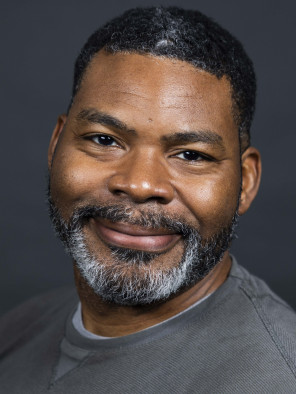
Kevin Clark is a photojournalist at The Seattle Times, where he specializes in capturing compelling images of life in the Pacific Northwest. Before landing his first full-time staff position at The Washington Post, he crisscrossed the country five times, interning at various newspapers including The Seattle Times, The Times-Picayune and the Fort Lauderdale Sun-Sentinel. Prior to joining The Seattle Times in 2022, he was a photojournalist for The Everett Herald. He is a graduate of the University of Washington.