Fiction, Drama and Poetry Winners to Read This Summer
In the first part of an occasional series, revisit Pulitzer-winning classics and discover unheralded gems.
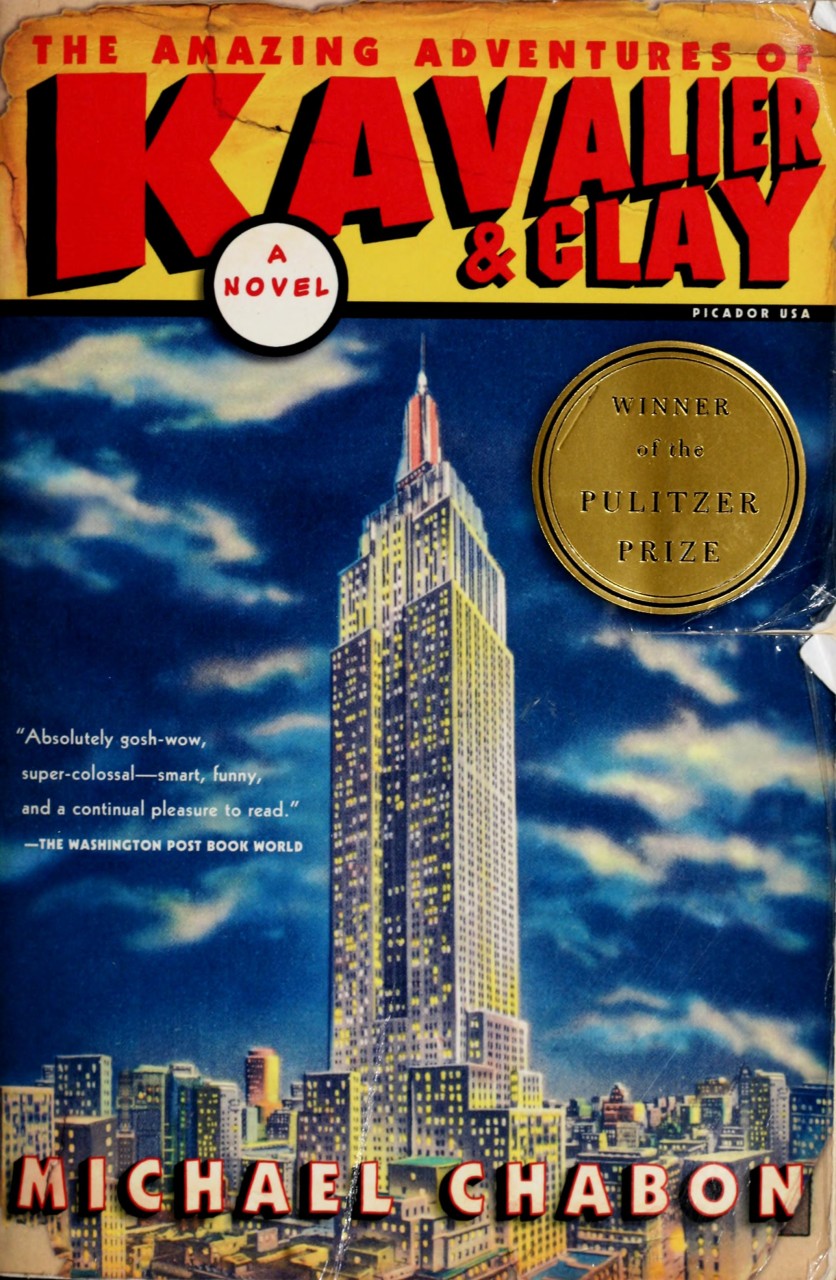
"The Adventures of Kavalier & Clay" by Michael Chabon (File)
Summer brings opportunities to discover new books and revisit favorite literary works. As the seasons progresses, the Pulitzers will highlight a range of Prize-winning books and dramas primed for your beach blanket or e-reader queue. We welcome recommendations for further installments at [email protected] or on our Twitter, Facebook and Instagram pages. Happy reading!
1.
"The Old Man and the Sea" by Ernest Hemingway
The first publication of "The Old Man and the Sea" in the September 1, 1952 issue of Life magazine marked a watershed in Ernest Hemingway's career. After the rapturous reception accorded to "For Whom The Bell Tolls" in 1940, the author entered a fallow period characterized by his marriage to Mary Welsh and coverage of World War II's European theater that produced legends but few stories. His dependence on alcohol was compounded by worsening bipolar disorder (culminating in his 1961 suicide) and deleterious interactions with Seconal and other prescriptions. Despite his condition, he entered a prolific period in the late 1940s that would intermittently persist until the dawn of the 1960s. While the ensuing litany of thematically interwoven works was never completed to his satisfaction (ultimately ensuring regular publication of "new" Hemingway books until the turn of the century), "Old Man" — conceived during a manic episode in 1950-1951 — immediately was singled out for publication and refined as a standalone novella. more than 5 million copies of the Life edition were sold that autumn, while a concurrently published illustrated hardcover edition from Scribner enjoyed a first printing of 50,000 copies. It received the 1953 Fiction Prize and was cited as an exemplifying work in his 1954 Nobel Literature Prize. Long a cultural touchstone for the symbolism initially promoted by the New Criticism and diffused through introductory literature courses, "Old Man" remains the most transcendent work in his late oeuvre. "Only I have no luck any more," the fisherman Santiago reflects. "But who knows? Maybe today. Every day is a new day. It is better to be lucky. But I would rather be exact. Then when luck comes you are ready." Santiago's journey unfurls on its own terms. It remains the quintessential beach read.
2.
"Near Changes" by Mona Van Duyn
Mona Van Duyn emerged from rural Iowa to become a key figure in a literary scene at St. Louis's Washington University that included such notables as 1978 Poetry winner Howard Nemerov, the comic novelist Stanley Elkin and William Gass, a philosopher best known for his postmodern fiction. She maintained a close friendship with 1977 Poetry winner James Merrill and played a key role in acquiring his archive for the university. While figures such as Merrill and Gass were both lauded and chided for their obscurantism, Van Duyn fashioned a poetics rooted in the rampant discrimination against women in postwar academia and other professions. (Although her husband, literary scholar Jarvis Thurson, eventually chaired the English department, Van Duyn remained an untenured lecturer in the continuing education division despite receiving many notable awards.) As she reflects in "Memoir," a key poem in her winning collection written shortly after she secured a visiting appointment in the department in 1987, "Detective Time takes his voiceprint,/which ends behind bars. Natures ear/knows it was little to lose." Elsewhere, in "To a Friend Who Threw Away Hair Dyes," she champions the "brilliant head wearing its first cold crown," while "The Block" offers a mordant vision of an aging community in retrenchment. Holding the middle ground between the personal and the political, the quotidian and the profound, Van Duyn's subversive vignettes of Midwestern suburbia could not be more relevant in the era of #MeToo and #TimesUp.
3.
"Fiorello!" by Jerome Weidman, George Abbott, Jerry Bock and Sheldon Harnick
More than 70 years after his death, Fiorello La Guardia remains New York City's archetypal mayor. An Italian-American Episcopalian raised in Greenwich Village, Arizona and his mother's native Trieste, he worked his way through NYU's law school as a quadrilingual interpreter at Ellis Island before pursuing a political career, including two stints in the House of Representatives. A progressive in the mold of Theodore Roosevelt, he clashed with the business wing that propelled Harding and Hoover to the presidency and emerged as a supporter of the New Deal during his mayoralty. While his three terms (1934-1945) yielded much of New York's contemporary infrastructure, ranging from a consolidated subway system to the beginnings of public housing and Art Deco recreational centers, Jerry Bock (music), Sheldon Harnick (lyrics), Jerome Weidman (book) and George Abbott's (book) musical is an underdog origin story that foregrounds La Guardia's difficult relationships with party leadership and the Tammany Hall Democratic machine. His obstreperousness in the political arena is contrasted with a doting family life, leading to his remarriage to his secretary, Marie Fisher, following the unexpected death of his first wife in 1921. A Broadway smash that inspired an album of jazz interpretations from Oscar Peterson, "Fiorello!" has lapsed into obscurity in the intervening decades. Nevertheless, it is an upbeat, breezy reminder that personal conviction can make all the difference in politics. (Moreover, the infrastructure built by La Guardia in an uneasy truce with Robert Moses — from the Bronx's Orchard Beach to numerous pools — remains a defining hallmark of New York City summers.)
4."The Amazing Adventures of Kavalier & Clay" by Michael Chabon
CBS All Access recently announced that 2001 Fiction winner Michael Chabon will be going where no literary novelists have gone before — as showrunner of Star Trek: Picard, the much-anticipated continuation of Star Trek: The Next Generation set to debut later this year. Accordingly, it's a fine time to read Chabon's winning work, a labyrinthine history of the early comic book industry set against the backdrops of 1930s Brooklyn, World War II and the era's criminalization of homosexuality. "Every golden age is as much a matter of disregard as of felicity,” comic artist Joe Kavalier observes, as Chabon offers an adroit and nuanced view of an era often blindly canonized in spite of its depredations as the "Golden Age" of comics. Like Superman co-creators Jerry Siegel and Joe Shuster, Kavalier and his cousin/collaborator, Sammy Clay, are exploited by their publisher, Empire Novelty, earning a fraction of the income generated by their signature character, The Escapist, while Kavalier's underlying motivation for enduring the chicanery ends in a tragedy that sets the tenor for the remainder of the novel.
5.
"Selected Poems" by Donald Justice
A doctoral graduate of the University of Iowa, Donald Justice was a bastion of the school's creative writing program, beloved as much for his eloquent teaching style as what former student Tad Richards has characterized as his "quiet but compelling insight into loss and distance [...] standard for craftsmanship, attention to detail, and subtleties of rhythm." Justice's poetics began to hit their stride in earnest in the early 1970s. "These flowers, they blossom/Again now, tender buds/Of migraine — souvenirs/And you call them poems," he writes in "Portrait of the Sixties," a multipart opus that blends tweedy accounts of academic life with visions redolent of the cinematic fever dreams of Sam Peckinpah. Memory became a central preoccupation for the poet by the late 1970s, best exemplified by "In the Attic": "There's a half-hour where dusk flies,/Trapped by the summer screens, expire/Musically in the dust of sills;/And ceilings slope toward remembrance," he observes. Those who are daunted by 20th century and contemporary American poetry will find a body of work that, according to former Pulitzer Prize juror David Orr, is "great in the way that tells us what poetry used to be, and is, and will be."