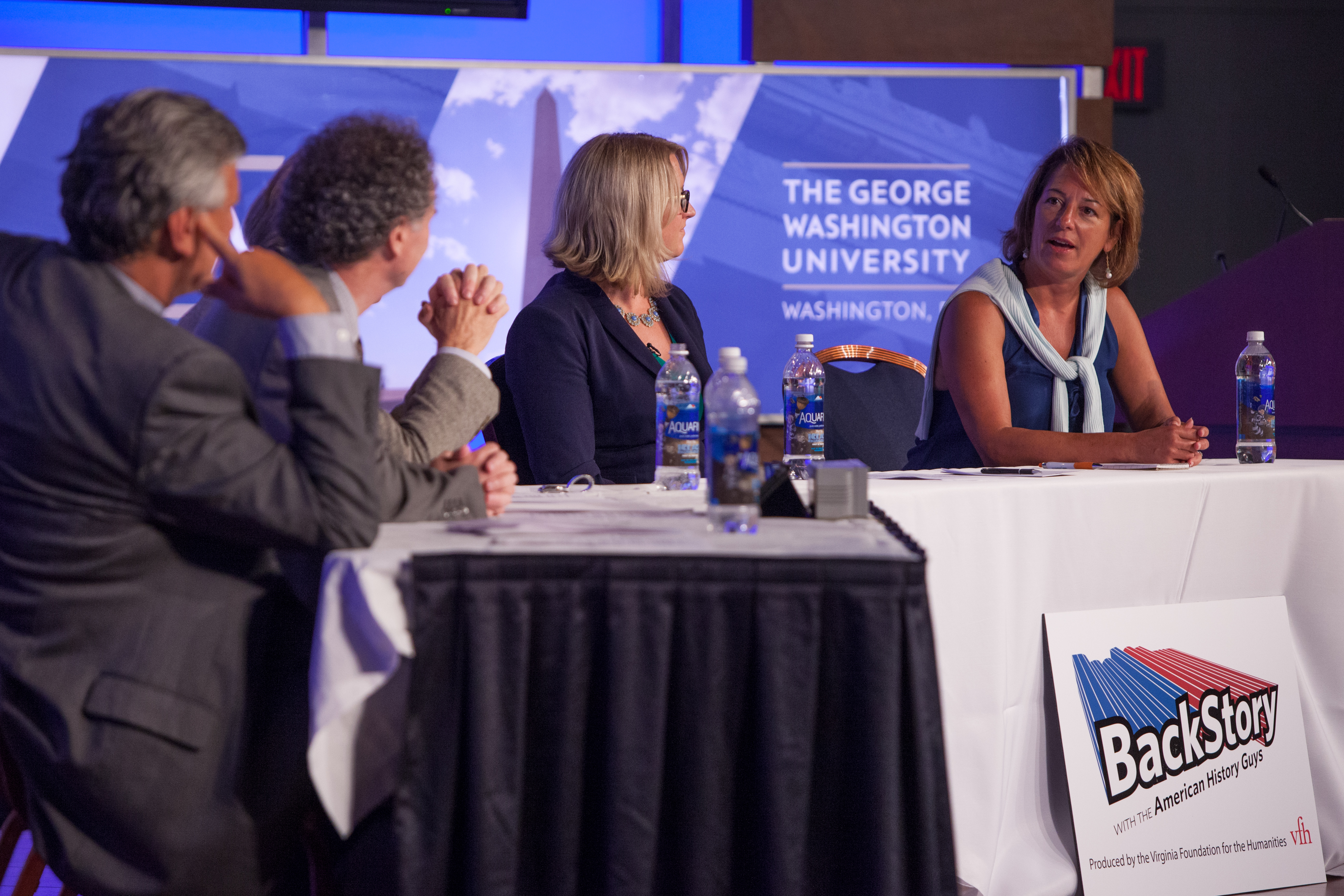
Ed Ayers, Peter Onuf, and Brian Balogh chat on stage with Kathryn Brownell of Purdue University and Carol Leonnig, a Pulitzer Prize-winning investigative journalist.
By DIANA WILLIAMS
On July 19, BackStory with the American History Guys took the conversational approach to history and current events they’re known for, to the stage of George Washington University’s Jack Morton Auditorium.
“Presidents and the Press,” a special event made possible by the Pulitzer Prize Centennial Campfires Initiatives, looked at the history between America’s presidents and the fourth estate. During this live episode, the American History Guys — Brian Balogh, Ed Ayers and Peter Onuf — explored how the press helped bind the nation together during and after the Revolution, only to help tear it apart during the Civil War. They also talked about the cozy relationship the White House established with the press after World War II and how it devolved into skepticism during the Vietnam War.
Guests Kathryn Brownell, a political historian of media, politics, and popular culture at Purdue University, and Carol Leonnig, a Pulitzer Prize-winning investigative journalist, rounded out this show. They delivered keen insights into how Hollywood has influenced this tenuous relationship and how high levels of access to the POTUS may never be restored.
“Presidents and the Press” helped to celebrate the centennial of the Pulitzer Prizes by looking at how its founder, Joseph Pulitzer, influenced American culture. As History Guy Brian Balogh pointed out, Joseph Pulitzer built his media empire from the ground up. While this was how things were done in the 19th century, it also put him in a league of high-achieving men, like Teddy Roosevelt.
Being at the helm of an emerging institution helped Pulitzer shape 20th century media. Pulitzer was adept at exposing corruption and it was this approach to journalism that put him on a collision course with Roosevelt in the early 20th century.
In 1908, after William Howard Taft won the election, Pulitzer’s newspaper, The World, published an op-ed charging that Roosevelt’s brother-in-law and Taft’s brother had received monies meant to fund the building of the Panama Canal. “It was a direct attack on Roosevelt,” Balogh said during the live show, “who, himself, had made a name for attacking corruption.”
The Guys went on to discuss the changes journalism has faced over the years and how presidents have figured out how to use — or avoid — the press in furthering their goals. After the American Revolution, the press was one of the key tools that helped establish a strong central government, which was a hard sell. “The press led the charge for the federal constitution and the emergence of the modern presidency,” Peter Onuf said.Ed Ayers elaborated on the importance of early news by adding, “When this brand-new Republican party is trying to figure out who they’re going to put forward for president, people know Abraham Lincoln through the press.” This good will between Lincoln and the press eventually turned, as the country raced towards war. In fact, war is one of the many instances that we see presidents and the media converge or diverge from each other. The emergence of the 24-hour news cycle and social media also help explain this attraction or repulsion.
Does the constant availability of news that we now enjoy (or maybe not) in the 21st century take the teeth out of media? When Ed Ayers posed a similar question to Pulitzer Prize-winning journalist Carol Leonnig, we learned that it’s something she doesn’t believe. “I think we’re up against some significant obstacles,” Leonnig said. “It would be nice if we had more accessibility with our politicians, but I think we’re going to do just fine and have plenty of teeth.”
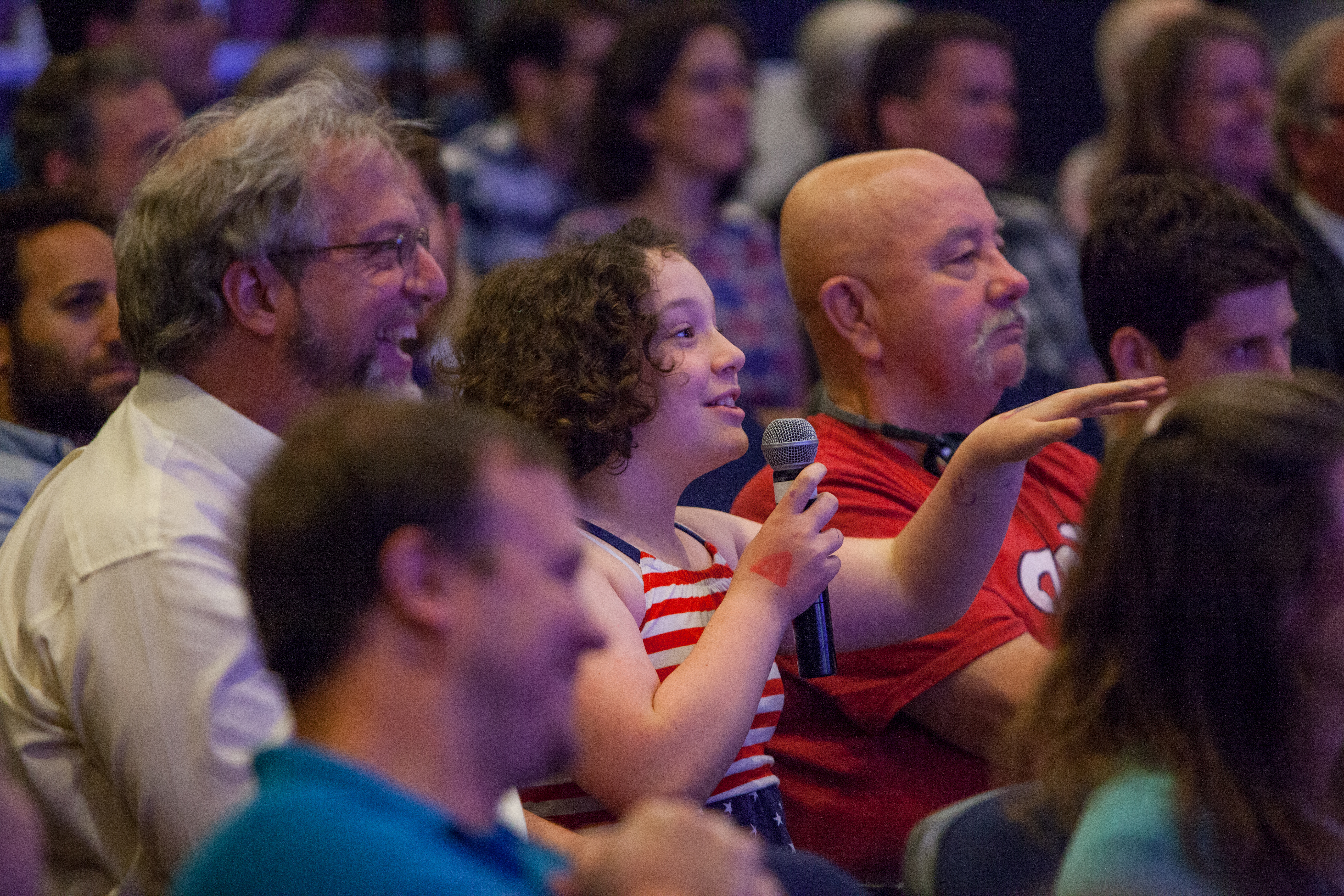
Audience members participate in the live program at George Washington University.
As Ed Ayers said, “I think that’s the sort of thing that Joseph Pulitzer would want us to end with.”
Diana Williams is digital editor and strategist for BackStory Radio at the Virginia Foundation for the Humanities. The Pulitzer Centennial Campfires Initiative is in partnership with the Federation of State Humanities Councils.