On March 27, scores of journalists, novelists, poets, playwrights and musicians gathered at Michael's in midtown Manhattan to celebrate the Pulitzers' next 100 years and the recent election of Dana Canedy as the program's seventh administrator.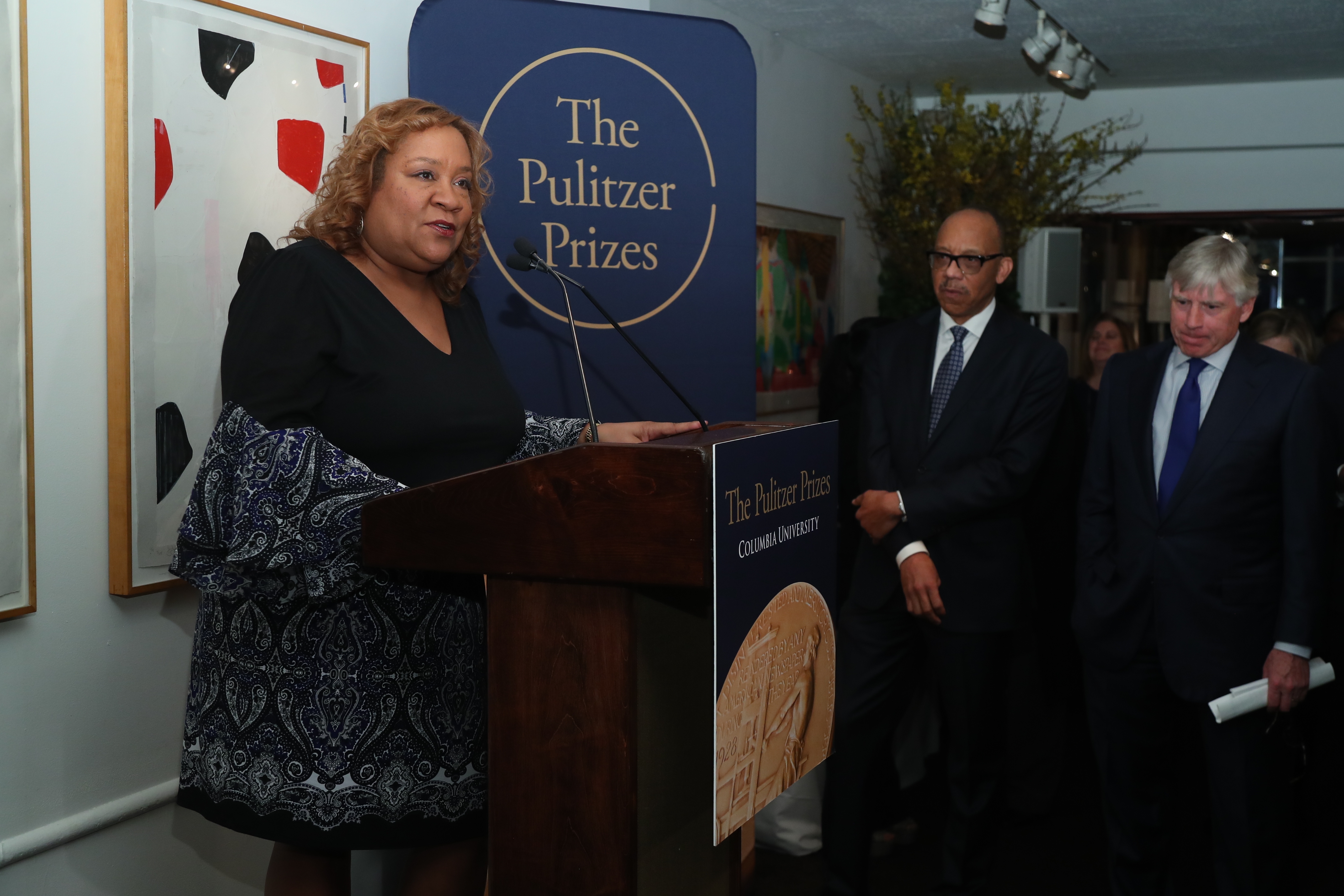
Pulitzer Prize Administrator Dana Canedy speaks as Pulitzer Prize Board Chair Eugene Robinson (right) and Columbia University President Lee Bollinger (far right) look on.
Attendees ranged from Robin Roberts and Diane Sawyer of ABC News to Stephen Colbert bandleader Jon Batiste. Digital news executives Lydia Polgreen and Raju Narisetti mingled with the likes of "deadline poet" Calvin Trillin. A cross-section of more than 20 winners included two-time Fiction recipient Richard Ford, playwright John Patrick Shanley and columnist Kathleen Parker, while the Pulitzer Prize Board was represented by Elizabeth Alexander, Gail Collins, John Daniszewski and Stephen Engelberg.
With only 20 days to go until the announcement of the 102nd class of winners, Canedy, Pulitzer Prize Board Chair Eugene Robinson and Columbia University President Lee Bollinger offered probing analyses of the state of journalism and the First Amendment in 2018.
Although he emphasized that the Pulitzers should "have a good party every once in a while" and recalled the astonishment of receiving the Commentary Prize in 2009, Robinson did not mince words. "[T]his is a moment where journalism is under attack," he said. "The very concepts of fact and truth are under assault … by a concerted and constant and very serious attempt to discredit and disqualify the voices of the news media."
In a moving speech, Bollinger framed his professional career as a First Amendment scholar and the University's journalistic initiatives in the context of his childhood experiences at the Baker Democrat-Herald, a newspaper partly owned by his parents.
Noting her status as the first woman and the first person of color to announce the awards, Canedy affirmed that the forthcoming winners and finalists will constitute "real news of the highest order, executed, as it was intended, without fear or favor."
In an interview with Pete Vernon of the Columbia Journalism Review, she discussed her vision for the Prizes. "I want more conservative journalists and columnists, more hotshot young digital news organizations, more people using new technologies and platforms applying for Pulitzer Prizes. To the extent that we broaden our appeal, we do a service to journalism."
View a selection of photos from the event below.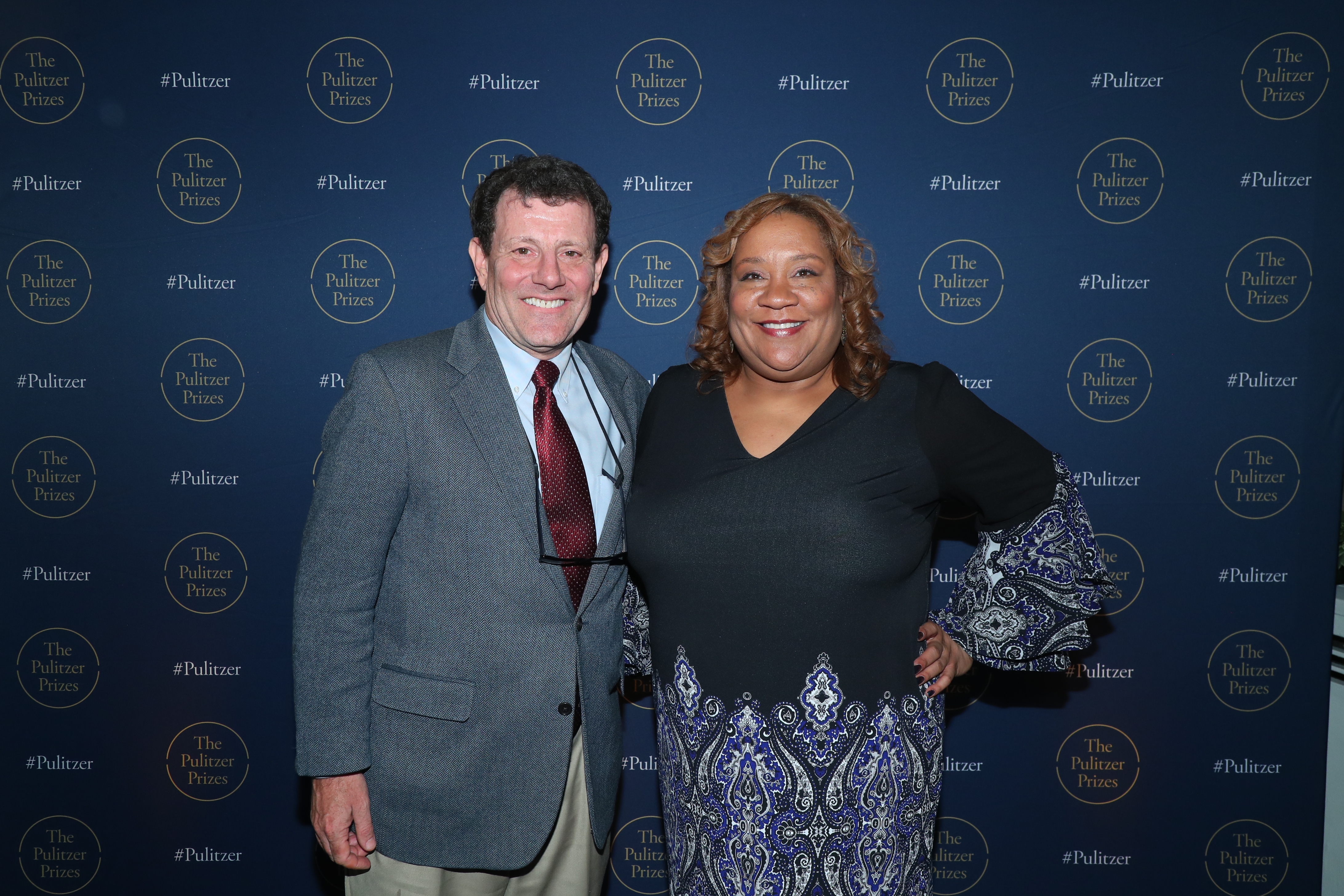
New York Times Op-Ed Columnist Nicholas Kristof (International Reporting, 1990; Commentary, 2006) and Canedy.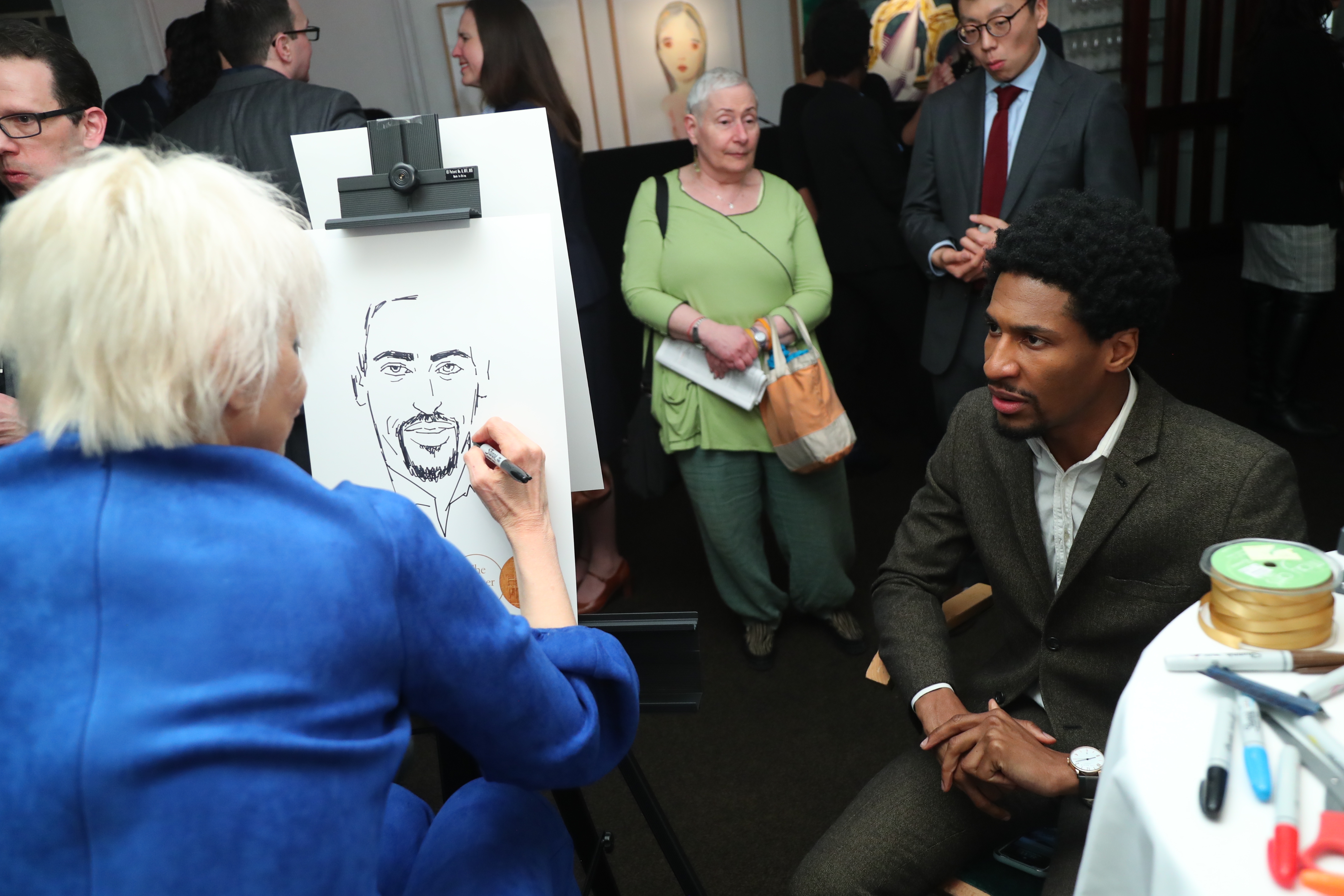
Late Show bandleader Jon Batiste poses for a live cartoon drawn by Marisa Acocella.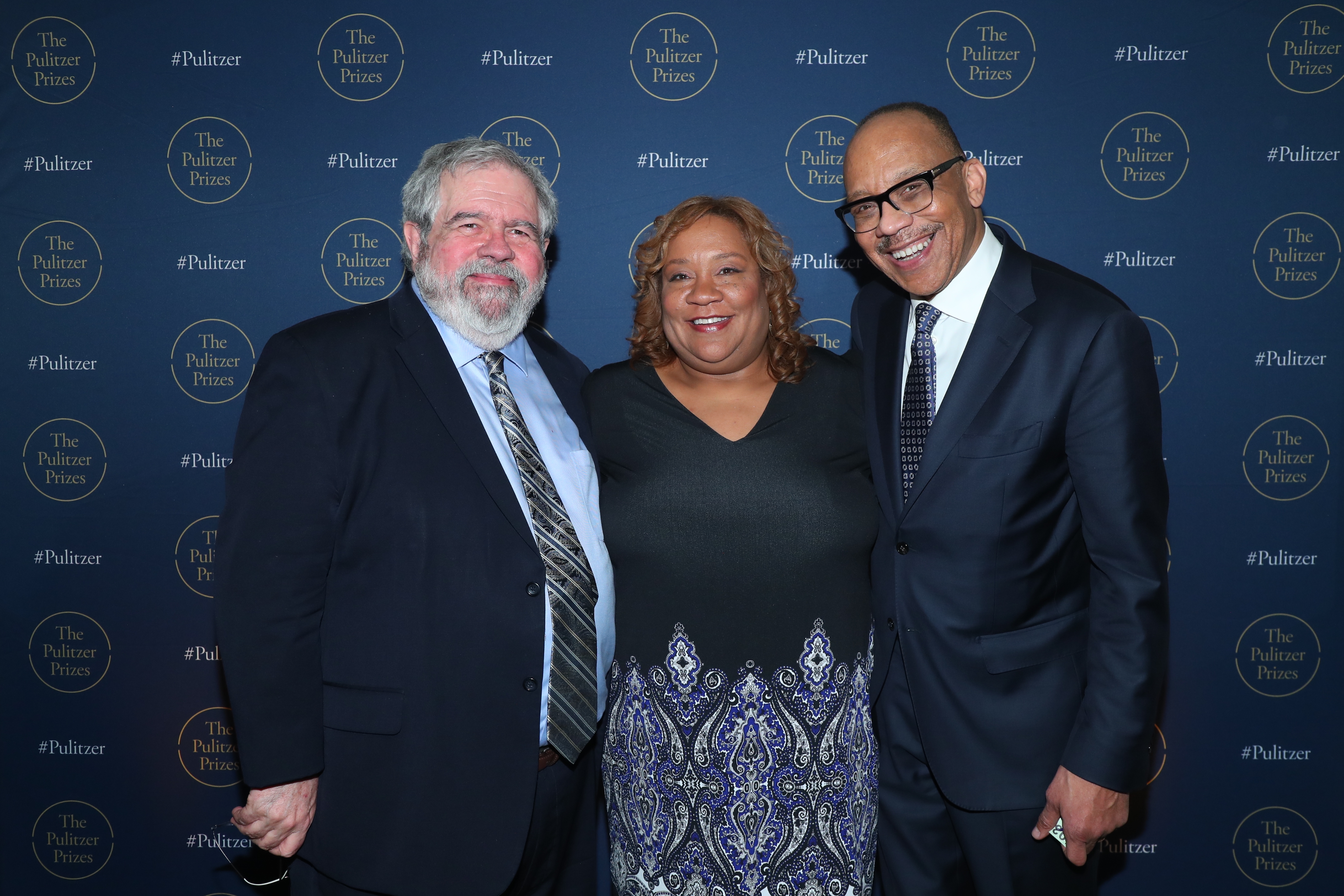
DC Report founder David Cay Johnston (Beat Reporting, 2001) with Canedy and Robinson. Johnston and Canedy were colleagues on the New York Times business desk.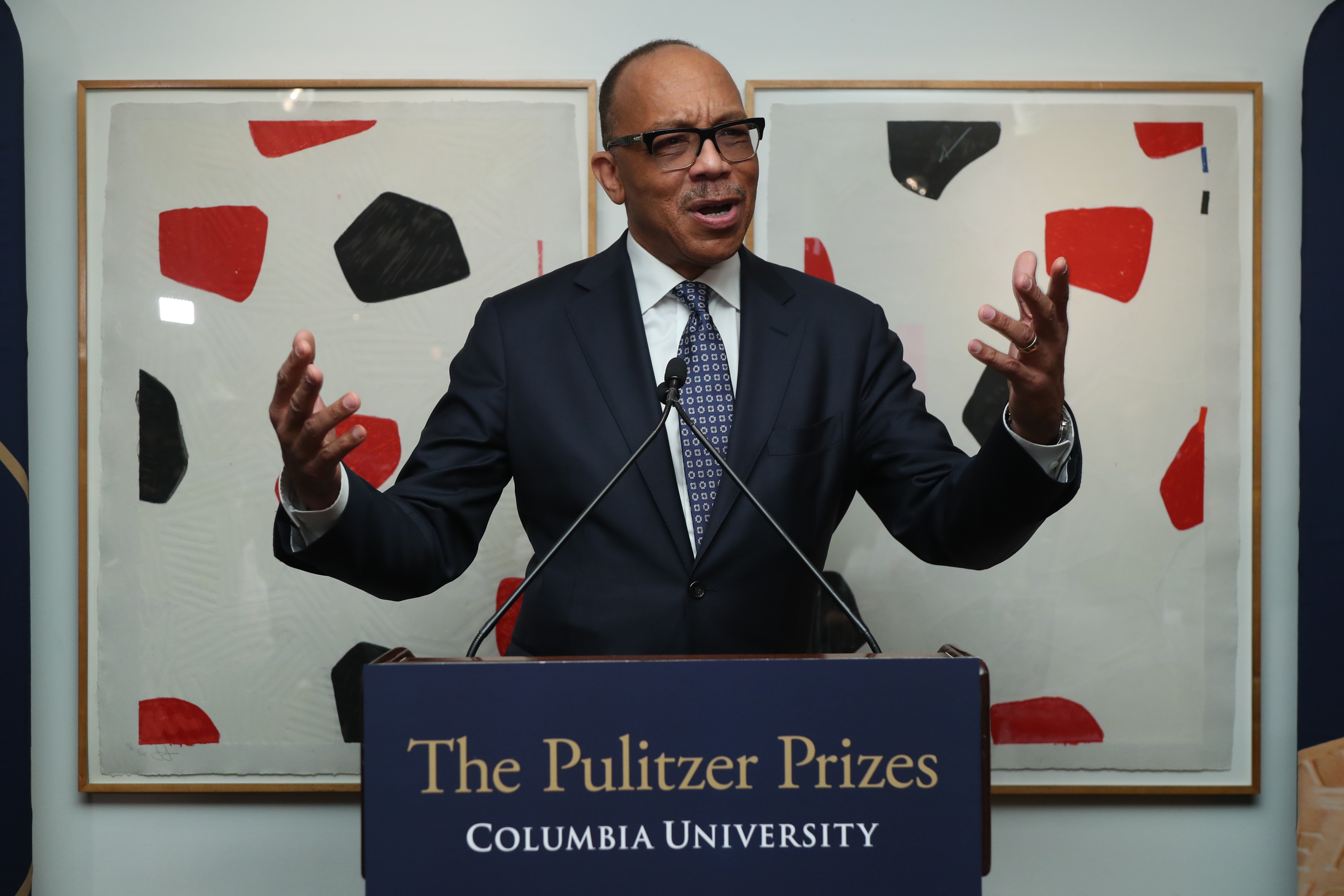
Robinson addresses the party.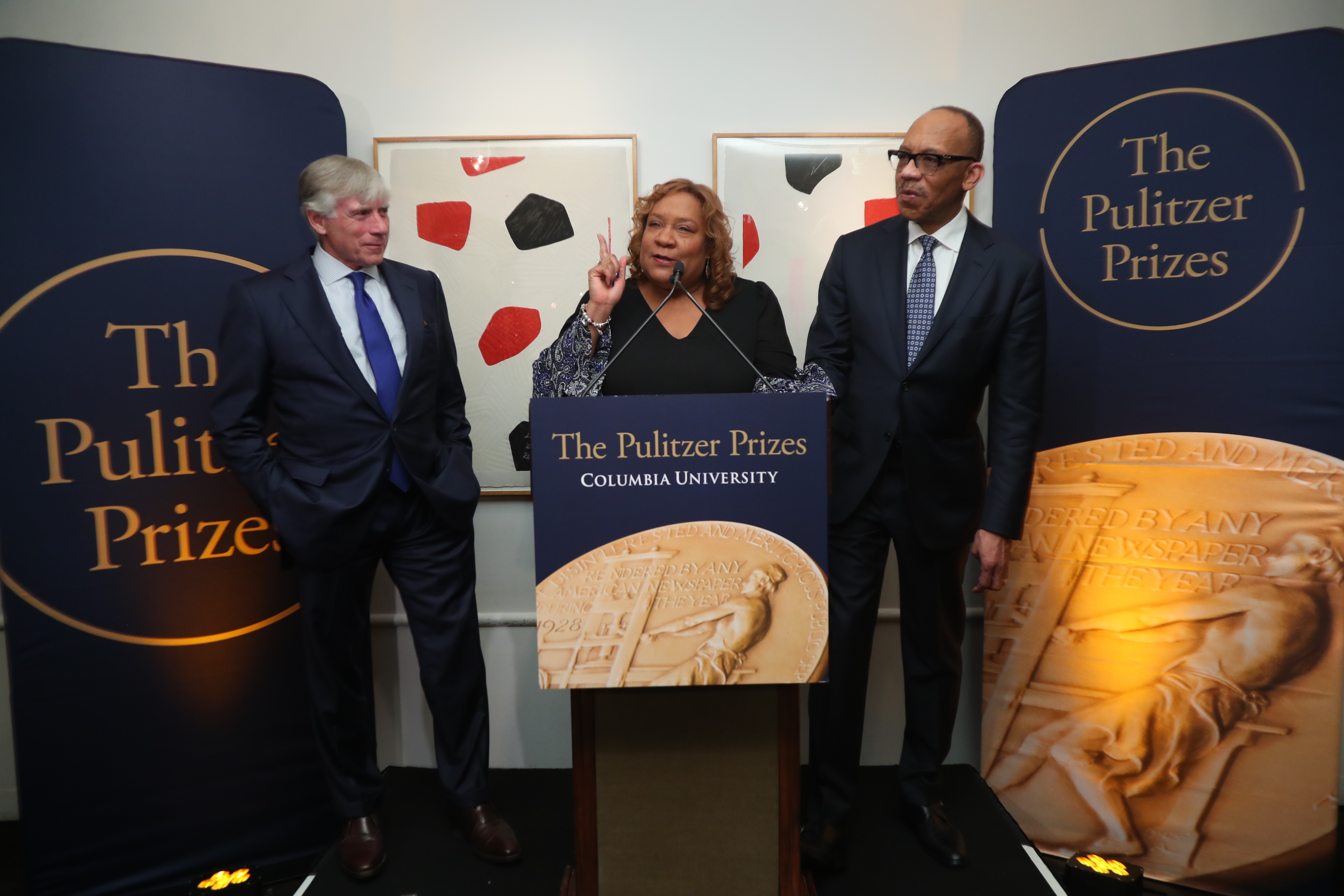
After Bollinger, Canedy and Robinson concluded their respective remarks, Canedy introduced brief audio clips from speeches by Presidents John F. Kennedy (Biography/Autobiography, 1958) and Ronald Reagan on the primacy of freedom of speech.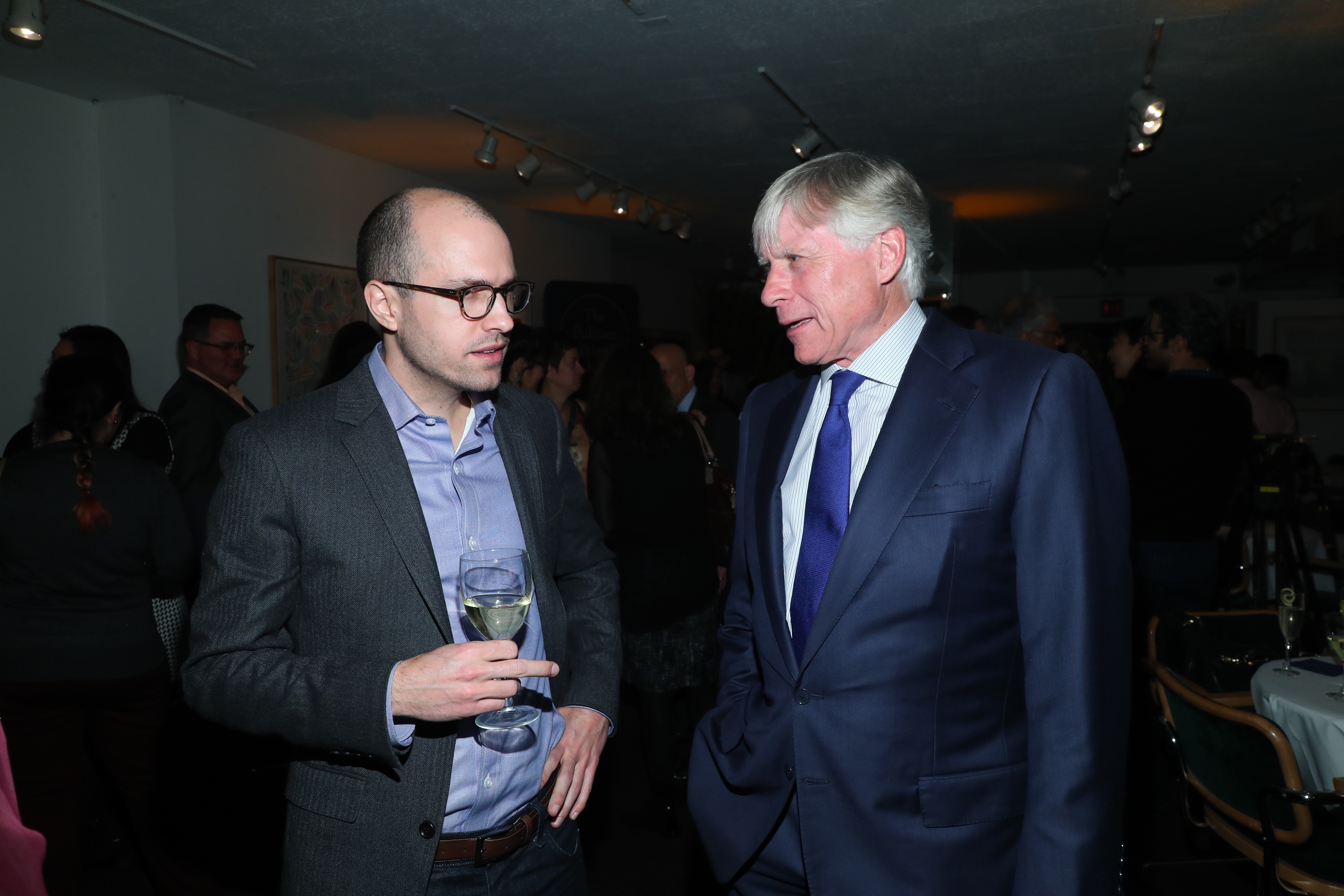
New York Times Publisher A.G. Sulzberger and Bollinger.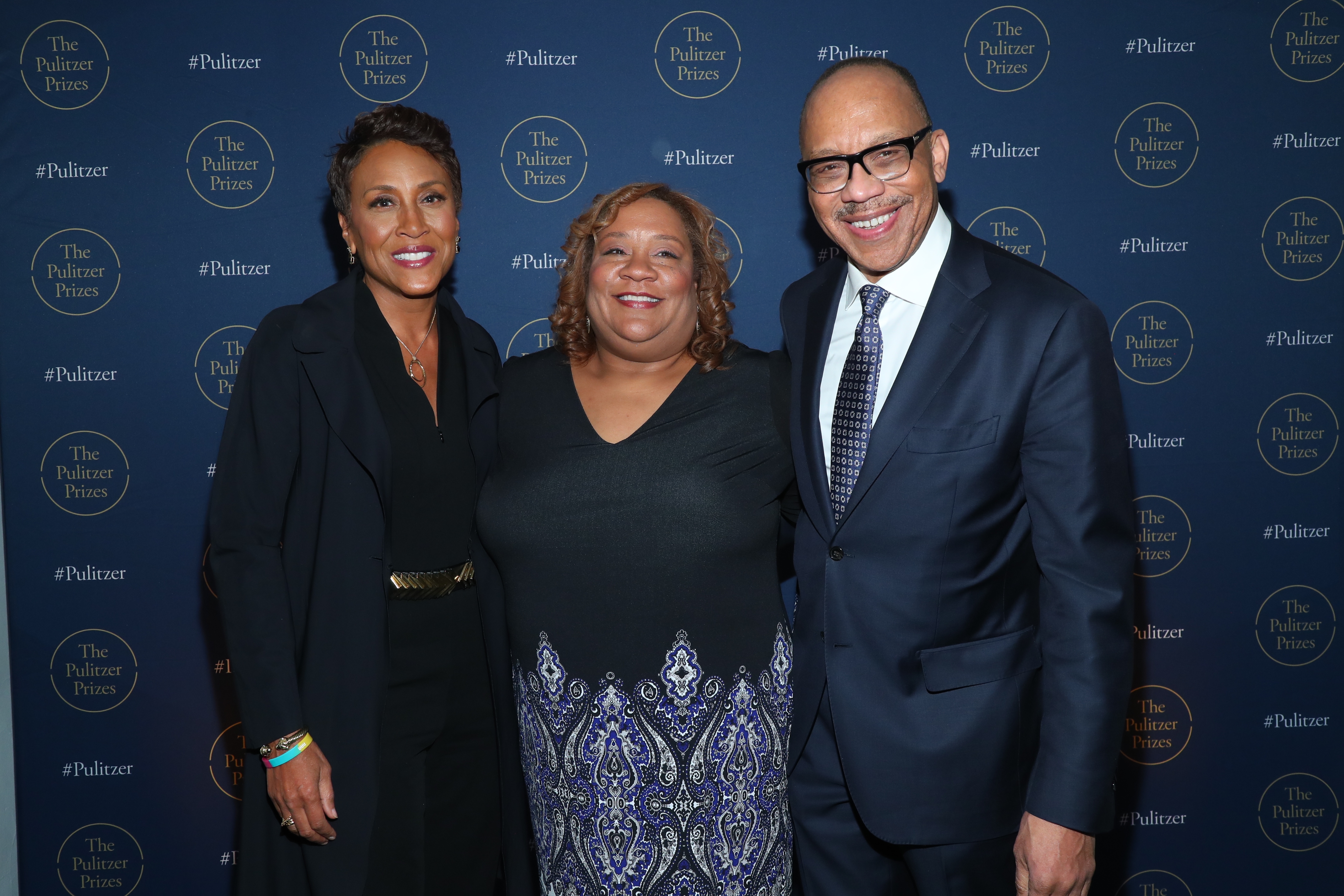
Robin Roberts with Canedy and Robinson.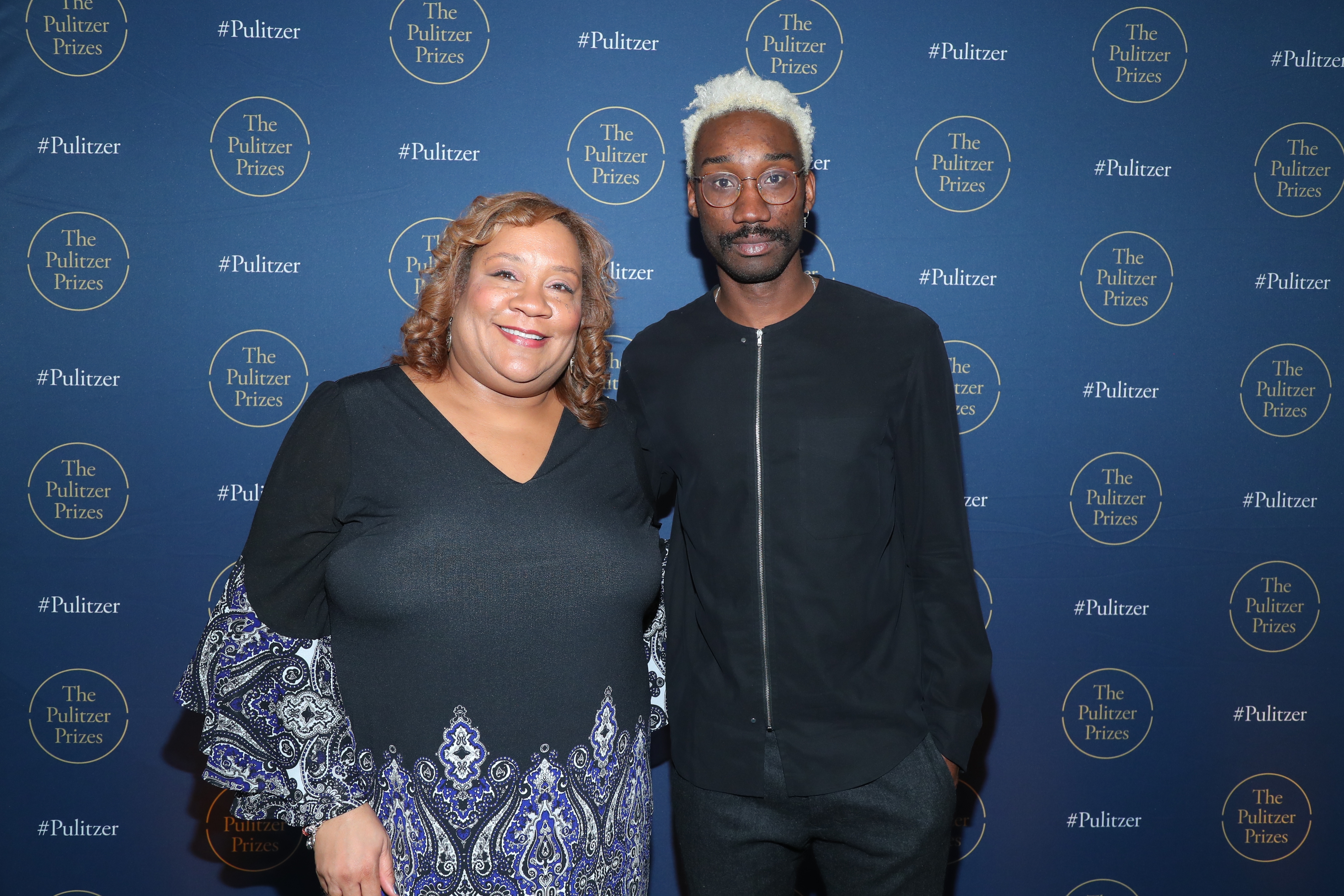
Nathan Stewart-Jarrett (Angels in America, Misfits) and Canedy.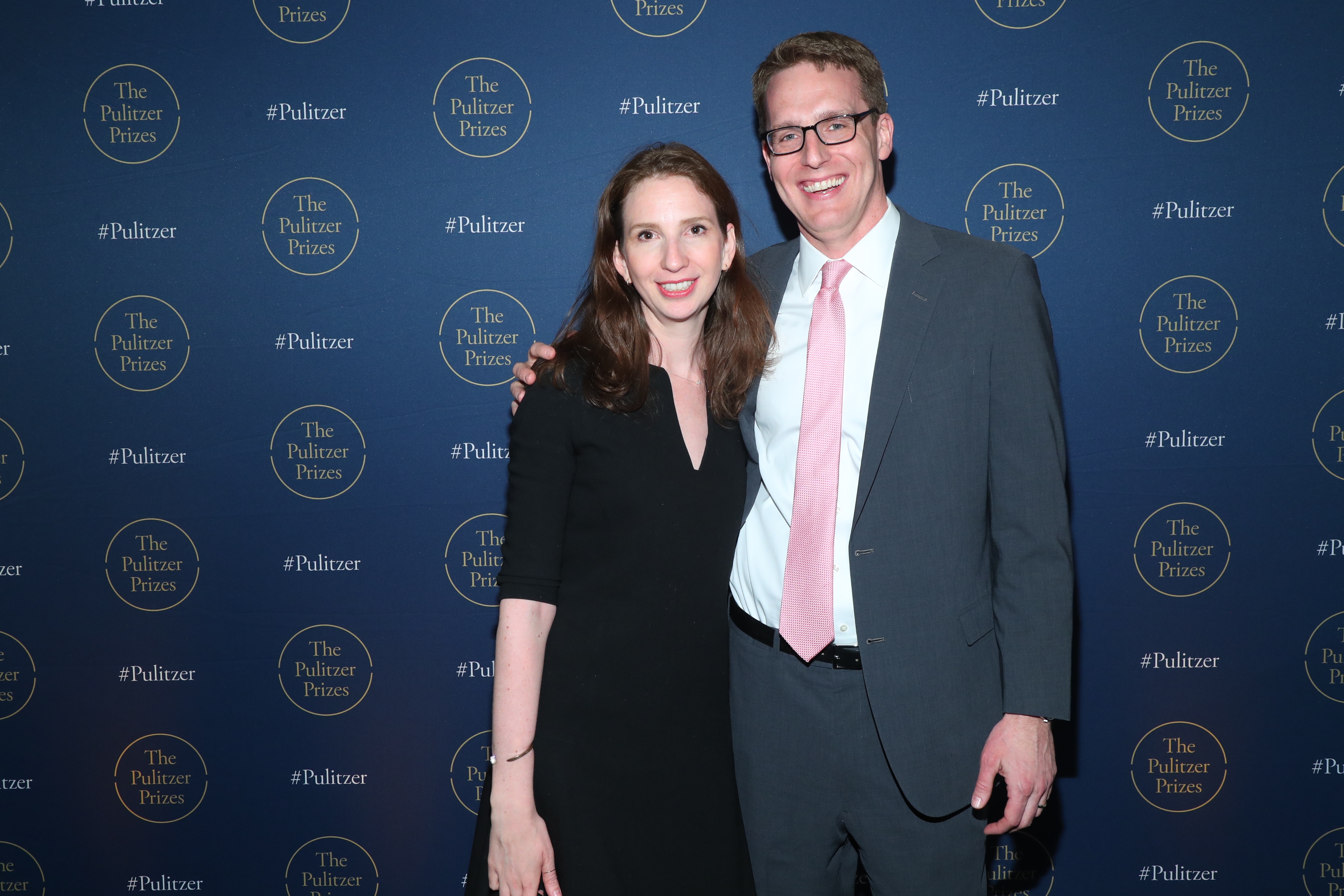
David Fahrenthold (National Reporting, 2017) and guest.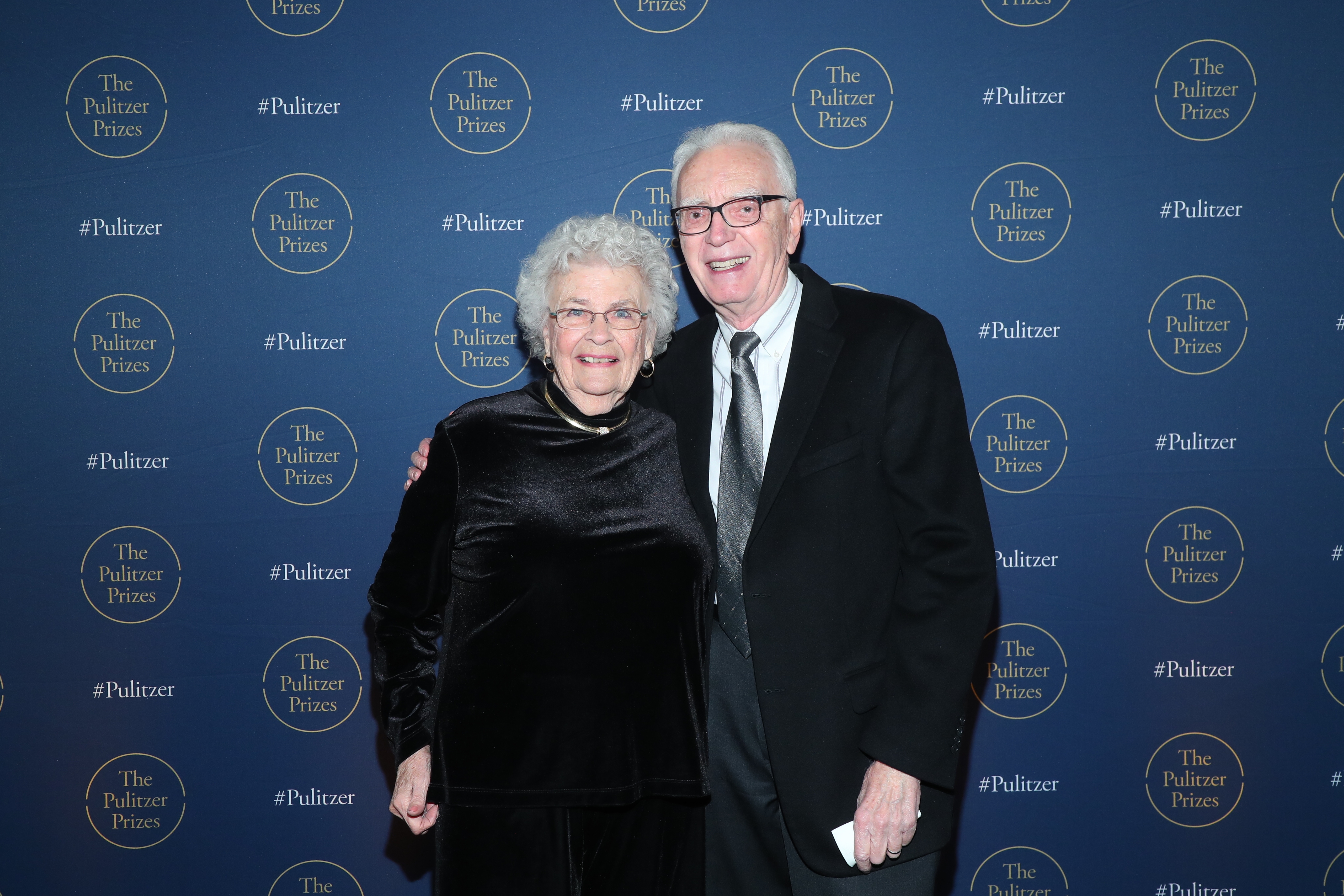
Retired Pulitzer Prize Administrator Sig Gissler and his wife, Mary Gissler.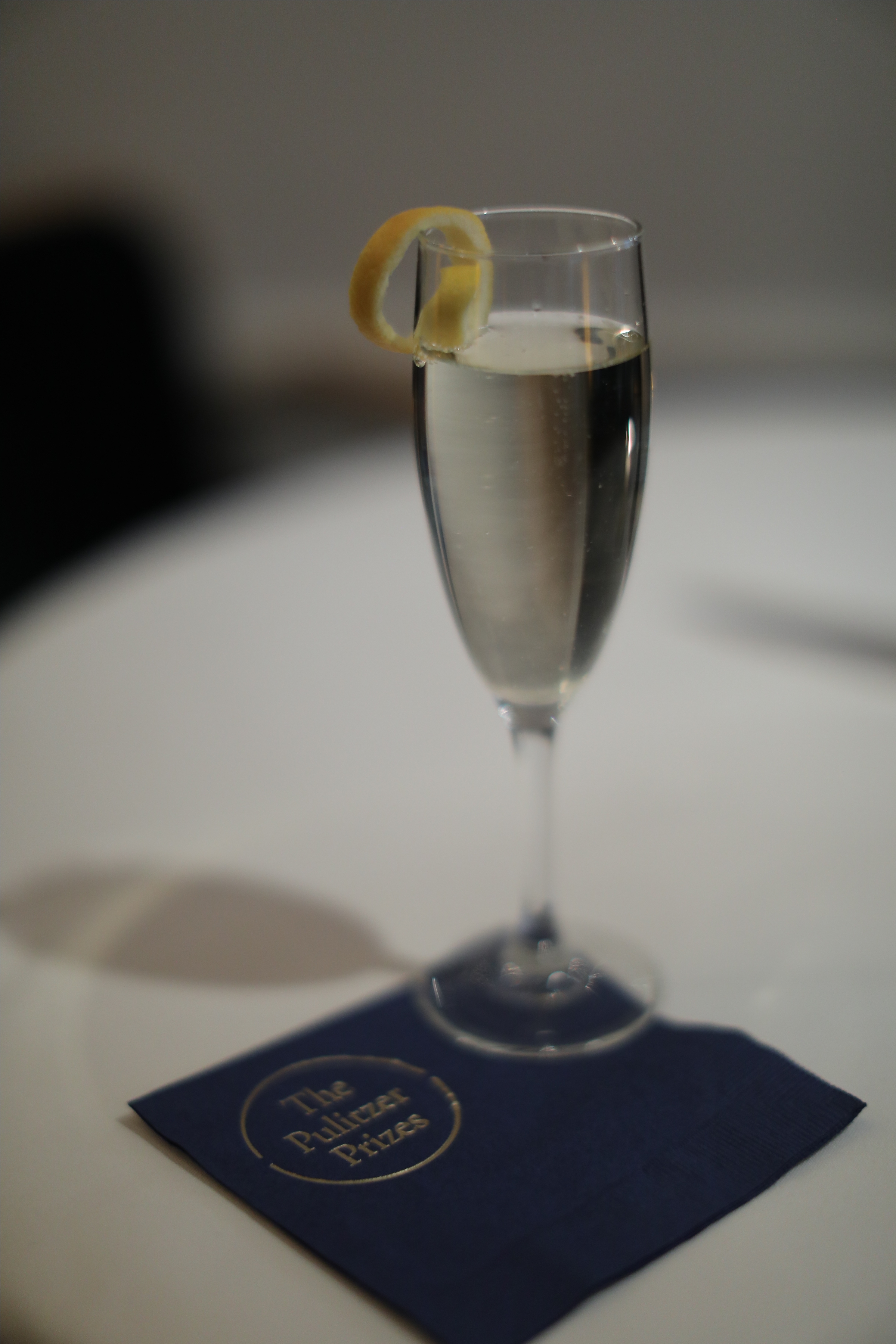
Would you like a Pulitzer? The party's signature cocktail of St. Germain and Mionetto Prosecco will be on the menu at Michael's through the spring.
For additional media coverage, please see:
Page Six: "Next Pulitzer winners to show 'strength of the American press'" (Emily Smith; March 28, 2017)
CNNMoney Reliable Sources: "Celebrating the Pulitzers" (Brian Stelter and CNN's media team; March 28, 2017)
POLITICO Morning Media: "Pulitzers party" (Michael Calderone with Cristiano Lima; March 28, 2017)
Poynter Morning Mediawire: "Pulitzer Party" (David Beard; March 28, 2017)
Columbia Journalism Review: "The media today: The Pulitzers celebrate next 100 years, with cocktails and a case for the free press" (Pete Vernon; March 28, 2017)