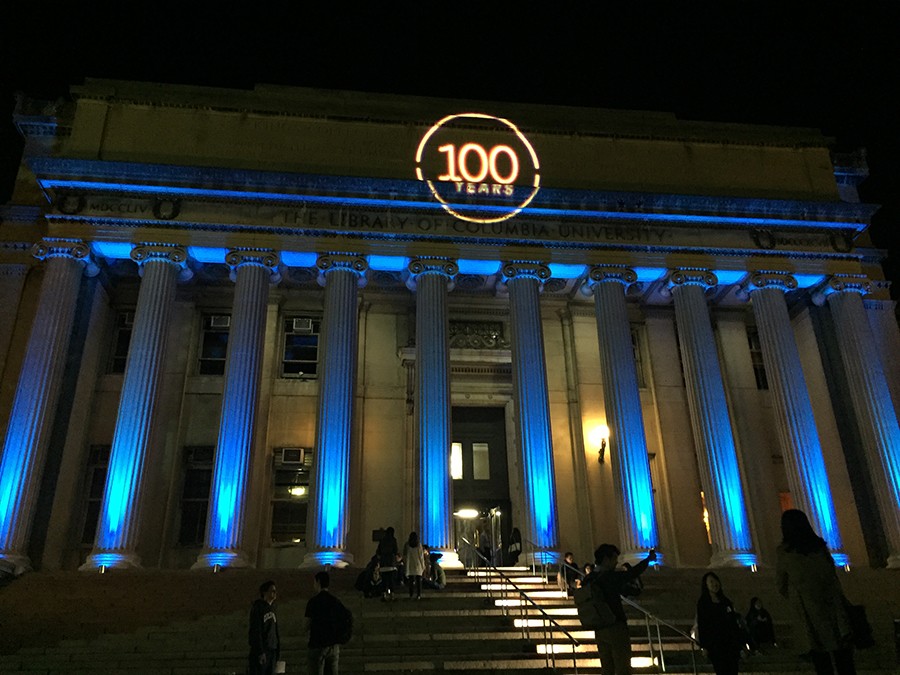
Before that key date in our calendar, we wanted to pause once more to look back and honor the hundred years that came before, and in particular the centennial festivities of 2016.
In partnership with the Federation of State Humanities Councils, the Pulitzers sponsored grassroots celebrations of our shared values as part of the Centennial Campfires Initiative. In total, 46 state and territorial humanities councils hosted Campfires throughout 2016. Programming from our home state of New York and as far afield as Alaska and Guam highlighted the excellence, integrity, openness, critical thought and relentless inquiry that are hallmarks of the prizes — and of American democracy.
In West Virginia, the Pearl S. Buck Living Gateway Conference celebrated an author credited with opening her fellow citizens’ eyes to a previously unknown culture, providing Americans a glimpse into the life of the Chinese people.
Kansans remembered outspoken news editor William Allen White, and his interest in progressive causes and relations with Russia.
Public Service prize winner and board member Katherine Boo traveled to Oregon to speak on the tensions between power and poverty. Boo also contributed an essay to Pulitzer.org, noting, “The distribution of benefit of doubt is as inequitable as the distribution of justice itself.”
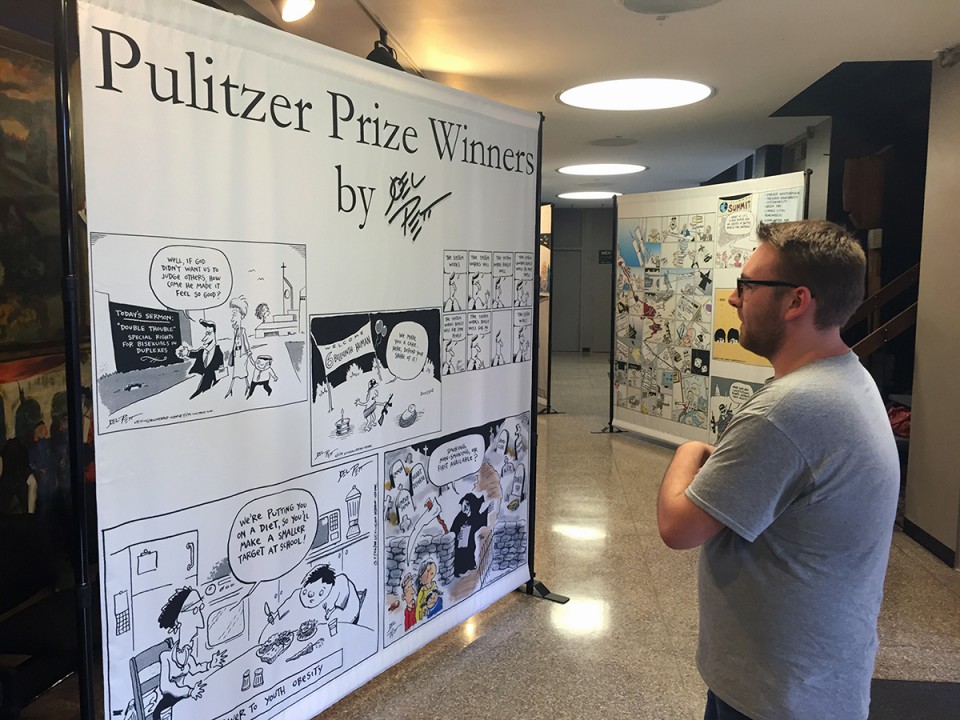
Joel Pett's cartoons on display in Kentucky.
“Our whole challenge, every day, is just to have one idea,” Lexington Herald-Leader cartoonist Joel Pett said modestly during his keynote address at the Kentucky Book Fair. One idea a day, that is, over a long career. Pett won a Pulitzer in 2000, and has been a finalist three times.
In New Hampshire and the District of Columbia, programs like HYPE and Soul of the City connected high school students with prize winners to develop the next generation of journalists.
The themes articulated by the Pulitzer Board at the start of 2016 carried through both the Campfires and the multiday marquee events held in Dallas, St. Petersburg, Fla., Los Angeles and Cambridge, Mass. Throughout the prizes’ history, winners have returned again and again to four subject areas: Power and Accountability, Civil Rights and Social Justice, War and Migration and the Presidency.
Whether officially linked to the Pulitzers or community events that grow organically, these challenging yet inclusive conversations are ongoing around the country. Our Miss Brooks 100, for example, brought together five African-American Pulitzer-winning poets to remember Gwendolyn Brooks and will continue through 2017.
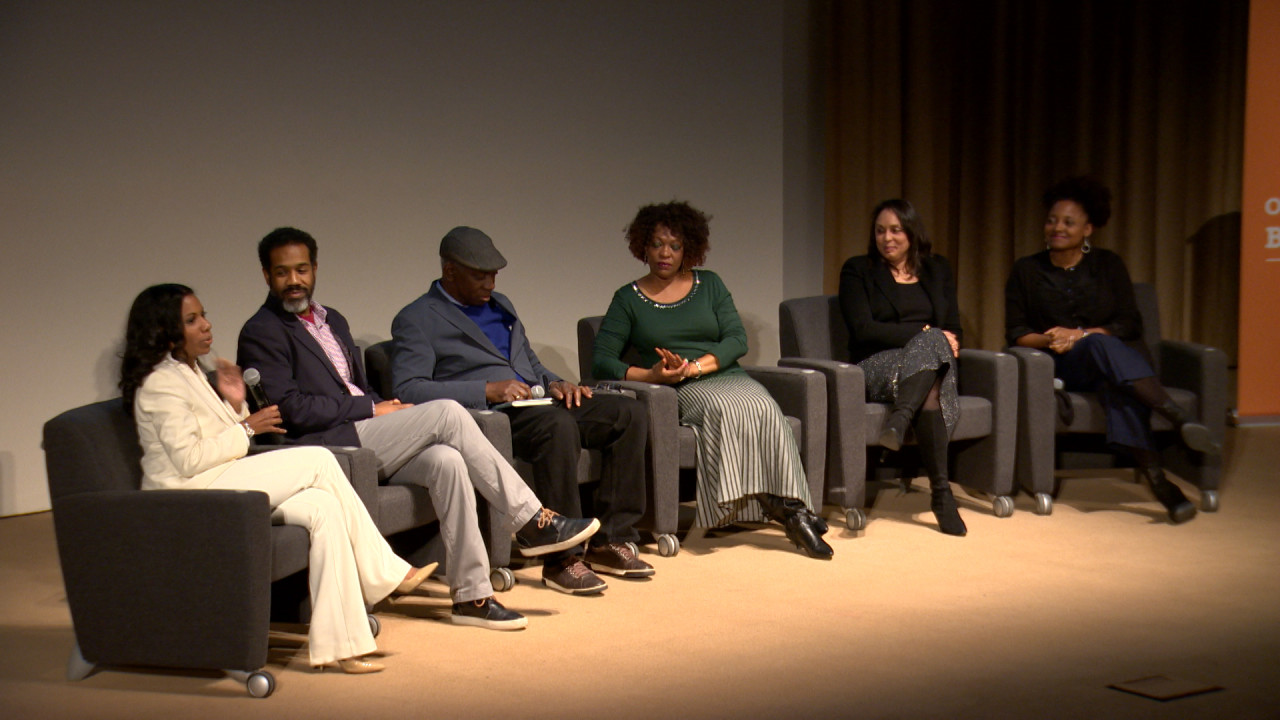
Gregory Pardlo (2015), Yusef Komunyakaa (1994), Rita Dove (1987), Natasha Trethewey (2007) and Tracy K. Smith (2012) speak at the Art Institute of Chicago during a sold-out discussion celebrating the centenniary of Gwendolyn Brooks, the first African American to receive a Pulitzer Prize.
By the end of 2016, with many individual humanities councils carrying out multiple programs, our partners had staged hundreds of events. As we near the first prize announcement of our second century, Pulitzer acknowledges and thanks the Federation of State Humanities Councils, the Marquee partners and the many independent institutions, large and small, that helped us observe our centennial.
Both the Federation and the Pulitzers are eager to continue their exploration and celebration of independent inquiry into current events and creative literary and scholarly exploration of American themes. In 2017 and beyond, we look forward to further examination of that cornerstone of U.S. democracy, the First Amendment, and its mission of empowering and informing Americans.