In 1993, John F. Burns received an International Reporting Pulitzer for his coverage of one of the bloodiest conflicts of the postwar era: the Bosnian War.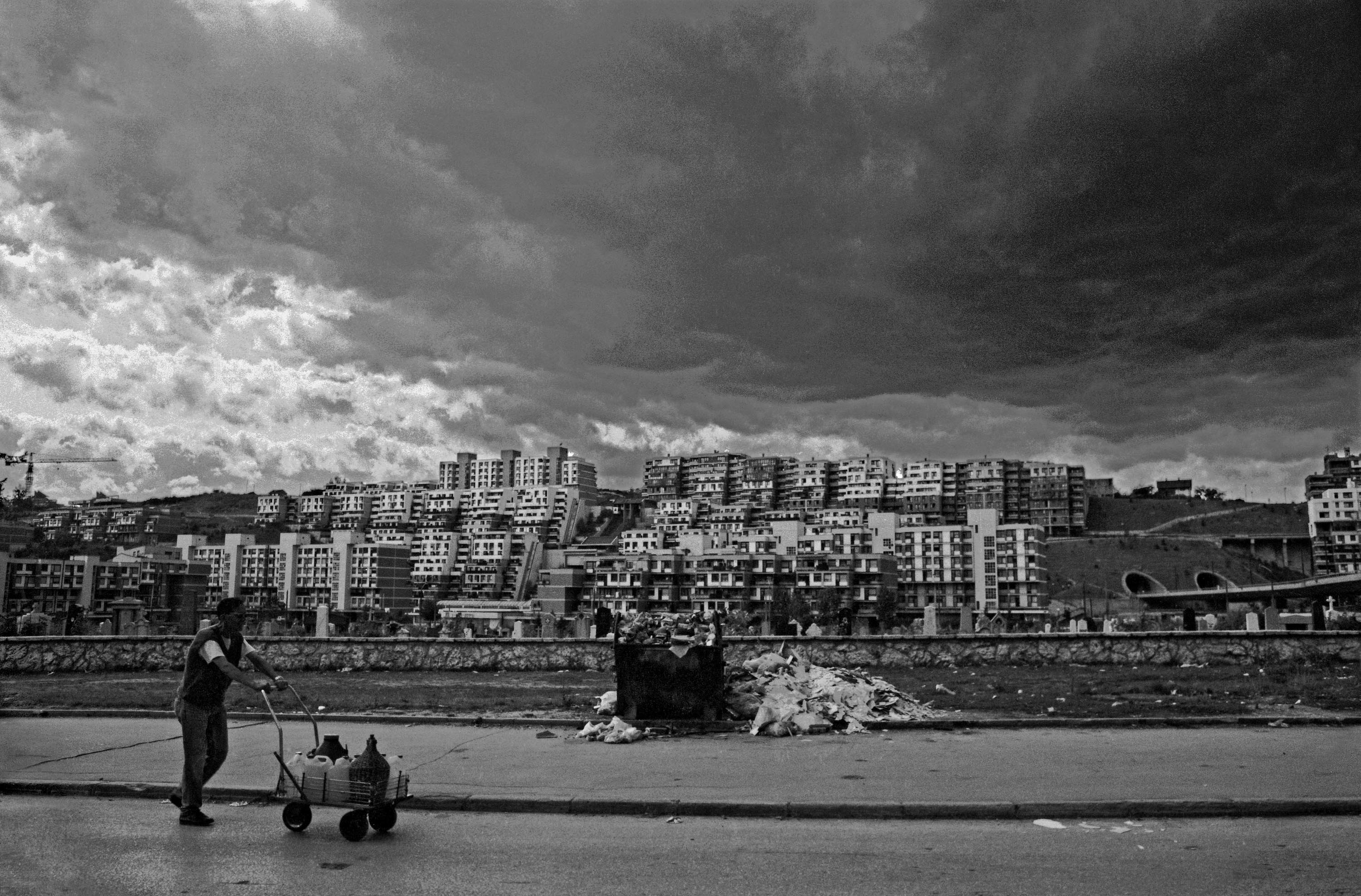
The siege of Sarajevo. (Dejan Vekic)
Lauded by Christopher Hitchens as "the greatest war correspondent of our time" in 2010, Burns spent much of his 40-year tenure at The New York Times on the front line of the world's stage, including tenures as Moscow, Beijing and New Delhi bureau chief.
In his Bosnian reportage, he took to the streets of besieged Sarajevo, interviewing such disparate individuals as the cellist of the Sarajevo Opera, surgeons at overworked clinics and an architect who volunteered for military service.
"I can't believe this is all real," one of the doctors said. "Here we are on the eve of the 21st century — in Europe, in a beautiful city and a country that offered people every possibility of a good life. How can such a thing happen? And how can a so-called civilized world allow it to continue?"
The Bosnian War was rooted in ethnic and religious divisions between the six constituent republics of the Socialist Federal Republic of Yugoslavia that had been obscured by decades of shared authoritarian governance. As the union dissolved in early 1992, the United States and the European Economic Community recognized the Republic of Bosnia and Herzegovina (dominated by Muslim Bosniaks) as an independent state on April 6, 1992.
However, a vocal minority of ethnic Orthodox Serbs in Bosnia formed the proto-state of Republika Srpska and pledged allegiance to the Serbian-dominated Federal Republic of Yugoslavia.
Characterized by widespread displacement, ethnic cleansing and mass rape, the conflict also spawned a "war-within-a-war" (the Croat–Bosniak War) between the previously allied Bosniak plurality and Catholic Croat minority. The Washington Agreement of 1994 brought an end to the Croat-Bosniak War, while NATO's Operation Deliberate Force paved the way for the political integration of Republika Srpska and the Federation of Bosnia and Herzegovina in the Dayton Accords of 1995.
Ninety participants ultimately were convicted of war crimes by the International Criminal Tribunal for the former Yugoslavia, which also encompassed such conflicts as the 1998-1999 Kosovo War and the Presevo Valley insurgency of 1999-2001.
After receiving his Pulitzer, Burns covered Afghanistan and Iraq, earning a second International Reporting Prize in 1997 for chronicling the beginnings of the Taliban regime in Afghanistan.
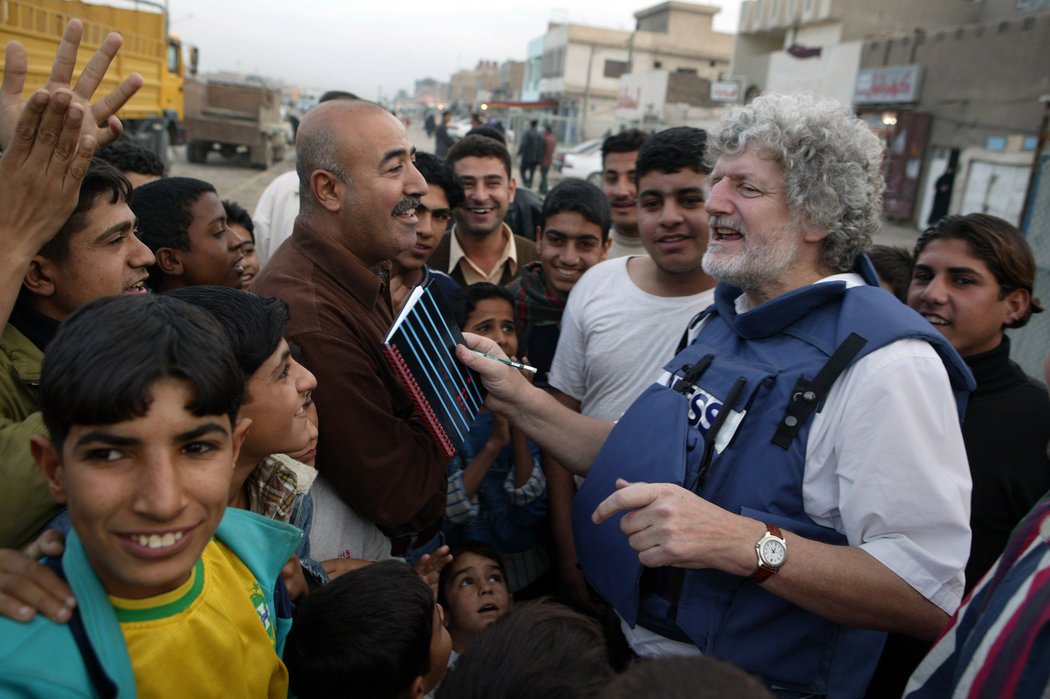
Burns interviewing Iraqis after the capture of Saddam Hussein in 2003. (Michael Kamber/The New York Times)
As we commemorate the 26th anniversary of the conflict, read Burns' entry for the first time on pulitzer.org here.
Related:
David Rohde received the International Reporting Prize in 1996 for exposing the massacre of thousands of Bosnian Muslims by Bosnian Serbs. Read his entry here.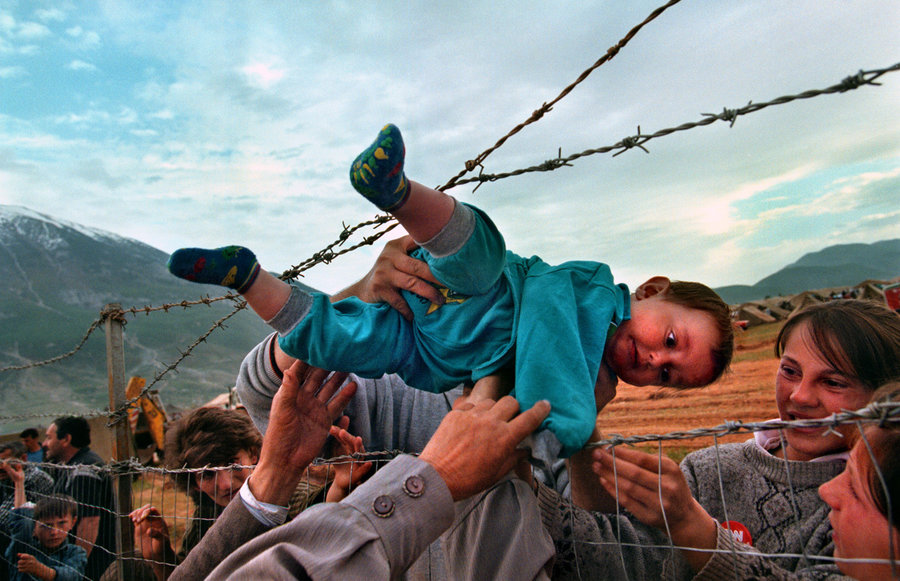
Carol Guzy, Michael Williamson and Lucien Perkins shared the 2000 Feature Photography Prize for their coverage of the Kosovo War. The entry included an iconic photo of Agim Shala, then 2, being passed through a barbed wire fence as members of his family were reunited at a refugee camp in Kukes, Albania.