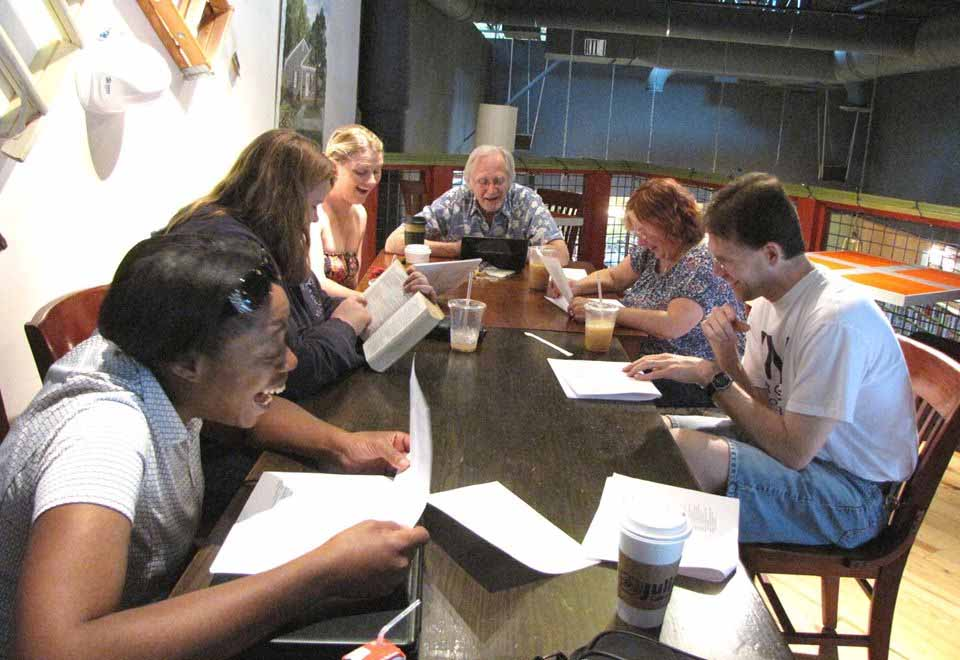
Cold Reads, part of the Pulitzer Campfires Initiative, brings people together to read prize-winning plays aloud in groups.
On a recent evening in Charlotte, N.C., drama aficionados gathered at Queen’s College to read Jesse Lynch Williams’ Why Marry?, the first play ever to win a Pulitzer Prize. The meet-up was part of a larger Pulitzer Campfires initiative dubbed “Cold Reads” by its founder, George Gray.
Following a welcome by Gray, attendees, ranging in age from college students to retirees, broke into groups of six to eight for the main event: simultaneous cold readings of Why Marry? Some brought light refreshments, shared at intermission.
"Essentially, Cold Reads operates like a book club, except the script is read aloud, in company — as around a campfire. Readers assume roles regardless of age, sex, or type, and swap off or double up, depending on the character/reader ratio,” Gray said.“Frequently they stop to recap, clarify or ‘ad lib’ comments, share insights, discuss relevance and meaning, and enjoy the company. If they don't finish, they either plan to meet again or find out how it ends in solitude.”
Gray’s ultimate goal is to arrange group readings of every Pulitzer-winning work in the drama category — and encourage others to do the same. He has set up a website where future participants can find scripts and get tips on hosting their own Cold Reads event.
In Charlotte, Gray recognized North Carolina Humanities Council’s program and grants administrator, Banu Valladares, who later commented on the Cold Reads Facebook page: “Excellent kickoff to the Cold Reads Pulitzer Event.” Attendee Ealy Lim added, “LOVED tonight's kickoff for the Cold Reads Pulitzer Play Reading Challenge! The place was humming with enthusiasm, conversation & laughter! Lovely way to end the day.”
Future plans for Cold Reads Charlotte, as they continue reading Pulitzer plays in small groups, include at least three more large open events — two focused on North Carolina playwrights Hatcher Hughes (Hell-Bent for Heaven, 1924) and Paul Green (In Abraham's Bosom, 1927) and one on presidential politics (Of Thee I Sing, 1932, the first musical to win the Prize).