On Wednesday, May 30, the 2018 Pulitzer Prize winners gathered to receive their awards at a lunchtime ceremony in New York City. Pulitzer Administrator Dana Canedy and Columbia University President Lee C. Bollinger presided. A full list of this year's winners and their work, announced April 16, is available here.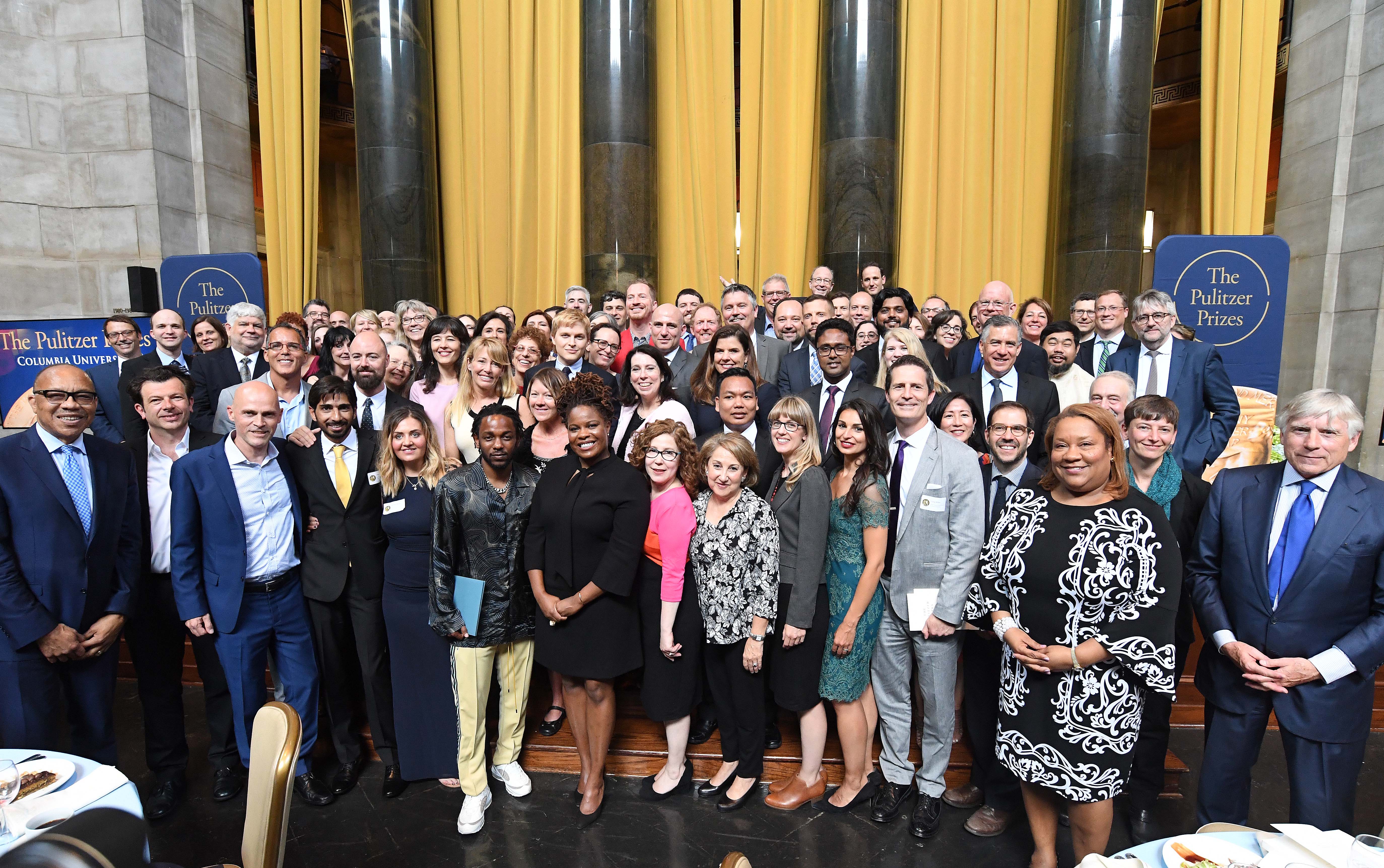
The 2018 Pulitzer Prize winners at Columbia University's Low Library. (Photo: Eileen Barroso/Columbia University)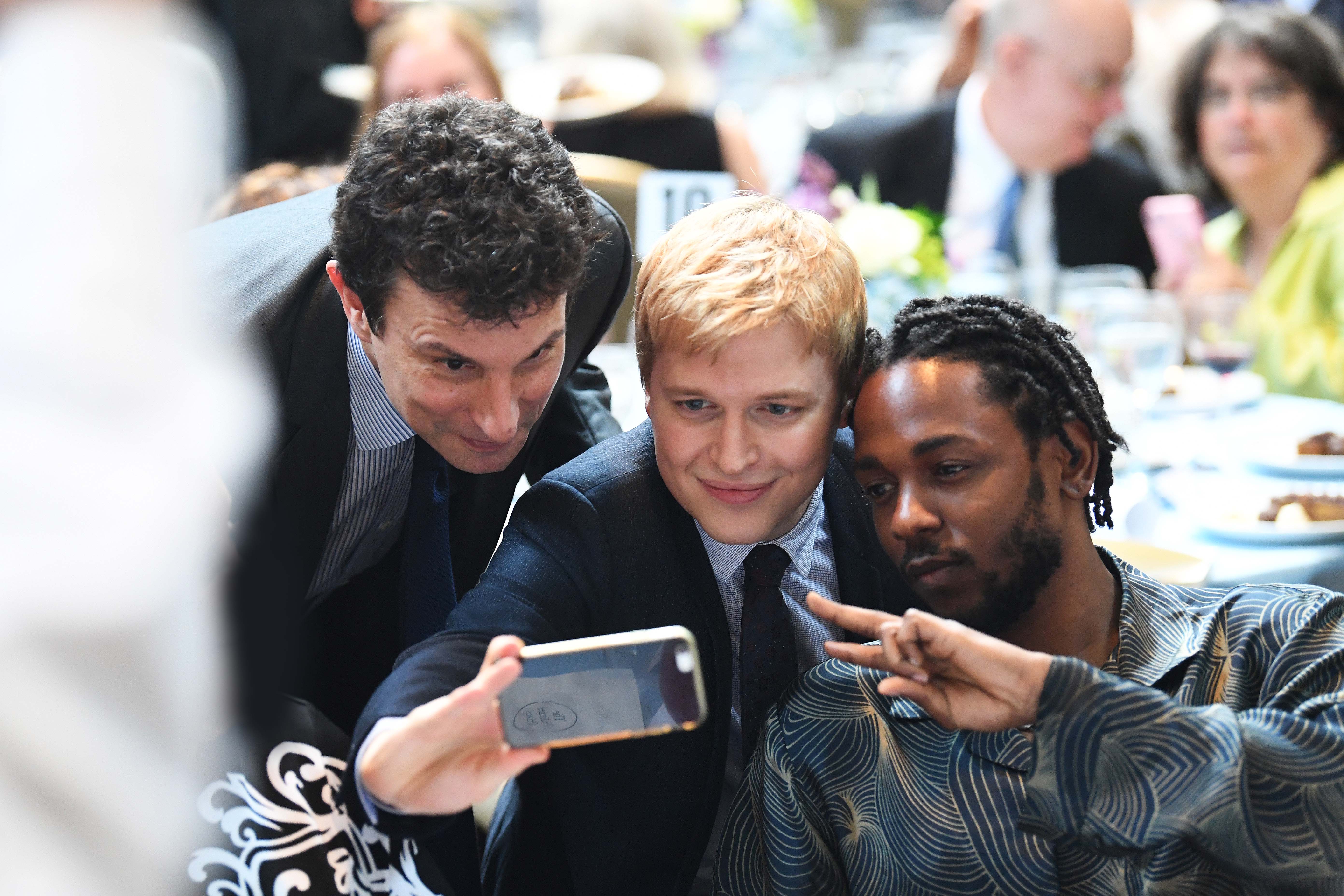
1994 General Nonfiction winner David Remnick of The New Yorker poses for a selfie with 2018 Public Service winner Ronan Farrow and 2018 Music winner Kendrick Lamar. (Photo: Eileen Barroso/Columbia University)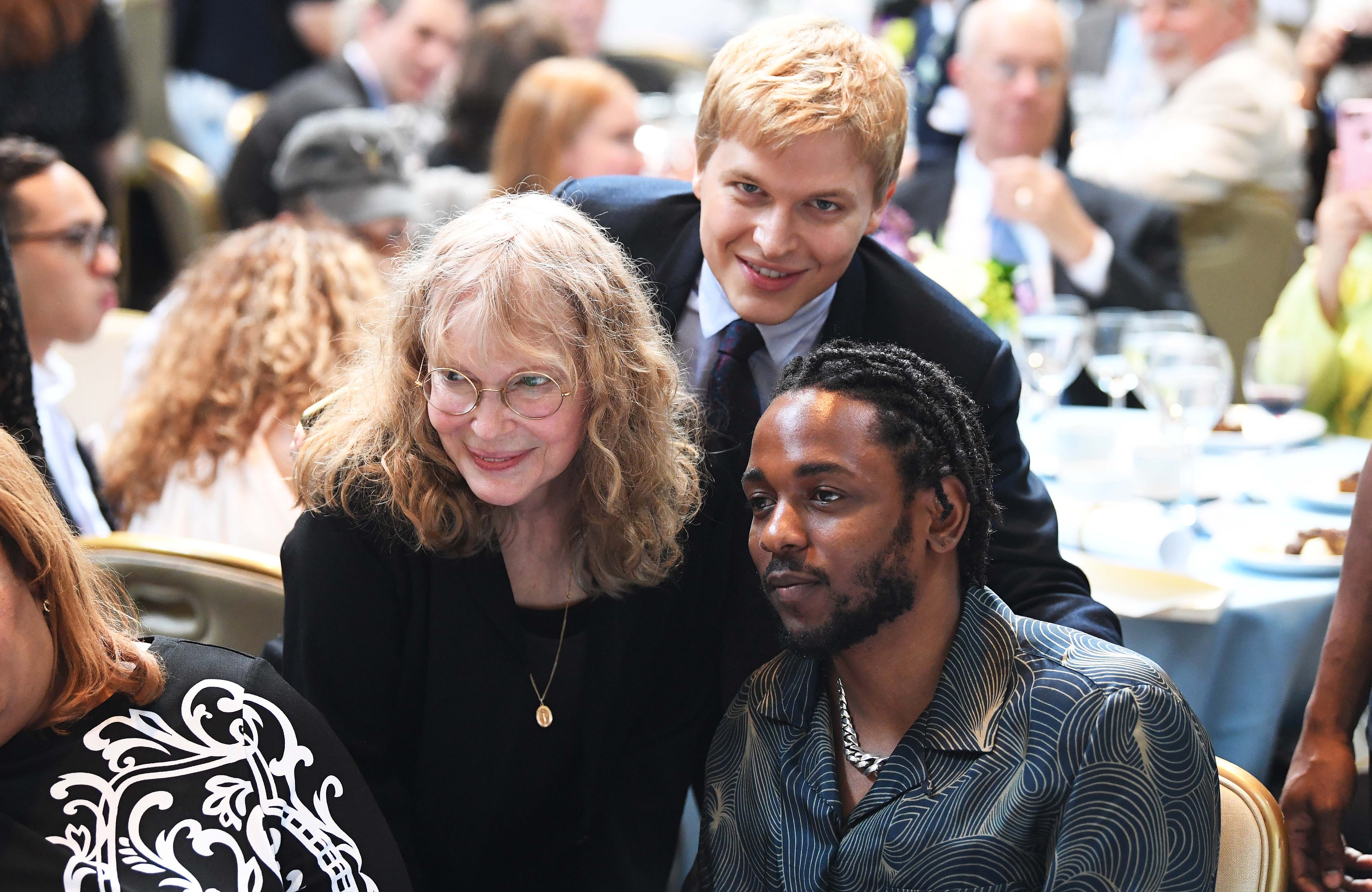
2018 Public Service winner Ronan Farrow and 2018 Music winner Kendrick Lamar pose with the former's mother, actress and activist Mia Farrow. (Photo: Eileen Barroso/Columbia University)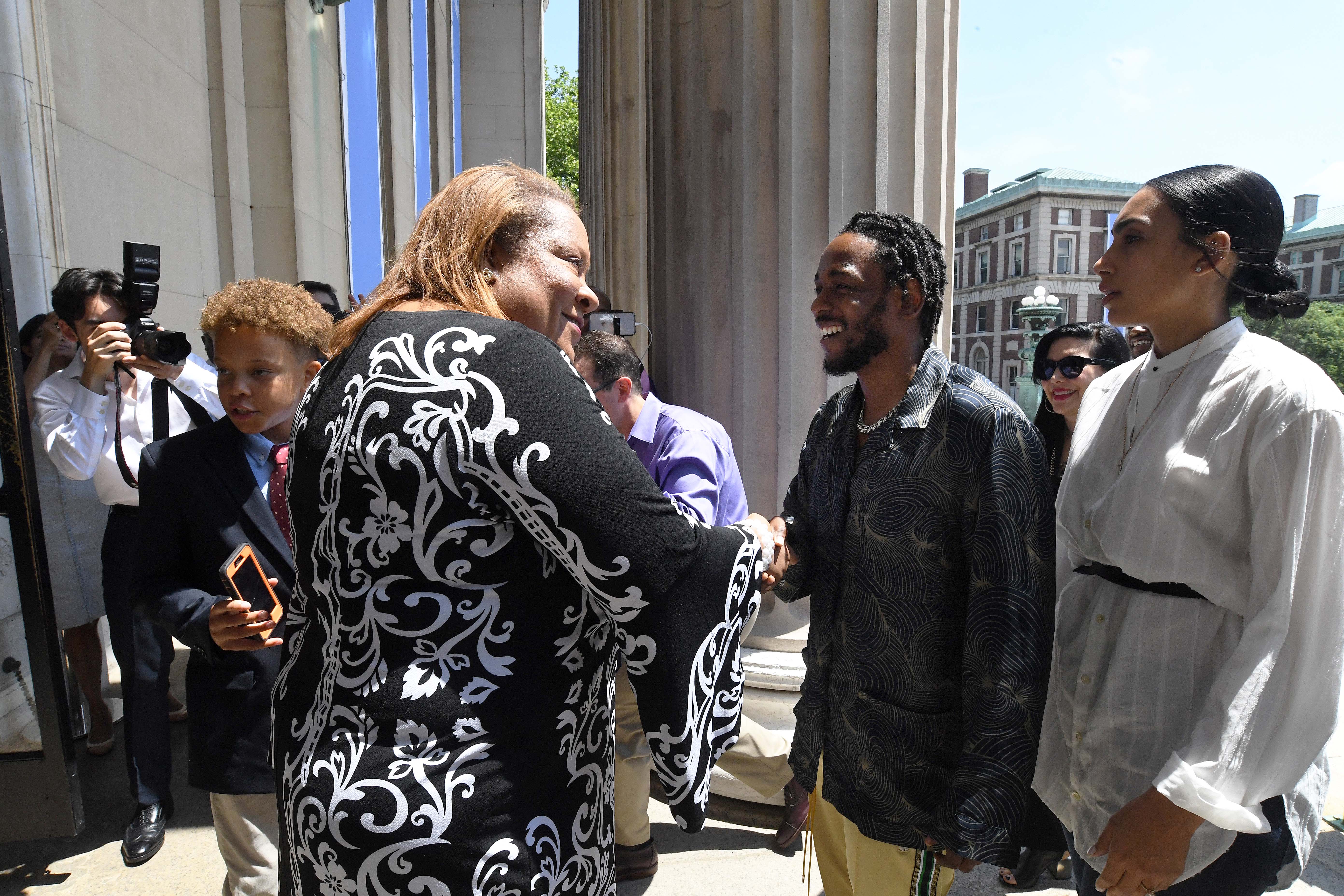
Pulitzer Administrator Dana Canedy greets Kendrick Lamar and his fiancee as they arrive at Columbia for the Pulitzer luncheon. (Photo: Eileen Barroso/Columbia University)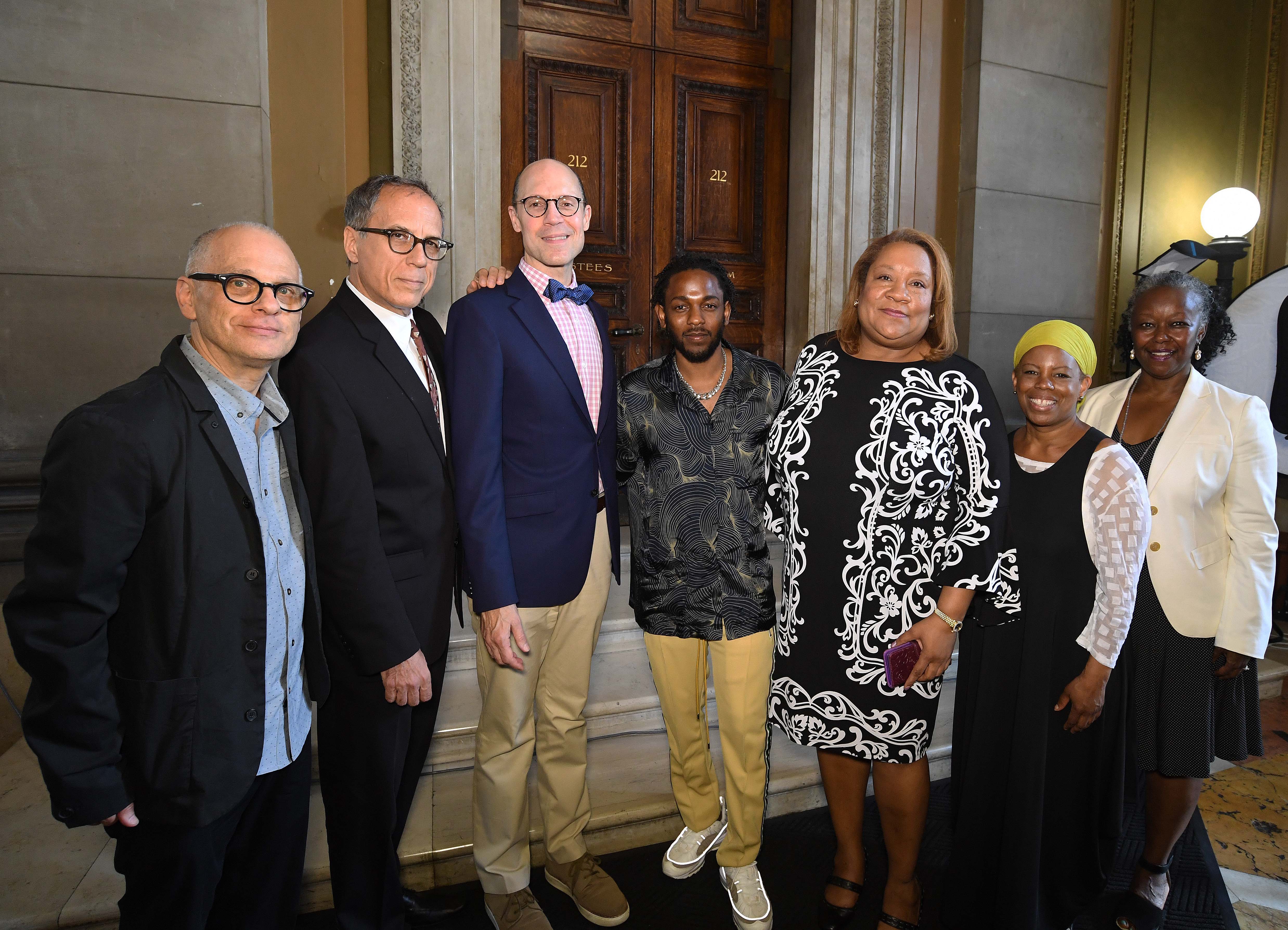
Members of the 2018 Pulitzer Prize Nominating Jury in Music (from left: 2008 Music winner David Lang, David Hajdu, Paul Cremo, chair Regina Carter and Farah Jasmine Griffin) pose with Kendrick Lamar (center) and Dana Canedy (fifth from left). (Photo: Eileen Barroso/Columbia University)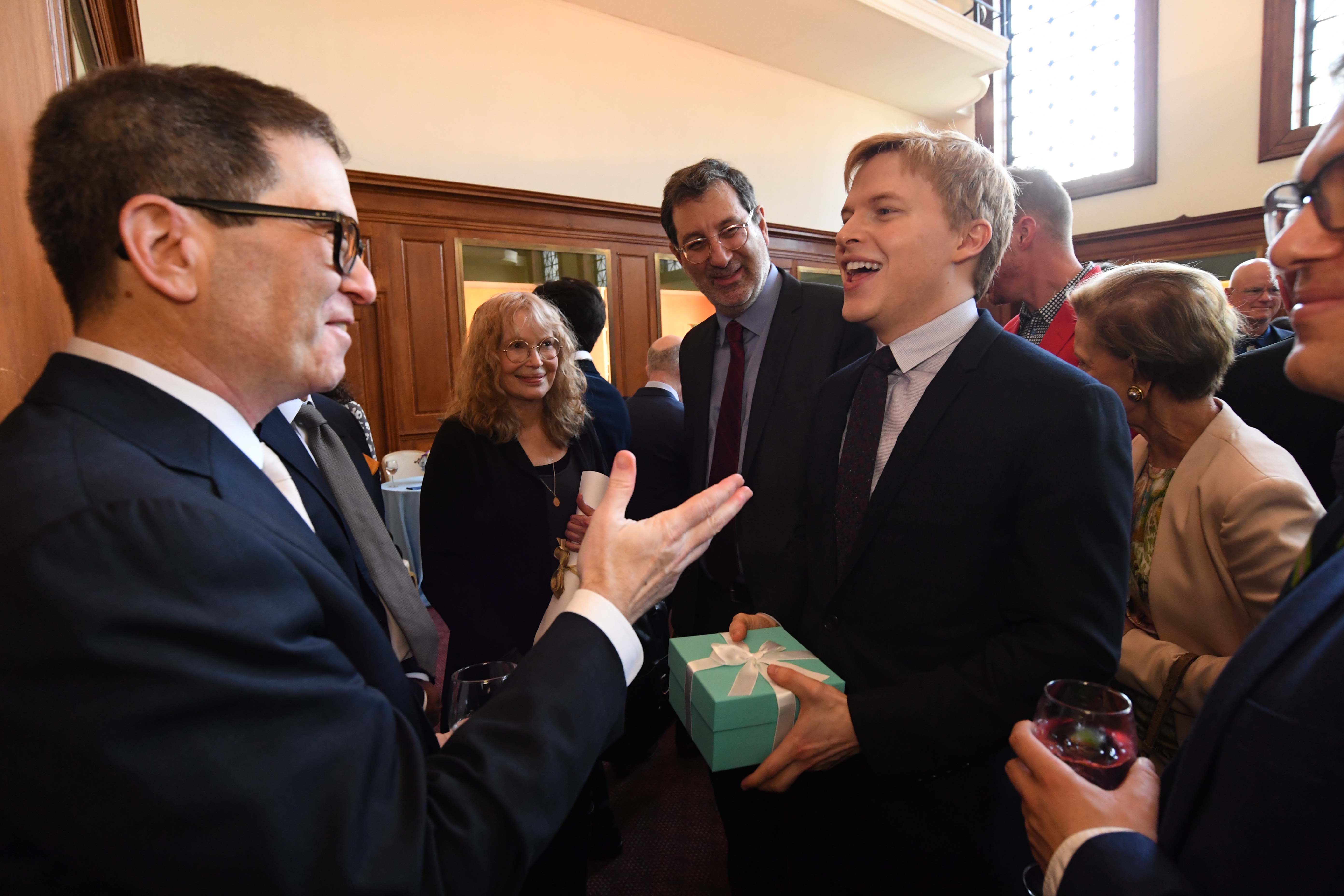
Ronan Farrow talks to Pulitzer Board member Robert Blau as fellow Pulitzer Board member Stephen Engelberg and Mia Farrow look on. (Photo: Eileen Barroso/Columbia University)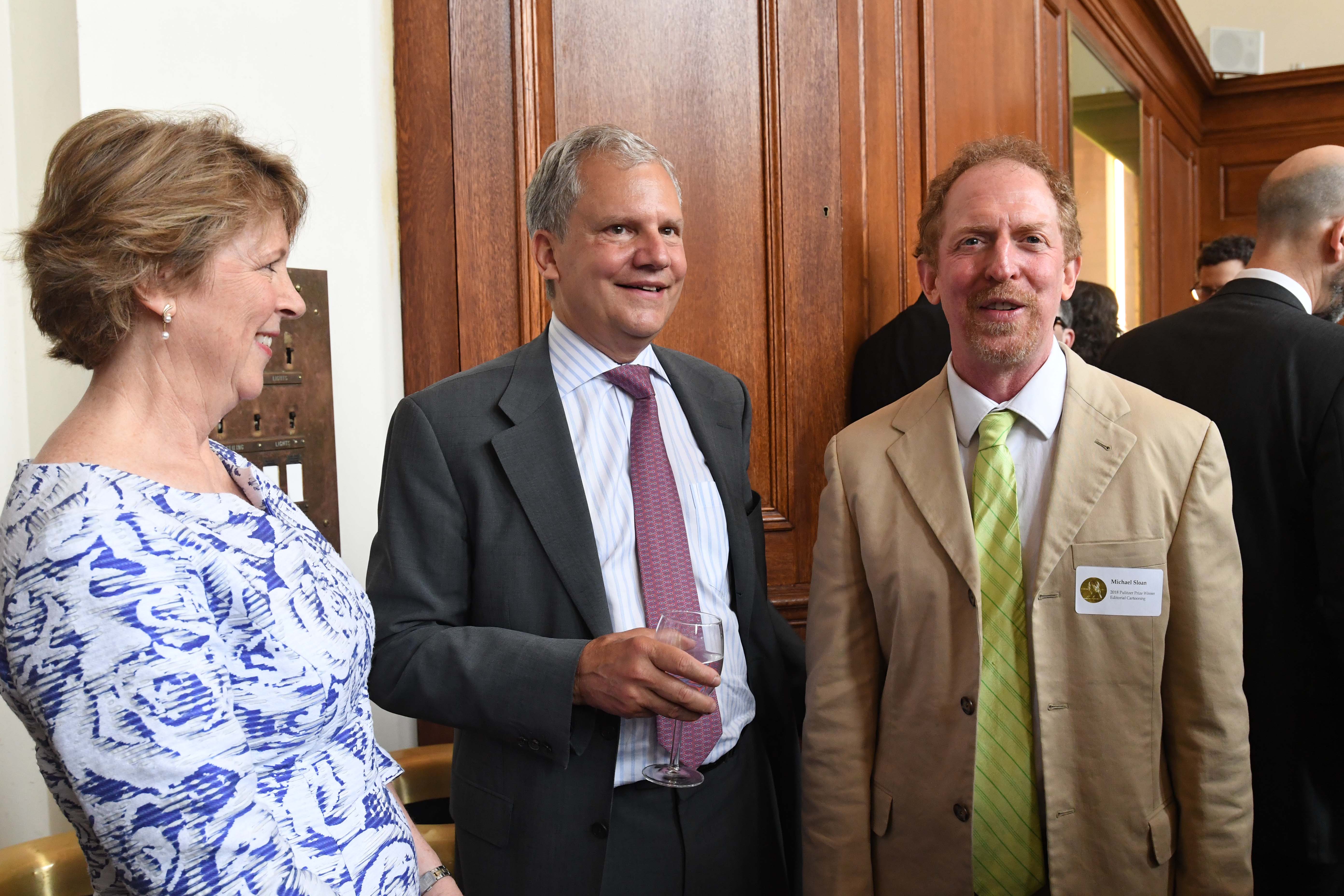
Arthur Ochs Sulzberger Jr. (center) talks to 2018 Editorial Cartooning winner Michael Sloan (right). (Photo: Eileen Barroso/Columbia University)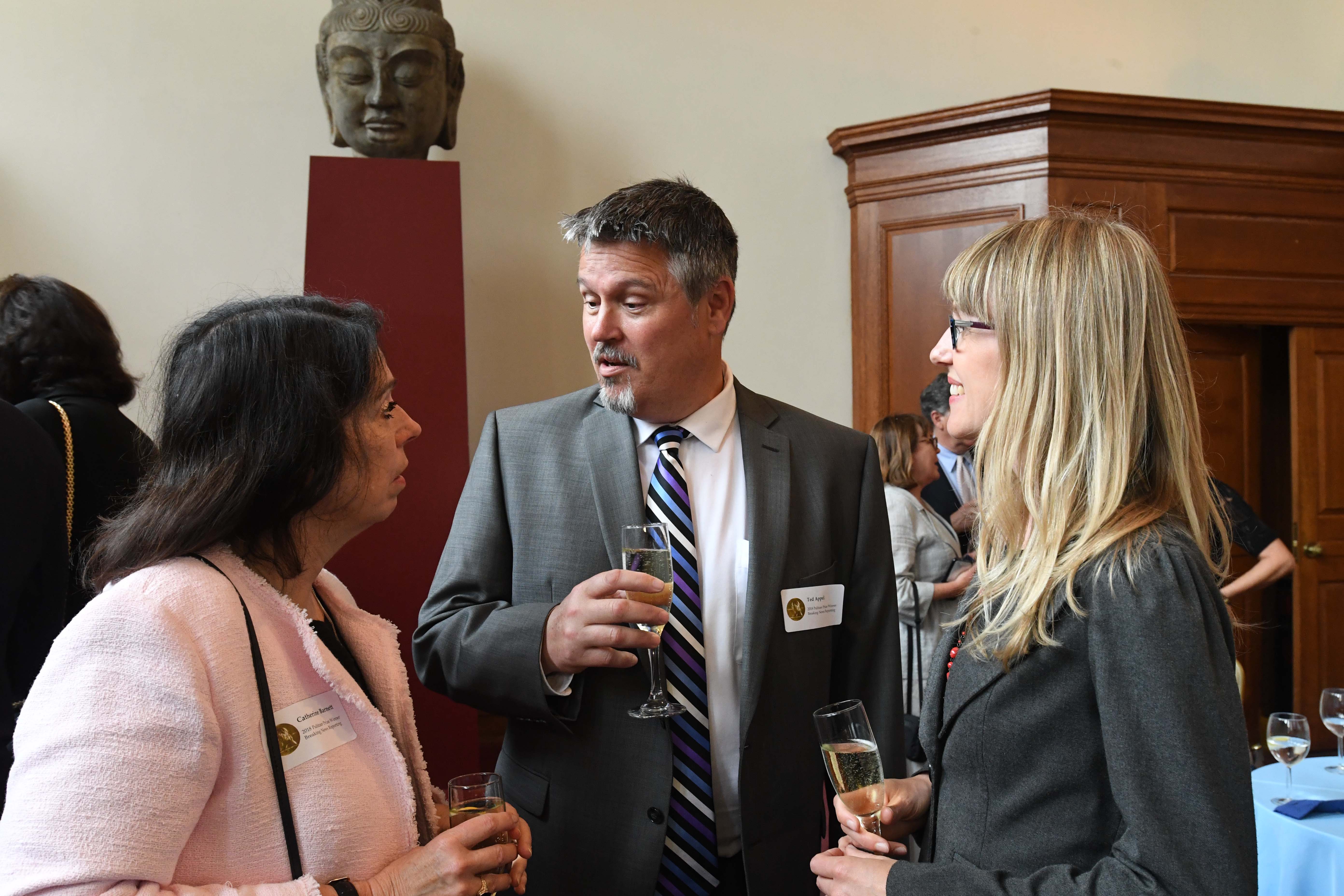
Staff contributors from The Press Democrat enjoy a pre-luncheon drink. The Santa Rosa, Calif.-based newspaper received the 2018 Breaking News Reporting Prize. (Photo: Eileen Barroso/Columbia University)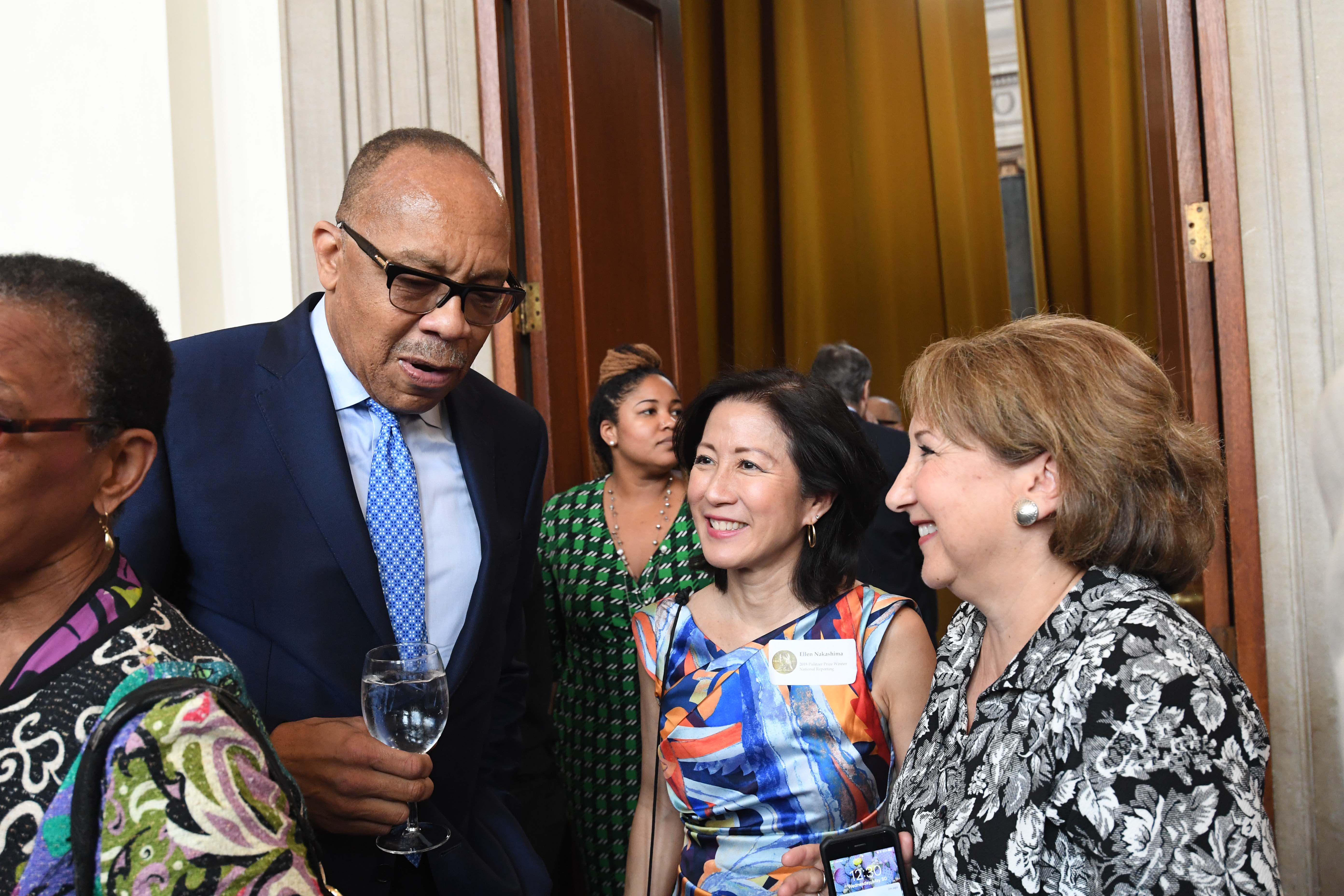
Pulitzer Board Chair Eugene Robinson (left) talks to 2018 National Reporting contributor Ellen Nakashima (center). (Photo: Eileen Barroso/Columbia University)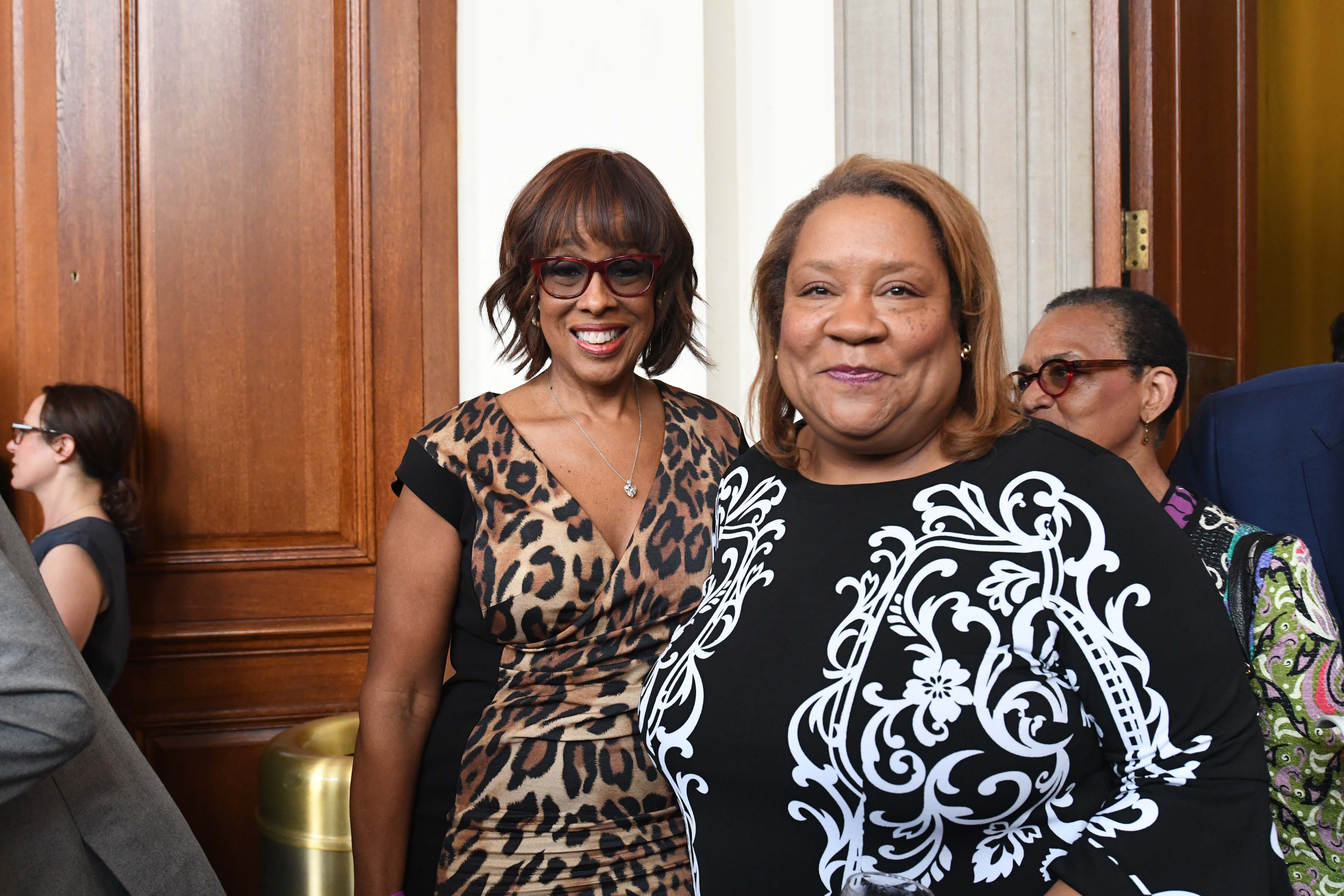
CBS anchor Gayle King and Dana Canedy. (Photo: Eileen Barroso/Columbia University)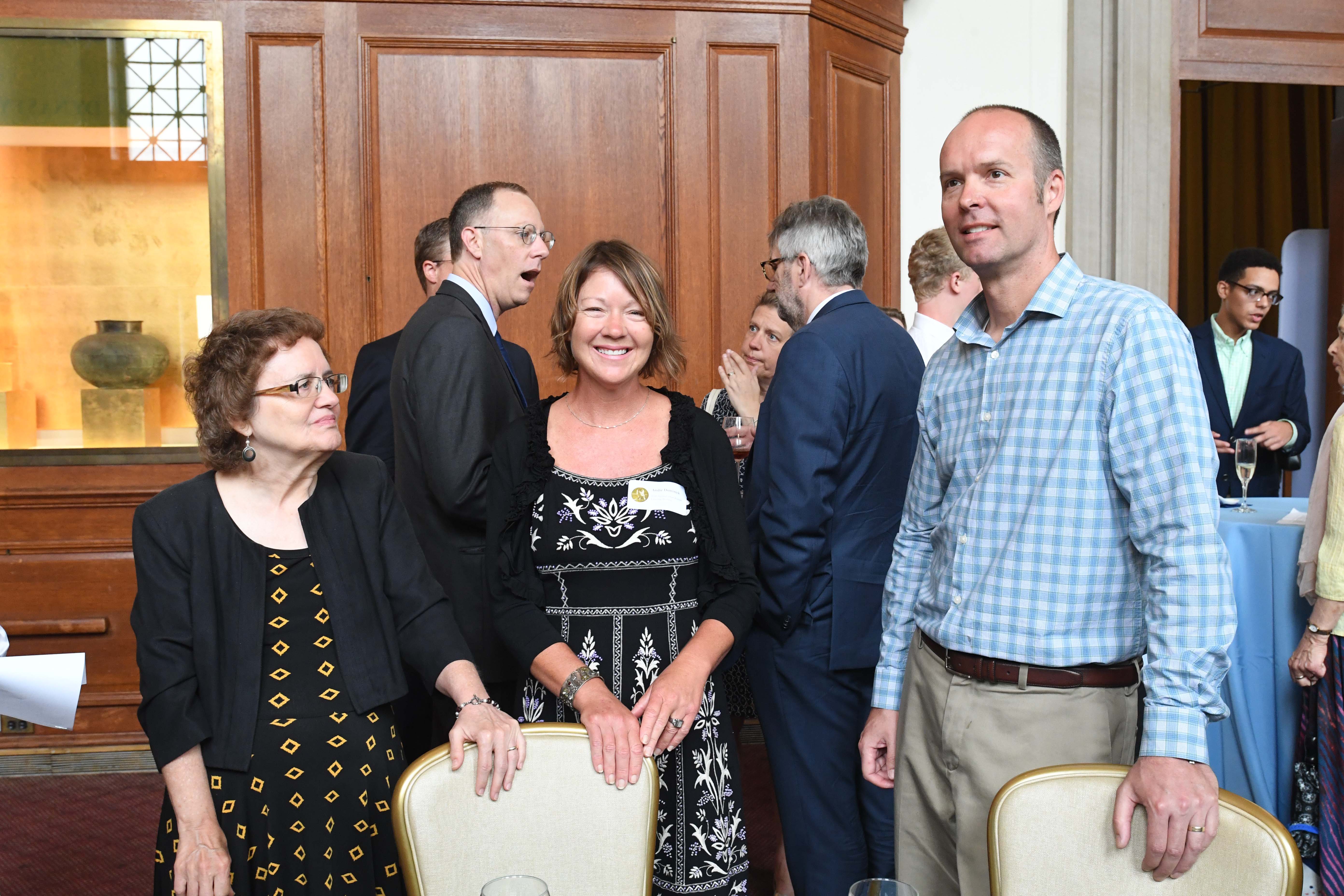
2018 Editorial Writing winner Andie Dominick and her guests. (Photo: Eileen Barroso/Columbia University)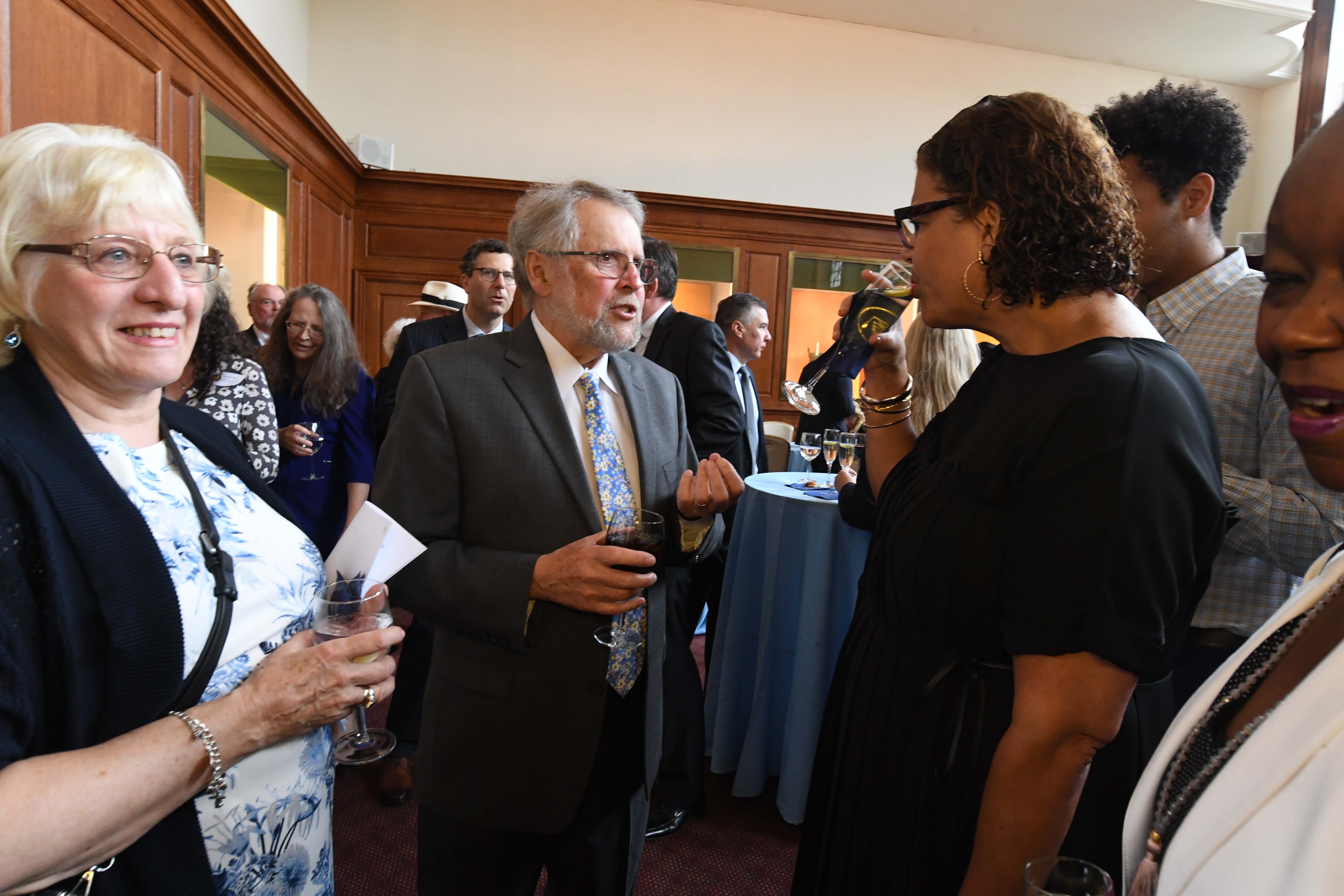
Former Pulitzer Board Chair and Administrator Mike Pride (center) talks to Pulitzer Board member Elizabeth Alexander (right) as Monique Pride looks on. (Photo: Eileen Barroso/Columbia University)
"We are living in an era that demands of us a new understanding of and confrontation with the abuses of power," Bollinger said. His full remarks are below:
Remarks by Columbia University President Lee C. Bollinger
May 30, 2018In any given year, the awarding of the Pulitzer Prizes is a singular moment in the annual cycle of noted and noteworthy events. The Prizes stand out in a world not wanting for awards and prizes, capturing the attention of professionals and the broader public because they somehow seem both to sum up what has just happened in our lives while marking the extraordinary creativity in journalism and the arts that have so illuminated these happenings. How prizes achieve this status is something of a mystery, but we know that they can only continue to have it if there is a deep integrity to the process of selection over time, and, I am always happy to testify as a Board member, as well as the President of this great University, that I’ve never been part of anything that has more dedication from more talented people committed to doing the best job humanly possible than is the case with the Pulitzer Prizes, helped in this regard by great Administrators like Dana Canedy.
So, the Pulitzers are always uniquely important, but I believe this year will stand out in the now century-long history of the Prizes as among the most important. This is not only because of the new and wider reach of the Prizes into realms where creative genius resides, such as we do today with music, but also because we are living in an era that demands of us a new understanding of and confrontation with the abuses of power. On the political front, I think it is clear that the nation is facing the most serious internal attacks on the fundamental values and institutional structures that define a democracy since the Pulitzers were introduced a century ago — then precisely to counteract problematic authoritarian tendencies throughout the society. As I have noted on many occasions, the inauguration of the Prizes was nearly simultaneous to the beginnings of the Supreme Court cases in 1919 that formed the basis of the modern notions we have now about the constitutional rights of freedom of speech and press. This, too, was prompted by the alarm over the rising tide of intolerance and censorship that was floating across the country. We are, indeed, fortunate that these, and other, bulwarks of freedom and respect for basic values of truth-seeking — and truth protection — in a framework of self-government and a Rule of Law — took root, prospered, and, I think, on the whole, succeeded.
So much so that I personally feel confident we can now, with clear focus and deep dedication, such as we are recognizing here this afternoon, preserve the character of genuine democracy that has defined the nation in its best moments and inspired so many around the world.
Now, happily and with gratitude, we turn to the awarding of the Pulitzer Prizes for 2018.
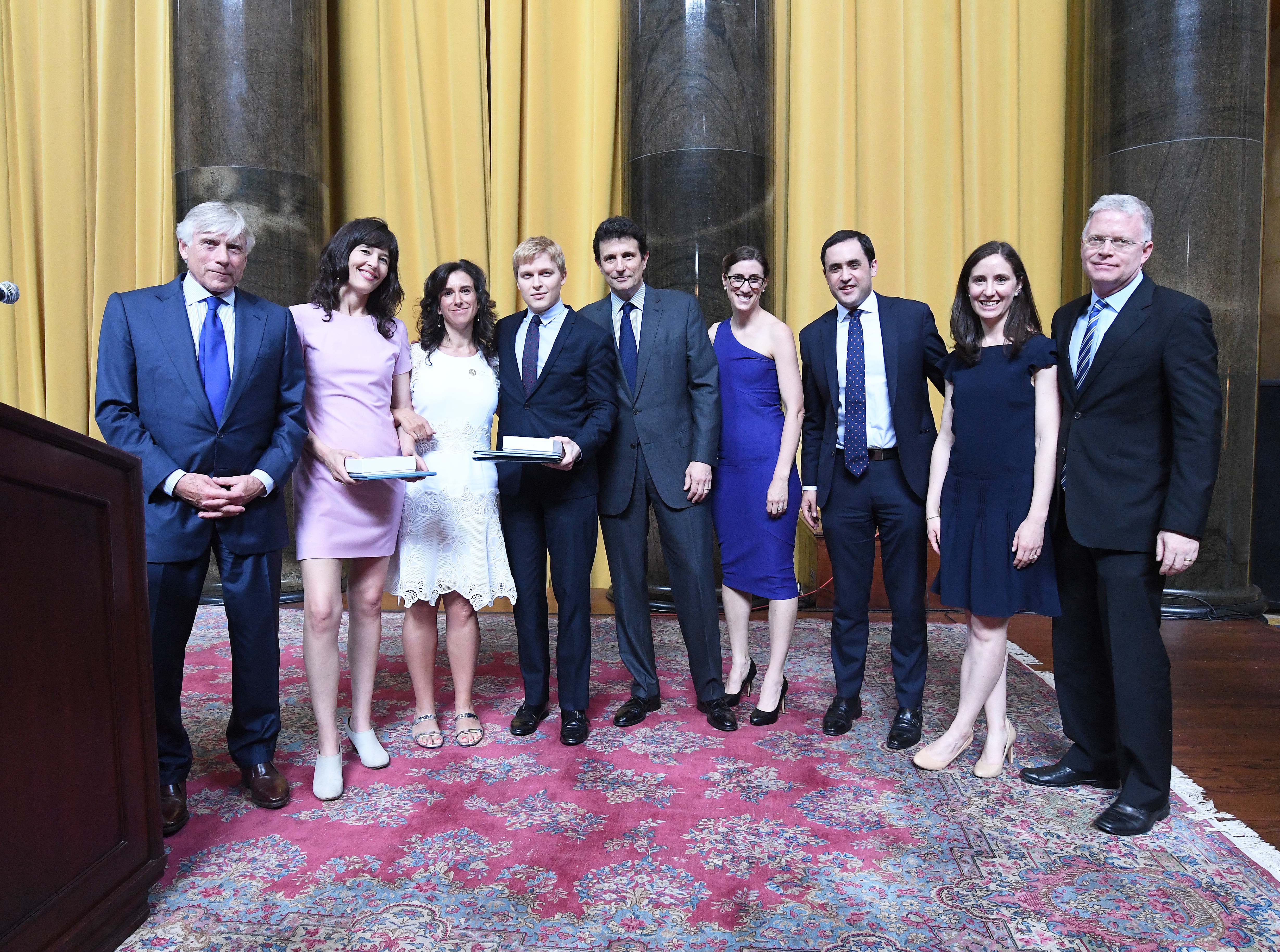
Staff members from The New York Times and The New Yorker (from left: Megan Twohey, Jodi Kantor, Ronan Farrow, David Remnick, Deidre Foley-Mendelssohn, Mike Schmidt, Emily Steel and 1996 International Reporting winner David Rohde) accept the 2018 Pulitzer Prize for Public Service from Columbia University President Lee Bollinger (far left). (Photo: Eileen Barroso/Columbia University)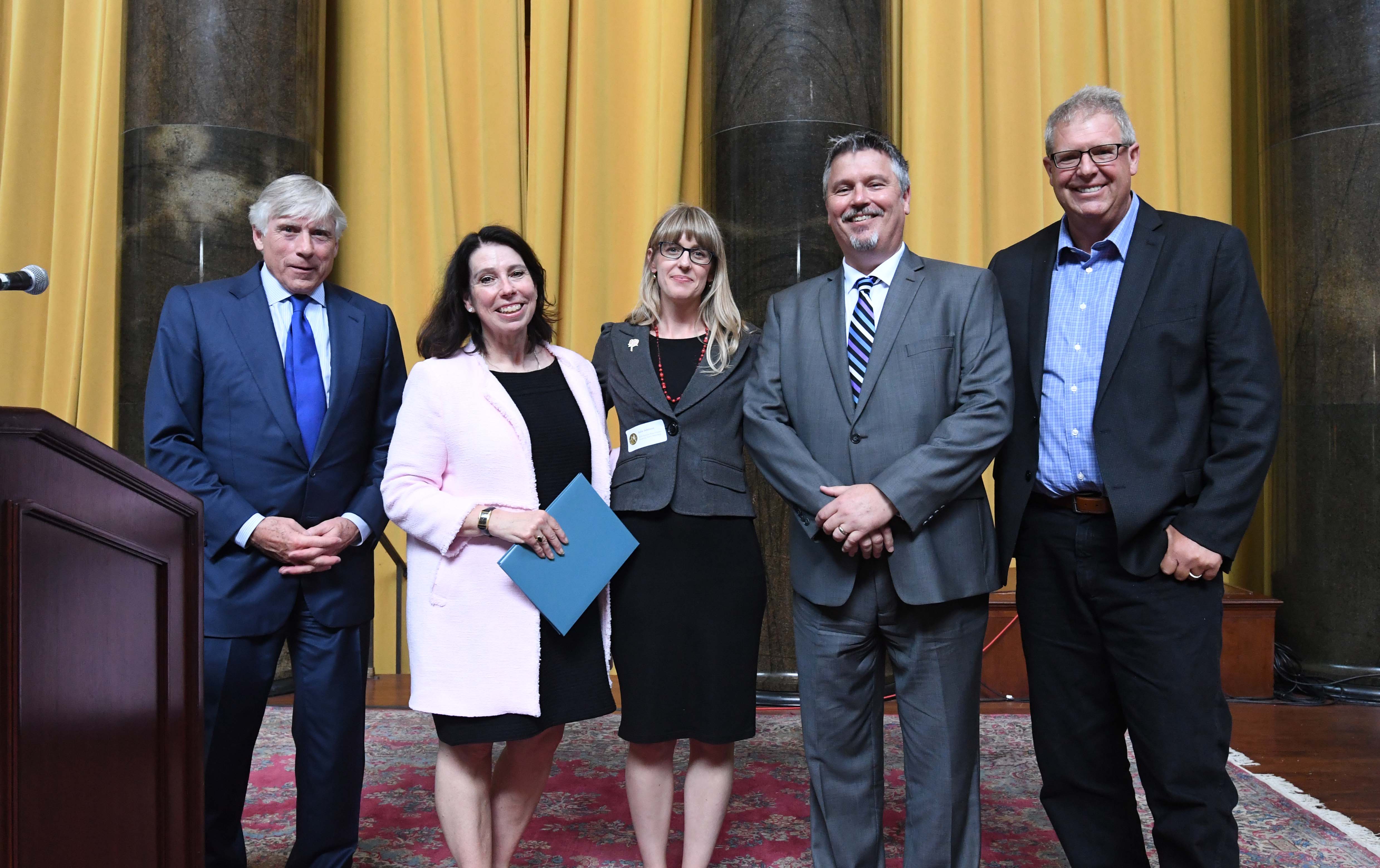
Staff members from The Press Democrat (from left: Catherine Barnett, Julie Johnson, Ted Appel and Kent Porter) accept the 2018 Pulitzer Prize for Breaking News Reporting from Columbia University President Lee Bollinger. (Photo: Eileen Barroso/Columbia University)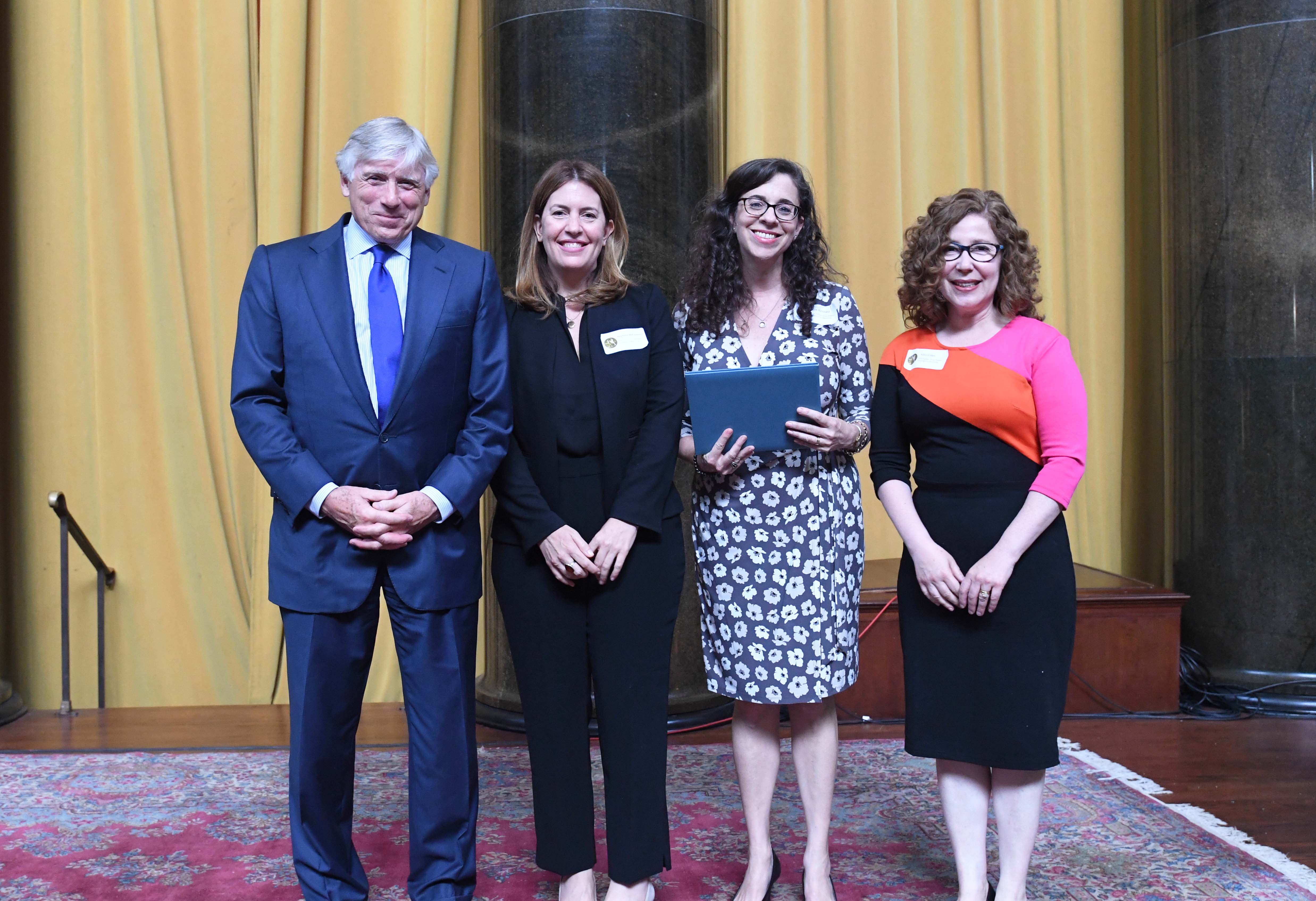
Staff members from The Washington Post (from left: Stephanie McCrummen, Beth Reinhard and Alice Crites) accept the 2018 Pulitzer Prize for Investigative Reporting from Columbia University President Lee Bollinger. (Photo: Eileen Barroso/Columbia University)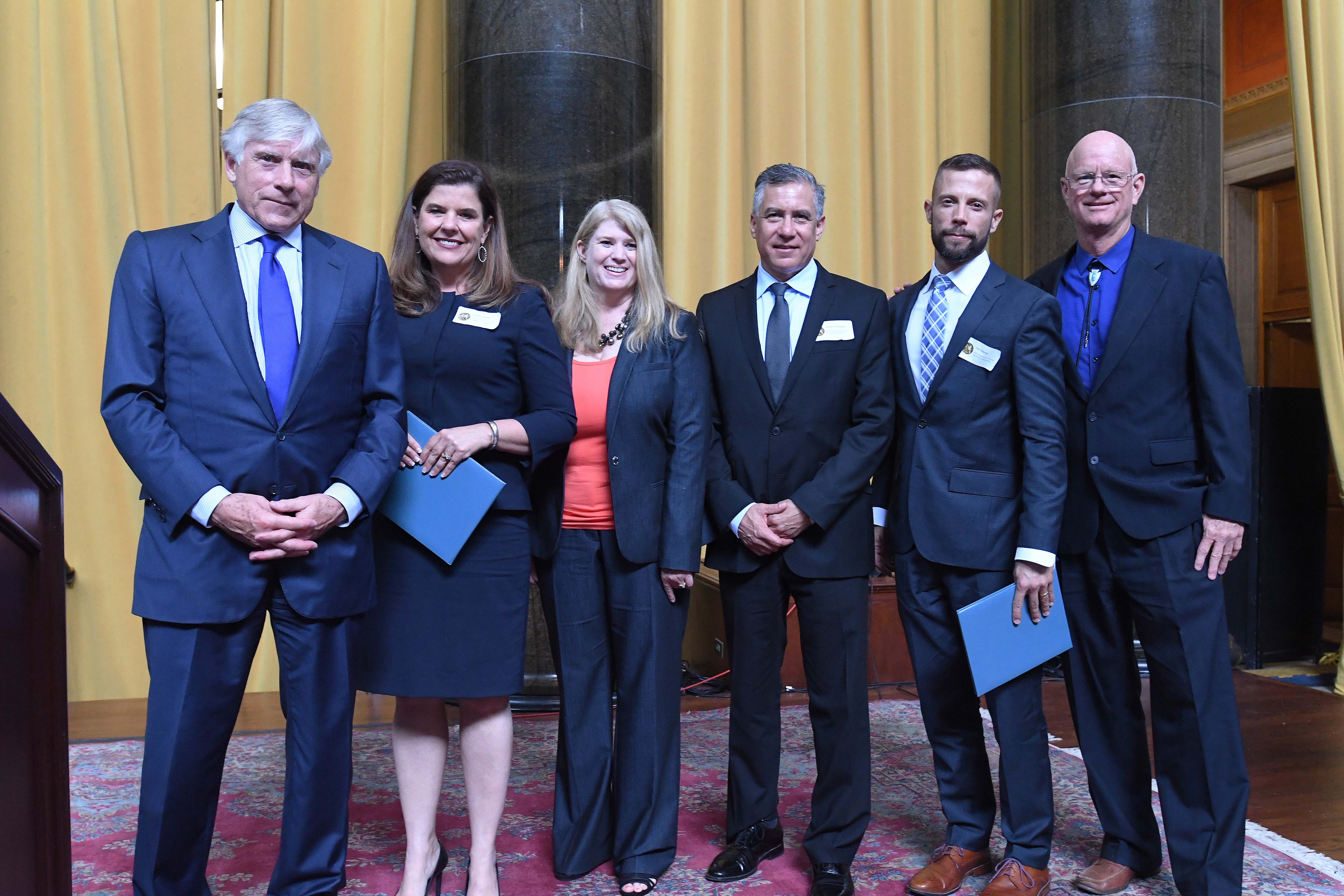
Staff members from The Arizona Republic (from left: Nicole Carroll, Cheryl Evans, Daniel Gonzalez, Josh Susong and Dennis Wagner) accept the 2018 Pulitzer Prize for Explanatory Reporting from Columbia University President Lee Bollinger. (Photo: Eileen Barroso/Columbia University)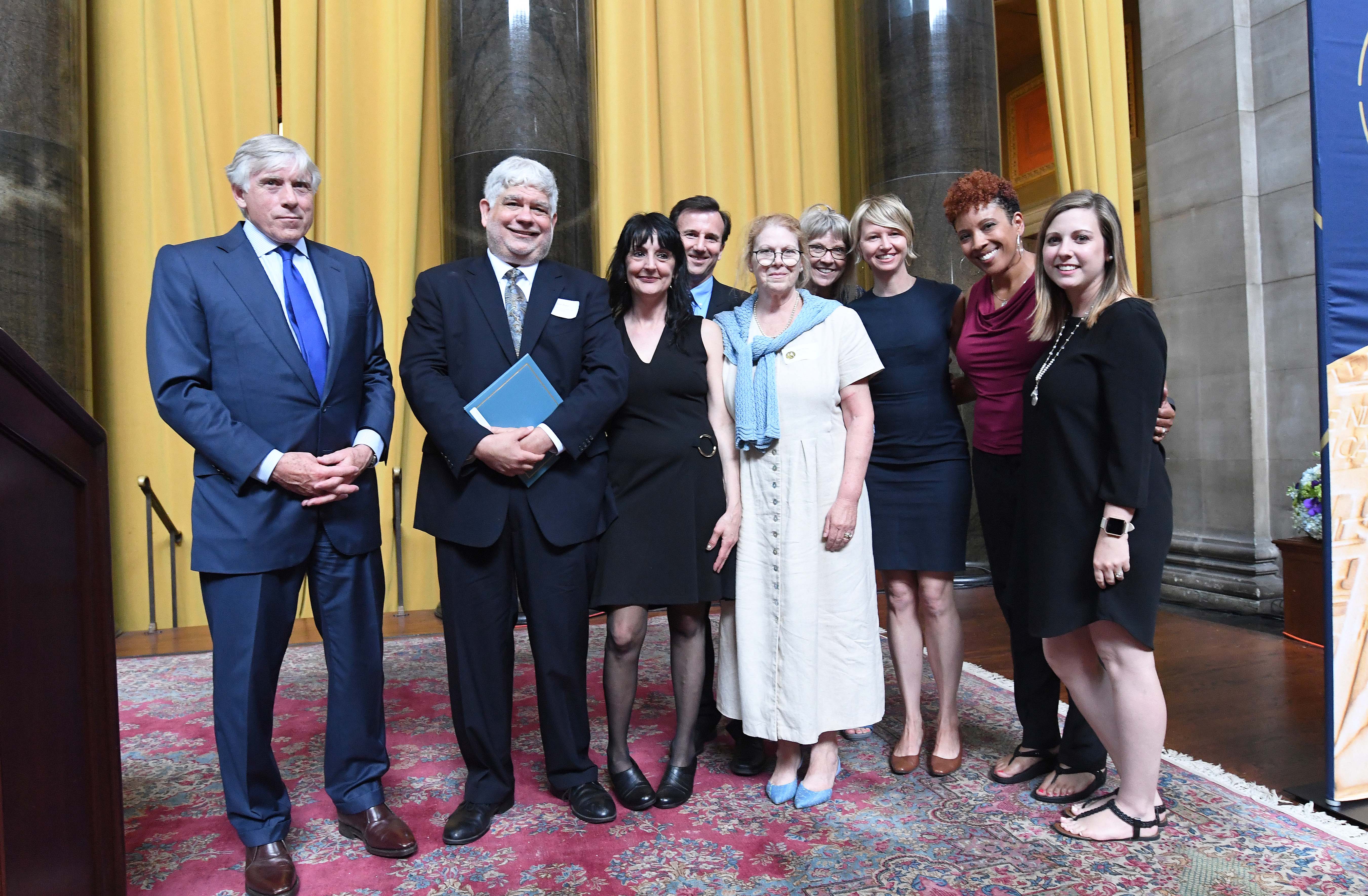
Staff members from The Cincinnati Enquirer (including Peter Bhatia [left], Terry DeMio [first from left], Dan Horn [second from left], Amy Wilson [third from left] and Cara Owsley [sixth from left]) accept the 2018 Pulitzer Prize for Local Reporting from Columbia University President Lee Bollinger. (Photo: Eileen Barroso/Columbia University)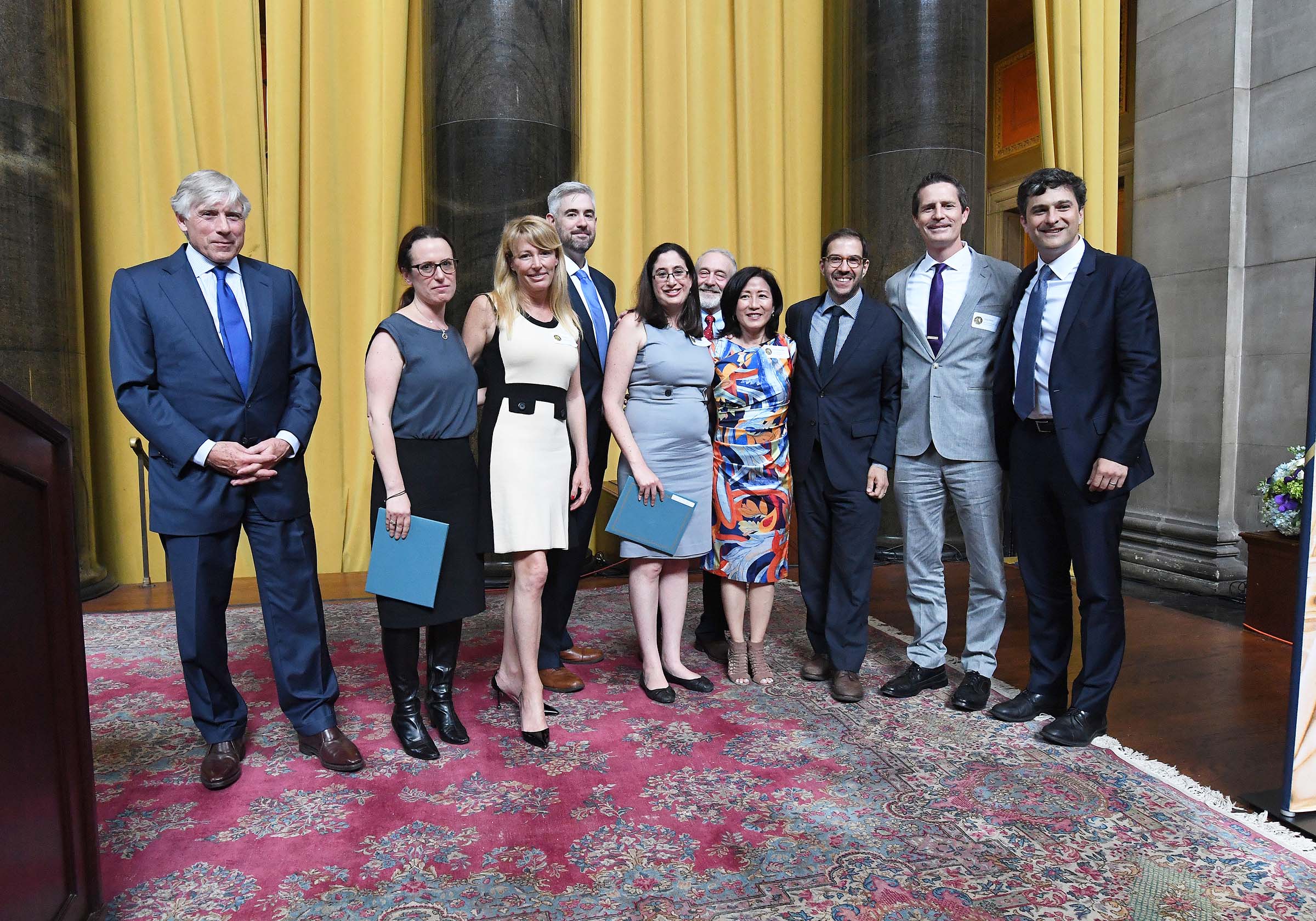
Staff members from The New York Times and The Washington Post (from left: Maggie Haberman, Jo Becker, Matt Apuzzo, Rosalind Helderman, Tom Hamburger, Ellen Nakashima, Adam Entous, Greg Miller and Mark Mazetti) accept the 2018 Pulitzer Prize for National Reporting from Columbia University President Lee Bollinger. (Photo: Eileen Barroso/Columbia University)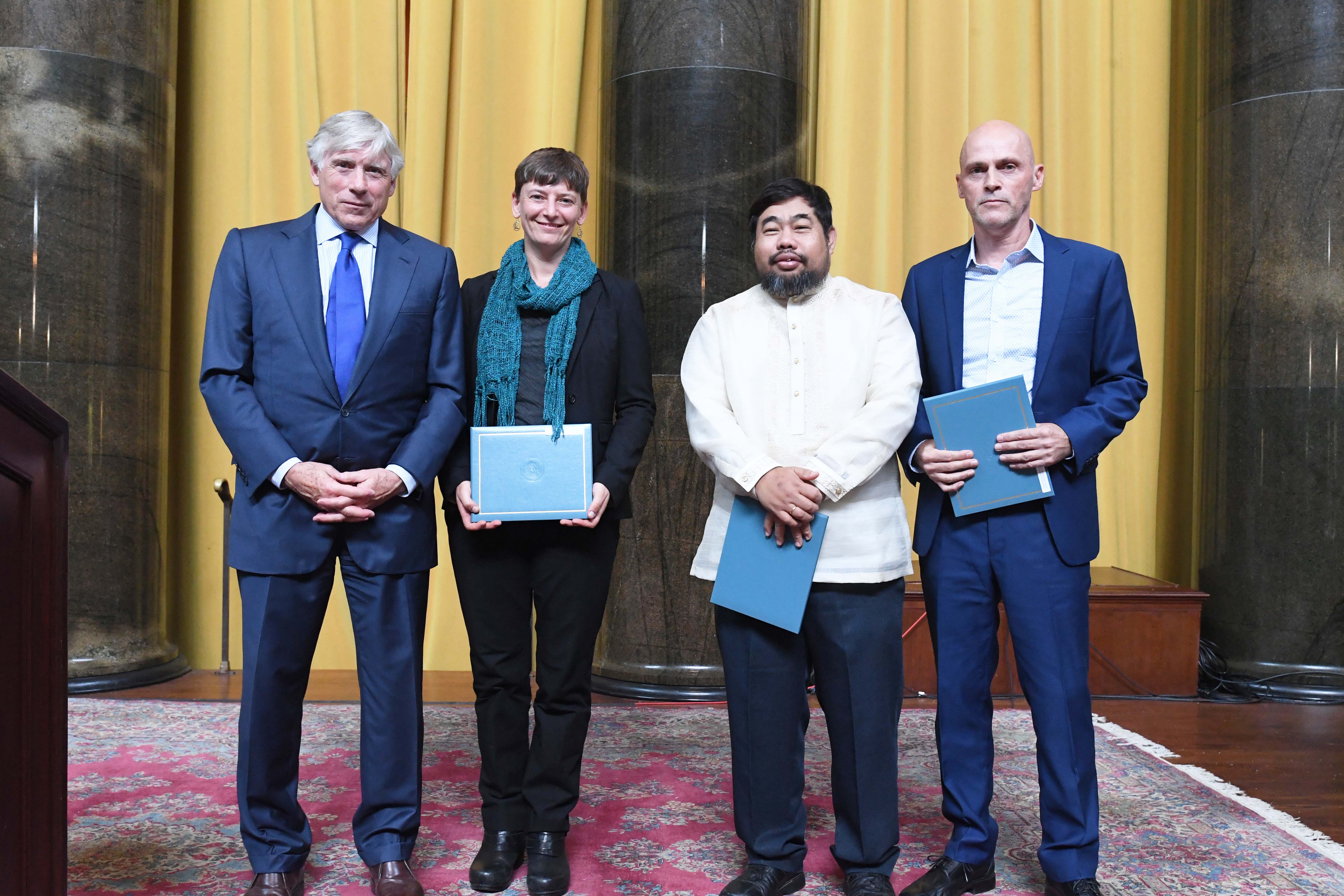
Clare Baldwin, Manuel Mogato and 2014 International Reporting winner Andrew R.C. Marshall accept the 2018 Pulitzer Prize for International Reporting from Columbia University President Lee Bollinger. (Photo: Eileen Barroso/Columbia University)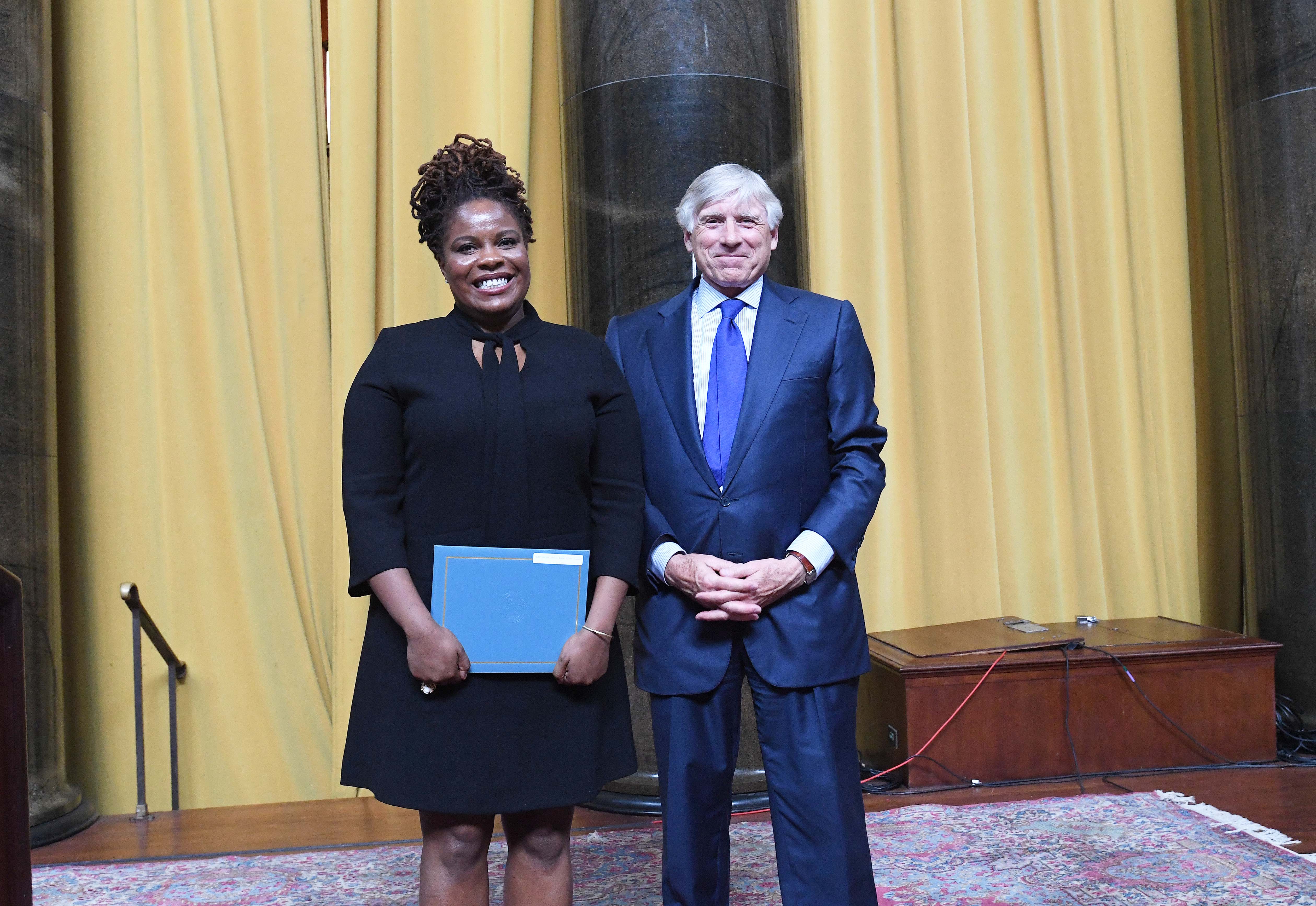
Rachel Kaadzi Ghansah accepts the 2018 Pulitzer Prize for Feature Writing from Columbia University President Lee Bollinger. (Photo: Eileen Barroso/Columbia University)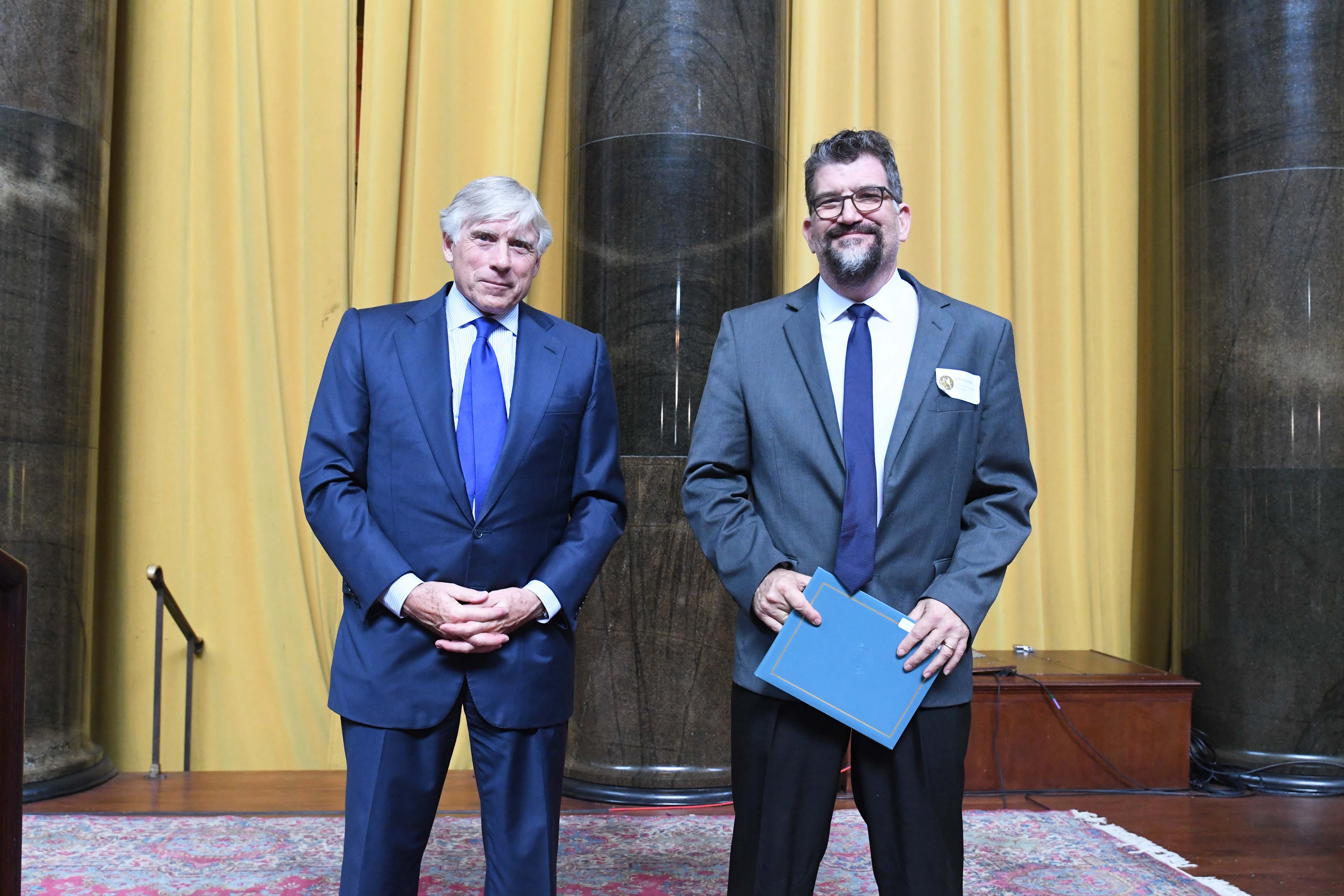
John Archibald accepts the 2018 Pulitzer Prize for Commentary from Columbia University President Lee Bollinger. (Photo: Eileen Barroso/Columbia University)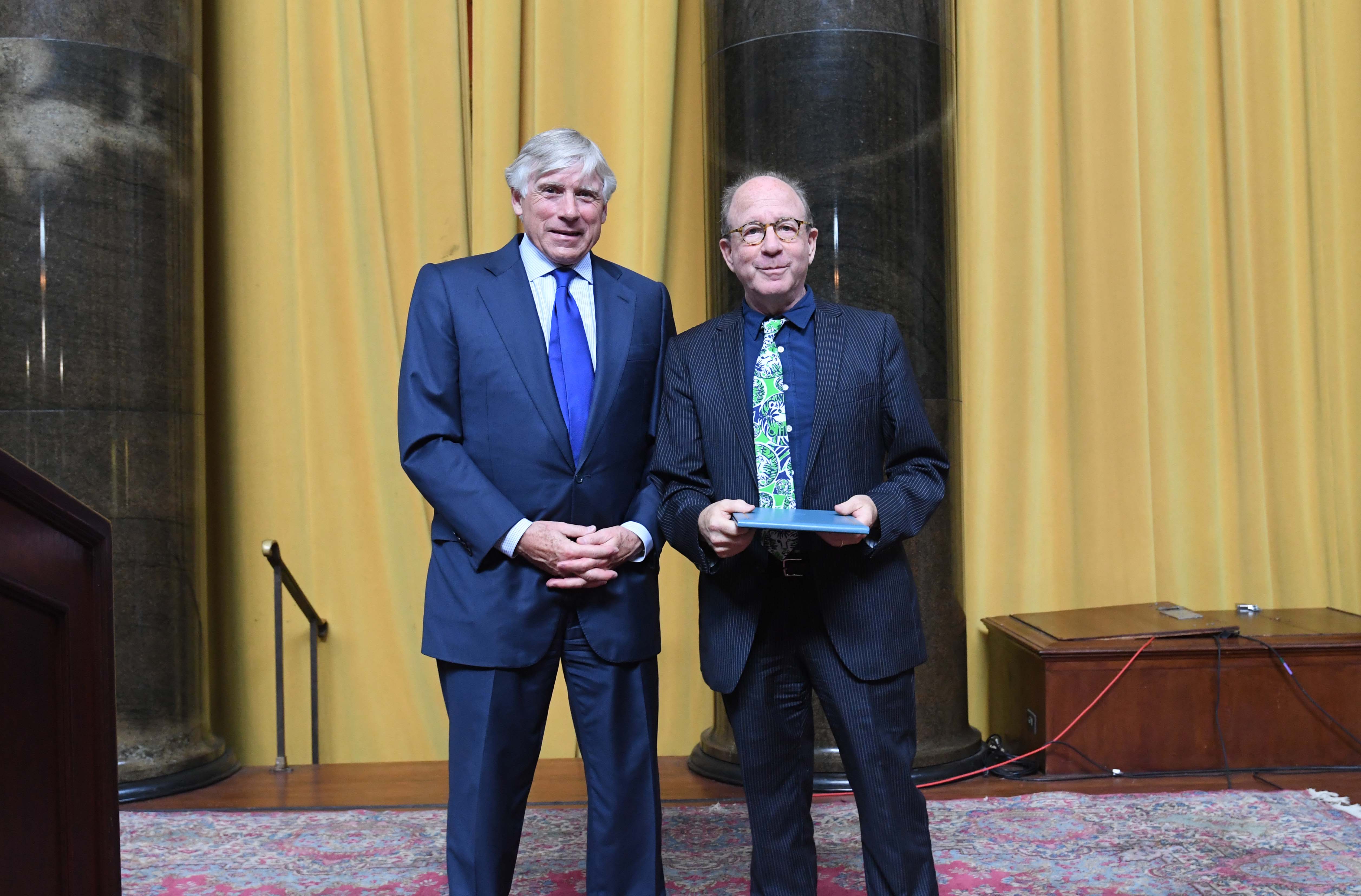
Jerry Saltz accepts the 2018 Pulitzer Prize for Criticism from Columbia University President Lee Bollinger. (Photo: Eileen Barroso/Columbia University)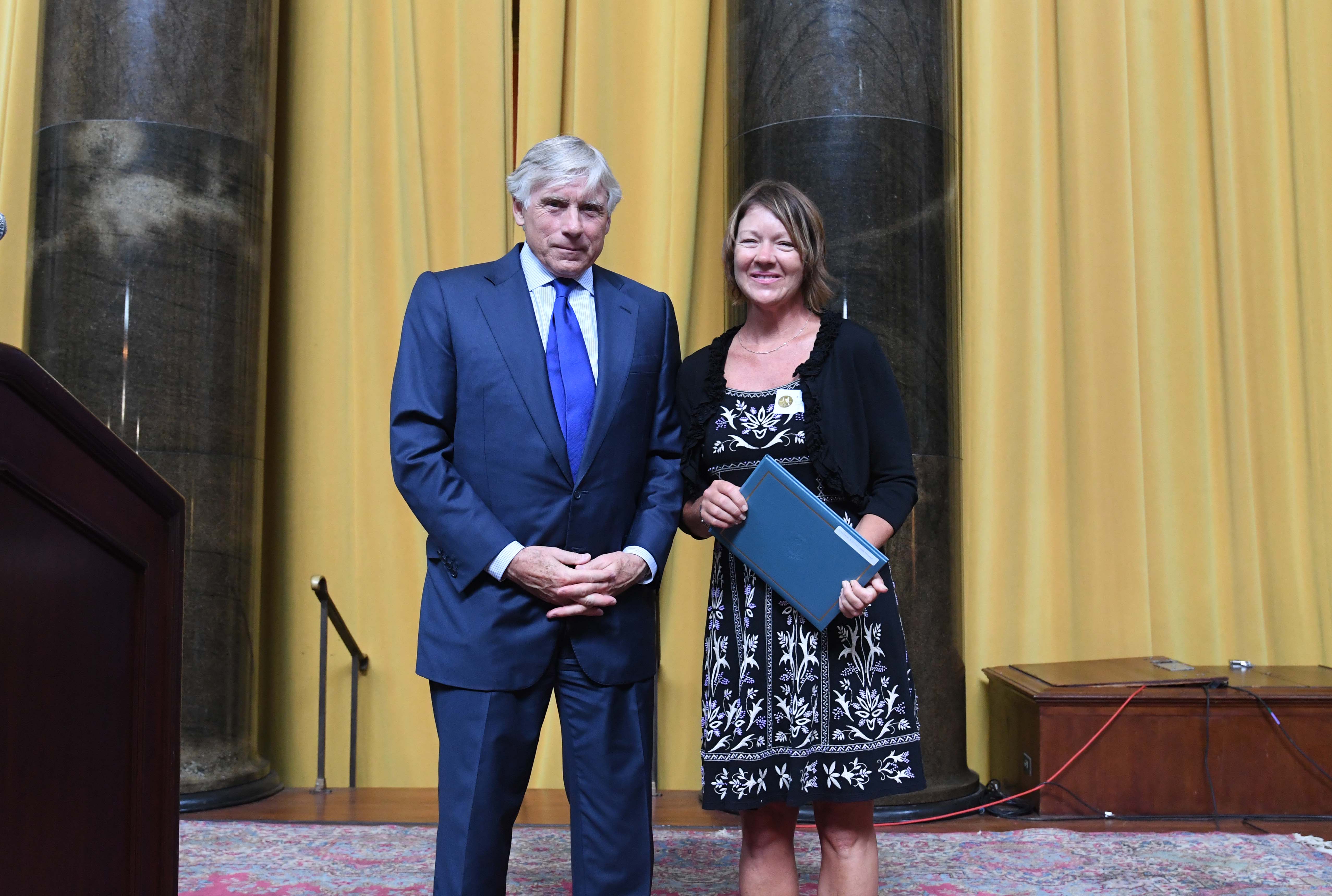
Andie Dominick accepts the 2018 Pulitzer Prize for Editorial Writing from Columbia University President Lee Bollinger. (Photo: Eileen Barroso/Columbia University)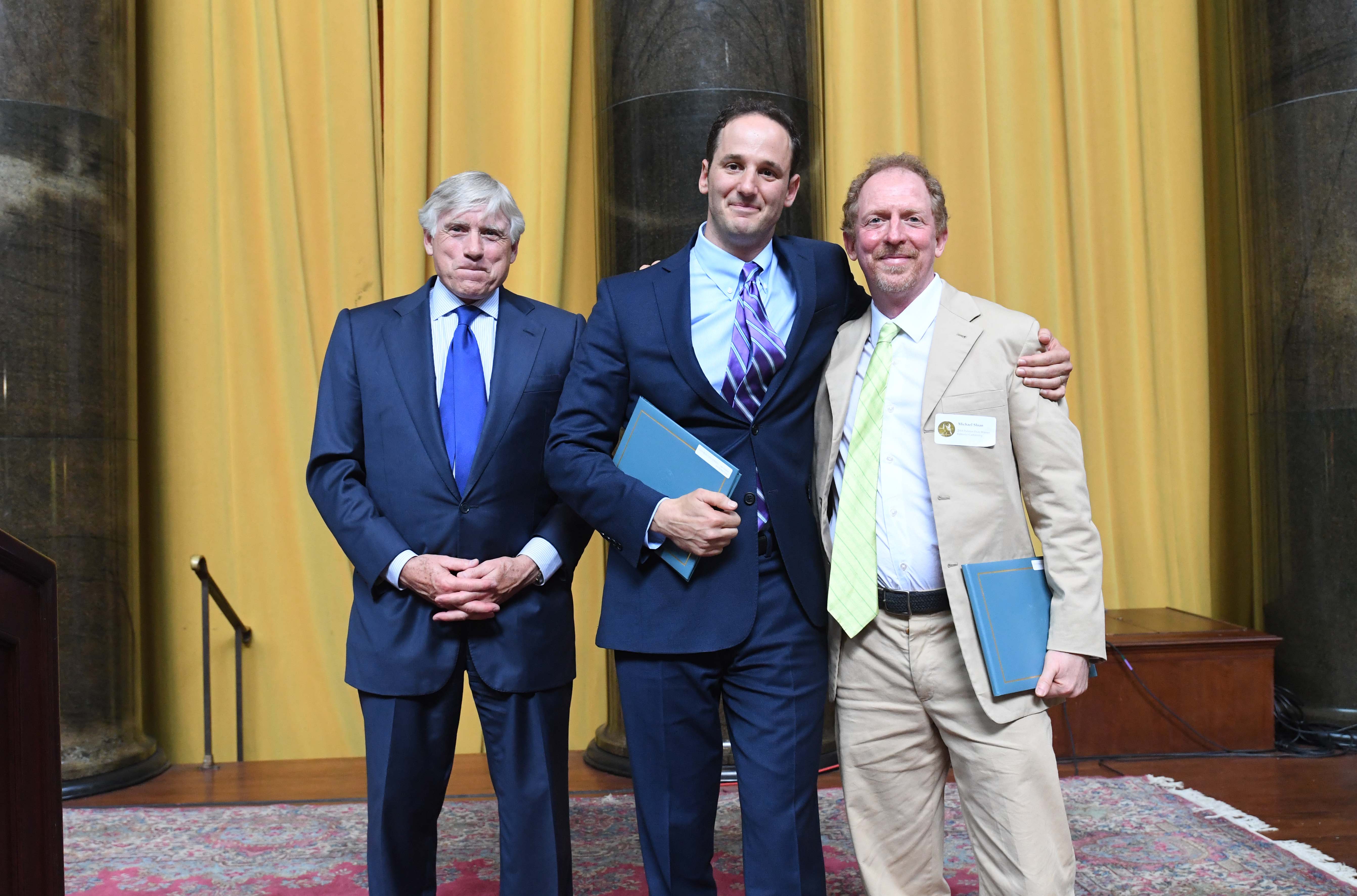
Jake Halpern (left) and Michael Sloan (right) accept the 2018 Pulitzer Prize for Editorial Cartooning from Columbia University President Lee Bollinger. (Photo: Eileen Barroso/Columbia University)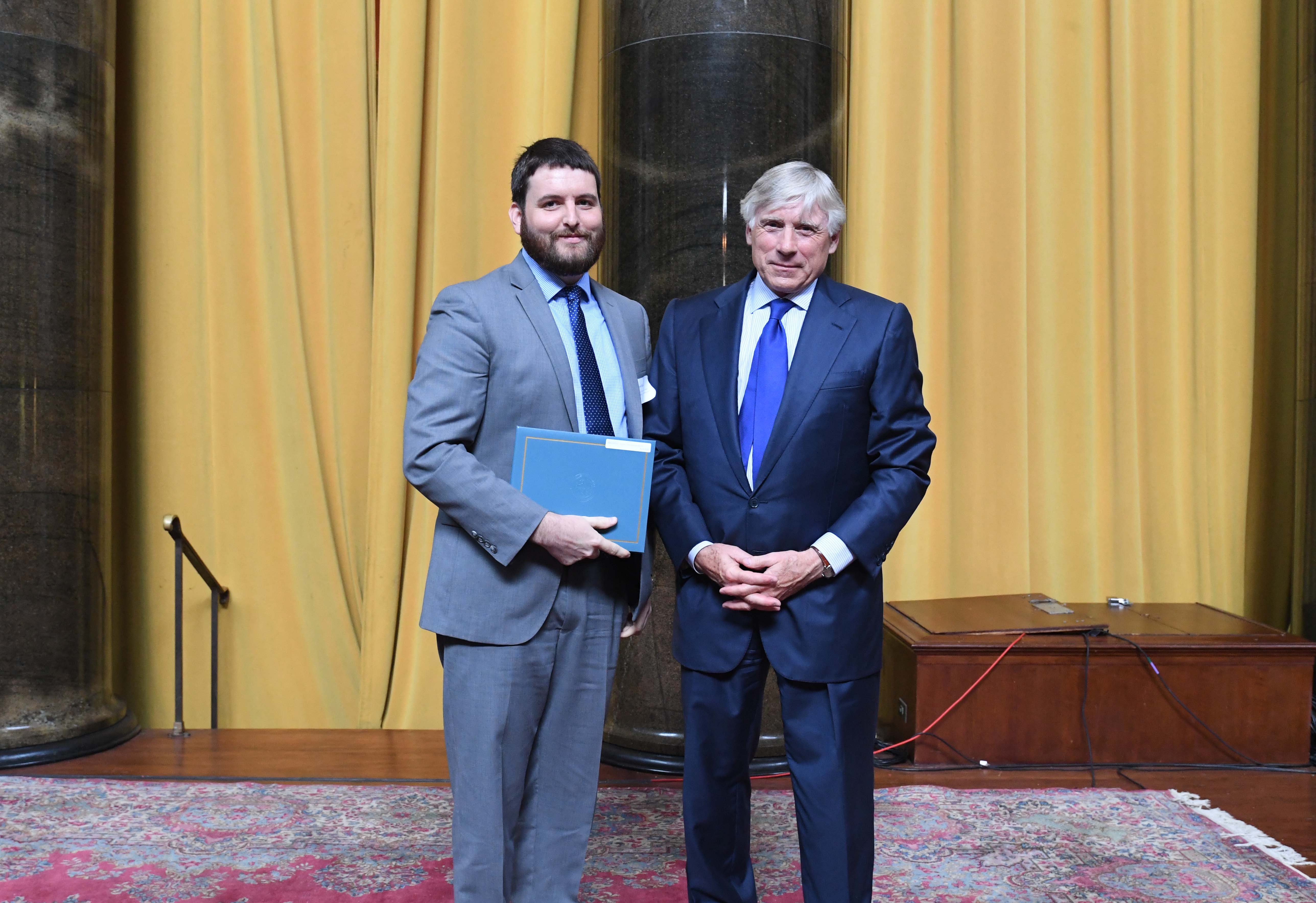
Ryan Kelly accepts the 2018 Pulitzer Prize for Breaking News Photography from Columbia University President Lee Bollinger. (Photo: Eileen Barroso/Columbia University)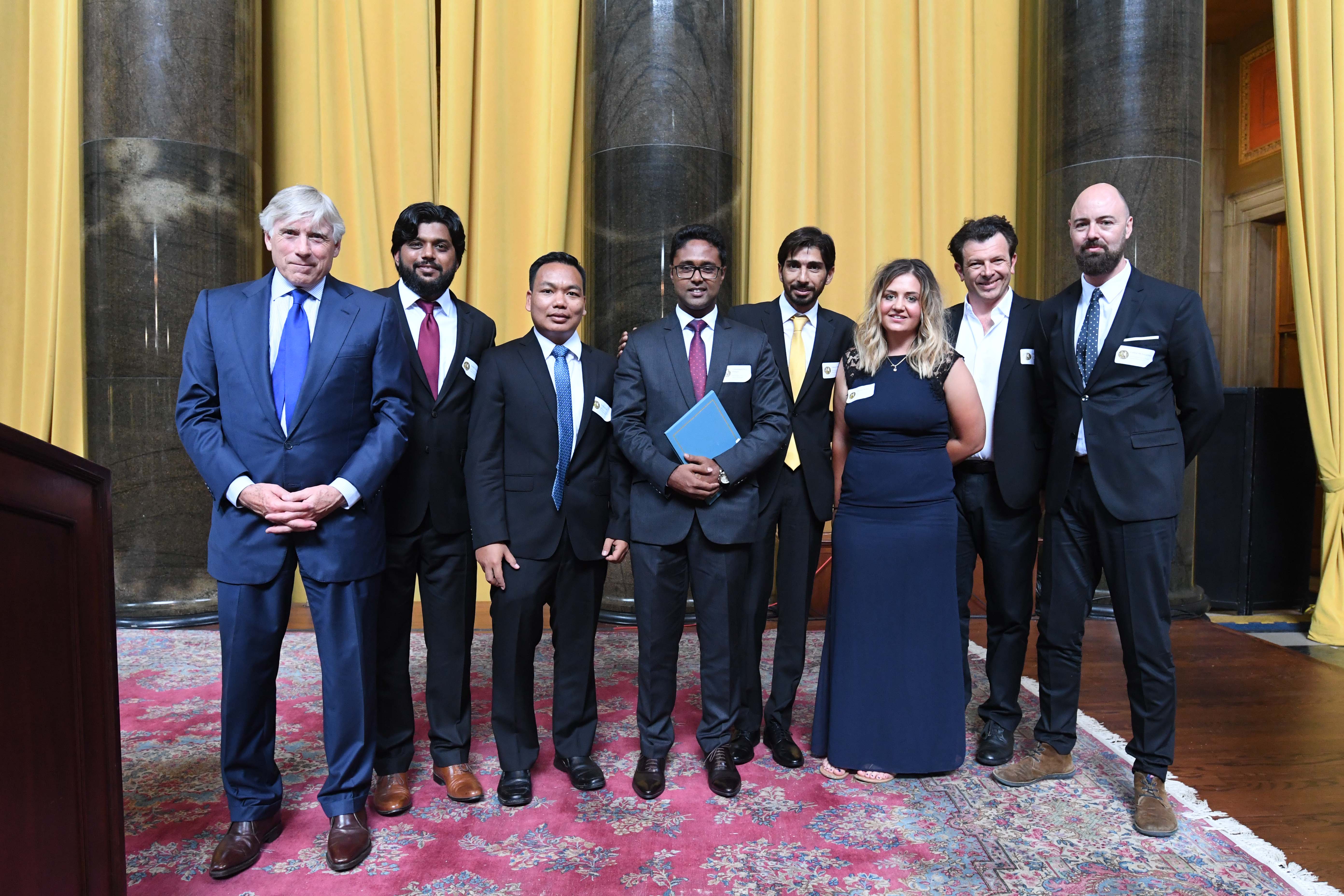
Staff members from Reuters (from left: Danish Siddiqui, Soe Zaya Tun, Mohammad Ponir Hossain, Adnan Abidi, Hannah McKay, Damir Sagolj and Cathal McNaughton) accept the 2018 Pulitzer Prize for Feature Photography from Columbia University President Lee Bollinger. (Photo: Eileen Barroso/Columbia University)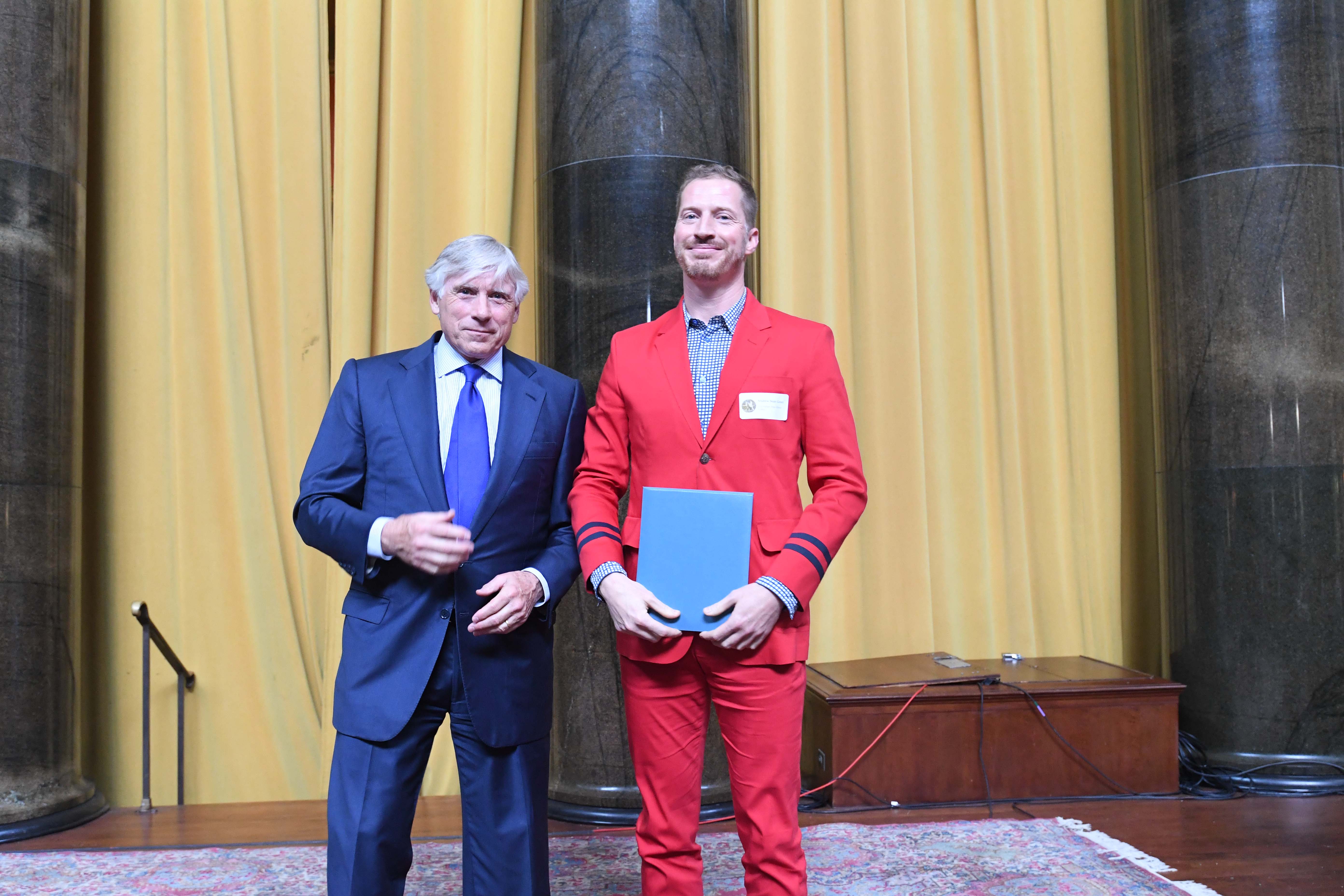
Andrew Sean Greer accepts the 2018 Pulitzer Prize for Fiction from Columbia University President Lee Bollinger. (Photo: Eileen Barroso/Columbia University)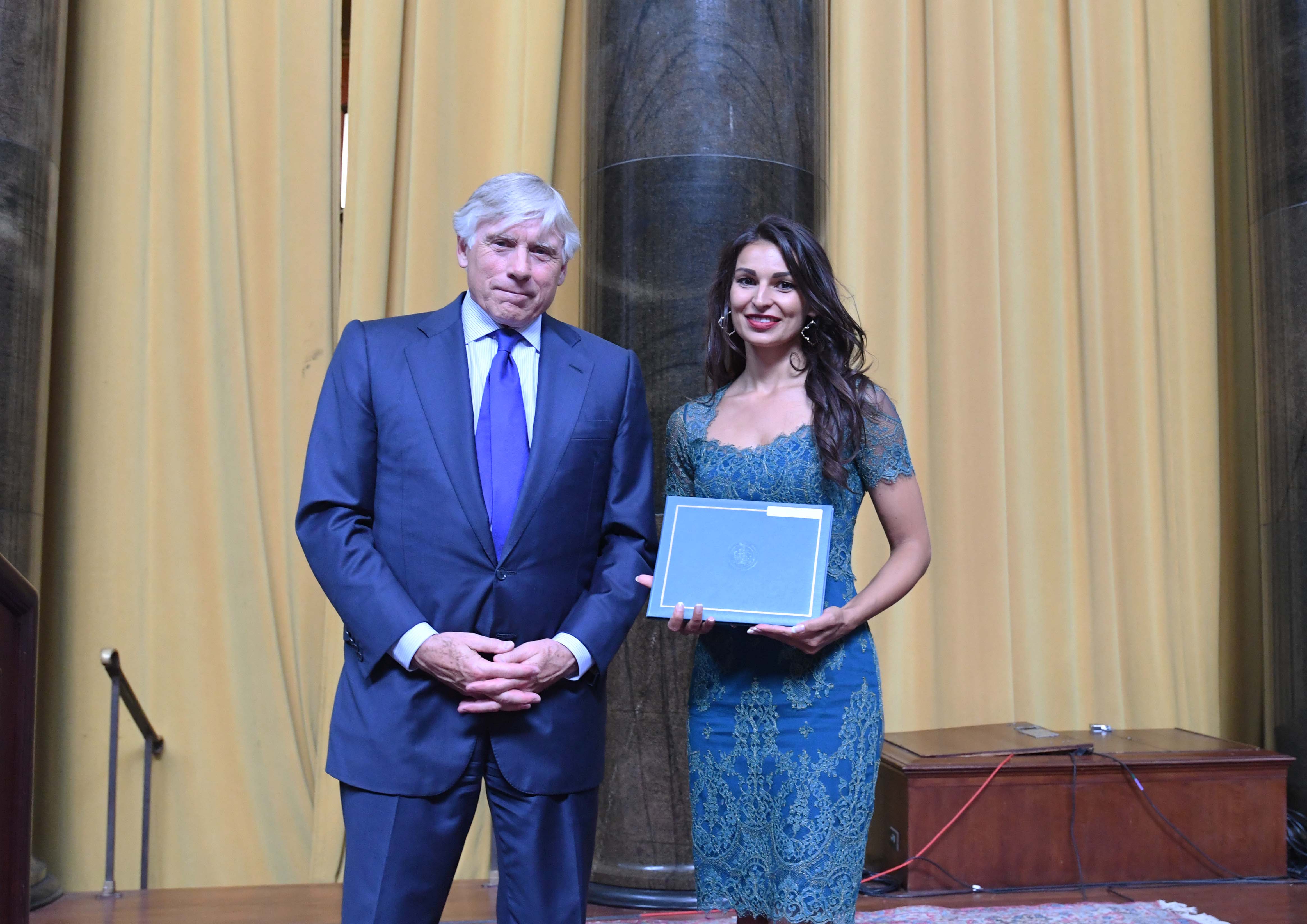
Martyna Majok accepts the 2018 Pulitzer Prize for Drama from Columbia University President Lee Bollinger. (Photo: Eileen Barroso/Columbia University)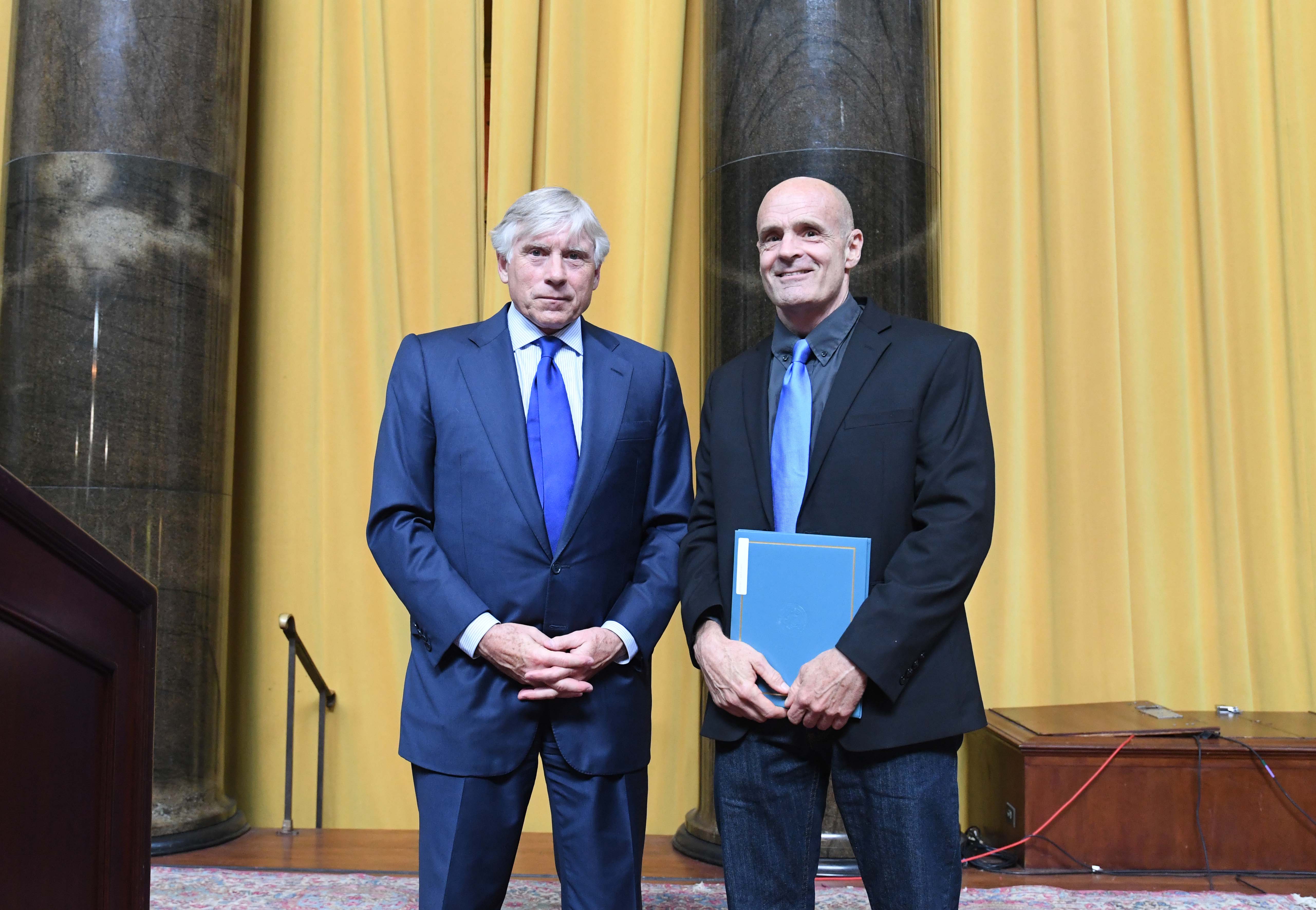
Jack E. Davis accepts the 2018 Pulitzer Prize for History from Columbia University President Lee Bollinger. (Photo: Eileen Barroso/Columbia University)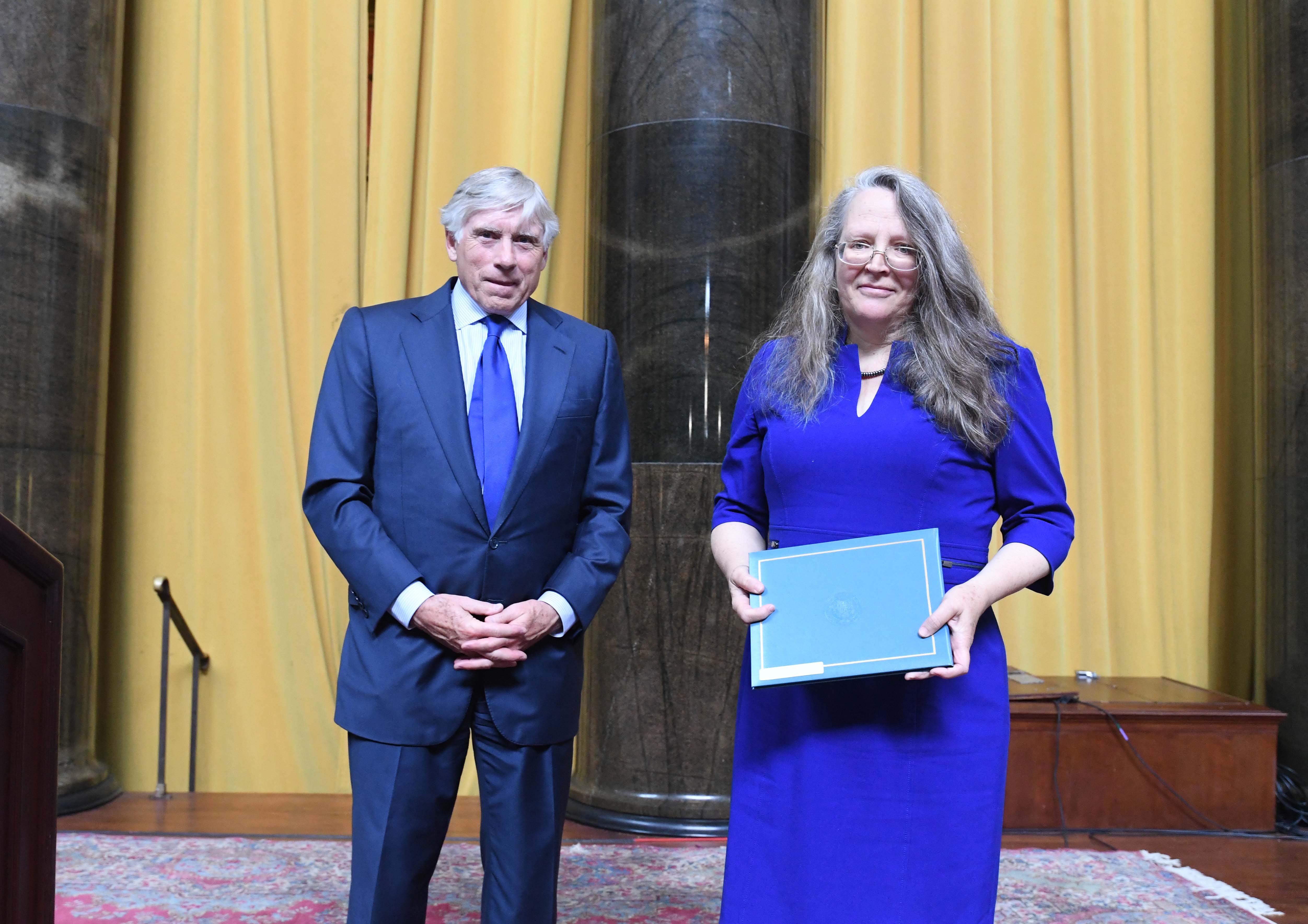
Caroline Fraser accepts the 2018 Pulitzer Prize for Biography from Columbia University President Lee Bollinger. (Photo: Eileen Barroso/Columbia University)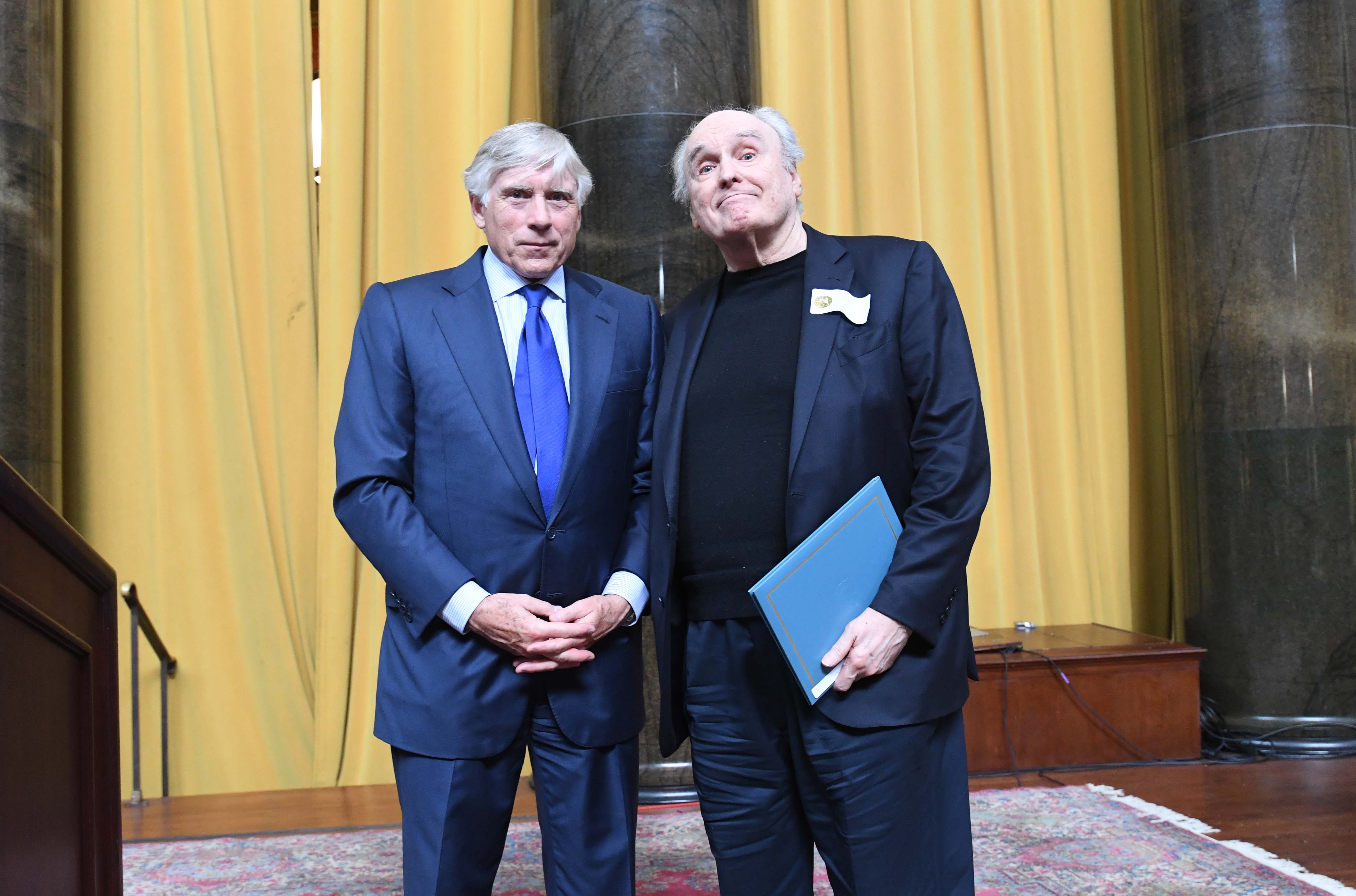
Frank Bidart accepts the 2018 Pulitzer Prize for Poetry from Columbia University President Lee Bollinger. (Photo: Eileen Barroso/Columbia University)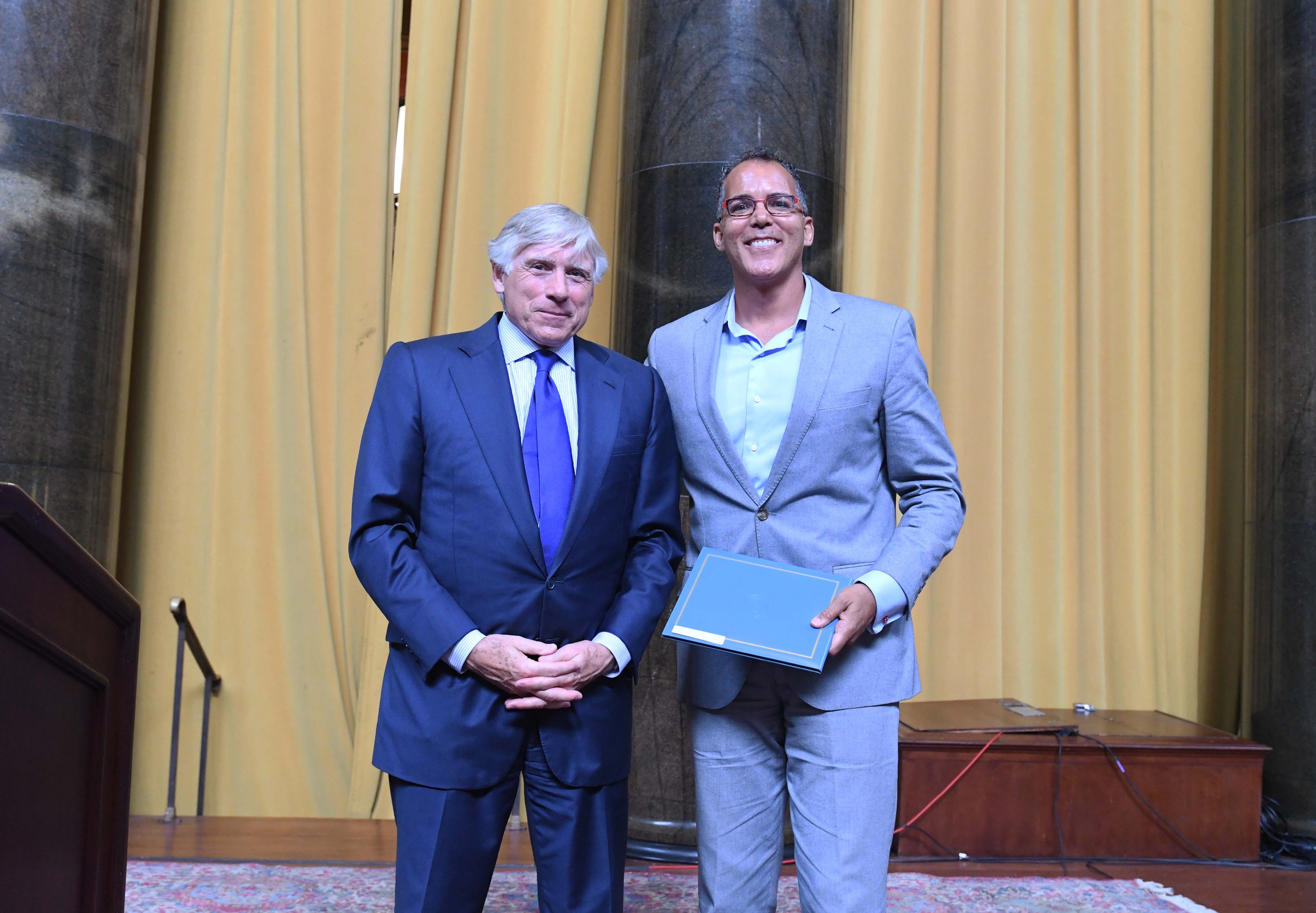
James Forman Jr. accepts the 2018 Pulitzer Prize for General Nonfiction from Columbia University President Lee Bollinger. (Photo: Eileen Barroso/Columbia University)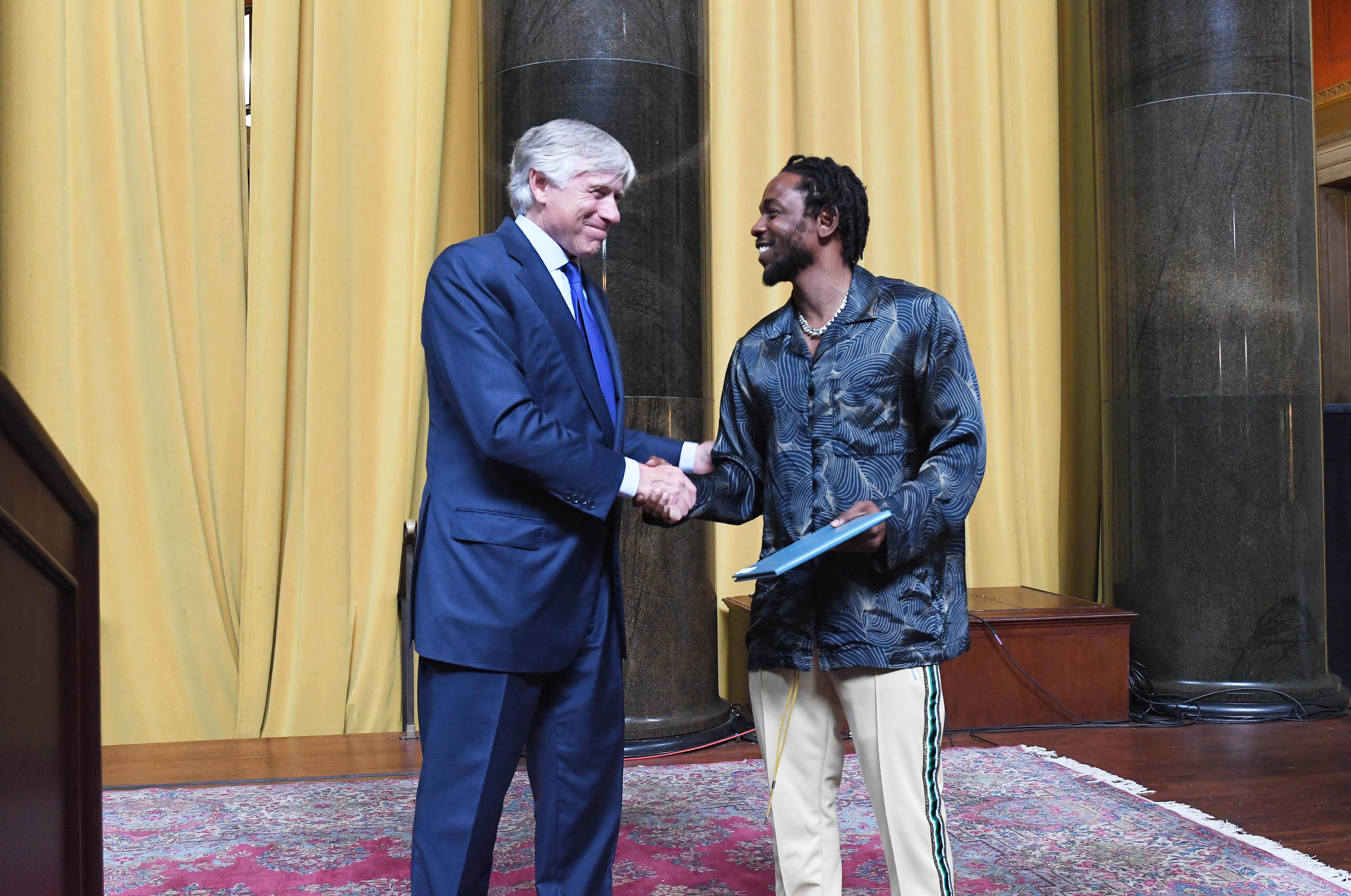
Kendrick Lamar accepts the 2018 Pulitzer Prize for Music from Columbia University President Lee Bollinger. (Photo: Eileen Barroso/Columbia University)
Additional photos and video footage will continue to be posted in the coming days. Please check back to see more.