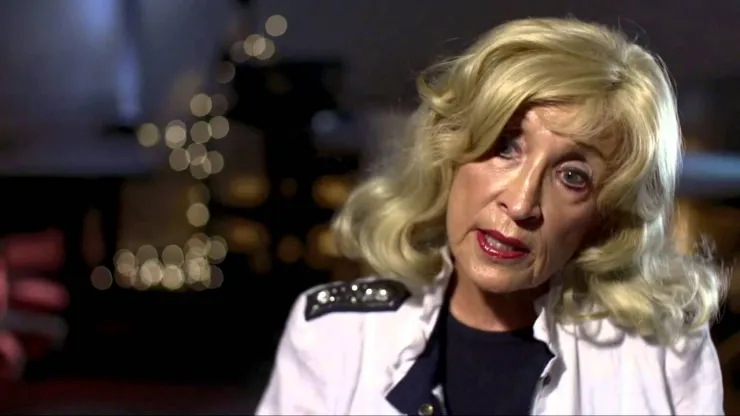
In 1986, the year Edna Buchanan of the Miami Herald won the Pulitzer Prize in General News Reporting, Calvin Trillin profiled her for The New Yorker. The story included this paragraph:
“On a day I was making the rounds with Edna, there was a police report saying that two Marielitos had begun arguing on the street and the argument had ended with one shooting the other dead. That sounded like a paragraph at most. But Edna had a tip that the victim and the killer had known each other in Cuba and the shooting was actually the settling of an old prison score. That sounded to me more like a murder that stood out a bit from the crowd. Edna thought so, too, but her enthusiasm was limited. ‘We’ve already had a couple of those,’ she told me. Edna has covered a few thousand murders by now, and she’s seen a couple of most things. She has done stories about a man who was stabbed to death because he stepped on somebody’s toes on his way to a seat in a movie theatre and about a two-year-old somebody tried to frame for the murder of a playmate and about an eighty-nine-year-old man who was arrested for beating his former wife to death and about a little boy killed by a crocodile. She has done stories about a woman who committed suicide because she couldn’t get her leaky roof fixed and about a newspaper deliveryman who committed suicide because during a petroleum shortage he couldn’t get enough gasoline. She has done stories about a man who managed to commit suicide by stabbing himself in the heart twice and about a man who threw a severed head at a police officer twice. She has done a story about two brothers who killed a third brother because he interrupted a checkers game. (‘I thought I had the best-raised children in the world,’ their mother said.) She has done a story about a father being killed at the surprise birthday party given for him by his thirty children. She has done a story about a man who died because fourteen of the eighty-two double-wrapped condom packages of cocaine he tried to carry into the country inside his stomach began to leak. (‘His last meal was worth $30,000 and it killed him.’) She has done any number of stories about bodies being discovered in the bay by beachcombers or fishermen or University of Miami scientists doing marine research. (‘“It’s kind of a nuisance when you plan your day to do research on the reef,” fumed Professor Peter Glynn, of the university’s Rosenstiel School of Marine and Atmospheric Science.’) Talking to Edna one day about murder cases they had worked on, a Metro-Dade homicide detective said, ‘In Dade County, there are no surprises left.’”
Buchanan also shared her reporting techniques with Karen Rothmyer for Winning Pulitzers, an anthology of prize-winning work. Just before Christmas in 1979 Buchanan pursued a tip that an African-American man had been beaten to death by the police after a chase and that the police were trying to cover it up.
Her first story ran on Christmas Eve. A few months later, after the officers were acquitted, riots erupted in Miami. As a result, 18 people died, 350 were injured and 600 arrested. The governor called in 3,500 National Guard troops to quell the riots.
Here is what Buchanan told Rothmyer about this story.
‘And that was when I knew that the police had lied’
A lot of my stories come from a telephone call, talking to people. But sometimes they come from tips. That’s how I found out about Arthur McDuffie, the black man who was attacked by the police and later died.
I heard about it on Dec. 21, which was a Friday. McDuffie had been attacked on the previous Monday and was in a fatal coma all week. On Friday in the afternoon I got the first call, from someone who said that the cops had beat up this black guy on a motorcycle and he was either dead or dying. The person said the cops were claiming they chased him and he crashed but that really they did it and there had been no crash.
So I called the morgue and I said, “Hey, do you have a black guy in there who was killed in a crash while being chased by the police?” And they said no. And I said to myself, “See, just one of these phony tips.” And the woman at the morgue said, “But he’s on his way, he just died about a half hour ago.” And I thought, “Oh, no.” And that was when I started working on it. And I worked all that night and Saturday and Sunday and the first story ran Monday, Christmas Eve.
One of the first things I did was to call Internal Affairs because when anybody is hurt during an arrest, Internal Affairs automatically has to investigate it. So I asked if they were investigating the case of McDuffie and they said yes. They had the captain call me back. And he said the investigation is closed. They’d found that nothing untoward had happened: they’d chased him; he was a jerk and he ran and he crashed his motorcycle.
Because the investigation was over, I was able to get a copy of the accident report and that was when I first saw the names of some of the guys involved. And I’d seen those names before when we had done this big series about police brutality. They were among the people who had been accused of police brutality and who had been sued the most by citizens, so that made me a heck of a lot more interested in the case.I also found out from the accident report where they’d taken the motorcycle and I went and looked at it. And that was when I knew that the police had lied, because they’d said that they had investigated it. When I walked into this towing garage and said, “Where’s Arthur McDuffie’s motorcycle?” the guy said, “Oh, I’ve been wondering when someone was going to come get it. Sign here.” And he handed me this clipboard. I could have signed and taken that motorcycle away.
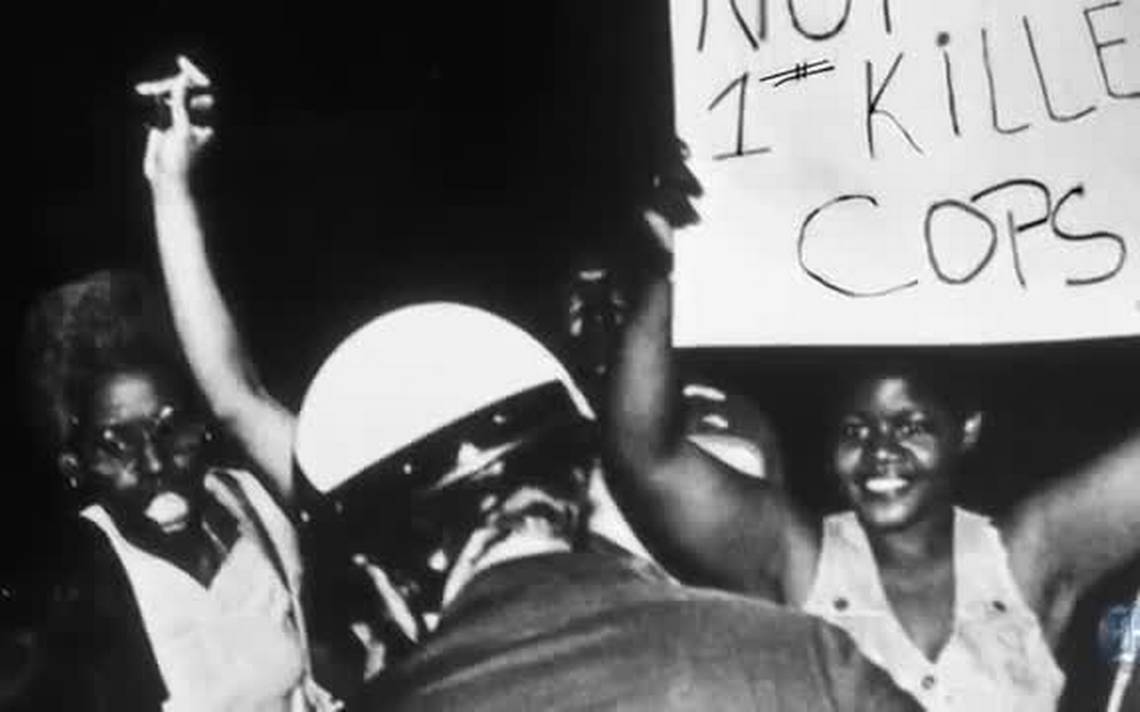
Riots broke out in Miami after the officers in the McDuffie case were cleared.
And I said, “No, no, I didn’t come to claim it, I just want to look at it.” And he said, “Well, help yourself, it’s over there.” If the police really had been investigating the case they wouldn’t have let people come in there and paw all over that motorcycle. It would have been confiscated as evidence. As it was, the day the first story appeared they went and confiscated it and then we weren’t even allowed to take a picture of it, because it was a major piece of evidence.
The doctor at the morgue had told me that McDuffie’s injuries were consistent with those of a motorcycle rider who was hurled over the handlebars and smashed his head on a solid object like a concrete pole or a bridge abutment or a telephone pole.
So I went out there to where it happened. But there was no wall, no pole, nothing. It was just an expressway ramp. So I began to wonder, well, maybe he could have hit his head on a curb or something. Because really, in my heart, I didn’t want to believe it could have happened the way it did.
I also went out to see the McDuffies. And I really liked them. Eula Mae, the mother, was so heartbroken. She’d gone out to the scene and she showed me that she’d found part of a sharpshooter badge and her son’s broken glasses and a strap that I think came from the motorcycle helmet.
They showed me all his plaques. He had plaques and plaques and plaques — a whole wall full of plaques. He’d headed a team for this insurance company and his team had consistently won the award every month for selling the most insurance. He also worked with this whole group of kids; he’d taught them how to paint and they had painted a funeral home, the one where he was buried, and he was helping these ghetto kids get jobs and teaching them a trade.
The police later criticized me and criticized the Herald because we kept calling him an insurance executive. They thought he was a piece of shit — they wanted him just to be some bad guy that they had to chase. Apparently he did have a traffic record and he had been accused of passing a worthless check once that was never prosecuted. He’d lost his license once and I guess that’s why he didn’t stop when the police told him to, which was a terrible mistake.
Cops get very upset during a chase; they’re not only risking their lives, they’re risking equipment and they get in trouble if they damage it. So by the time they got to him they were just furious.
Blacks will tell you that race was a factor, but I don’t think so. It is true that the police officer who struck the first blow got in trouble later for kicking black people. But I think Arthur McDuffie, no matter what color he was, probably would have taken a beating that night. Once the first guy hit him, it was like a wild dogpack.
The day the first story came out, a city officer read the morning paper and told his supervisor that he had seen what happened, and that became part of the investigation that was launched, though of course we didn’t find that out until later.
And we also found out later that two of the cops who had been involved were waiting for the paper to come out that morning, and they raced off to read it alone to figure out how bad things were and whether they could keep getting away with it. The first story wasn’t all that exciting because I had an awful editor, but just its appearance made things begin to happen.
I continued to cover the story up to the point of the police officers’ arrest. From then on the people who cover the courts took over.
I never went to journalism school and I don’t know what the official code of ethics is supposed to be, but I’ve always had my own sense of values and I was a little disturbed by some of the stories that began appearing. Because once it got into the court system it was a big story and the whole journalism pack was after it, so when they would get a deposition and some police officer who was involved would testify how they jumped up and down on McDuffie’s legs to break them and things like that, they would all report every detail.
So obviously, you knew there could never be a trial in Miami. And in fact they sent the case off to Tampa, off to redneck country with an all-white jury and they came back pretty quickly with an acquittal.
Sources: “Covering the Cops,” by Calvin Trillin, The New Yorker, Feb. 17, 1986; Winning Pulitzers, by Karen Rothmyer, Columbia University Press, 1991, 186-89